In my kitchen, steak pasta is never treated as just another quick meal. It is a dish that depends on timing, control, and balance between tender steak and a well coated pasta base. I focus on keeping the steak juicy while ensuring the sauce binds everything together without becoming heavy. When handled correctly, each bite feels structured, where the pasta carries the sauce evenly and the steak adds depth without overpowering it. I pay close attention to heat and sequencing, because small details determine the final texture. It is a reliable option for a satisfying dinner that still feels refined. A properly prepared steak pasta should deliver consistency from the first bite to the last, with each element working together rather than competing for attention.
Where Steak Pasta Loses Its Balance
From my experience, the most common mistake begins with overcooking the steak. Many cooks leave it on heat too long, which removes moisture and results in a tough texture. I have also seen steak added too early into the sauce, causing it to continue cooking and lose tenderness. Another issue is poor sauce control, where excess liquid makes the dish loose instead of structured. Inconsistent slicing of steak creates uneven bites that affect the overall experience. Timing between pasta and steak is often overlooked, leading to one component being overdone while the other is underprepared. These mistakes reduce the quality of the dish, turning what should be a rich and balanced meal into something less controlled and less satisfying.
My Approach for Tender Steak and Cohesive Pasta
When I prepare steak pasta, I always begin by searing the steak quickly over high heat to develop a proper crust while keeping the inside tender. After cooking, I allow it to rest before slicing it evenly. This step preserves the juices and improves texture. The pasta is cooked separately until slightly firm so it can absorb the sauce later without becoming too soft. I prepare a thick, balanced sauce that coats the pasta evenly without excess liquid. The steak is added only at the final stage to avoid overcooking. Gentle mixing ensures everything comes together without breaking the structure. This method allows me to create a dish that feels balanced, where each component maintains its integrity while still blending into a cohesive result.
Ingredients List
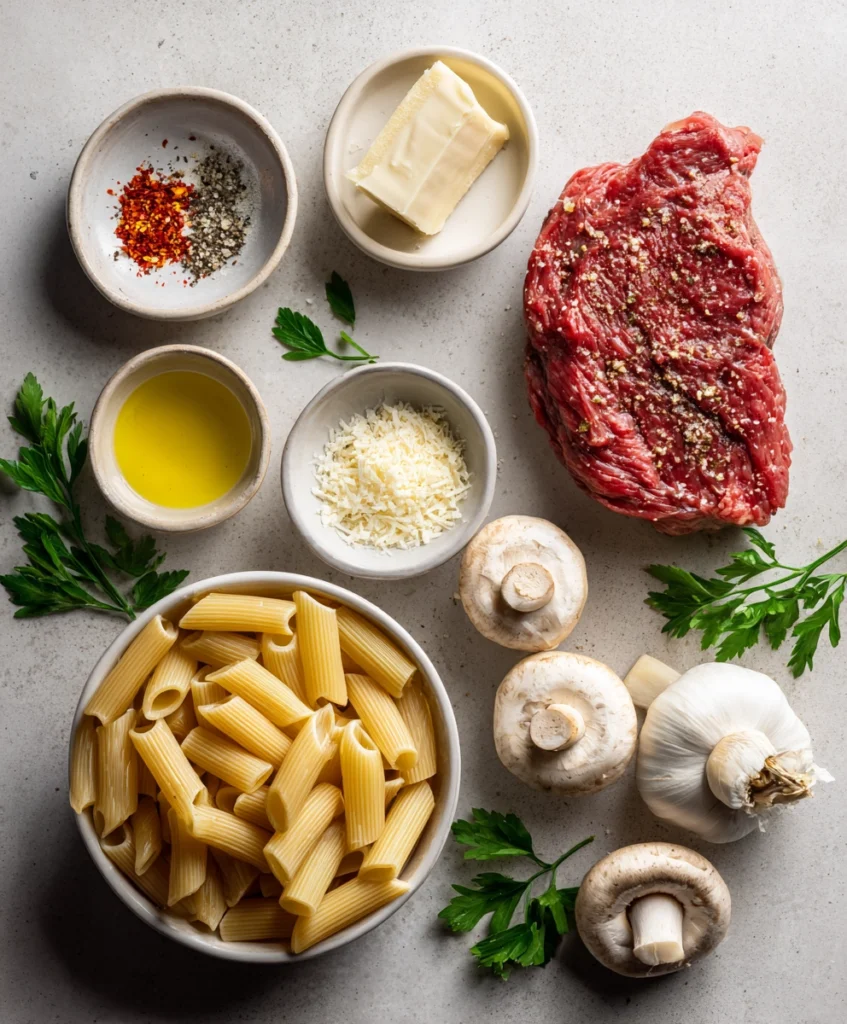
Base Ingredients:
- 12 ounces pasta
- 1 pound steak
- 2 tablespoons olive oil
- 3 cloves garlic minced
- 1 cup cream or tomato based sauce
- 1 2 cup grated parmesan cheese
- Salt to taste
- Black pepper to taste
Optional Add-ins:
- 1 2 teaspoon chili flakes
- 1 4 cup fresh parsley chopped
- 1 2 cup mushrooms sliced
- 1 tablespoon butter
- 1 4 cup caramelized onions
Step-by-Step Instructions
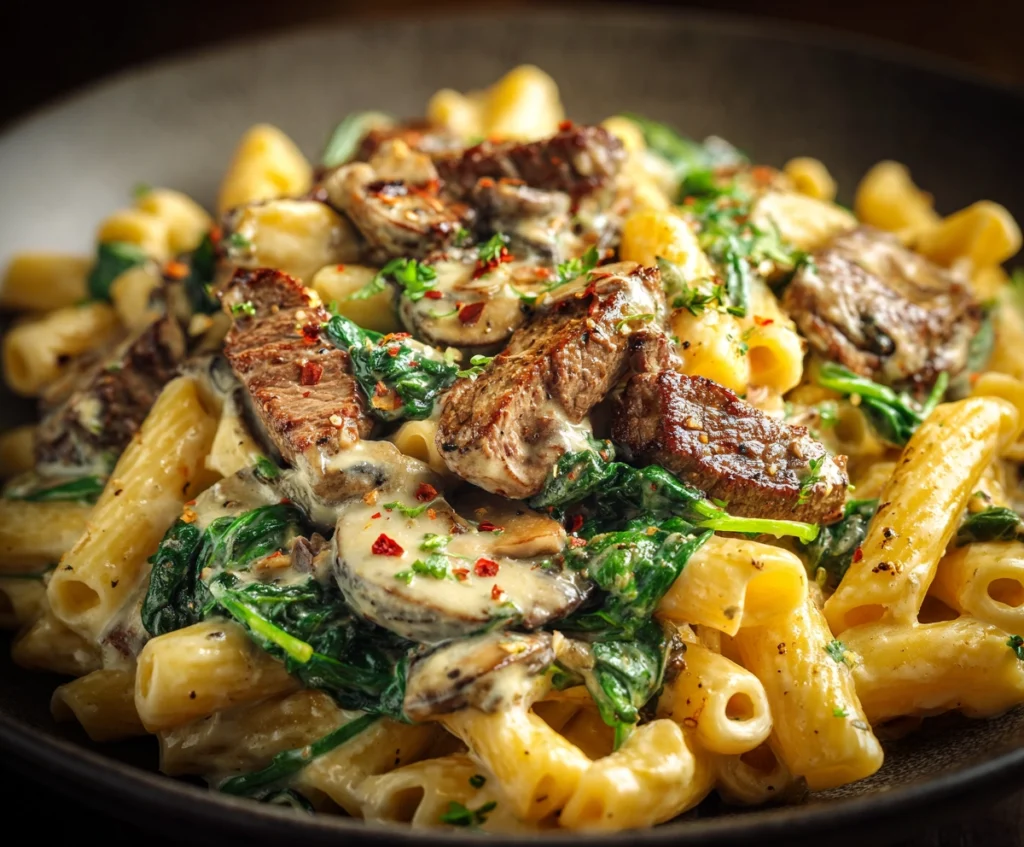
Step 1: Preparing the Steak
I begin by bringing the steak to room temperature before cooking, which helps it cook evenly. I season it lightly with salt and black pepper, then heat a pan until it is hot enough to create a proper sear. The steak is placed in the pan and cooked briefly on each side to form a firm outer crust while keeping the inside tender. I avoid moving it too often, allowing the surface to develop properly. Once cooked, I remove it from the heat and let it rest. This resting period is essential because it allows the juices to settle within the meat. After resting, I slice it into even pieces, ensuring each portion remains tender and ready to combine with the pasta without losing its texture.
Step 2: Cooking the Pasta
In a large pot, I bring salted water to a steady boil and add the pasta. I cook it until it reaches a slightly firm texture, not fully soft, because it will continue cooking once combined with the sauce. Stirring occasionally prevents sticking and ensures even cooking. Once ready, I drain the pasta and reserve a small amount of the cooking water. I avoid rinsing the pasta, as the starch helps the sauce adhere better. Proper control at this stage ensures the pasta maintains its structure and does not become overly soft. This step creates a solid base for the dish, allowing the sauce to coat evenly while maintaining a balanced texture throughout.
Step 3: Building the Sauce
Using the same pan, I add olive oil and minced garlic, cooking gently to release aroma without burning. I then add the sauce base and allow it to simmer until it thickens slightly. The goal is to create a sauce that is smooth and controlled, not overly thin. I season carefully with salt and black pepper, ensuring the taste remains balanced. If needed, I add a small amount of reserved pasta water to adjust consistency. This stage is important because the sauce must coat the pasta evenly without pooling. A well prepared sauce allows the steak to integrate smoothly later, ensuring the dish remains cohesive and balanced.
Step 4: Combining Pasta and Sauce
Once the sauce reaches the desired consistency, I add the cooked pasta and toss it gently to ensure even coating. I keep the heat moderate so the pasta can absorb some of the sauce without becoming too soft. This step requires attention because uneven mixing can lead to inconsistent texture. Each piece of pasta should carry a balanced amount of sauce, creating a uniform base for the dish. Proper combination ensures the pasta and sauce work together rather than feeling separate. This stage prepares the dish for final assembly, ensuring a consistent texture that supports the addition of steak without disrupting the balance.
Step 5: Final Assembly with Steak
At the final stage, I add the sliced steak to the pasta and mix gently. I avoid over mixing to preserve the texture of the meat. Parmesan cheese is added and allowed to melt slightly, creating a smooth finish. I ensure the dish is heated through without continuing to cook the steak. A brief rest before serving allows everything to settle together. Serving it warm ensures the best texture and taste. This step brings all components together, creating a dish where the steak remains tender, the pasta is well coated, and the sauce provides a balanced finish without overpowering the other elements.
Cook Time
Total: 35 minutes
Prep: 15 minutes
Bake: 20 minutes
Servings
In my kitchen, this steak pasta serves four to six people depending on portion size. I prefer moderate servings that allow the dish to feel filling without becoming heavy. Each portion should include a balanced mix of pasta, sauce, and steak, ensuring consistency across servings. I often pair it with a light side such as vegetables to balance the richness. Proper portioning helps maintain presentation and ensures every plate reflects the intended structure. Allowing the dish to rest briefly before serving also improves consistency. A well served dish enhances the overall experience and ensures that each serving delivers the same quality and balance.
Makes approximately 4 to 6 servings
Nutritional Information (approx. per serving)
- Calories: 450 to 520 kcal
- Protein: 25 g
- Fat: 22 g
- Carbohydrates: 40 g
- Fiber: 2 g
- Sodium: Moderate
From my perspective, this dish offers a balanced combination of protein and carbohydrates, making it a complete meal. The steak provides strength and depth, while the pasta supplies steady energy. Pairing it with vegetables can improve overall balance. Proper portion control ensures it remains satisfying without excess, supporting a consistent and enjoyable meal experience.
Storage Instructions
After cooking, I allow the steak pasta to cool completely before storing it in an airtight container. It can be refrigerated for up to two days while maintaining quality. When reheating, I prefer using low heat on the stove to preserve texture. Adding a small amount of liquid can help restore the sauce if it thickens. I avoid overheating, as it can affect the tenderness of the steak. Storing components separately is also effective if preparing in advance. Proper storage ensures the dish retains its structure and taste, allowing it to remain enjoyable even after the initial serving while preserving the balance achieved during cooking.
Suggestions
In my experience, pairing steak pasta with fresh sides enhances the overall meal. Crisp vegetables or a light salad provide contrast to the rich base. Adjusting seasoning slightly allows customization without altering the structure of the dish. Preparing components in advance can improve efficiency, especially during busy schedules. I also recommend serving the dish immediately after final assembly to maintain texture. Adding fresh herbs can elevate both appearance and taste. These small adjustments make a noticeable difference, turning a simple meal into something more refined and well balanced.
Seasonal Relevance
I find that steak pasta works well throughout the year with slight adjustments. During cooler months, it provides a warm and satisfying meal that suits indoor dining. In warmer seasons, serving smaller portions with lighter sides helps maintain balance. Seasonal vegetables can be added for variation while preserving the core structure. This flexibility allows the dish to remain relevant regardless of the season. Adjusting presentation and pairing ensures it fits naturally into different dining settings while maintaining its rich and structured character.
Conclusion
In my kitchen, steak pasta represents careful control of timing and balance. Every step, from searing the steak to combining it with the pasta, contributes to the final result. By focusing on structure and proper technique, I ensure the dish remains consistent and satisfying. Serving it warm enhances the overall experience and brings all elements together. With attention to detail, this recipe becomes a reliable option that delivers both depth and comfort. It is a simple idea refined through precision, and that is what makes it stand out as a well executed dish.
Frequently Asked Questions
Can I use a different cut of steak for this recipe?
Yes, I often use different cuts depending on availability. The key is to choose one that cooks quickly and remains tender. Proper slicing and resting ensure good texture regardless of the cut used.
How do I keep the steak from becoming tough?
I avoid overcooking and always allow the steak to rest before slicing. Adding it at the final stage also prevents further cooking, helping maintain tenderness and structure.
Can I prepare the sauce in advance?
Yes, the sauce can be prepared earlier and stored. Reheating it gently before combining with pasta ensures it maintains consistency and integrates smoothly with the other components.
What is the best way to reheat steak pasta?
I prefer reheating it on low heat with a small amount of liquid to restore the sauce. This method helps maintain both texture and taste without affecting the tenderness of the steak.
Can I make this dish lighter?
Yes, adjusting the sauce by reducing heavy ingredients can create a lighter version. Maintaining balance ensures the dish still feels complete while being less rich.
