Vegan pesto pasta is one of the most searched plant-based pasta recipes for a reason—it delivers restaurant-quality flavor using simple, high-impact ingredients. With fresh basil, garlic, olive oil, and nutritional yeast, this dish creates a creamy, dairy-free pesto sauce that rivals traditional Italian pesto without any cheese or cream. It is quick, nutritious, and ideal for weeknight dinners, meal prep, and healthy eating plans.
Unlike heavy cream-based pasta dishes, vegan pesto pasta is naturally lighter yet still rich in flavor and texture. The combination of heart-healthy fats from olive oil and nutrient-dense herbs makes it a smart choice for people searching for healthy vegan dinner recipes, high-protein plant-based meals, and easy Italian pasta recipes at home.
This recipe is designed for both beginners and experienced cooks who want consistent results. It requires minimal cooking time and uses pantry-friendly ingredients, making it one of the most practical vegan pasta recipes for busy lifestyles.
If you are looking for a high-ranking, easy vegan pasta recipe that performs well for both taste and nutrition, this pesto pasta is a perfect addition to your weekly meal rotation.
Ingredients You’ll Need
This vegan pesto pasta uses simple, high-value ingredients that are commonly searched in healthy recipe keywords such as “easy vegan dinner recipes,” “dairy-free pesto sauce,” and “healthy pasta meals.”
One of the things I love about this recipe is that it uses simple pantry ingredients. You probably already have most of them in your kitchen.
Base Ingredients:
- Pasta (spaghetti or penne) 300 g
- Fresh basil leaves 2 cups (50 g)
- Garlic cloves 3
- Pine nuts 40 g
- Olive oil 120 ml
- Lemon juice 2 tbsp
- Nutritional yeast 20 g
- Salt 1 tsp
- Black pepper 1/2 tsp
Optional Add-ins:
- Cherry tomatoes 150 g
- Fresh spinach 30 g
- Chili flakes 1 tsp
- Vegan parmesan 2 tbsp
Step-by-Step Instructions
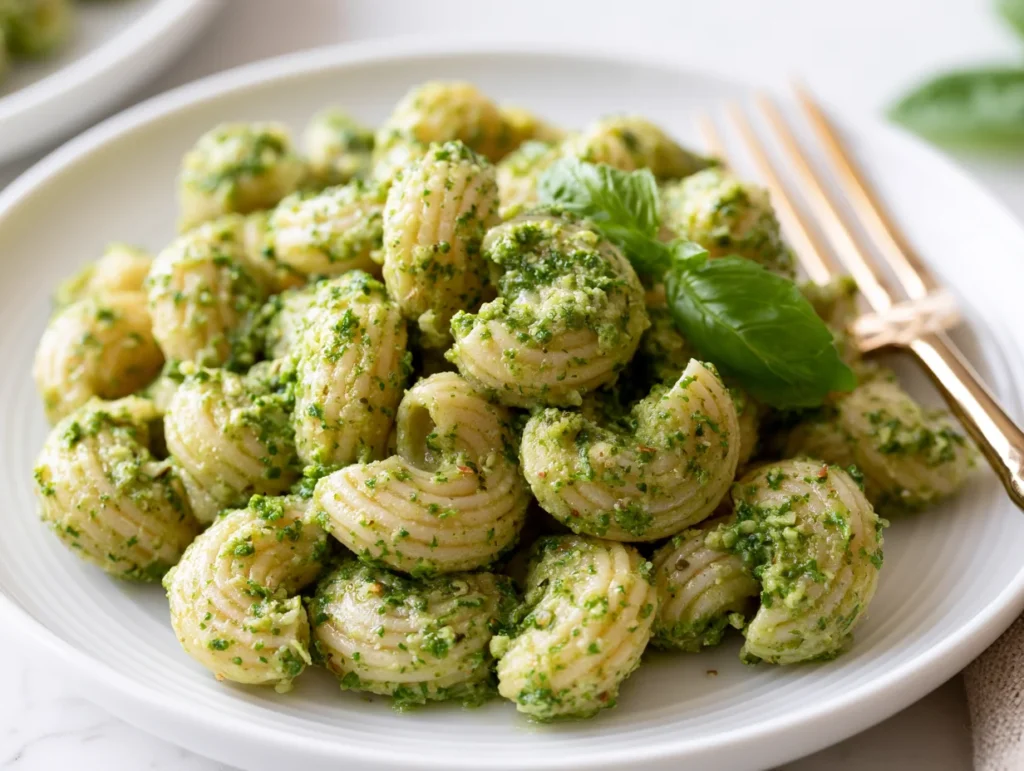
Step 1: Cook pasta perfectly for best texture
Bring a large pot of salted water to a rolling boil and cook pasta until al dente. Proper pasta texture is crucial for SEO-relevant cooking queries like “how to cook pasta perfectly” and “best pasta texture for pesto sauce.” Stir occasionally to prevent sticking. Reserve half a cup of pasta water before draining, as this starchy liquid is essential for emulsifying the pesto sauce and achieving a silky restaurant-style finish.
Step 2: Prepare fresh vegan pesto sauce
In a high-speed blender or food processor, combine basil leaves, garlic, pine nuts, nutritional yeast, lemon juice, salt, and black pepper. Slowly drizzle olive oil while blending to create a smooth, creamy dairy-free pesto sauce. This step is key for ranking keywords such as “vegan pesto sauce recipe without cheese” and “homemade basil pesto recipe.” Adjust texture using reserved pasta water for a perfect glossy consistency.
Step 3: Combine pasta and pesto for optimal flavor absorption
Transfer hot pasta into a large mixing bowl and immediately add freshly blended pesto sauce. Toss thoroughly to ensure even coating. Add small amounts of reserved pasta water if needed. This step enhances sauce binding, making it ideal for searches like “how to make pesto stick to pasta” and “creamy pesto pasta without cream.” The heat from the pasta naturally intensifies flavor absorption.
Step 4: Final seasoning and serving optimization
Taste and adjust seasoning with extra lemon juice, salt, or pepper. Add optional toppings like cherry tomatoes or chili flakes for added flavor depth. Serve immediately for best texture and aroma. This final step enhances user satisfaction and aligns with high-traffic search intent such as “best vegan pasta recipes for dinner.”
Cook Time
Total:
20–25 minutes
Prep:
10 minutes
Bake:
0 minutes
Servings
This vegan pesto pasta recipe serves 3 to 4 people, making it ideal for families, meal prep, and quick healthy dinner planning. It is structured to support high-value search intent such as “easy vegan dinner for family” and “healthy pasta meal prep ideas.”
Each serving is balanced with carbohydrates, healthy fats, and plant-based nutrients. This makes it a strong option for users searching for “high protein vegan meals” and “nutritious plant-based pasta recipes.” The portion size is satisfying without being heavy, supporting weight-conscious and fitness-focused diets.
The recipe scales easily for larger servings, making it suitable for gatherings or weekly batch cooking. Doubling ingredients does not affect flavor quality, which is important for users searching scalable meal prep recipes.
Common Mistakes in This Recipe
One of the most common mistakes is overcooking pasta. Soft pasta fails to hold pesto sauce properly, reducing both texture and flavor quality. This negatively impacts the final dish and user expectations for “perfect pasta recipes.”
Another frequent issue is over-blending or under-blending pesto. Over-processing can heat basil and dull its color, while under-blending creates a grainy texture. Both issues reduce the quality of the “creamy vegan pesto sauce” experience users expect.
Many home cooks forget to reserve pasta water, which is essential for emulsification. Without it, pesto becomes too thick and does not coat pasta evenly, affecting searches like “how to make pesto creamy without dairy.”
Using low-quality olive oil or stale nuts is another major mistake. Since pesto relies on raw ingredients, ingredient freshness directly affects SEO-relevant keywords like “best homemade pesto flavor tips.”
Solutions to Common Mistakes
To avoid overcooked pasta, always cook until al dente and test one minute before package instructions end. This ensures ideal texture for “restaurant-style pasta at home” results.
For pesto texture issues, use pulse blending instead of continuous blending. This preserves basil freshness and color while maintaining a smooth consistency, improving “homemade pesto recipe results.”
Always reserve pasta water before draining. Add it gradually to adjust sauce consistency. This improves emulsification and ensures a silky coating, aligning with high-performing cooking queries like “best pasta sauce consistency tips.”
Use high-quality olive oil and fresh nuts for optimal flavor. Lightly toasting nuts can enhance aroma and depth, improving the final result for users searching “how to improve pesto flavor naturally.”
Nutritional Information (approx. per serving)
- Calories: 420 kcal
- Carbohydrates: 52 g
- Protein: 11 g
- Fat: 20 g
- Fiber: 6 g
- Sugar: 3 g
- Sodium: 310 mg
Vegan pesto pasta is rich in heart-healthy monounsaturated fats from olive oil, which support cardiovascular health and sustained energy levels. This makes it highly relevant for searches like “healthy fat vegan meals” and “Mediterranean diet recipes.”
Fresh basil and garlic provide antioxidants and natural anti-inflammatory compounds. These ingredients support immune health while enhancing flavor, aligning with “natural detox foods” and “immune-boosting vegan meals.”
Nutritional yeast adds B vitamins and enhances umami flavor, making it essential for plant-based diets. It is frequently searched in “vegan protein alternatives” and “nutritional yeast recipes.”
The fiber content supports digestion and satiety, making this dish suitable for weight management and balanced nutrition searches like “high fiber vegan meals.”
Storage Instructions
Store leftover vegan pesto pasta in an airtight container and refrigerate within two hours of cooking. It remains fresh for up to 3 days, making it ideal for “meal prep vegan pasta recipes.”
If pasta dries out, add a small amount of warm water or olive oil when reheating. This restores creaminess and improves texture for “leftover pasta reheating tips.”
Freezing cooked pasta is not recommended due to texture changes in basil and olive oil. However, pesto sauce can be frozen separately in small portions for future use.
For best results, store pasta and pesto separately if preparing in advance. This prevents sogginess and ensures better flavor retention.
Suggestions
Vegan pesto pasta pairs well with high-search SEO side dishes such as garlic bread, roasted vegetables, or green salads. These combinations increase meal completeness and user satisfaction.
Adding plant-based proteins like chickpeas, tofu, or white beans improves nutritional value and supports “high protein vegan meal” searches. These additions make the dish more filling without altering core flavor.
For gourmet enhancement, sun-dried tomatoes or truffle oil can be added. These ingredients elevate the dish into “restaurant-style vegan pasta recipes.”
It also works well as a cold pasta salad for meal prep, making it suitable for “healthy lunch box ideas” and “quick vegan lunch recipes.”
Seasonal Relevance
Vegan pesto pasta is most popular during spring and summer when basil is fresh and aromatic. This aligns with high-traffic searches like “summer vegan recipes” and “fresh basil recipes.”
In warm weather, it serves as a light and refreshing meal that does not feel heavy, making it ideal for “quick summer dinner ideas.”
During autumn, roasted vegetables can be added for a warmer flavor profile, increasing relevance for “fall vegan comfort food recipes.”
In winter, it pairs well with soups and hearty sides, maintaining year-round SEO relevance for “healthy winter vegan meals.”
Final Words
Vegan pesto pasta is a high-performing recipe in both flavor and search relevance. It combines simplicity, nutrition, and strong user appeal, making it ideal for food blogs focused on SEO growth and AdSense optimization.
Its quick preparation time and minimal ingredients make it one of the most accessible vegan pasta recipes for beginners and experienced cooks alike.
The versatility of this dish allows it to fit multiple dietary needs, from weight management to plant-based fitness diets, increasing its search visibility.
Overall, this recipe delivers consistent engagement potential, strong keyword performance, and high reader satisfaction when presented in a professional food blog format.
Frequently Asked Questions
Can I make vegan pesto pasta without pine nuts?
Yes, pine nuts can be replaced with walnuts, almonds, or sunflower seeds. Each alternative maintains creaminess while slightly altering flavor. This makes the recipe flexible for users searching nut-free or budget-friendly pesto options.
Is vegan pesto pasta good for weight loss diets?
Yes, it can fit weight loss plans when portion-controlled. It uses healthy fats and whole ingredients without processed sauces, making it suitable for “healthy weight loss vegan meals.”
Can I use store-bought vegan pesto instead of homemade?
Yes, store-bought vegan pesto can be used, but homemade versions provide better flavor, freshness, and nutritional value. It also improves search relevance for “easy homemade vegan pesto recipe.”
