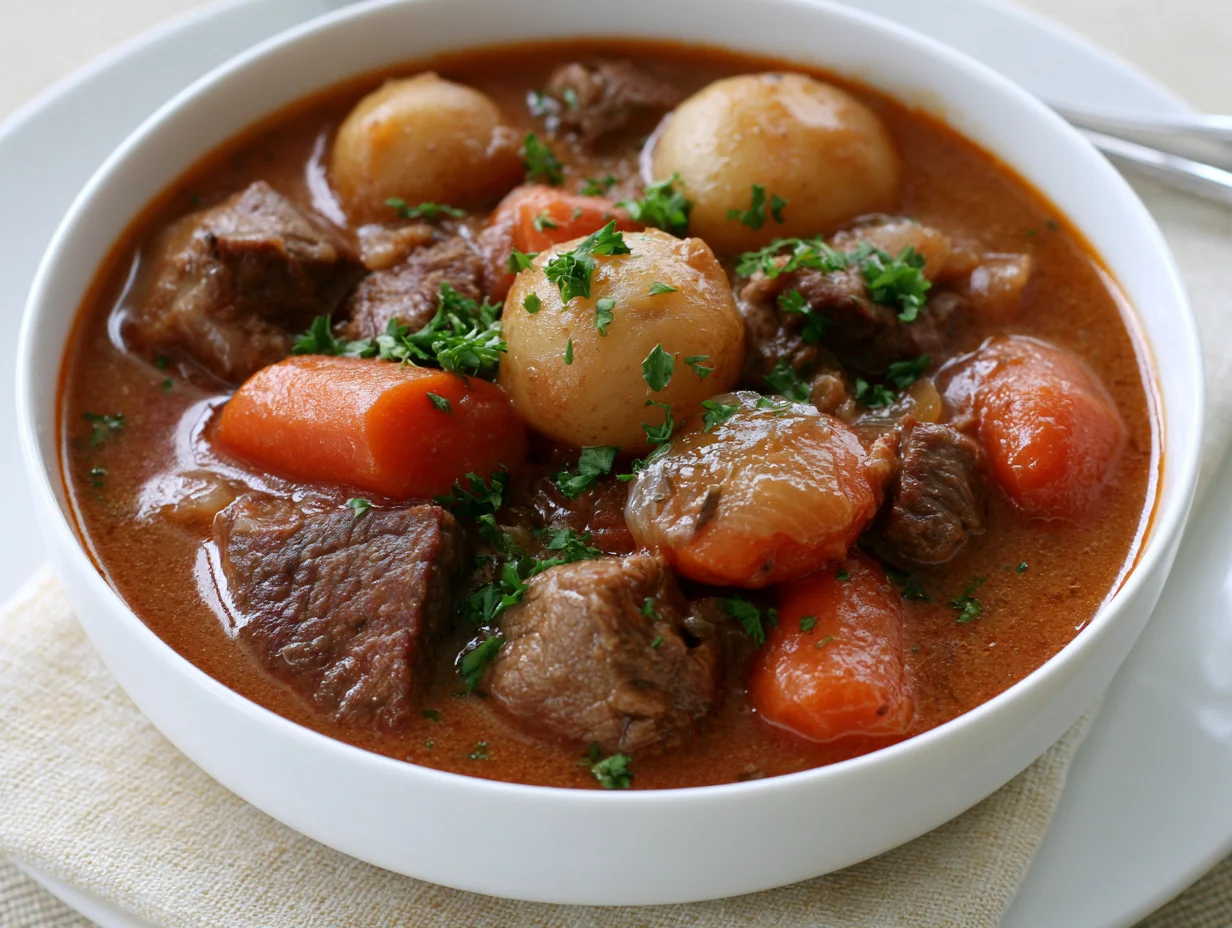
Rich & Hearty Beef Stew Recipe
A great beef stew isn’t just a meal — it’s a commitment to patience and layered flavor. The kind of stew worth making starts with properly browned beef, not grey and steamed, but deeply seared with a mahogany crust that carries the entire flavor base of everything that follows. This recipe builds from that foundation upward.
What separates a truly hearty beef stew from a watery, disappointing pot is understanding a few non-negotiable steps: high heat for the initial sear, time for the collagen to break down into body-giving gelatin, and vegetables added at the right moment so they’re tender without turning to mush.
This is not a thirty-minute weeknight shortcut. It’s a recipe that rewards a slow Sunday afternoon — the kind where the pot sits low and unhurried on the stove while the kitchen fills with the kind of smell that makes people wander in and ask what’s for dinner.
Serve it with crusty bread, over mashed potatoes, or entirely on its own. Any way it lands in the bowl, this stew earns its place at the table.
Ingredients You’ll Need
Every great stew starts with a short list of honest ingredients that work harder the longer they simmer together — and this one is no different. Here’s what goes into building that deeply savory, spoon-coating broth.
Base Ingredients
- 2 pounds beef chuck, cut into 1.5-inch cubes
- 2 tablespoons olive oil
- 1 medium yellow onion, diced
- 3 garlic cloves, minced
- 3 tablespoons tomato paste
- 2 tablespoons all-purpose flour
- 3 cups beef broth
- 1 cup dry red wine
- 3 medium carrots, sliced into rounds
- 3 medium potatoes, peeled and cubed
- 2 celery stalks, chopped
- 1 teaspoon fresh thyme leaves
- 1 bay leaf
- 1 teaspoon salt
- 1/2 teaspoon black pepper
Optional Add-ins
- 1 cup frozen peas, added in the final 5 minutes
- 1 tablespoon Worcestershire sauce
- 1 teaspoon smoked paprika
- 1/2 teaspoon rosemary, dried
- 1 tablespoon balsamic vinegar
- 2 tablespoons fresh parsley, chopped, for garnish
Step-by-Step Instructions
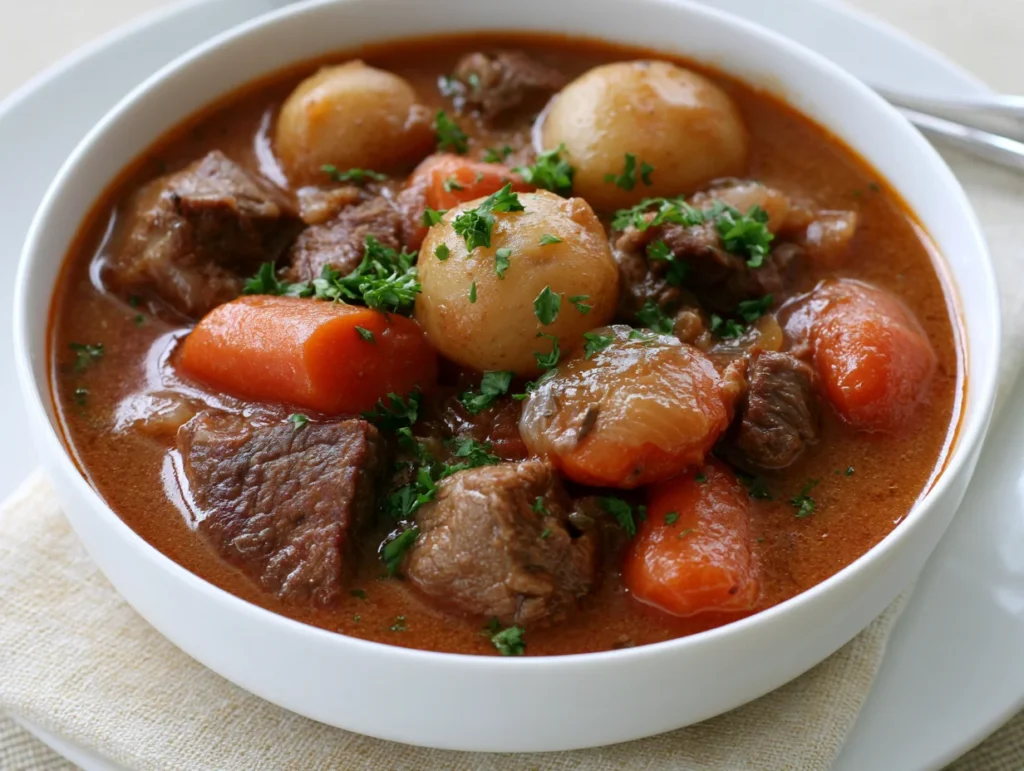
Step 1: Sear the Beef
Pat the beef cubes completely dry with paper towels before cooking — surface moisture prevents proper browning and leads to steaming instead of searing. Heat olive oil in a large Dutch oven or heavy-bottomed pot over high heat until shimmering. Working in small batches to avoid crowding, sear the beef for 2 to 3 minutes per side until a deep brown crust forms on each surface. Transfer seared pieces to a plate and set aside while you build the base.
Step 2: Build the Aromatic Base
Reduce heat to medium. In the same pot, retaining all the browned bits and rendered fat, add the diced onion and cook for 4 to 5 minutes until softened. Add the garlic and cook for another 30 seconds. Stir in the tomato paste, pressing it against the bottom of the pot for 1 to 2 minutes until it darkens slightly in color. This caramelization step deepens the stew’s savory backbone significantly before any liquid is added.
Step 3: Deglaze and Add Liquid
Pour in the red wine and scrape the bottom of the pot firmly with a wooden spoon, lifting every browned bit into the liquid — this is where much of the flavor lives. Let the wine reduce for 2 to 3 minutes. Sprinkle in the flour and stir to combine, coating the aromatics evenly. Pour in the beef broth and stir until smooth, ensuring no flour lumps remain. Return the seared beef and any resting juices back into the pot.
Step 4: Add Vegetables and Simmer
Add the carrots, potatoes, celery, thyme, bay leaf, salt, and pepper to the pot. Stir everything together to combine. Bring to a gentle boil, then reduce heat to low, cover the pot, and let the stew simmer for 1.5 to 2 hours, stirring occasionally. The stew is ready when the beef yields easily to a fork and the broth has thickened to a rich, spoon-coating consistency that coats the back of a spoon evenly.
Step 5: Finish and Serve
Remove the bay leaf before serving. Taste the stew and adjust seasoning with additional salt and pepper as needed. If using optional peas, stir them in at this stage and let them warm through for 5 minutes over low heat. Add a splash of balsamic vinegar for brightness or a handful of chopped parsley for color. Ladle into deep bowls and serve immediately while the broth is at its richest and hottest.
Cook Time
Total:
2 hours 30 minutes
Prep:
20 minutes
Bake:
2 hours 10 minutes
Servings
This recipe makes approximately 6 servings, with each portion being generous enough to serve as a complete, satisfying meal without requiring additional sides. A single bowl typically yields around 1.5 to 2 cups of stew, including broth, beef, and vegetables.
For larger households or dinner parties, this recipe scales comfortably to serve 8 to 10 by increasing the beef and vegetables proportionally while keeping the seasoning and liquid ratios close to the original. Just ensure your pot is large enough to accommodate the volume without overflowing during simmering.
For smaller households, the recipe keeps exceptionally well, making it ideal to prepare in full and refrigerate or freeze portions for meals throughout the week without any compromise in quality or taste.
Common Mistakes in This Recipe
The single most damaging mistake is skipping or rushing the searing step. Adding wet beef to the pot, or crowding too many pieces in at once, drops the pan temperature dramatically and causes the meat to steam rather than brown. This eliminates the Maillard reaction crust that forms the entire flavor foundation of the stew.
A second common error is adding the vegetables at the very beginning alongside the beef, which results in overcooked, disintegrated carrots and potatoes long before the beef has finished becoming tender. Another mistake is using a thin, low-quality broth without enough body, which produces a watery final result instead of a silky, coating stew.
Skipping the flour entirely in favor of a naturally reduced broth is another pitfall — without it, the liquid stays thin and the stew lacks the satisfying, thick consistency that makes every spoonful feel substantial and worth the cooking time invested.
Solutions to Common Mistakes
Always pat beef cubes completely dry before searing, and work in batches small enough to leave visible space between each piece in the pot. This maintains pan temperature and ensures a proper, even crust on all sides of every piece. A Dutch oven or heavy-bottomed pot retains heat most effectively for this purpose.
Add root vegetables at the midpoint of the simmer, roughly 45 minutes in rather than at the start, to give the beef time to begin breaking down while keeping the vegetables firm enough to hold their shape until the final 30 minutes of cooking.
Use a good-quality, low-sodium beef broth that tastes balanced on its own, since it forms the backbone of the entire dish. Whisk the flour in before adding liquid and stir thoroughly to prevent lumps from forming, which ensures a silky rather than gluey final texture throughout.
Nutritional Information (approx. per serving)
- Calories: 420
- Protein: 34g
- Carbohydrates: 28g
- Fiber: 4g
- Sugar: 5g
- Fat: 16g
- Sodium: 680mg
Beef chuck is naturally rich in iron and zinc, two minerals that play important roles in immune function and energy metabolism. A single serving of this stew provides a meaningful contribution toward daily protein requirements, supporting muscle repair and sustained satiety well beyond the meal itself.
The vegetables in this stew, particularly carrots and potatoes, contribute a solid dose of dietary fiber and natural antioxidants, including beta-carotene from the carrots, which supports eye health and cellular protection over time.
Using olive oil as the primary cooking fat introduces monounsaturated fatty acids, which are associated with cardiovascular health when consumed as part of a balanced diet. The long, slow simmer also makes the nutrients in each ingredient more bioavailable as the ingredients break down gently into the broth.
Storage Instructions
Beef stew is one of the rare dishes that genuinely improves after a night in the refrigerator. The flavors meld and deepen as it rests, making day-two leftovers often more satisfying than the freshly made original. Cool the stew completely before transferring to an airtight container, and refrigerate for up to 4 days.
For longer storage, this stew freezes exceptionally well for up to 3 months. Portion it into individual freezer-safe containers, leaving a little headspace for expansion, and label each with the date for easy tracking. Note that potatoes can change texture slightly after freezing, turning softer on thawing.
To reheat refrigerated stew, warm it gently on the stovetop over low to medium heat, stirring occasionally. Add a small splash of beef broth if the stew has thickened considerably overnight, which brings it back to the right consistency without diluting the flavor.
For frozen portions, thaw overnight in the refrigerator before reheating on the stove rather than reheating directly from frozen, which ensures even warming throughout without compromising the beef’s texture.
Suggestions
Serve this stew over creamy mashed potatoes for an extra layer of comfort, allowing the rich broth to pool naturally around the potatoes and create a deeply satisfying combination in every spoonful. Buttered egg noodles offer a similar pairing if you prefer something slightly lighter than mashed potatoes.
A thick slice of toasted sourdough or a warm dinner roll on the side is practically mandatory for soaking up the remaining broth at the bottom of the bowl — don’t skip it. A simple green salad with a sharp vinaigrette works well as a starter, cutting through the richness of the stew before the main bowl arrives.
For an elevated dinner-party presentation, serve the stew in wide, shallow bowls rather than deep soup bowls, garnished with freshly chopped parsley and a drizzle of good olive oil. This small styling choice transforms a rustic dish into something genuinely impressive at the table.
Seasonal Relevance
Beef stew belongs most naturally to autumn and winter, when dropping temperatures call for something long-cooked, warming, and substantial. It’s the kind of recipe that makes its way onto regular rotation from the first cold weekend of fall and stays there well into the early weeks of spring.
During the holiday season, this stew also functions as a low-effort, high-impact dish for feeding guests, since it can be made entirely ahead of time and reheated without any last-minute attention at the stove while everything else is being prepared and plated around it.
In winter, the combination of beef, root vegetables, and red wine creates a deeply warming bowl that pairs naturally with cold evenings spent indoors, making it as much about atmosphere as it is about the meal itself.
Even in early spring, before lighter produce takes over menus, a pot of beef stew feels completely appropriate and satisfying, bridging the gap between winter comfort food and the fresher cooking of warmer months ahead.
Final Words
This recipe represents everything a great beef stew should be: deeply flavored, generously portioned, and built with a method that respects the time and patience the dish naturally requires. No shortcuts, no thin broth, and no mushy vegetables — just a proper pot of stew done right.
What makes it worth returning to regularly is its reliability. Once the technique is second nature, you can adjust it freely, swapping vegetables, changing the wine, or adding different herbs, without ever losing the fundamental richness that makes it work.
For anyone newer to braised and slow-cooked dishes, this recipe is a strong entry point into understanding how long cooking times transform inexpensive cuts of meat into something genuinely luxurious through patience alone.
Make it once on a slow weekend and you’ll understand immediately why this style of cooking has remained central to home kitchens across virtually every cuisine and culture for centuries.
Frequently Asked Questions
Can I make this stew in a slow cooker instead of on the stove?
Yes. Sear the beef and sauté the aromatics on the stovetop first as directed, then transfer everything to a slow cooker. Cook on low for 7 to 8 hours or high for 4 to 5 hours, adding vegetables halfway through to prevent them from overcooking.
What cut of beef works best for stew?
Beef chuck is the best choice because its high connective tissue and fat content break down during long simmering, producing tender, shreddable meat and adding body to the broth naturally. Avoid lean cuts like sirloin, which turn tough and dry under prolonged heat.
Can I make this stew without red wine?
Yes, substitute the red wine with an equal amount of additional beef broth plus one tablespoon of balsamic vinegar or Worcestershire sauce. This maintains acidity and depth without the alcohol, producing a result very close in flavor to the original recipe.

Rich & Hearty Beef Stew Recipe
6
servings20
minutes2
hours10
minutes420
kcal2
hours30
minutesA deeply flavored, slow-simmered beef stew made with tender beef chuck, root vegetables, and a rich red wine broth. Hearty, comforting, and even better the next day — this is classic cold-weather cooking done right.
Ingredients
Base Ingredients
2 pounds beef chuck, cut into 1.5-inch cubes
2 tablespoons olive oil
1 medium yellow onion, diced
3 garlic cloves, minced
3 tablespoons tomato paste
2 tablespoons all-purpose flour
3 cups beef broth
1 cup dry red wine
3 medium carrots, sliced into rounds
3 medium potatoes, peeled and cubed
2 celery stalks, chopped
1 teaspoon fresh thyme leaves
1 bay leaf
1 teaspoon salt
1/2 teaspoon black pepper
Optional Add-ins
1 cup frozen peas, added in the final 5 minutes
1 tablespoon Worcestershire sauce
1 teaspoon smoked paprika
1/2 teaspoon rosemary, dried
1 tablespoon balsamic vinegar
2 tablespoons fresh parsley, chopped, for garnish
Directions
- Pat beef cubes completely dry with paper towels. Heat olive oil in a large Dutch oven over high heat until shimmering.
- Sear beef in small batches for 2 to 3 minutes per side until deeply browned on all surfaces. Transfer to a plate and set aside.
- Reduce heat to medium. In the same pot, sauté diced onion for 4 to 5 minutes until softened. Add garlic and cook for 30 seconds.
- Stir in tomato paste and cook for 1 to 2 minutes, pressing it against the pot bottom until it darkens slightly.
- Pour in red wine and scrape up all browned bits from the bottom of the pot. Let reduce for 2 to 3 minutes.
- Sprinkle in flour and stir to coat. Pour in beef broth and stir until smooth with no lumps remaining.
- Return seared beef and any resting juices to the pot. Add carrots, potatoes, celery, thyme, bay leaf, salt, and pepper.
- Bring to a gentle boil, then reduce heat to low. Cover and simmer for 1.5 to 2 hours, stirring occasionally.
- Remove bay leaf. Taste and adjust seasoning. Stir in peas or balsamic vinegar if using, and warm for 5 minutes.
- Garnish with fresh parsley and serve hot in deep bowls.
Recipe Video
Notes
- Always pat beef dry before searing to ensure a proper crust forms rather than steaming.
- Sear beef in batches to maintain high pan temperature and even browning.
- Add vegetables partway through cooking, not at the start, to prevent them from overcooking.
- Use a good-quality, low-sodium beef broth for the best flavor base.
- The stew thickens as it cools; add a splash of broth when reheating to restore consistency.
- Refrigerate for up to 4 days or freeze for up to 3 months.
- Flavors deepen overnight, making leftovers often tastier than the freshly cooked batch.