There is a reason beef stroganoff has survived more than a century of changing food trends without ever losing its place at the dinner table. It is rich, comforting, and built on a balance of flavors that feels both nostalgic and genuinely sophisticated. Tender strips of beef, a deeply savory mushroom sauce, and a finish of tangy sour cream come together in a dish that feels far more complex than the effort it actually requires.
What makes this recipe stand apart is technique, not difficulty. Searing the beef properly, building a sauce in stages, and finishing with sour cream at exactly the right moment are the small details that separate a forgettable stroganoff from one people ask you to make again and again.
This version has been refined through repeated testing to get the sauce silky rather than broken, the beef tender rather than chewy, and the flavor layered rather than flat. Every step exists for a specific reason, and understanding that reason is what gives you control in the kitchen.
Whether you are cooking this for a weeknight dinner or a special occasion, this guide will walk you through the entire process with clarity. By the end, you will understand not just what to do, but why it works.
Ingredients You’ll Need
Good stroganoff lives or dies on a handful of ingredients treated with real care, and this recipe proves that simplicity, done right, beats complexity every time.
Base Ingredients:
- 1.5 lbs beef sirloin or tenderloin, thinly sliced
- 2 tablespoons all-purpose flour
- 1 teaspoon salt
- 1/2 teaspoon black pepper
- 3 tablespoons unsalted butter, divided
- 1 tablespoon olive oil
- 1 large yellow onion, thinly sliced
- 16 oz cremini mushrooms, sliced
- 3 cloves garlic, minced
- 1 cup beef broth
- 1 tablespoon Worcestershire sauce
- 1 tablespoon Dijon mustard
- 1 cup sour cream
- 2 tablespoons fresh parsley, chopped
- 12 oz egg noodles, cooked
Optional Add-ins:
- 2 tablespoons brandy or dry white wine
- 1/4 teaspoon smoked paprika
- 1 teaspoon fresh thyme leaves
- 1/2 cup heavy cream (for extra richness)
- 1 tablespoon tomato paste (for added depth)
- Extra parsley for garnish
Step-by-Step Instructions
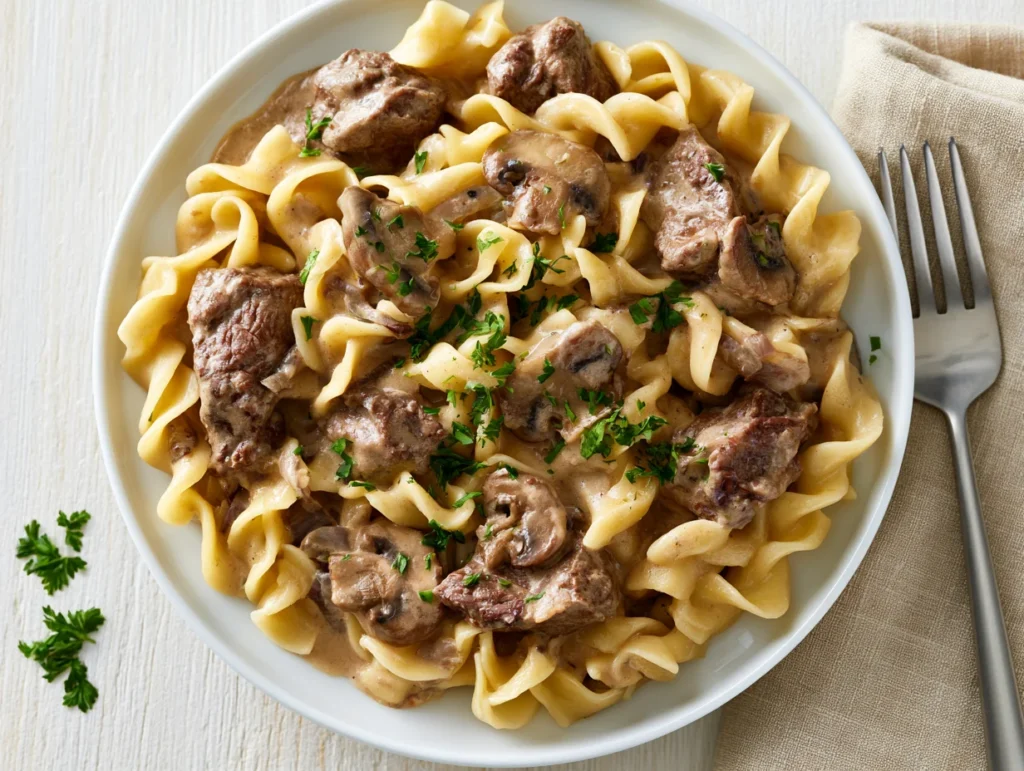
Step 1: Season and Sear the Beef
Pat the beef slices completely dry with paper towels, then toss with flour, salt, and pepper until lightly coated. Heat one tablespoon of butter and the olive oil in a large skillet over high heat. Working in batches to avoid overcrowding, sear the beef for 60 to 90 seconds per side until browned but not fully cooked through. Remove and set aside. Searing in batches keeps the pan hot, which is essential for proper browning and flavor development.
Step 2: Build the Mushroom Base
In the same skillet, melt the remaining butter over medium heat. Add the onions and cook for 4 to 5 minutes until softened and translucent. Add the mushrooms and cook for 6 to 8 minutes, stirring occasionally, until they release their moisture and begin to brown. Add the garlic during the final minute to prevent burning. This stage builds the deep, earthy foundation that defines an authentic stroganoff sauce.
Step 3: Deglaze and Simmer
Pour in the beef broth, scraping the bottom of the pan to release any browned bits, which carry significant flavor. Stir in the Worcestershire sauce and Dijon mustard. Bring the mixture to a gentle simmer and let it reduce for 5 to 7 minutes, until slightly thickened. This step concentrates the sauce and ensures the final dish is rich rather than watery once the sour cream is added.
Step 4: Finish with Sour Cream
Lower the heat to medium-low before adding the sour cream — high heat at this stage can cause it to curdle. Stir the sour cream in gradually, mixing continuously until the sauce becomes smooth and creamy. Return the seared beef to the pan along with any accumulated juices. Simmer gently for 2 to 3 minutes, just until the beef is heated through and fully cooked, without overcooking it further.
Step 5: Combine and Serve
Toss the cooked egg noodles directly into the skillet, or serve the stroganoff over a bed of noodles on each plate. Garnish generously with freshly chopped parsley. Serve immediately while the sauce is at its silkiest. Stroganoff is best enjoyed fresh, as the sauce continues to thicken the longer it sits, so timing your noodles and sauce to finish together makes a noticeable difference in the final result.
Cook Time
Total:
45 minutes
Prep:
15 minutes
Bake:
Not applicable (stovetop recipe, 30 minutes cook time)
Servings
This recipe is built to comfortably serve six people as a satisfying main course, especially when paired with egg noodles or a side of crusty bread. Each portion delivers a generous amount of beef and sauce, balanced so that no single bite feels heavy or one-dimensional.
For smaller households, this dish stores and reheats exceptionally well, making it a practical option for planned leftovers across two or three meals. It also scales easily for larger gatherings without losing its flavor balance.
Makes approximately 6 servings.
Common Mistakes in This Recipe
One of the most common mistakes is overcrowding the pan when searing the beef. When too many slices go in at once, the pan temperature drops and the beef steams instead of sears, resulting in gray, tough meat rather than a flavorful, browned exterior. This single misstep affects the texture of the entire dish.
Another frequent issue is adding sour cream over high heat. Sour cream is delicate, and when introduced too quickly or at too high a temperature, it separates and curdles, leaving the sauce grainy instead of smooth and velvety.
Overcooking the beef during the final simmer is also common. Since the beef is already seared and partially cooked, leaving it in the sauce too long toughens the meat, undoing all the careful work done during the searing stage.
Many cooks also rush the mushroom stage, pulling them off the heat before they have released their moisture and browned properly. Undercooked mushrooms result in a sauce that lacks the deep, savory backbone that defines a truly great stroganoff.
Solutions to Common Mistakes
To avoid overcrowding, sear the beef in two or three smaller batches rather than one large one. It takes slightly more time, but the payoff in texture and flavor is significant. A properly seared exterior locks in juices and adds critical depth to the final sauce.
For the sour cream, always reduce the heat to medium-low before incorporating it, and add it gradually while stirring continuously. Tempering it with a small amount of warm sauce first can also help prevent curdling in more sensitive batches.
To keep the beef tender, treat the final simmer as a brief reheating step rather than a true cooking stage. Two to three minutes is sufficient once the beef has already been seared properly in step one.
For the mushrooms, resist the urge to stir constantly or remove them early. Letting them sit undisturbed for stretches of one to two minutes allows proper browning, which is where much of their flavor actually develops.
Nutritional Information (approx. per serving)
- Calories: 480 kcal
- Total Fat: 24g
- Saturated Fat: 11g
- Cholesterol: 110mg
- Sodium: 620mg
- Total Carbohydrates: 32g
- Dietary Fiber: 2g
- Total Sugars: 4g
- Protein: 32g
- Vitamin A: 8% DV
- Vitamin C: 6% DV
- Calcium: 9% DV
- Iron: 22% DV
Beef is one of the most concentrated natural sources of complete protein and iron, both of which play a central role in muscle maintenance and healthy red blood cell production. A single serving of this dish delivers a substantial portion of daily iron needs.
Mushrooms contribute meaningful amounts of B vitamins, particularly riboflavin and niacin, along with selenium, an antioxidant mineral that supports immune function and helps protect cells from oxidative stress.
The sour cream used in moderation adds calcium and probiotics, contributing to bone health and digestive balance without overwhelming the dish with excess richness when measured properly.
Paired with egg noodles, this meal offers a well-rounded combination of protein, carbohydrates, and micronutrients, making it a genuinely satisfying main course rather than an empty-calorie comfort food.
Storage Instructions
Allow the stroganoff to cool to room temperature before transferring it to an airtight container. Refrigerate promptly, ideally within two hours of cooking, to maintain both food safety and the quality of the sauce. Properly stored, the dish will stay fresh for up to three days in the refrigerator.
When reheating, use low to medium heat on the stovetop rather than a microwave whenever possible. High heat can cause the sour cream-based sauce to separate, resulting in a grainy texture. Adding a small splash of beef broth while reheating helps restore the sauce’s original silky consistency.
Freezing is possible but requires some care, as sour cream-based sauces can change texture once thawed. If you plan to freeze leftovers, do so without the noodles, storing only the beef and sauce separately for up to two months.
Thaw frozen stroganoff overnight in the refrigerator before reheating gently on the stove. Cook fresh noodles separately at the time of serving for the best texture and overall presentation.
Suggestions
Beef stroganoff pairs naturally with a variety of sides beyond the traditional egg noodles. Buttered mashed potatoes, steamed white rice, or even a simple slice of crusty bread all work beautifully to soak up the rich, savory sauce.
For a lighter approach, consider serving the stroganoff over spiralized zucchini or cauliflower rice. The sauce itself is hearty enough to carry a lighter base without losing any of its comforting character or depth of flavor.
A simple side salad with a sharp vinaigrette provides welcome contrast to the richness of the dish. The acidity cuts through the cream and butter, balancing the meal and keeping each bite feeling fresh rather than heavy.
For an elevated presentation, plate individual portions with a small swirl of extra sour cream on top, a few fresh thyme leaves, and a light dusting of smoked paprika. These small finishing touches make the dish feel restaurant-quality with minimal additional effort.
Seasonal Relevance
Beef stroganoff is fundamentally a cold-weather dish, built for the months when warmth and richness feel not just appealing but necessary. It belongs naturally to fall and winter menus, when heartier proteins and creamy sauces fit the mood of shorter days and colder evenings.
From October through February, this recipe fits seamlessly into weeknight dinners, family gatherings, and even more formal winter entertaining. Its origins as a dish meant to comfort and sustain through harsh seasons remain very much intact in how satisfying it feels today.
That said, stroganoff does not need to disappear once spring arrives. Lightened slightly with fresh herbs or served over a brighter side like asparagus or peas, it can transition reasonably well into milder months without losing its core identity.
Cooking seasonally with a dish like this is less about strict rules and more about matching food to mood. There is something deeply satisfying about a steaming plate of stroganoff on a cold evening that no amount of seasonal flexibility can fully replace.
Final Words
Classic beef stroganoff endures because it delivers on every front that matters in a home-cooked meal — flavor, comfort, and a sense of occasion, all without demanding excessive time or obscure ingredients. It is proof that some of the best dishes are the ones built on solid technique rather than novelty.
If this is your first time making stroganoff, focus closely on the searing and the sour cream stages. These two moments determine the texture of the final dish more than any other step in the process.
If you have made stroganoff many times before, consider this recipe an invitation to refine your approach. Small adjustments, like tempering the sour cream or letting the mushrooms brown fully, can meaningfully elevate a dish you may already know well.
However you arrive at this recipe, I hope it becomes a reliable part of your cooking rotation. A great stroganoff is the kind of meal people remember, request, and look forward to long after the plates have been cleared.
Frequently Asked Questions
What cut of beef works best for stroganoff?
Sirloin and tenderloin are ideal because they are tender enough to sear quickly without becoming chewy. Ribeye also works well for added richness. Avoid leaner cuts like round steak unless sliced very thinly, as they tend to toughen quickly during cooking.
Can I make beef stroganoff without sour cream?
Yes, though the flavor profile will shift. Crème fraîche is a reliable substitute with a similar tang and less risk of curdling. Greek yogurt can also work in a pinch, though it should be added off heat to avoid separation issues.
Is beef stroganoff traditionally served with noodles or rice?
Egg noodles are the most traditional pairing in Western versions of this dish, while rice is common in Eastern European and Russian variations. Both options work well; the choice largely comes down to personal preference and what best complements the richness of the sauce.
