There are chicken recipes, and then there are chicken recipes that stop you mid-bite and make you close your eyes for a second. Bold Jerk Chicken is the latter. Born in the Blue Mountains of Jamaica, jerk cooking is not just a technique — it is a tradition steeped in centuries of flavor, fire, and culture.
What makes this recipe stand apart is the marinade. A deeply layered blend of scotch bonnet peppers, allspice, thyme, and a handful of aromatics that penetrate the meat overnight and transform it into something you simply cannot recreate with store-bought seasoning.
Whether you are grilling over charcoal in the backyard or using a cast iron grill pan in your kitchen, this recipe adapts without ever compromising on taste. The char on the outside, the juiciness locked inside — that contrast is everything.
This is the kind of dish that earns its place on the table. It is bold, it is unapologetic, and once you make it yourself, you will understand why jerk chicken has a cult following around the world.
Ingredients You’ll Need
There is something deeply satisfying about building this much heat, depth, and aroma from a short list of real ingredients — no shortcuts, no fillers, just honest flavor from things that have been earning their place in jerk cooking for generations.
One of the things I love about this recipe is that it uses simple pantry ingredients. You probably already have most of them in your kitchen.
Base Ingredients:
- 2.5 lbs bone-in chicken pieces (thighs and drumsticks preferred)
- 4 whole scotch bonnet peppers (or habaneros for milder heat)
- 6 cloves garlic
- 1 bunch green onions (scallions), roughly chopped
- 2 tbsp fresh thyme leaves
- 2 tbsp ground allspice
- 1 tbsp smoked paprika
- 1 tbsp black pepper, freshly ground
- 1 tsp ground cinnamon
- 1 tsp ground nutmeg
- 3 tbsp soy sauce
- 2 tbsp brown sugar
- 3 tbsp olive oil
- 2 tbsp apple cider vinegar
- 1 tbsp fresh lime juice
- 1 tsp salt
Optional Add-ins:
- 1 tsp ground ginger (for extra warmth)
- 1 tbsp dark rum (deepens the marinade beautifully)
- 1 tbsp honey (balances heat with sweetness)
- 1 tsp dried oregano (adds an earthy undertone)
- 1 whole jalapeño (mild heat addition for scotch bonnet substitution)
Step-by-Step Instructions
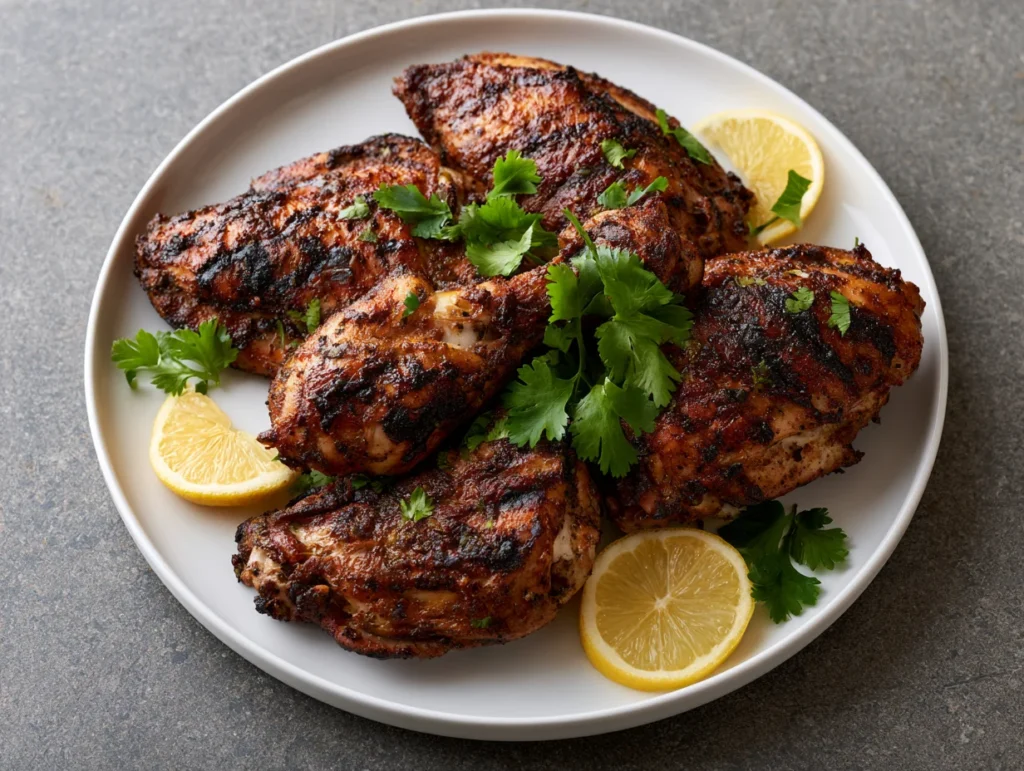
Step 1: Build the Jerk Marinade
Add the scotch bonnet peppers, garlic, scallions, thyme, allspice, smoked paprika, black pepper, cinnamon, nutmeg, soy sauce, brown sugar, olive oil, apple cider vinegar, lime juice, and salt into a blender or food processor. Blend until a smooth, thick paste forms. Taste it — it should hit you with heat first, then a wave of warmth and spice. If you are adding any optional ingredients like dark rum or honey, this is the moment. Adjust salt if needed. Set aside.
Step 2: Score and Marinate the Chicken
Using a sharp knife, score each piece of chicken 2 to 3 times down to the bone. This is not optional — scoring is what allows the marinade to penetrate deep into the meat rather than sitting on the surface. Place the chicken in a large zip-lock bag or a glass dish. Pour the marinade over the chicken and use your hands (wear gloves — scotch bonnets are serious) to rub it thoroughly into every cut and crevice. Seal and refrigerate for a minimum of 8 hours, ideally overnight for maximum flavor development.
Step 3: Bring Chicken to Room Temperature
About 30 to 45 minutes before cooking, take the chicken out of the refrigerator and let it sit at room temperature. This step is often skipped but it matters. Cold chicken placed directly onto a hot grill cooks unevenly — the outside chars before the inside reaches a safe temperature. Allowing the meat to come up in temperature slightly ensures more even cooking throughout and helps the exterior develop that signature jerk crust without burning prematurely. Do not rinse off the marinade; every bit of it is flavor.
Step 4: Grill the Chicken Low and Slow
Preheat your grill to medium heat — around 350°F. Place the chicken pieces skin-side down and cook for 8 to 10 minutes without moving them. Flip and cook for another 8 minutes. Then reduce the heat slightly and continue cooking, turning occasionally, until the internal temperature reaches 165°F. The goal is a deep mahogany crust with light char marks — not blackened or burnt. If using a charcoal grill, set up a two-zone fire: sear directly over the coals, then finish on the cooler side. Total grill time is typically 30 to 35 minutes depending on piece size.
Step 5: Rest, Garnish, and Serve
Once the chicken is off the grill, resist the urge to cut into it immediately. Let it rest on a cutting board for 5 to 7 minutes, loosely tented with foil. This resting period allows the juices to redistribute throughout the meat rather than running out the moment you slice it. Garnish with fresh lime wedges, sliced scallions, and a few sprigs of thyme. Serve alongside festival (Jamaican fried dumplings), rice and peas, grilled corn, or a simple mango slaw. The brightness of these sides balances the heat of the chicken perfectly.
Cook Time
Total:
Approximately 9 hours (including marination)
Prep:
20 minutes active prep + 8 hours marination
Bake:
30 to 35 minutes on the grill
Servings
This recipe is designed to feed a gathering. Made with 2.5 pounds of bone-in chicken, it comfortably serves four adults as a main course alongside sides. If you are hosting a larger group or want leftovers — and trust me, jerk chicken reheats beautifully — simply double the marinade and scale up the chicken accordingly.
The marinade quantity in this recipe is generous by design. It coats every piece thoroughly, fills every scored cut, and still leaves enough behind to use as a basting sauce during grilling. That basting layer is what builds the sticky, caramelized exterior that makes this chicken visually as stunning as it tastes.
Makes approximately 4 generous servings.
Common Mistakes in This Recipe
The most frequent mistake is not marinating long enough. A one-hour marinade will give you seasoned chicken. An overnight marinade gives you jerk chicken — there is a real difference. The allspice, scotch bonnet, and aromatics need time to work their way past the surface and into the muscle fibers. Rushing this step is the single biggest reason home versions of this dish fall flat.
Another common error is cooking on heat that is too high. People see the dark marinade and assume the chicken is done when it is only charred on the outside. Medium heat and patience are essential. The interior must reach 165°F safely while the exterior develops color gradually — not in a flash of flames.
Skipping the scoring step also undermines the entire recipe. Without those cuts in the meat, the marinade sits on the skin and never penetrates. You end up with a well-colored exterior and bland meat underneath.
Finally, many people use ground scotch bonnet powder from a jar instead of fresh peppers. While convenient, it does not replicate the fruity, floral heat of fresh scotch bonnets. That unique flavor profile is what separates authentic jerk from a spicy chicken imitation.
Solutions to Common Mistakes
Plan your marination time in advance. The moment you decide to make this dish, prepare the marinade and coat the chicken. Leave it in the fridge overnight and your active cooking time the next day is under an hour. Treat the marination as part of the cooking process, not a waiting period.
Use a two-zone grill setup to manage heat intelligently. Start skin-side down over direct medium heat to build color, then move to the indirect zone to cook through gently. This gives you control over both caramelization and doneness without the risk of burning.
Always score the chicken before marinating. Make cuts at least half an inch deep and space them about an inch apart. For bone-in thighs and drumsticks, cut down toward but not through the bone. This surface area is where flavor lives.
Use fresh scotch bonnet peppers whenever possible. If they are unavailable, habaneros are the closest substitute — similar heat level and a comparable fruity note. Avoid relying on dried chili flakes or generic hot sauce as substitutes; they change the flavor profile entirely.
Nutritional Information (approx. per serving)
- Calories: 410 kcal
- Protein: 38g
- Total Fat: 22g
- Saturated Fat: 5g
- Carbohydrates: 10g
- Sugar: 6g
- Fiber: 1.5g
- Sodium: 680mg
- Vitamin C: 18% DV
- Iron: 14% DV
- Potassium: 520mg
Jerk chicken is a legitimately nutritious meal. The protein content per serving is substantial, making it a strong option for anyone focused on muscle maintenance or recovery from training. Paired with a legume-based side like rice and peas, it becomes a complete amino acid profile in a single plate.
The scotch bonnet peppers in this recipe contain capsaicin, a compound with well-documented anti-inflammatory properties. Regular consumption of capsaicin has been linked to improved circulation and a natural boost to metabolic rate — a pleasant side effect of eating something delicious.
Thyme and allspice, two backbone ingredients in jerk cooking, are both rich in antioxidants. Thyme in particular has been studied for its antimicrobial properties, while allspice contains eugenol, a natural compound associated with pain relief and digestive support.
The marinade uses olive oil rather than butter or heavy cream, keeping the saturated fat reasonable. Bone-in, skin-on chicken retains more moisture during grilling, meaning you are getting a juicy result without needing to add excess fat to compensate for dryness.
Storage Instructions
Cooked jerk chicken stores exceptionally well and arguably tastes better the next day as the residual spices continue to meld with the meat. Once cooled to room temperature, store leftovers in an airtight container in the refrigerator. It will keep well for up to four days without any noticeable loss in quality.
For longer storage, jerk chicken freezes beautifully. Wrap individual pieces in parchment paper before placing them in a freezer-safe bag to prevent freezer burn and sticking. Properly stored, it will hold quality in the freezer for up to three months.
To reheat from the refrigerator, the oven is your best option. Place the chicken in a baking dish with a small splash of water or chicken stock, cover tightly with foil, and heat at 325°F for 15 to 20 minutes. This method keeps the meat moist rather than drying it out the way a microwave does.
Never re-marinate or re-grill leftover chicken thinking it will boost flavor — it tends to dry out the meat and can cause the exterior to become overly bitter. Gentle reheating preserves the texture and lets the existing seasoning do its work.
Suggestions
Jerk chicken is endlessly versatile once you have it cooked. Leftover pieces pulled from the bone make an outstanding filling for tacos — top with a pineapple salsa and a drizzle of crema and you have a completely different meal with zero extra cooking required.
For a sit-down dinner, serve the chicken whole on a large platter lined with fresh banana leaves if you can find them. Add a pot of coconut rice, a side of fried plantains, and a cold bottle of ginger beer. That combination covers every flavor dimension — heat, fat, sweetness, and refreshment.
If you want to bring down the heat for guests who are sensitive to spice, remove the seeds from the scotch bonnets before blending. The flavor remains fully intact; most of the capsaicin lives in the seeds and white membrane. You can even split the batch — full heat for some, deseeded for others.
Leftover marinade (that has not touched raw chicken) can be used as a dipping sauce or drizzled over roasted vegetables. It works particularly well over grilled corn on the cob, sweet potato wedges, or even as a bold salad dressing thinned with extra lime juice and olive oil.
Seasonal Relevance
Bold Jerk Chicken is most naturally associated with summer — it is a grill recipe at its core, and there is nothing better than the smell of scotch bonnet marinade caramelizing over charcoal on a warm evening. Backyard gatherings, beach cookouts, and holiday weekends are all perfect occasions for this dish.
That said, jerk chicken holds up equally well in autumn and winter when made on a cast iron grill pan or finished in the oven after a quick sear. The warming spices — allspice, cinnamon, nutmeg — are deeply comforting in cold weather and pair naturally with seasonal sides like roasted butternut squash or spiced lentils.
In spring, when fresh herbs are at their peak, this is also an excellent time to experiment with the marinade. Fresh thyme from the garden rather than dried, scallions pulled straight from the earth, and peak-season limes will elevate the flavor profile noticeably compared to off-season alternatives.
The versatility of this recipe across all four seasons is part of what makes it a permanent fixture in any serious home cook’s repertoire. A recipe worth knowing should not be seasonal — it should be adaptable. This one is.
Final Words
Jerk chicken is one of those recipes where the process teaches you something every time you make it. The first time, you learn patience — that the overnight marinade is non-negotiable. The second time, you learn heat management. By the third, you start making it yours — adjusting the scotch bonnet count, adding a splash of rum, playing with the brown sugar ratio.
That evolution is the mark of a recipe worth keeping. It is not a dish you make once for novelty. It is a dish that becomes a signature — the thing people specifically ask you to bring to the cookout, the meal that earns you unsolicited compliments.
There is also something meaningful about the history behind jerk cooking. It traces back to the Maroons of Jamaica, Indigenous Taíno people and enslaved Africans who developed this preservation and cooking technique in the mountains. Cooking this dish with care and intention is a small act of honoring that history.
So take your time with it. Source good peppers, marinate overnight, and respect the grill. The result will be the kind of chicken that earns a permanent spot in your cooking rotation — bold, layered, and completely unforgettable.
Frequently Asked Questions
Can I make Bold Jerk Chicken in the oven if I do not have a grill?
Absolutely. Preheat your oven to 400°F and place the marinated chicken on a wire rack over a lined baking sheet. Roast for 35 to 40 minutes, flipping once halfway through. Finish under the broiler for 3 to 4 minutes to develop the char. The result is not identical to grilled jerk chicken, but it is excellent and perfectly achievable indoors any time of year.
How do I control the heat level without losing the authentic jerk flavor?
The heat in this recipe comes from scotch bonnet peppers. To reduce it without altering the flavor base, simply remove the seeds and white membrane before blending — this cuts the heat by roughly 60 to 70 percent. For a milder version entirely, substitute habaneros with a mix of red bell pepper and a single jalapeño. The aromatic profile stays intact while the fire becomes more approachable.
Can the jerk marinade be made ahead and stored separately?
Yes, and it is actually a great idea. The marinade can be prepared up to five days in advance and stored in a sealed glass jar in the refrigerator. The flavors deepen over time, which means a marinade made on Monday and used on Friday will be even more complex than one made the same day. It can also be frozen in an ice cube tray and portioned out as needed for future batches.
