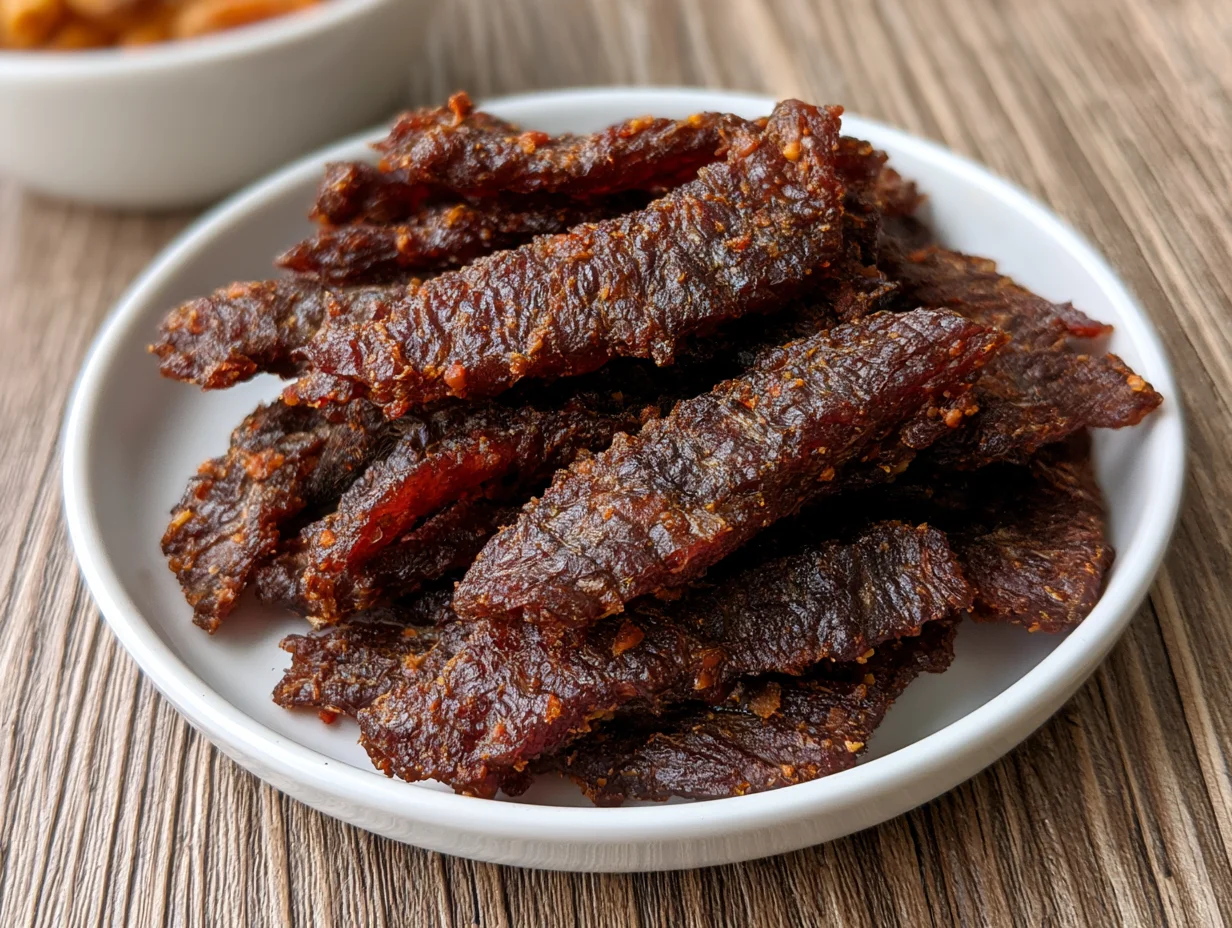
Homemade Beef Jerky Recipe
There’s a reason beef jerky disappears from pantry shelves faster than almost any other snack: it’s bold, chewy, and satisfying in a way that ultra-processed chips simply can’t match. Yet most jerky sold in stores is loaded with preservatives, hidden sugars, and a price tag that makes a single pound of beef feel like a luxury purchase.
Making beef jerky at home flips that equation entirely. With a handful of pantry staples, a lean cut of beef, and a little patience, you can produce jerky that’s leaner, more flavorful, and far more affordable than anything shrink-wrapped at a gas station counter.
This recipe walks through every detail that actually matters: the right cut of meat, a marinade that penetrates rather than just coats, and a drying method that delivers the perfect snap-then-chew texture jerky lovers chase.
Whether you’re stocking up for road trips, hiking weekends, or simply craving a protein-dense snack that doesn’t come from a vending machine, this is the jerky recipe worth bookmarking and making on repeat.
Ingredients You’ll Need
Great jerky isn’t decided in the dehydrator — it’s decided in the marinade bowl, hours before the meat ever sees heat or airflow. One of the things I love about this recipe is that it uses simple pantry ingredients. You probably already have most of them in your kitchen.
Base Ingredients
- 2 pounds beef eye of round, trimmed and thinly sliced
- 1/2 cup soy sauce
- 1/4 cup Worcestershire sauce
- 2 tablespoons brown sugar
- 1 tablespoon black pepper, freshly ground
- 1 tablespoon smoked paprika
- 2 teaspoons garlic powder
- 1 teaspoon onion powder
- 1 teaspoon liquid smoke
- 1/2 teaspoon red pepper flakes
Optional Add-ins
- 1 tablespoon honey
- 1 teaspoon sriracha
- 1 teaspoon ground ginger
- 1 tablespoon apple cider vinegar
- 1/2 teaspoon five-spice powder
- 1 tablespoon toasted sesame oil
Step-by-Step Instructions
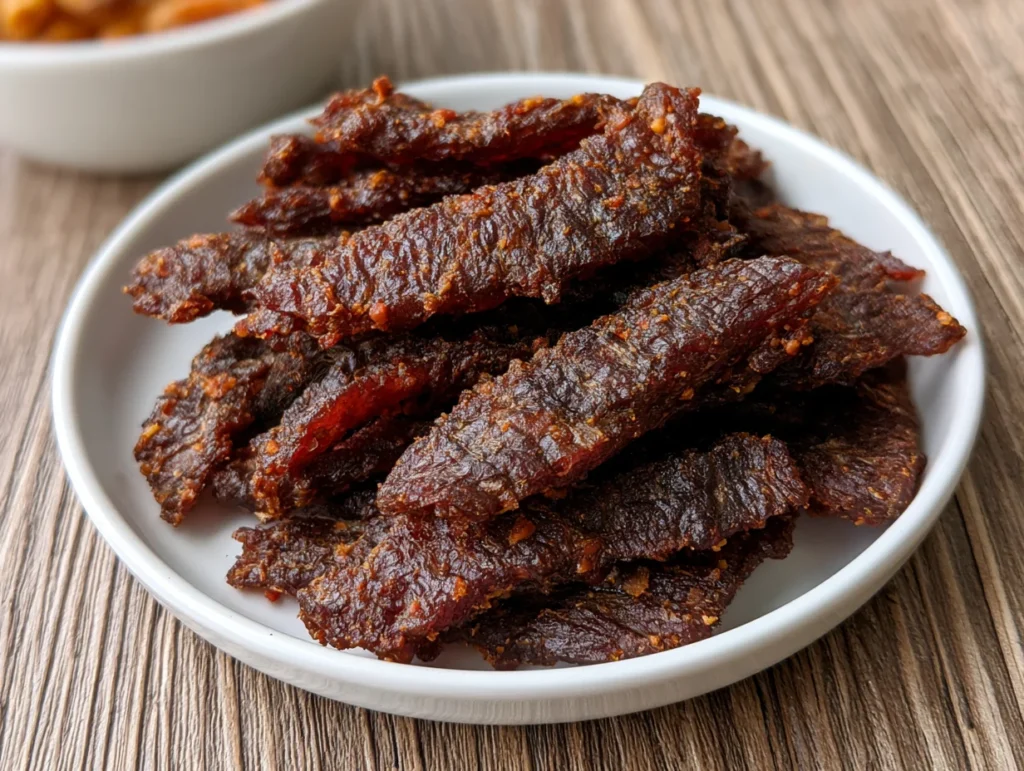
Choose and Trim the Beef
Start with a lean, affordable cut like eye of round, top round, or flank steak. Fat doesn’t dry properly and turns rancid faster, so trim every visible streak of white fat before slicing. A cleanly trimmed cut not only dries more evenly but also extends shelf life significantly. If possible, partially freeze the beef for about an hour before trimming — firmer meat is far easier to handle and trim with precision, which makes the next slicing step considerably faster and safer.
Slice the Meat
Slice the beef against the grain into strips roughly 1/8 to 1/4 inch thick. Against-the-grain slicing shortens the muscle fibers, giving you jerky that’s easier to chew rather than stringy or tough. For a chewier, more traditional texture, slice with the grain instead. Keep strip thickness consistent throughout the batch so every piece dries at the same rate. Uneven slices mean some pieces finish too soon while others remain dangerously underdone in the center.
Make the Marinade
Whisk together the soy sauce, Worcestershire sauce, brown sugar, pepper, smoked paprika, garlic powder, onion powder, liquid smoke, and red pepper flakes in a large bowl. Taste and adjust the balance of salt, sweetness, and heat before adding the beef — this is your only chance to fine-tune the flavor. If using optional add-ins like honey or sriracha, stir them in now. The marinade should taste slightly stronger than you’d want the final jerky, since drying concentrates every flavor significantly.
Marinate the Beef
Add the sliced beef to the marinade, tossing thoroughly so every strip is fully coated. Transfer everything to a resealable bag, press out excess air, and refrigerate for at least 8 hours, ideally overnight. Longer marinating allows the salt and seasonings to penetrate deeper into the muscle fibers rather than sitting only on the surface. Massage the bag occasionally to redistribute the marinade evenly, ensuring no strip is left under-seasoned by the time you’re ready to dry it.
Arrange for Drying
Remove the beef from the marinade and pat each strip dry with paper towels — excess moisture slows drying and can lead to uneven texture. Arrange strips in a single layer on dehydrator trays or wire racks set over baking sheets, leaving space between pieces for airflow. Strips should not touch or overlap, since contact points trap moisture and dry inconsistently. Proper spacing is the single easiest way to guarantee uniform, properly textured jerky across the entire batch.
Dehydrate or Oven-Dry the Jerky
Dehydrate at 160°F for 4 to 6 hours, or use an oven set to its lowest temperature with the door slightly propped open for airflow. Rotate trays halfway through if your dehydrator dries unevenly. The jerky is ready when it bends and cracks slightly without snapping cleanly in half, and shows no visible moisture when pressed. Avoid rushing this stage with higher heat — low, slow drying preserves flavor and prevents the exterior from hardening before the inside is fully dried.
Test for Doneness
Pull a few strips from different trays to test, since drying speed can vary by position. Bend each piece firmly; properly dried jerky cracks at the bend but doesn’t snap apart completely or shred into fibers. If it feels rubbery or bends without any resistance, it needs more time. If it shatters, it’s overdried. This quick visual and tactile check is more reliable than relying on time alone, since oven and dehydrator performance varies between models and altitudes.
Cool and Store
Let the jerky cool completely to room temperature on the racks before storing — packing it warm traps steam and invites spoilage. Once cooled, transfer strips to an airtight container or vacuum-sealed bag. Properly dried jerky should feel dry to the touch with no greasy residue. This final cooling step is easy to skip when you’re eager to taste your work, but it directly determines how long your jerky stays fresh and safe in storage.
Cook Time
Total
Approximately 12 to 14 hours, including marinating time
Prep
20 minutes, plus 8 hours minimum for marinating
Bake
4 to 6 hours in a dehydrator or low-temperature oven
Servings
This recipe makes approximately 8 servings, with each serving consisting of around 2 ounces of finished jerky. Yield will vary slightly depending on how thinly the beef is sliced and how long it dries, since moisture loss directly affects final weight.
From a starting weight of 2 pounds of raw beef, expect to end up with roughly 12 to 14 ounces of finished jerky once the drying process is complete, as beef loses a significant portion of its weight in water.
This amount is ideal for portioning into individual snack bags for the week, packing for a multi-day hiking trip, or sharing generously at a gathering without running short halfway through.
Common Mistakes in This Recipe
The most common mistake is slicing the beef unevenly, which causes some strips to dry far faster than others and creates a batch with inconsistent texture and food safety risk. Skipping the fat-trimming step is a close second, since residual fat shortens shelf life and turns rancid even in properly dried jerky.
Many home cooks also rush the marinating time, assuming a quick one-hour soak is enough. Shallow marination leaves the center of each strip under-seasoned and noticeably blander than the exterior.
Overcrowding the drying trays is another frequent issue, with strips touching or overlapping and trapping moisture between them. This leads to soft, unevenly dried patches that spoil faster than the rest of the batch.
Finally, relying solely on a timer rather than checking texture often results in jerky that’s either dangerously underdone or brittle and overdried.
Solutions to Common Mistakes
Always slice against a ruler or guide to keep strips within 1/8 to 1/4 inch thick, and group similarly sized pieces on the same tray so they finish drying together rather than at staggered times.
Trim fat meticulously before marinating, running a sharp knife along every visible streak. A few extra minutes here meaningfully extends how long the finished jerky stays safe and flavorful.
Commit to a minimum of 8 hours of marinating, and ideally let the beef rest overnight in the refrigerator so the seasoning fully penetrates each strip rather than sitting only on the surface.
Leave visible gaps between strips on every tray, and always finish with a bend test rather than trusting the clock alone, since drying time varies by equipment and humidity.
Nutritional Information (approx. per serving)
- Calories: 115 kcal
- Protein: 18 g
- Total Fat: 3 g
- Saturated Fat: 1 g
- Carbohydrates: 4 g
- Sugars: 3 g
- Sodium: 590 mg
- Iron: 2 mg
Beef jerky made at home is remarkably protein-dense for its size, making it an effective snack for muscle recovery, sustained energy, and appetite control between meals. A single serving delivers a substantial protein hit without the heavy calorie load of many packaged snacks.
Because you control the marinade, sodium and sugar levels stay considerably lower than most commercial brands, which often double or triple the sugar content to mask cheaper cuts of meat.
The iron and zinc naturally present in lean beef support oxygen transport and immune function, making this snack genuinely useful rather than just indulgent.
Portability without refrigeration also makes it a practical choice for active lifestyles, travel days, and anyone managing a high-protein, lower-carbohydrate eating pattern.
Storage Instructions
Properly dried jerky stored in an airtight container at room temperature will stay fresh for 1 to 2 weeks, ideally kept in a cool, dark pantry away from direct sunlight and heat sources that can accelerate spoilage.
For extended freshness, refrigerate the jerky in a sealed bag or container, which comfortably extends shelf life to 1 to 2 months without any noticeable decline in texture or flavor.
Freezing is the best option for long-term storage, preserving jerky for up to 6 months when sealed in a vacuum bag or heavy-duty freezer bag with as much air removed as possible.
Always check for any off smell, visible moisture, or mold before eating stored jerky, and label containers with the drying date so you can track freshness accurately over time, especially if making multiple batches.
Suggestions
Pair this jerky with a sharp cheese and a handful of nuts for a satisfying, protein-forward snack board that works well for road trips or casual entertaining without much preparation.
Experiment with regional flavor profiles by swapping the base marinade for a Korean-style gochujang blend, a Mexican-inspired chili-lime mix, or a peppered Montreal-style rub for variety across batches.
Crumble leftover jerky into trail mix, salads, or even scrambled eggs for an unexpected savory protein boost that adds texture and depth to otherwise simple dishes.
If serving for guests, slice strips into bite-sized pieces and arrange them on a wooden board alongside pickles and mustard for an elevated, conversation-starting appetizer.
Seasonal Relevance
Beef jerky earns its place in nearly every season, but it shines brightest during summer road trips and camping season, when shelf-stable, high-protein snacks are genuinely hard to beat for convenience.
Come fall, jerky becomes a natural companion to hunting season and outdoor gatherings, often made in larger batches to share or gift during cooler weather.
Winter holidays bring another wave of relevance, with homemade jerky frequently appearing in gift baskets and care packages thanks to its long shelf life and crowd-pleasing appeal.
Even in spring, jerky remains a practical pick for hiking trails and outdoor activities, proving this isn’t a one-season recipe but a year-round pantry staple worth keeping in regular rotation.
Final Words
Homemade beef jerky rewards patience more than skill, and once you’ve made a batch from scratch, store-bought versions tend to feel flat and overly sweet by comparison. The process is simple, but every small detail genuinely matters.
This recipe is built to be a foundation rather than a fixed formula. Once you’re comfortable with the basic technique, adjusting spice levels, sweetness, and smokiness becomes an easy way to make it your own.
Beyond flavor, there’s real satisfaction in knowing exactly what went into your snack, free of unnecessary preservatives or inflated pricing found on store shelves.
Keep this recipe in your regular rotation, and don’t be surprised if homemade jerky becomes the snack people specifically request when they know you’re cooking.
Frequently Asked Questions
Can I make beef jerky without a dehydrator?
Yes, a conventional oven works well. Set it to its lowest temperature, typically around 170°F, and prop the door open slightly with a wooden spoon to allow moisture to escape. This mimics dehydrator airflow and produces comparable results, though drying times may vary slightly depending on your oven’s calibration.
Is it safe to use ground beef instead of sliced strips?
Yes, with proper precautions. Ground beef jerky requires reaching an internal temperature of 160°F before drying to eliminate bacteria, since ground meat has more surface area exposed during processing. Use a jerky gun or rolling pin to form uniform, thin sheets for even drying.
Why does my jerky sometimes taste too salty?
This usually happens when marinating time exceeds 24 hours, allowing excess salt to fully penetrate the meat before drying concentrates it further. Stick to the recommended 8 to 12-hour window, and consider reducing soy sauce slightly if you prefer a milder, less intense saltiness in the finished jerky.
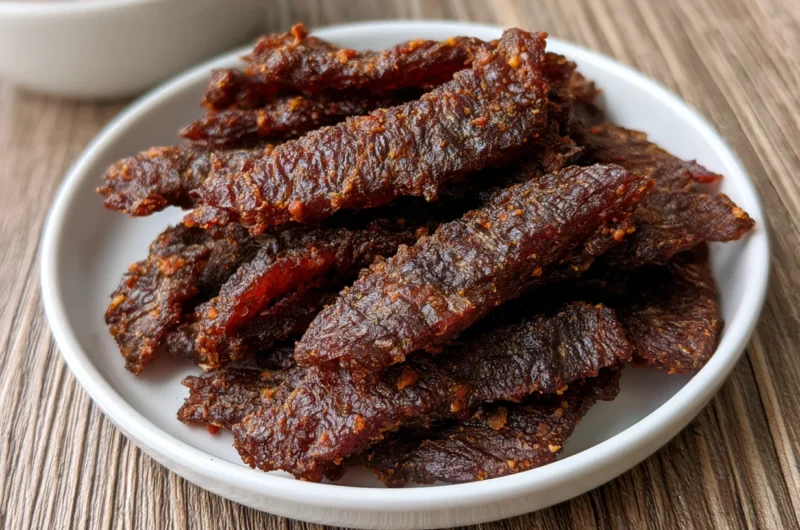
Homemade Beef Jerky Recipe
8
servings20
minutes6
hours115
kcal6
hours20
minutesBold, smoky, and protein-packed, this homemade beef jerky beats anything store-bought. A simple soy-based marinade and low, slow drying deliver perfectly chewy, flavorful strips using basic pantry ingredients you already have.
Ingredients
Base Ingredients
2 pounds beef eye of round, trimmed and thinly sliced
1/2 cup soy sauce
1/4 cup Worcestershire sauce
2 tablespoons brown sugar
1 tablespoon black pepper, freshly ground
1 tablespoon smoked paprika
2 teaspoons garlic powder
1 teaspoon onion powder
1 teaspoon liquid smoke
1/2 teaspoon red pepper flakes
Optional Add-ins
1 tablespoon honey
1 teaspoon sriracha
1 teaspoon ground ginger
1 tablespoon apple cider vinegar
1/2 teaspoon five-spice powder
1 tablespoon toasted sesame oil
Directions
- Trim all visible fat from the beef; partially freeze for easier slicing.
- Slice beef against the grain into 1/8 to 1/4-inch thick strips.
- Whisk together soy sauce, Worcestershire, brown sugar, and all spices to make the marinade.
- Add beef to marinade, coat thoroughly, and refrigerate 8 hours or overnight.
- Pat strips dry and arrange in a single layer with space between pieces.
- Dehydrate at 160°F (or oven on lowest setting, door slightly open) for 4–6 hours.
- Test doneness: jerky should bend and crack, not snap or feel rubbery.
- Cool completely before transferring to an airtight container.
Recipe Video
Notes
- Slice with the grain instead for a chewier texture.
- Marinate no longer than 24 hours to avoid overly salty jerky.
- Rotate dehydrator trays halfway through for even drying.
- Store at room temperature up to 2 weeks, refrigerate up to 2 months, or freeze up to 6 months.