Apple crumble, in its most refined form, is not just a dessert but a quiet expression of warmth, memory, and craft. In this version,Apple Crumble with Golden Crispy Topping,I focus on balance rather than excess. The softened baked apples carry natural tartness, gently lifted with spice, while the crumble forms a golden, textured crust that feels both rustic and precise.
As an author of culinary experiences, I see this dish as a bridge between simplicity and technique. It does not demand complexity, but it rewards attention. Each layer matters: the cut of the apple, the grain of the flour, the temperature of the butter.
When baked correctly, it becomes more than food,it becomes a moment. Served warm, it holds a quiet elegance that feels familiar, yet always special.
? If you enjoy warm baked desserts, you’ll also love our Best Apple Cake Ever – Soft, Moist Cake Packed Apples
Common Mistake in Apple Crumble Preparation
One mistake I repeatedly observe in home kitchens is the lack of restraint in handling both fruit and crumble mixture. Many assume that more sugar or finer apple cuts will improve the dessert, yet the opposite often happens.
Over-sweetening masks the natural acidity of apples, removing depth from the final flavor. Cutting apples too thin causes them to collapse completely during baking, resulting in a texture closer to puree than structured filling. On the crumble side, excessive mixing turns what should be a delicate, sandy texture into a dense dough-like layer.
Another overlooked issue is impatience,baking at high heat to “speed things up” often burns the topping while leaving the apples unevenly cooked. The result is a dish that looks correct but lacks the intended contrast between soft fruit and crisp topping, which is the essence of a well-executed crumble.
Solution to the Common Mistake in Apple Crumble Preparation
The solution begins with respect for ingredients rather than control over them. Apples should be cut thick enough to retain identity after baking, allowing them to soften without disintegrating. I prefer to treat them lightly,just enough sugar to enhance, not overwhelm, and a touch of acidity to preserve brightness.
The crumble must remain loose and irregular; cold butter is essential here, worked gently into flour until it resembles uneven soil rather than dough. This irregularity is what creates crispness later. Temperature discipline is equally important: a moderate oven allows gradual transformation instead of sudden collapse.
Most importantly, the dish should be left undisturbed after baking, allowing internal heat to settle the structure. When these principles are followed, the crumble becomes layered in both texture and intention, offering clarity of flavor instead of confusion on the palate.
Ingredients List
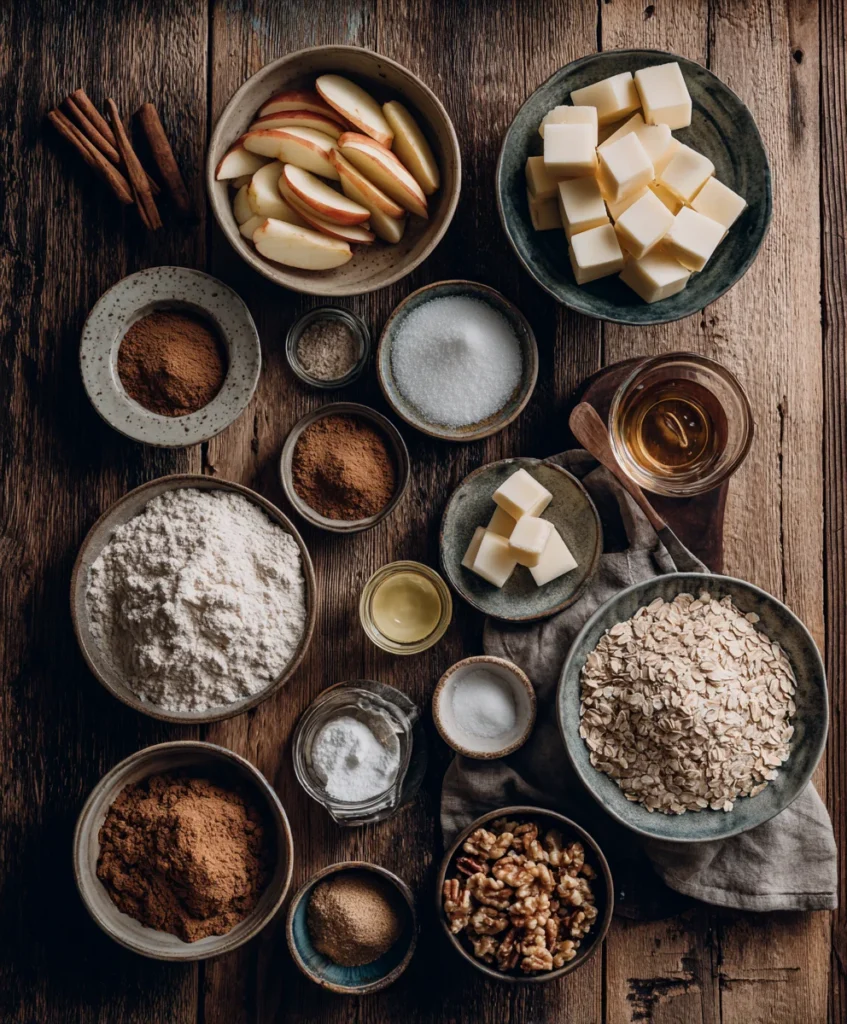
Base Ingredients:
- Fresh firm apples
- All-purpose flour
- Cold unsalted butter
- Brown sugar
- White sugar
- Ground cinnamon
- Nutmeg
- Lemon juice
- Cornstarch
- Salt
Optional Add-ins:
- Rolled oats
- Chopped nuts (walnuts or almonds)
- Vanilla extract
- Caramel drizzle
- Raisins
Step-by-Step Instructions
Preparing the Apple Base
In my approach, the apple base is never rushed, because it defines the entire character of the dessert. I begin by selecting firm, slightly tart apples and preparing them with deliberate uniformity,peeled, cored, and sliced into balanced wedges rather than thin shavings.
These slices are then gently coated with sugar, cinnamon, nutmeg, lemon juice, and a small amount of cornstarch. The goal here is not to drown the fruit but to lightly season it, allowing its natural character to remain visible. I let the mixture rest briefly so the apples begin to release their juices naturally.
This resting phase is often ignored, yet it is essential,it creates a controlled syrup that forms during baking. Once ready, the mixture is arranged evenly in a baking dish, ensuring consistency in thickness so that every spoonful later reflects the same harmony of texture and warmth.
? For another cozy fruit-based dessert, try our Best Strawberry Rhubarb Pie with a perfect sweet-tart balance.
Crafting the Crumble Topping
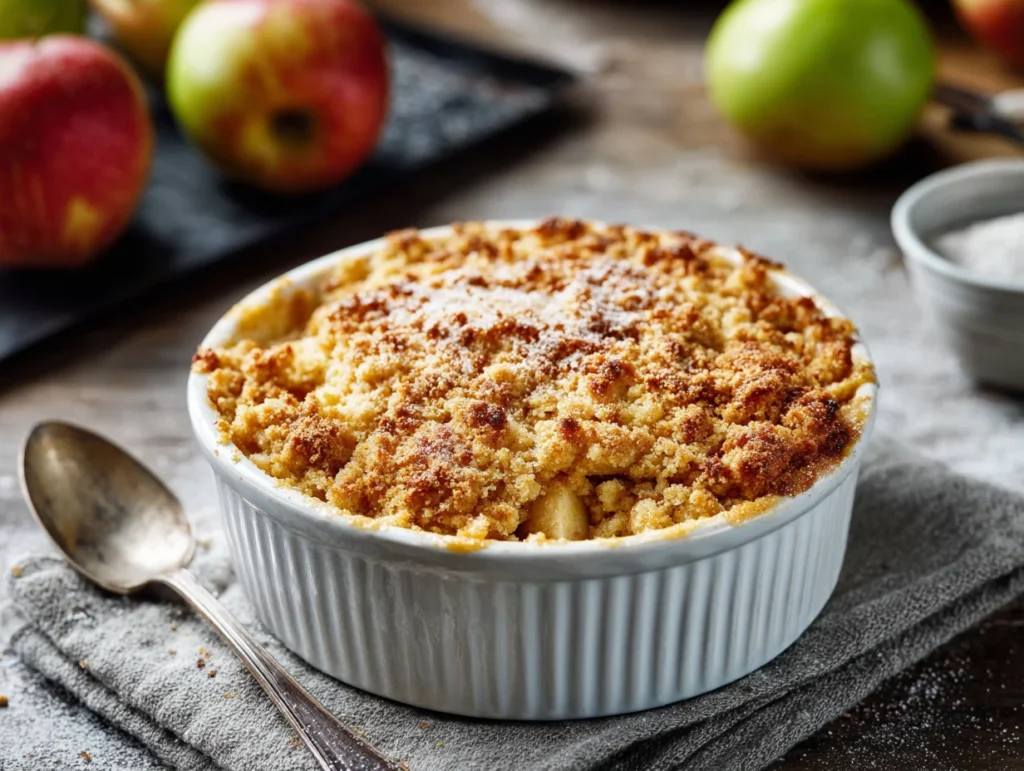
The crumble topping, in my view, is where restraint becomes visible technique. I combine flour, brown sugar, and a pinch of salt, then introduce cold butter slowly, working it in with fingertips rather than tools. The intention is not to blend but to create irregular clusters that will later transform in heat. If overworked, the mixture loses its identity and becomes heavy; if underworked, it fails to bind.
I often pause during this process to assess texture visually rather than mechanically. Occasionally, I introduce oats or nuts, not as fillers but as structural accents. Once achieved, the mixture is chilled briefly, reinforcing the contrast between cold preparation and hot baking.
This contrast is what produces the signature crispness later. The topping is then gently scattered over the apples without compression, preserving air pockets that contribute to its golden, brittle finish after baking.
Baking with Precision
Baking, for me, is less about time and more about observation. I place the assembled dish into a preheated oven at a steady moderate temperature, resisting the temptation to increase heat for faster results. The transformation must occur gradually. Within minutes, the aroma begins to shift,the fruit softens, the sugar melts, and the topping begins its slow caramelization.
I observe the surface rather than rely strictly on timers; the crumble should turn golden, not dark. Edges bubbling gently is a sign of internal readiness. Once removed from the oven, I do not serve immediately. Instead, I allow it to rest so the structure stabilizes.
This resting stage refines the texture, ensuring that the filling is cohesive rather than runny. What emerges is not just baked dessert, but a carefully balanced composition of heat, time, and patience.
Cook Time
Total: 1 hour 5 minutes
Prep: 20 minutes
Bake: 45 minutes
Servings
In my interpretation, this apple crumble comfortably serves around six portions, though I often find that serving sizes become flexible once the dish reaches the table. There is something about its aroma and warmth that encourages generous spoonfuls rather than measured portions. Each serving carries a balance of soft baked apples and crisp topping, ensuring no bite feels incomplete.
I prefer serving it slightly warm rather than piping hot, as this allows flavors to settle and develop clarity. It pairs naturally with cream or ice cream, though it does not depend on them to feel complete. The dessert holds its own identity, offering satisfaction through texture rather than excess sweetness. In gatherings, it tends to disappear quietly, which I consider the highest compliment any baked dish can receive.
Nutritional Information (approx. per serving)
- Calories: 320 kcal
- Carbohydrates: 52 g
- Fat: 12 g
- Protein: 2 g
- Fiber: 4 g
- Sugar: 28 g
From a nutritional perspective, I view apple crumble as a balanced indulgence rather than an everyday necessity. The apples contribute natural fiber and gentle sweetness, while the butter and sugar provide richness and energy. Cinnamon and nutmeg add more than flavor,they introduce subtle aromatic complexity that enhances perception of sweetness without requiring excess sugar. When consumed mindfully, it fits comfortably within a varied diet.
I often emphasize that desserts like this are not meant to be restrictive but appreciated in context. The real value lies in using real ingredients, understanding portions, and recognizing satisfaction beyond quantity. It is a dish that rewards awareness, both in preparation and consumption, making it both comforting and consciously enjoyable.
? If you love creamy dessert combinations, don’t miss our Easy No Bake Cheesecake That Tastes Rich and Creamy.
Storage Instructions
Storage, in my experience, determines whether an apple crumble retains its identity or loses it overnight. Once cooled completely, it should be covered gently to avoid condensation forming on the surface, which would soften the crumble. Refrigeration is necessary if it is not consumed immediately, and it typically holds well for up to three days.
However, I always recommend reheating in an oven rather than a microwave, as gentle dry heat restores the crisp topping more effectively. The filling regains warmth while the crust recovers its texture. If frozen, it should be thawed slowly to preserve structure before reheating. I find that this dessert is at its best within the first 24 hours, when contrast between textures is still at its peak and the aroma remains most expressive.
Suggestions
When refining apple crumble, I often encourage subtle experimentation rather than dramatic alteration. Blending apple varieties introduces complexity in both sweetness and acidity. A small addition of vanilla or citrus zest can elevate aroma without overpowering the core profile. For texture contrast, nuts or oats can be introduced sparingly into the crumble.
Serving temperature also plays a significant role,warm enhances comfort, while slightly cooled improves structure. I suggest pairing it thoughtfully rather than excessively; cream or custard should complement, not compete. Adjusting sugar based on fruit ripeness is another overlooked detail that significantly affects balance. Ultimately, this dish rewards observation. Each variation should feel intentional, not experimental for its own sake, preserving the identity of the crumble while allowing subtle personal expression to emerge.
Seasonal Relevance
Apple crumble naturally belongs to cooler seasons, particularly autumn and winter, when apples are at their most expressive. During this time, the fruit carries deeper flavor and balanced acidity, making it ideal for baking. I often associate this dessert with shorter days and slower evenings, where warmth from the oven feels as important as the dish itself.
In warmer months, I adjust the profile slightly, using lighter apples and reducing spice intensity to maintain freshness. Its adaptability across seasons is one of its quiet strengths. However, its emotional connection remains strongest in colder weather, when comfort becomes part of the dining experience. It is not merely seasonal by ingredient availability but by feeling,offering warmth, familiarity, and a sense of grounded simplicity whenever it is prepared thoughtfully.
In writing about apple crumble, I return repeatedly to one idea: simplicity refined through attention. This dessert does not rely on complexity, yet it demands care in every stage. From selecting apples to observing the final bake, each decision shapes the outcome. When prepared thoughtfully, it becomes more than a recipe,it becomes a crafted experience of texture, aroma, and warmth.
I find its appeal lies in its honesty; nothing is hidden, nothing is excessive. It is a dish that reflects patience more than technique. Served warm, it offers comfort without pretense, and satisfaction without effort. In many ways, it represents what home baking should be: grounded, expressive, and quietly memorable. It lingers not only on the palate but in memory, which is perhaps its most lasting quality.
? For a comforting fall-inspired treat, you’ll also enjoy our Cinnamon Apple French Toast Casserole with warm spices
Frequently asked questions
1. What apples work best for a balanced crumble?
Firm and slightly tart apples are ideal because they maintain structure during baking and provide contrast to the sweet topping. Varieties such as Granny Smith or similar local equivalents are commonly preferred. Avoid overly soft apples as they tend to break down too much, affecting texture and reducing definition in the final dessert.
2. Why is my crumble topping not turning crispy?
A soft topping usually results from warm butter being overmixed into the flour or insufficient baking time. The butter must remain cold to create texture during baking. Also, the crumble should not be pressed down onto the filling, as airflow is essential for achieving a crisp, golden finish.
3. Can this dessert be prepared in advance?
Yes, it can be assembled ahead of baking and stored in the refrigerator for several hours. This actually allows flavors to develop further. However, for best texture, baking should be done shortly before serving so that the topping retains its crispness and the filling remains warm and structured.
4. How do I reduce sweetness without losing flavor?
Reducing sugar in both filling and topping is possible if the apples are naturally sweet. To maintain depth, I rely more on spices like cinnamon and nutmeg or a slight touch of lemon juice. This preserves balance while ensuring the dessert does not feel flat or overly sugary.
5. What is the best way to reheat leftovers?
The best method is reheating in an oven at a moderate temperature. This restores crispness to the topping while gently warming the filling. Microwaves tend to soften the crust, which affects texture quality. Slow reheating ensures the dessert regains much of its original structure and flavor integrity.
