Introduction
As a chef, I’ve always loved a cake that’s simple yet unforgettable, and this lemon cake hits that perfect note. Bright, zesty, and irresistibly moist, it’s the kind of cake that makes every slice feel like a little celebration. I’ve spent years refining the balance between buttery richness and fresh lemon flavor so that the crumb is soft, tender, and melts in your mouth. Whether you’re baking for family, friends, or just treating yourself, this recipe delivers consistent, professional results in your home kitchen. By focusing on proper mixing, fresh ingredients, and precise techniques, you can recreate a cake that’s both visually stunning and bursting with citrus aroma. This is my go-to recipe whenever I want a bakery-quality lemon cake at home.
Overmixing – The Lemon Cake’s Hidden Enemy
One mistake I see home bakers make repeatedly is overmixing the batter, especially after adding the flour. It’s tempting to stir until the batter looks “perfectly smooth,” but that actually develops gluten and produces a dense, rubbery texture. Another common error is under-creaming the butter and sugar, which leaves the batter heavy and prevents proper aeration. Cold ingredients can also curdle the mixture, causing lumps that bake unevenly. Overmixing may seem harmless, but it’s a subtle way the cake’s soft, tender crumb is compromised. In my kitchen, I treat every step with care, knowing that attention to these details directly impacts the final texture, rise, and moisture of the cake.
How to Avoid Overmixing and Achieve Perfect Texture
To consistently achieve that tender, light crumb, I always start with room-temperature ingredients. Butter and sugar are creamed until fluffy, then eggs are added one at a time, allowing the batter to remain smooth and stable. When folding in the flour, I use gentle, deliberate strokes and stop immediately when no streaks remain. Lemon juice and zest are folded in carefully to maintain structure. This method preserves air pockets in the batter, ensures proper rise, and keeps the crumb soft. Following this approach, the cake comes out moist, flavorful, and evenly baked, giving every slice the bright, zesty texture I aim for in a professional-quality lemon cake.
Ingredients List
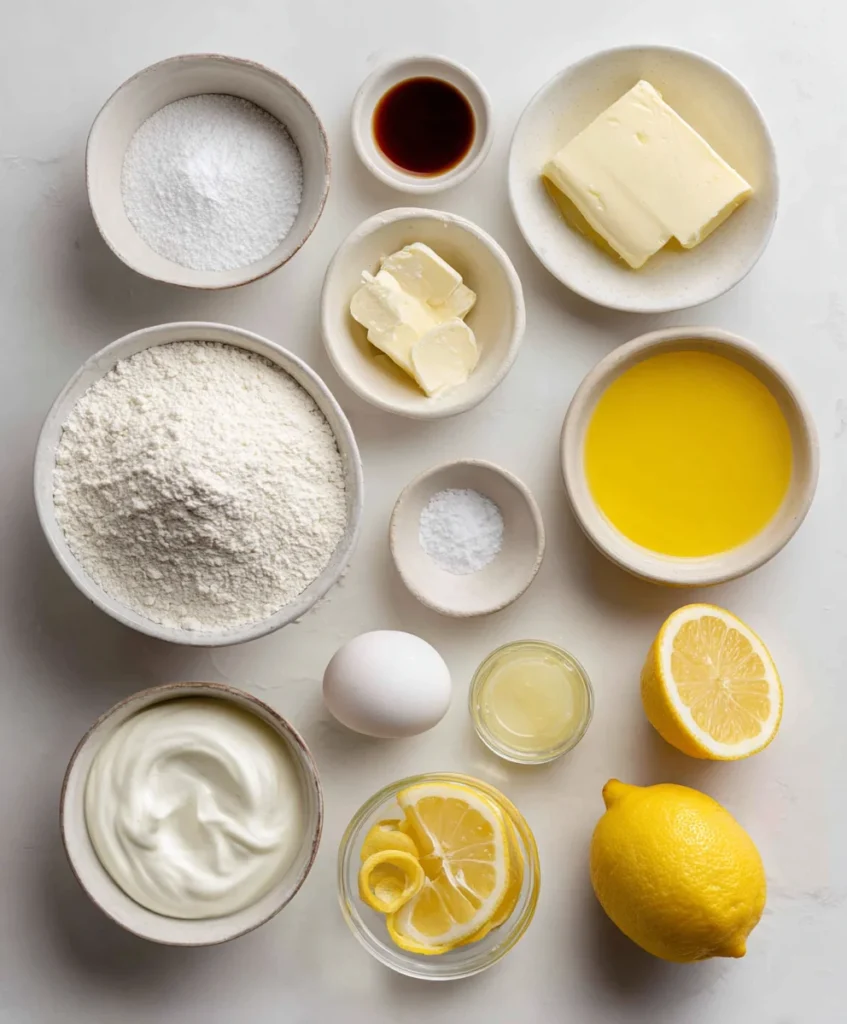
Base Ingredients:
- 1 ½ cups all-purpose flour
- 1 teaspoon baking powder
- ¼ teaspoon salt
- ½ cup unsalted butter (softened)
- 1 cup granulated sugar
- 3 large eggs
- ½ cup sour cream or Greek yogurt
- ¼ cup fresh lemon juice
- 1 tablespoon lemon zest
- 1 teaspoon vanilla extract
Optional Add-ins:
- ½ teaspoon lemon extract for extra flavor
- Powdered sugar for glaze
- Extra lemon juice for icing
- Lemon slices or candied zest for garnish
Step-by-Step Instructions

Step 1: Preheat and Prepare Pans
Preheat the oven to 175°C and grease a loaf pan with butter, lining it with parchment paper. Sift together flour, baking powder, and salt for even distribution and a light texture. In a separate bowl, cream the butter and sugar until pale and fluffy, about 3–5 minutes, to incorporate air. Gradually add eggs, one at a time, mixing until smooth. Proper creaming sets the foundation for a tender crumb and stable structure. Treating this step with care ensures the cake will rise evenly and have a light, airy texture.
Step 2: Add Moisture and Flavor
Fold in sour cream, fresh lemon juice, zest, and vanilla extract. These ingredients add essential moisture and vibrant flavor. Fresh lemons are key—they provide natural aroma and acidity that balance sweetness. Stir gently until fully combined, avoiding overmixing, which could toughen the cake. The sour cream contributes richness and a tender crumb, while the lemon juice adds brightness. At this stage, the batter should feel smooth, creamy, and fragrant, setting the tone for the perfect lemon cake.
Step 3: Incorporate Dry Ingredients
Gently fold the sifted flour mixture into the wet ingredients using a spatula. Mix only until no flour streaks remain. Overmixing at this point develops gluten, making the cake dense and chewy. If desired, add a touch of lemon extract to intensify flavor. The batter should be thick but spreadable. Proper folding preserves the delicate crumb structure, ensuring the cake rises evenly and stays soft. This technique is essential for creating a light, professional-quality lemon cake.
Step 4: Bake and Glaze
Pour the batter into the prepared pan and smooth the surface evenly. Bake for 45–50 minutes, checking doneness with a toothpick in the center. Avoid opening the oven early, which can cause the cake to sink. Allow the cake to cool in the pan for 10 minutes, then transfer to a wire rack. Prepare a simple glaze with powdered sugar and lemon juice, drizzling it over the cooled cake. Optional garnishes like candied zest or thin lemon slices enhance both appearance and flavor.
Cook Time
Total: 1 hour 5 minutes
Prep: 15 minutes
Bake: 50 minutes
Servings
This recipe yields 8–10 slices depending on thickness. I prefer slightly thicker slices to highlight the moist crumb and bold lemon flavor. Perfect for tea time, brunch, or dessert, this cake balances sweetness and citrus brightness. It pairs beautifully with coffee, tea, berries, or whipped cream. The recipe is reliable, producing consistent texture and flavor every time, making it ideal for entertaining or casual enjoyment.
Makes approximately 1 loaf cake
Nutritional Information (approx. per serving)
- Calories: 280–320 kcal
- Carbohydrates: 38g
- Protein: 5g
- Fat: 14g
- Sugar: 22g
- Fiber: 1g
This lemon cake is a thoughtful balance of flavor and nutrition. Butter and eggs provide richness and satiety, while lemon juice adds vitamin C and brightness. Sour cream introduces subtle protein and calcium. It’s an indulgent yet wholesome treat, with controlled sweetness and fresh ingredients making it a healthier alternative to store-bought versions.
Storage Instructions
Store in an airtight container at room temperature for up to two days to retain moisture. In warmer climates, refrigerate for up to five days. Bring to room temperature before serving to restore softness. For longer storage, wrap slices individually and freeze for up to two months. Thaw overnight in the refrigerator before enjoying. Proper storage ensures the cake maintains its tender crumb, vibrant lemon flavor, and moist texture for every slice.
Suggestions
For extra flair, drizzle a thick lemon glaze over the cake or serve with fresh berries and whipped cream. Garnish with candied zest or thin lemon slices for presentation. A small touch of lemon extract can intensify flavor. Using high-quality butter and fresh lemons elevates both taste and aroma. These adjustments let you customize while maintaining the cake’s soft texture, bright flavor, and classic appeal. Perfect for gifting, entertaining, or casual enjoyment.
Seasonal Relevance
I love making this cake in spring and summer when citrus flavors feel light and refreshing, perfect for brunches, tea parties, and outdoor gatherings. The buttery base keeps it comforting in cooler months as well. Fresh lemons are widely available year-round, allowing consistent results. Chilled in summer or lightly warmed in winter, it remains a versatile, satisfying, and bright dessert option any time of the year.
Conclusion
This lemon cake is a result of careful attention to technique and ingredient quality, delivering a moist, tender crumb and vibrant citrus flavor. By creaming properly, folding gently, and using fresh lemons, you can achieve a bakery-quality cake at home. Perfect for tea time, brunch, or dessert, it balances indulgence with freshness. Following this method ensures consistent results every time, giving you a soft, flavorful, and visually appealing cake that’s as professional as it is delicious.
FAQs
1. Can I use bottled lemon juice instead of fresh?
Fresh lemon juice gives brighter, more natural flavor than bottled juice. Bottled juice lacks the essential oils from zest and can taste muted. Using fresh ensures your cake has the vibrant, zesty citrus flavor that makes it stand out.
2. How do I prevent the cake from sinking in the middle?
Ensure ingredients are at room temperature, avoid overmixing, and bake at the correct temperature. Do not open the oven early. Properly creamed butter and eggs also help the cake rise evenly and maintain a stable structure.
3. Can I make this recipe into cupcakes?
Yes, divide the batter into lined muffin tins and bake at the same temperature for 18–22 minutes. Check with a toothpick for doneness. The cupcakes remain moist, tender, and retain the bright lemon flavor of the loaf.
