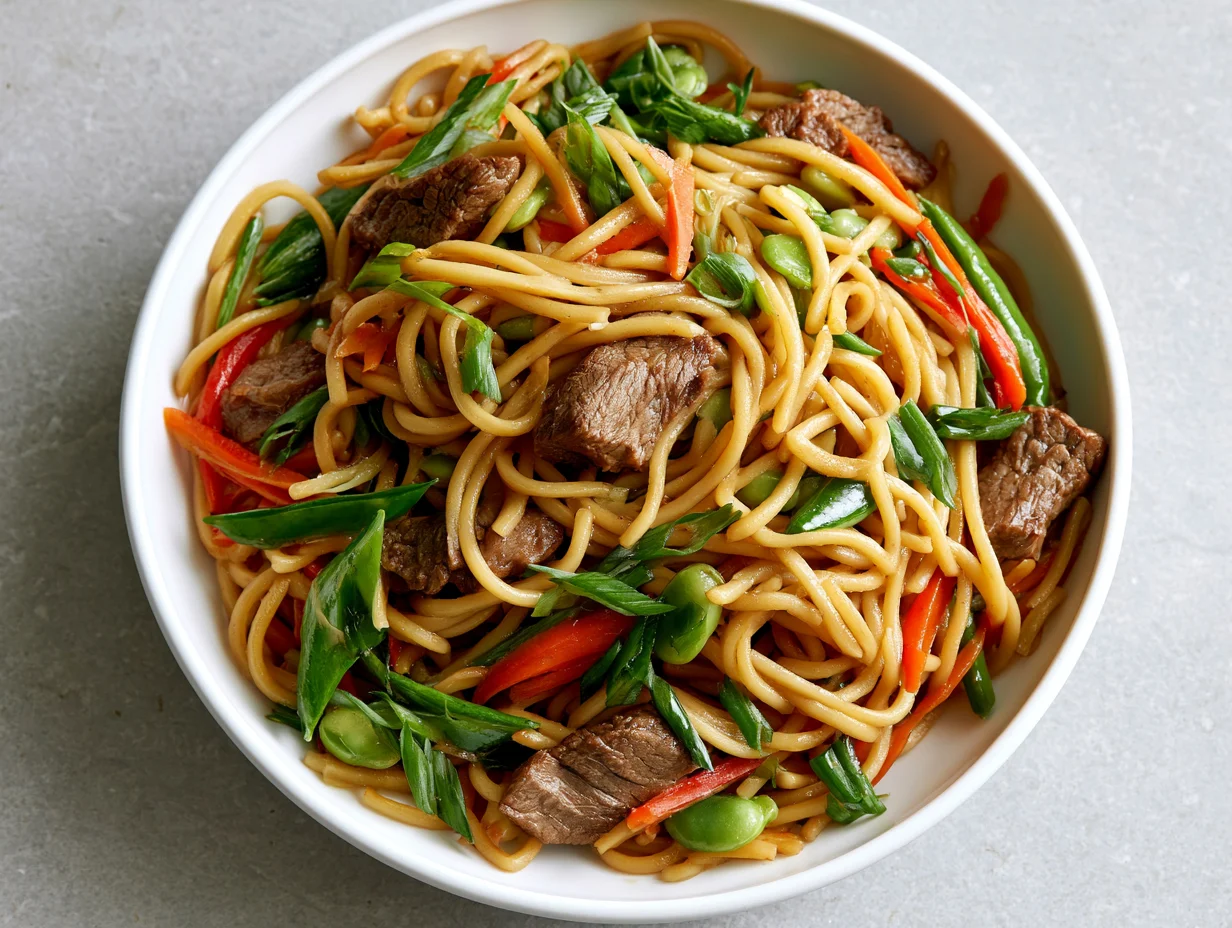
Classic Beef Lo Mein Recipe
There’s a reason takeout containers of lo mein vanish faster than anything else on the table — that glossy tangle of noodles, tender beef, and crisp vegetables hits every craving at once. But here’s the secret most restaurants won’t tell you: it takes less than 35 minutes to build the same dish at home, with better beef, fresher vegetables, and a sauce you control completely.
This Classic Beef Lo Mein recipe relies on two techniques real Chinese-American kitchens swear by: velveting the steak for fork-tender bites, and building a sauce with depth instead of just salt. The result is restaurant-quality texture without a deep fryer or a wok burner blasting at 20,000 BTUs.
Whether you’re feeding a hungry family on a Tuesday night or meal-prepping lunches for the week, this recipe scales beautifully and reheats without turning gummy. It’s the kind of dish that disappears off the stove the moment it’s plated.
Below, you’ll find every ingredient, technique, and timing detail laid out clearly — no guesswork, no mystery sauce ratios, just a dependable recipe you’ll return to again and again.
Ingredients You’ll Need
Great lo mein isn’t about a long shopping list — it’s about a handful of ingredients working together with precision, which is exactly what this lineup delivers. One of the things I love about this recipe is that it uses simple pantry ingredients. You probably already have most of them in your kitchen.
Base Ingredients
- 8 oz lo mein noodles (or thick fresh egg noodles)
- 1/2 lb flank steak, thinly sliced against the grain
- 2 tbsp soy sauce (for the marinade)
- 1 tsp cornstarch
- 2 tbsp vegetable oil, divided
- 2 cloves garlic, minced
- 1 tsp fresh ginger, minced
- 1 cup carrots, julienned
- 1 cup cabbage, shredded
- 1/2 cup red bell pepper, thinly sliced
- 3 green onions, sliced into 2-inch pieces
- 3 tbsp soy sauce (for the sauce)
- 1 tbsp oyster sauce
- 1 tbsp dark soy sauce
- 1 tsp toasted sesame oil
- 1 tsp granulated sugar
- 1/4 cup beef broth
Optional Add-ins
- 1 cup bean sprouts
- 1/2 cup shiitake mushrooms, sliced
- 1/2 cup snap peas
- 1/4 cup broccoli florets
- 1 tbsp chili garlic sauce, for heat
- 1 tsp toasted sesame seeds, for garnish
Step-by-Step Instructions
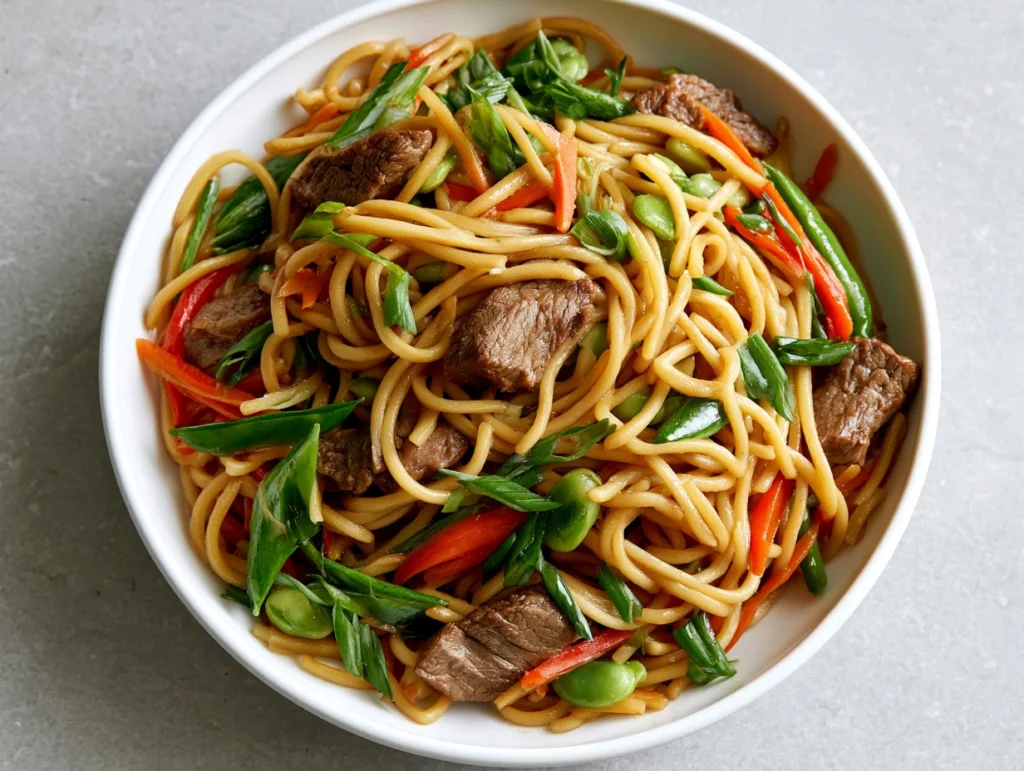
Marinate the Beef
Slice the flank steak thinly against the grain — this is non-negotiable for tenderness. Toss the strips with 2 tablespoons soy sauce and 1 teaspoon cornstarch in a bowl, massaging the mixture into the meat with your hands. Let it sit for at least 15 minutes at room temperature, or refrigerate up to overnight. The cornstarch coats each strip, locking in moisture and creating that silky, restaurant-style texture when seared. Don’t skip this step; it’s the single biggest difference between flat, chewy beef and beef that melts in your mouth.
Prepare the Noodles
Bring a large pot of water to a rolling boil and cook the lo mein noodles according to package directions, usually 3 to 4 minutes. Drain immediately and rinse under cold water to halt the cooking process and wash away excess starch. Toss the noodles with a small drizzle of oil to prevent clumping while you finish the rest of the dish. Slightly undercooking them here is smart, since they’ll finish cooking in the wok later, soaking up sauce without turning mushy or sticking together in one solid mass.
Make the Sauce
In a small bowl, whisk together 3 tablespoons soy sauce, oyster sauce, dark soy sauce, sesame oil, sugar, and beef broth until the sugar dissolves completely. This combination delivers the deep mahogany color and umami backbone that defines authentic lo mein, rather than the flat, one-note saltiness of bottled stir-fry sauces. Taste and adjust — add a touch more sugar for balance or a splash more broth if you prefer a lighter coating. Set the sauce aside; having it premixed means you won’t be measuring while the wok is screaming hot.
Sear the Beef
Heat 1 tablespoon oil in a wok or large skillet over high heat until it shimmers and just begins to smoke. Add the marinated beef in a single layer, resisting the urge to stir immediately. Let it sear undisturbed for 60 to 90 seconds to develop a deep brown crust, then toss quickly for another minute until just cooked through. Remove the beef to a plate immediately; overcooking here turns tender strips tough. This hard sear is what gives the final dish its signature charred, smoky aroma.
Stir-Fry the Vegetables
In the same hot wok, add the remaining oil along with garlic and ginger, stirring for 15 seconds until fragrant but not browned. Add carrots and cabbage first, since they need slightly longer to soften, followed by bell pepper and any optional add-ins like mushrooms or snap peas. Stir-fry on high heat for 2 to 3 minutes, keeping everything moving constantly. You want vegetables that are crisp-tender, not limp — they’ll continue softening slightly once combined with the noodles and sauce in the next step.
Combine Everything
Return the seared beef to the wok along with the cooked noodles. Pour the prepared sauce evenly over the top and use tongs to toss everything together, lifting and folding rather than stirring flat. Continue tossing over high heat for 2 minutes, allowing the noodles to absorb the sauce and pick up a light caramelized sheen. Every strand should be coated, with beef and vegetables distributed evenly throughout — no pooling sauce at the bottom of the pan.
Final Toss and Serve
Add green onions and bean sprouts if using, tossing for a final 30 seconds just to warm them through without wilting completely. Taste and adjust with a splash more soy sauce if needed. Plate immediately while everything is hot and glossy, garnishing with toasted sesame seeds. Serve straight from the wok to the table for the best texture — lo mein waits for no one, and every minute it sits, the noodles continue absorbing sauce and softening.
Cook Time
Total
35 minutes
Prep
15 minutes (includes marinating and slicing)
Bake
10 minutes (stovetop cooking — no oven required)
Servings
This recipe makes approximately 4 generous servings, making it ideal for a family dinner or two days of satisfying lunches. Each portion balances protein, vegetables, and noodles in roughly equal measure, so you’re not left with an empty, carb-heavy plate.
For larger gatherings, the recipe doubles cleanly — just cook the beef and noodles in batches to avoid overcrowding the wok, which is essential for proper searing and that signature smoky flavor.
If you’re meal-prepping, divide the finished lo mein into four airtight containers while still warm. It holds its texture remarkably well in the refrigerator, making it one of the more reliable make-ahead noodle dishes you’ll find.
Common Mistakes in This Recipe
The most frequent error is overcooking the noodles during the boiling stage, leaving them mushy and unable to hold up to the stir-frying process that follows. A close second is overcrowding the wok or skillet, which traps steam instead of allowing a proper sear, leaving both beef and vegetables pale and watery rather than caramelized.
Skipping the beef marinade is another common shortcut that backfires — without the cornstarch coating, the meat turns dry and chewy under high heat rather than staying tender and juicy.
Finally, many home cooks add the sauce too early, before the wok is hot enough, which results in steamed rather than stir-fried noodles, robbing the dish of its essential smoky depth and glossy finish.
Solutions to Common Mistakes
To avoid mushy noodles, pull them from the boiling water slightly before they’re fully tender, then rinse with cold water immediately to stop the cooking process completely. For overcrowding, cook beef and vegetables in separate batches over high heat, giving each component room to sear properly rather than steam.
Always marinate the beef for at least 15 minutes with soy sauce and cornstarch; this single step transforms the texture dramatically and costs almost no extra time.
Lastly, wait until your wok is visibly smoking hot before adding the sauce, and keep the heat on high throughout the final toss to lock in that authentic charred aroma.
Nutritional Information (approx. per serving)
- Calories: 420 kcal
- Protein: 28g
- Carbohydrates: 45g
- Fat: 14g
- Fiber: 4g
- Sugar: 6g
- Sodium: 780mg
Beyond satisfying a noodle craving, this dish delivers a meaningful dose of lean protein from the flank steak, which supports muscle repair and keeps you full far longer than a plain bowl of noodles would. The colorful mix of carrots, cabbage, and bell peppers contributes fiber, vitamin A, and vitamin C, turning a comfort food into something genuinely nourishing.
Using a measured homemade sauce also means significantly less sodium and sugar than typical takeout versions, which often rely on heavy glazes. Ginger and garlic, present in nearly every bite, bring subtle anti-inflammatory benefits along with their signature aromatic punch.
Because the dish balances protein, complex carbohydrates, and vegetables in one pan, it functions as a complete, well-rounded meal rather than a carb-heavy side dish.
Storage Instructions
Leftover lo mein keeps beautifully in an airtight container in the refrigerator for up to 4 days, making it one of the more dependable meal-prep noodle dishes around. The noodles do absorb some sauce over time, so don’t be surprised if day-three portions taste slightly more concentrated than the day you cooked it.
For longer storage, freeze portions in freezer-safe bags or containers for up to 2 months, pressing out as much air as possible to prevent freezer burn on the noodles.
When reheating, use a hot skillet or wok with a small splash of water or broth rather than the microwave alone, which can leave noodles unevenly heated and rubbery in spots.
Avoid storing the dish with extra raw garnishes like bean sprouts mixed in, as they turn limp and watery faster than the rest of the dish during storage.
Suggestions
Serve this lo mein alongside a simple cucumber salad dressed in rice vinegar for a cool, crunchy contrast to the warm, savory noodles. A fried or soft-boiled egg on top transforms the dish into something heartier, with the runny yolk adding extra richness to every bite.
For spice lovers, a drizzle of chili crisp or a spoonful of chili garlic sauce stirred in at the table lets everyone customize their own heat level without altering the base recipe.
If you’re cooking for a crowd, double the vegetable portion rather than the noodles to stretch the dish further while keeping it light and colorful.
Leftover lo mein also makes an excellent filling for spring rolls or a topping for a quick fried rice the next day, minimizing food waste while maximizing flavor.
Seasonal Relevance
While lo mein works year-round, it shines particularly in late autumn and winter, when a hot, savory noodle dish feels especially comforting against colder weather. The high-heat cooking method also makes good use of root vegetables like carrots, which are at their sweetest and most affordable during these months.
In spring and summer, the recipe adapts easily by swapping in seasonal produce like snap peas, asparagus, or baby bok choy, keeping the dish light without sacrificing its signature savory profile.
Around the Lunar New Year, noodle dishes like this one carry symbolic meaning tied to longevity, making this recipe a fitting addition to celebratory spreads during that season.
Regardless of the calendar, the dish’s quick cooking time makes it a practical choice whenever a fast, satisfying dinner is needed without turning on the oven.
Final Words
This Classic Beef Lo Mein recipe proves that restaurant-quality flavor doesn’t require restaurant equipment — just the right techniques applied with attention. Velveting the beef, prepping ingredients before the heat goes on, and working quickly over high flame are the real secrets behind every great stir-fry.
Once you’ve made this a few times, you’ll likely stop reaching for takeout menus altogether, since the homemade version comes together just as fast and tastes noticeably fresher.
Feel free to treat the vegetable lineup as a flexible canvas — this recipe forgives substitutions gracefully as long as the core techniques stay intact.
Keep this one in regular rotation; it’s the rare weeknight recipe that feels indulgent enough for guests yet simple enough for a Tuesday.
Frequently Asked Questions
Can I make this Classic Beef Lo Mein gluten-free?
Yes — substitute the lo mein noodles with rice noodles or gluten-free chow mein noodles, and replace all soy sauce, oyster sauce, and dark soy sauce with gluten-free tamari and a gluten-free oyster sauce alternative. The cooking method and timing remain exactly the same.
What’s the actual difference between lo mein and chow mein?
Lo mein noodles are boiled and tossed with sauce, staying soft and chewy throughout. Chow mein noodles are pan-fried until partially crisp before saucing. Both use similar flavors, but the noodle texture and cooking technique set them clearly apart.
Can I substitute ground beef for the sliced flank steak?
Yes, though the texture changes noticeably. Brown 1/2 lb ground beef in the wok until cooked through, then proceed with the same sauce and vegetables. You’ll lose the silky velveted texture, but it remains a quick, flavorful weeknight alternative.
Classic Beef Lo Mein Recipe
4
servings15
minutes20
minutes420
kcal35
minutesA quick, restaurant-style beef lo mein with tender velveted steak, crisp vegetables, and glossy noodles tossed in a rich savory sauce — ready in just 35 minutes, no takeout required.
Ingredients
Base Ingredients:
8 oz lo mein noodles (or thick fresh egg noodles)
1/2 lb flank steak, thinly sliced against the grain
2 tbsp soy sauce (for the marinade)
1 tsp cornstarch
2 tbsp vegetable oil, divided
2 cloves garlic, minced
1 tsp fresh ginger, minced
1 cup carrots, julienned
1 cup cabbage, shredded
1/2 cup red bell pepper, thinly sliced
3 green onions, sliced into 2-inch pieces
3 tbsp soy sauce (for the sauce)
1 tbsp oyster sauce
1 tbsp dark soy sauce
1 tsp toasted sesame oil
1 tsp granulated sugar
1/4 cup beef broth
Optional Add-ins:
1 cup bean sprouts
1/2 cup shiitake mushrooms, sliced
1/2 cup snap peas
1/4 cup broccoli florets
1 tbsp chili garlic sauce, for heat
1 tsp toasted sesame seeds, for garnish
Directions
- Slice flank steak thinly against the grain; marinate with soy sauce and cornstarch for at least 15 minutes.
- Boil lo mein noodles 3–4 minutes, drain, rinse with cold water, and toss with a little oil.
- Whisk together soy sauce, oyster sauce, dark soy sauce, sesame oil, sugar, and beef broth to make the sauce.
- Sear marinated beef in hot oil for 60–90 seconds per side; remove and set aside.
- Stir-fry garlic, ginger, carrots, cabbage, and bell pepper for 2–3 minutes until crisp-tender.
- Return beef and noodles to the wok; pour in sauce and toss until evenly coated and glossy.
- Add green onions and bean sprouts; toss 30 seconds, garnish with sesame seeds, and serve hot.
Recipe Video
Notes
- Slice beef against the grain for maximum tenderness.
- Slightly undercook noodles since they finish cooking in the wok.
- Use a smoking-hot wok for an authentic charred flavor.
- Store leftovers in an airtight container for up to 4 days.
- Reheat in a skillet with a splash of broth to revive texture.