Classic Pasta Carbonara Recipe
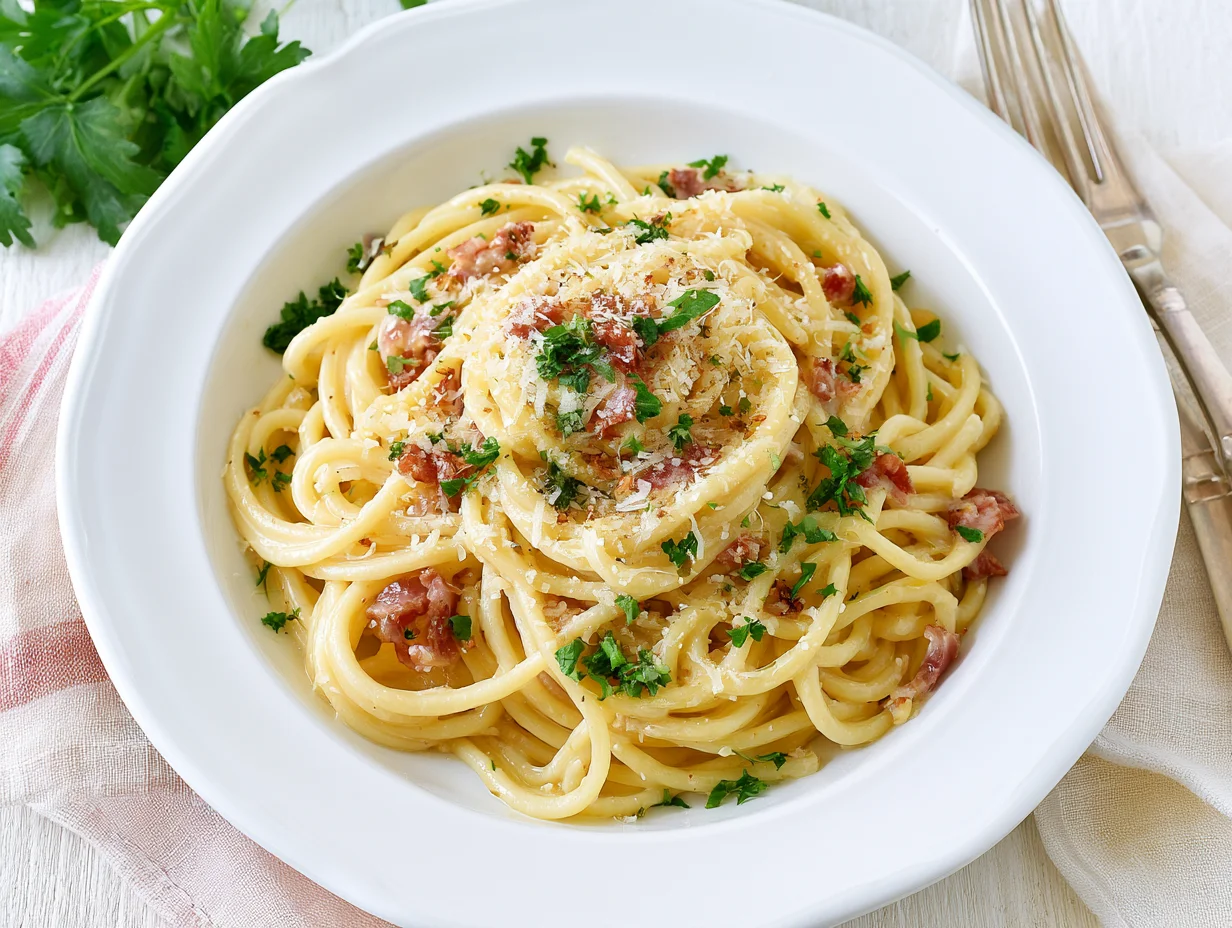
There is a reason carbonara has survived a century of culinary trends without ever needing a makeover. It is not a sauce dish. It is not a cream dish, despite what countless menus around the world insist. It is an emulsion, built entirely from heat, fat, and egg, and when you get the timing right, the result is something almost unreasonably silky for how few ingredients it asks of you.
Most home cooks ruin carbonara in one of two ways: they scramble the eggs into curds, or they drown the dish in cream to compensate for a technique they never quite mastered. Neither is necessary. The real version, the one Roman trattorias have quietly perfected for generations, relies on nothing more than pasta water, rendered pork fat, sharp cheese, and eggs pulled together off direct heat.
This recipe strips away the shortcuts and gives you the method that actually works, written the way a chef would explain it standing next to you in the kitchen. No cream. No guesswork. No broken sauce.
By the end of this article, you will understand exactly why each step matters, not just what to do.
Ingredients You’ll Need
Carbonara is proof that restraint, not abundance, is what separates a good plate of pasta from a forgettable one. One of the things I love about this recipe is that it uses simple pantry ingredients. You probably already have most of them in your kitchen.
Base Ingredients
- 400g spaghetti or rigatoni
- 150g guanciale, cut into small strips
- 4 large egg yolks
- 1 whole large egg
- 100g Pecorino Romano, finely grated
- 1 teaspoon freshly cracked black pepper
- 1 tablespoon reserved pasta water (extra, as needed)
- Salt, for the pasta water only
Optional Add-ins
- 50g Parmigiano Reggiano, grated, for a softer flavor blend
- 2 cloves garlic, lightly crushed and removed before serving
- 1 tablespoon extra virgin olive oil, if guanciale is unavailable
- A pinch of chili flakes, for a subtle kick
- Fresh parsley, finely chopped, for garnish only
Step-by-Step Instructions
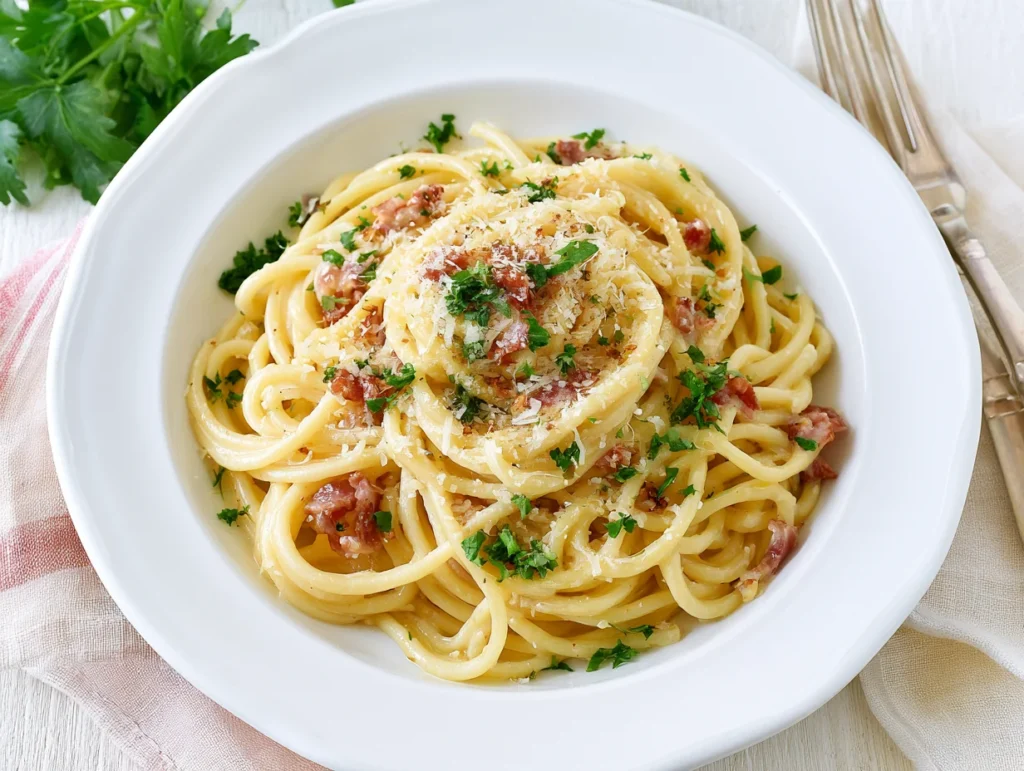
Step 1: Render the Guanciale
Place the guanciale strips in a cold, wide skillet and set the heat to medium-low. Let the fat melt slowly rather than frying it hard. This slow render is what gives carbonara its backbone of flavor. Stir occasionally for about 8 minutes, until the pieces turn deep golden and crisp at the edges. Remove from heat once done, but keep the rendered fat in the pan. Do not discard it. This fat will carry the entire dish, replacing any need for butter, cream, or additional oil later in the process.
Step 2: Boil the Pasta Properly
Bring a large pot of water to a rolling boil and salt it generously, the way you would for any pasta. Add the spaghetti and cook two minutes less than the package suggests, since it will finish cooking in the pan later. Before draining, scoop out at least one full cup of starchy pasta water and set it aside. This water is essential for the emulsion and cannot be substituted with plain tap water at any point in the recipe.
Step 3: Whisk the Egg Mixture
While the pasta cooks, whisk the egg yolks, the whole egg, grated Pecorino, and black pepper together in a heatproof bowl until smooth and slightly thickened. The mixture should look pale and creamy, almost like a thin custard base. Avoid adding any liquid yet. This step is best done by hand with a fork or small whisk, since overworking it with an electric tool can introduce too much air and weaken the final texture of the sauce.
Step 4: Combine Pasta and Fat
Transfer the drained pasta directly into the skillet with the rendered guanciale and its fat. Toss everything over very low heat for about 30 seconds, just enough to coat each strand evenly. Remove the skillet from the heat completely before moving to the next step. This timing detail matters more than almost anything else in the recipe, since residual heat that is too high will scramble the eggs the moment they touch the pasta.
Step 5: Build the Emulsion
Pour the egg and cheese mixture over the pasta away from direct heat, tossing continuously and quickly. Add splashes of the reserved pasta water gradually, a tablespoon at a time, until the sauce turns glossy and clings to every strand. The motion should be constant, almost like folding a risotto. Within about a minute, you will see the sauce transform from loose to lush, with no visible streaks of raw egg remaining anywhere in the pan.
Step 6: Plate and Finish
Serve immediately while the pasta is still warm enough to keep the sauce fluid but not so hot that it continues cooking. Top with an extra grind of black pepper and a final dusting of Pecorino. Carbonara does not hold well, so this is a dish meant to be eaten the moment it leaves the pan, not rested or reheated on the counter while other parts of the meal are finished.
Cook Time
Total: 30 minutes
Prep: 10 minutes
Bake: 0 minutes (stovetop only)
Servings
This recipe makes approximately 4 generous servings, suitable as a main course rather than a starter portion. Each plate carries roughly 100g of dry pasta, which is enough to satisfy most appetites without leaning on bread or a heavy side dish to round out the meal.
If you are cooking for a smaller household, the recipe halves cleanly without disrupting the egg-to-pasta ratio that keeps the sauce stable. Scaling up, however, requires a slightly steadier hand, since larger batches of egg mixture can seize faster against residual pan heat.
For dinner parties, this dish works best plated individually straight from the skillet rather than served family-style from a shared bowl, where the sauce can thicken unevenly as it sits and cools on the table.
Common Mistakes in This Recipe
The single most common failure is cooking the eggs directly over flame, which turns a silky sauce into scrambled curds within seconds. This happens because home stoves often run hotter than people expect, and carbonara has almost no margin for error once the eggs hit a heated pan. Another frequent issue is adding cream, which is not part of the traditional method and ultimately mutes the sharpness that Pecorino and black pepper are meant to provide.
Many cooks also discard the pasta water, not realizing it is the actual binding agent that creates the glossy texture restaurants achieve. Without it, the sauce often turns clumpy or separates into pools of fat and curdled egg. Finally, overcooking the pasta itself is a quiet mistake, since carbonara pasta should retain a firm bite, as it continues softening slightly once tossed with the warm sauce off heat.
Solutions to Common Mistakes
To avoid scrambled eggs, always remove the pan from heat entirely before adding the egg mixture, relying on residual warmth alone to cook it gently. If the kitchen is warm or the pan retains heat aggressively, let it cool for thirty extra seconds first. Skip cream altogether and trust the fat-egg-cheese combination, which was designed centuries ago specifically to avoid needing dairy beyond cheese.
Always reserve at least a full cup of pasta water before draining, since you will likely need more than expected, especially if the sauce tightens while plating. Set a timer and pull pasta two minutes early, finishing it in the pan with the guanciale fat so it absorbs flavor while reaching the correct doneness without turning soft or mushy.
Nutritional Information (approx. per serving)
- Calories: 520 kcal
- Protein: 22g
- Carbohydrates: 58g
- Fat: 24g
- Saturated Fat: 9g
- Sodium: 480mg
- Fiber: 2g
Beyond its richness, carbonara offers a genuinely solid protein base thanks to the eggs and cured pork, which support muscle maintenance better than many cream-heavy pasta dishes of similar size. The dish is also relatively low in added sugar, since nothing in the recipe relies on sweetness to balance flavor.
Pecorino Romano contributes a meaningful amount of calcium per serving, supporting bone health without requiring a separate dairy source like milk or cream. Because the sauce is egg-based rather than cream-based, it tends to sit lighter on the stomach than many comparable comfort dishes.
Guanciale, while indulgent, is used here in a controlled quantity rather than as a primary bulk ingredient, which keeps the saturated fat content reasonable for an occasional indulgence rather than a daily staple.
Pairing the dish with a simple green salad can help round out the meal with fiber and freshness, balancing its richness without diluting the authenticity of the plate itself.
Storage Instructions
Carbonara is, by nature, not a dish built for leftovers, since the egg-based sauce continues to firm up and lose its silky texture once it cools completely. If you do have extra, store it in an airtight container in the refrigerator for no longer than one day to maintain food safety given the egg content.
Reheating should be done gently in a skillet over low heat with a small splash of water or extra pasta water, stirred constantly to loosen the sauce again. Microwaving is not recommended, since it tends to overcook the eggs unevenly and can quickly push the texture toward rubbery.
Freezing carbonara is generally discouraged, as the emulsion does not hold up well once thawed, often separating into oily pools with a grainy egg texture that cannot be restored through reheating alone.
For best results, this is a dish best made fresh and portioned to match exactly how many people are eating that night, rather than planned around future meals.
Suggestions
Pair this dish with a crisp, dry white wine, which cuts through the richness of the guanciale fat without overwhelming the delicate egg sauce underneath. A simple arugula salad dressed with lemon also works well, offering a peppery contrast that keeps the meal from feeling one-note.
If you want to add texture, a light scattering of toasted breadcrumbs on top introduces crunch without altering the core flavor profile. Some cooks also enjoy a thin shaving of additional Pecorino tableside, letting guests adjust sharpness to their own preference as they eat.
For a heartier version, rigatoni or bucatini can replace spaghetti, since their shape holds onto the sauce slightly differently and gives a more substantial bite in every forkful.
Finally, serve in warmed bowls if possible, since this keeps the sauce fluid for longer during the meal, especially in cooler dining rooms.
Seasonal Relevance
Carbonara works particularly well in colder months, when its richness feels appropriate rather than heavy, making it a natural fit for autumn and winter dinner tables. The dish carries enough warmth and depth to stand on its own as a cold-weather comfort meal.
That said, it also has a place in summer evenings when paired with lighter sides, such as a citrus-forward salad, which helps balance the richness against warmer temperatures and lighter appetites typical of the season.
Around holidays, carbonara makes an excellent fallback dish for smaller gatherings, since it comes together quickly without requiring an oven, freeing up kitchen space for other dishes being prepared simultaneously.
Its short ingredient list also makes it a practical choice during busy seasons, when shopping time is limited but the desire for a genuinely satisfying meal remains high.
Final Words
Carbonara rewards patience far more than it rewards complicated technique. Once you understand the timing of heat and egg, this dish becomes one of the most reliable meals in your entire repertoire, ready in under thirty minutes with ingredients that rarely require a special trip to the store.
What makes this recipe worth returning to is its honesty. There is nowhere for a rushed step to hide, which means every time you make it well, you genuinely earn that result through attention rather than luck.
Treat the egg mixture with respect, trust the pasta water, and resist the urge to add cream out of habit. The dish has survived this long because the original method simply works better than the shortcuts.
Make it once the traditional way, and it becomes very difficult to go back to any other version of carbonara again.
Frequently Asked Questions
Can I use bacon instead of guanciale if I cannot find it locally?
Yes, pancetta or thick-cut bacon can substitute, though the flavor will be smokier and slightly less delicate. Guanciale offers a softer, more rounded fat that melts differently, so expect a slightly different texture and a bolder, more assertive finish overall.
Why does my carbonara sauce turn watery instead of creamy?
This usually happens when too much pasta water is added too quickly, diluting the egg and cheese mixture before it has a chance to thicken. Add water gradually, in small amounts, while tossing constantly to maintain proper consistency throughout.
Is it safe to eat carbonara with slightly undercooked eggs in the sauce?
The residual heat from the pasta and pan gently cooks the eggs to a safe, custard-like consistency without fully scrambling them. Using fresh, high-quality eggs and serving immediately after preparation minimizes any food safety concerns for most home cooks.
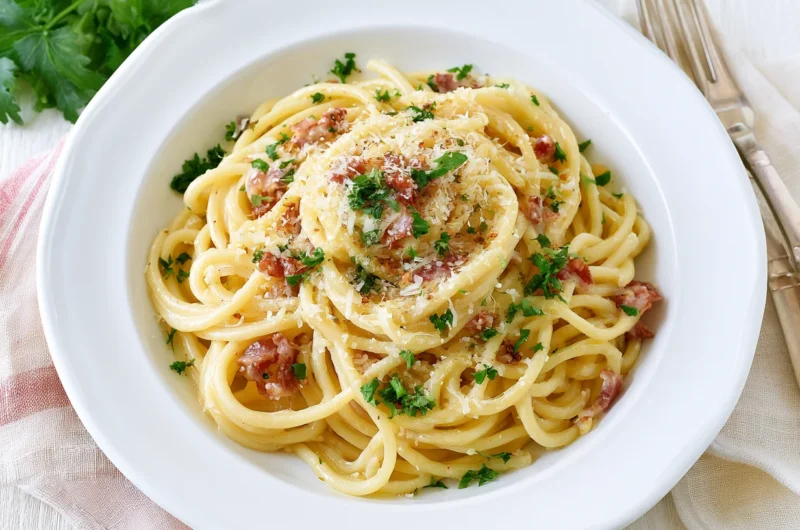
Classic Pasta Carbonara Recipe
4
servings10
minutes20
minutes520
kcal30
minutesA silky, authentic Roman classic made with eggs, Pecorino, and crisp guanciale — no cream needed. Ready in 30 minutes, this carbonara delivers rich, glossy texture and bold flavor in every single forkful.
Ingredients
400g spaghetti or rigatoni
150g guanciale, cut into small strips
4 large egg yolks
1 whole large egg
100g Pecorino Romano, finely grated
1 teaspoon freshly cracked black pepper
1 tablespoon reserved pasta water (extra, as needed)
Salt, for the pasta water only
50g Parmigiano Reggiano, grated (optional)
2 cloves garlic, lightly crushed (optional)
1 tablespoon extra virgin olive oil (optional, if guanciale unavailable)
A pinch of chili flakes (optional)
Fresh parsley, finely chopped, for garnish (optional)
Directions
- Place guanciale in a cold skillet and render slowly over medium-low heat for about 8 minutes until golden and crisp. Keep the fat in the pan.
- Boil salted water and cook pasta two minutes less than package instructions. Reserve at least 1 cup of starchy pasta water before draining.
- Whisk egg yolks, whole egg, grated Pecorino, and black pepper together until smooth and pale.
- Add drained pasta to the skillet with guanciale fat and toss for 30 seconds over low heat. Remove from heat completely.
- Pour the egg mixture over the pasta away from direct heat, tossing quickly while adding splashes of reserved pasta water until glossy and creamy.
- Serve immediately with extra black pepper and grated Pecorino on top.
Recipe Video
Notes
- Never add the egg mixture over direct heat — it will scramble instead of forming a sauce.
- Reserve more pasta water than you think you’ll need; it’s essential for the right consistency.
- Avoid cream — it’s not part of the traditional recipe and dulls the flavor.
- Best eaten immediately; carbonara does not reheat or store well long-term.
- Use fresh, high-quality eggs since they are gently cooked rather than fully cooked through.