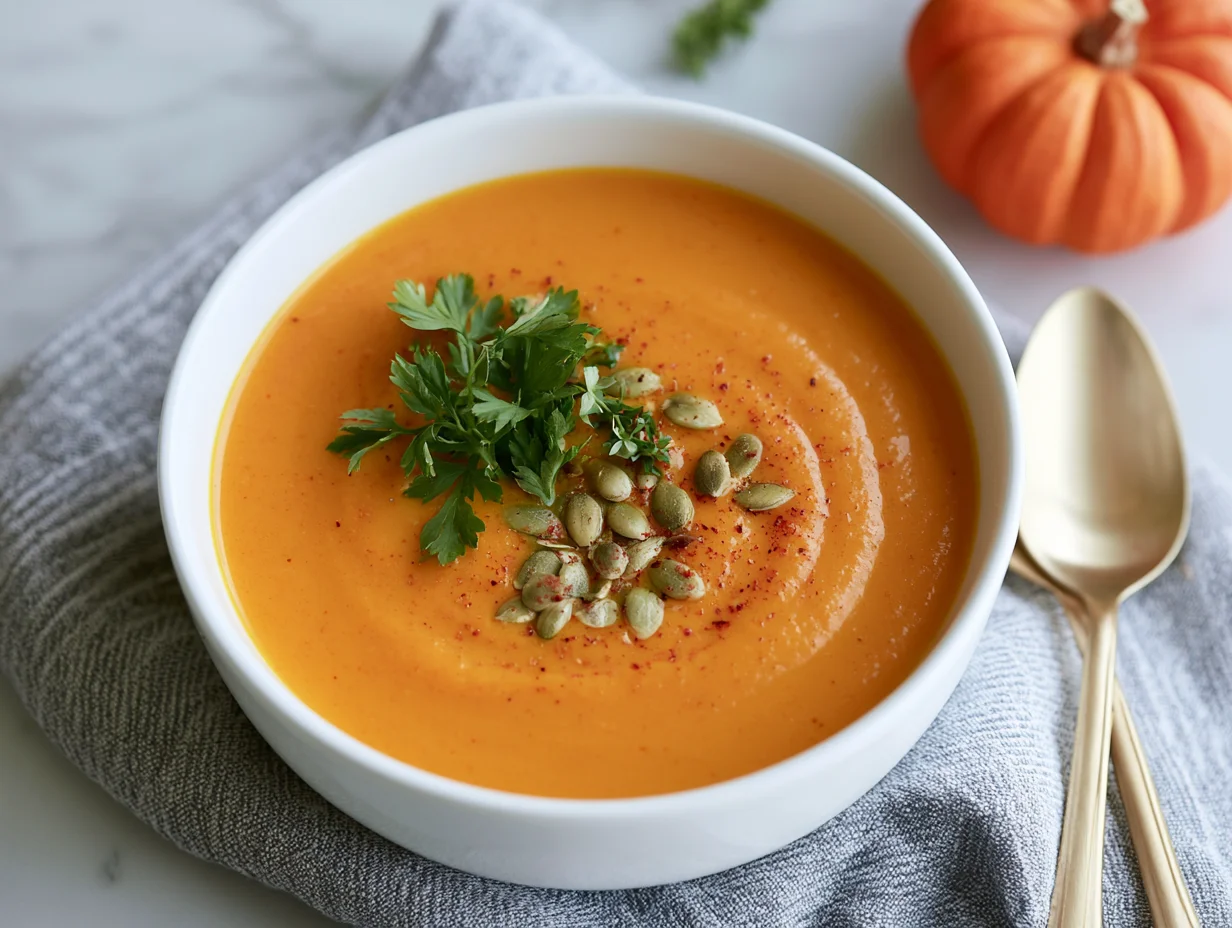
Creamy Pumpkin Soup Recipe
There is something deeply comforting about a bowl of pumpkin soup — the kind that warms you from the inside out and makes you feel like autumn itself is being ladled into your bowl. This recipe has been a staple in my kitchen for years, and every time I make it, it disappears faster than I can plate it.
What sets this creamy pumpkin soup apart from every other version you have tried is balance. It is not just sweet, not just savory, and not overwhelmingly spiced. It walks the line between warmth and brightness in a way that keeps you coming back for spoonful after spoonful without any single flavor overpowering the rest.
I developed this recipe after years of testing different ratios, roasting techniques, and finishing touches. The result is a velvety, restaurant-quality soup that you can make entirely at home with pantry staples and a single pot. No fancy equipment. No hard-to-find ingredients. Just honest, deeply satisfying cooking.
Whether you are feeding a crowd, meal-prepping for the week, or looking for the perfect starter to a holiday dinner, this creamy pumpkin soup will earn a permanent spot in your recipe rotation. Let’s get into it.
Ingredients You’ll Need
Every great bowl starts long before the stove comes on — here is what you will gather to make this soup sing from the very first spoonful.
One of the things I love about this recipe is that it uses simple pantry ingredients. You probably already have most of them in your kitchen.
Base Ingredients
- 2 lbs fresh pumpkin, peeled and cubed (or 1 can, 15 oz, pure pumpkin purée)
- 2 tablespoons olive oil
- 1 medium yellow onion, diced
- 4 cloves garlic, minced
- 1 teaspoon fresh ginger, grated
- 4 cups vegetable broth (low sodium)
- 1 cup full-fat coconut milk (or heavy cream)
- 1 teaspoon ground cumin
- ½ teaspoon ground cinnamon
- ¼ teaspoon ground nutmeg
- Salt and black pepper to taste
- 1 tablespoon maple syrup or honey
Optional Add-ins
- ½ teaspoon smoked paprika (for a subtle smoky depth)
- 1 tablespoon apple cider vinegar (for brightness)
- ¼ teaspoon cayenne pepper (for gentle heat)
- 2 tablespoons unsalted butter (for extra richness at the finish)
- Fresh thyme sprigs (added during simmering)
- 1 small carrot, diced (for added natural sweetness)
Step-by-Step Instructions
Step 1 — Prepare the Pumpkin
If using fresh pumpkin, peel, seed, and cube it into roughly 1-inch pieces for even cooking. Toss the cubes with one tablespoon of olive oil, a pinch of salt, and a pinch of cinnamon. Spread onto a baking sheet and roast at 400°F (200°C) for 25 to 30 minutes until the edges are caramelized and the flesh is fork-tender. Roasting rather than boiling is the single biggest flavor upgrade you can give this soup — it concentrates the natural sugars and adds a subtle nuttiness that canned pumpkin simply cannot replicate.
Step 2 — Sauté the Aromatics
In a large, heavy-bottomed pot, heat the remaining tablespoon of olive oil over medium heat. Add the diced onion and cook for 5 to 7 minutes, stirring occasionally, until softened and just beginning to turn golden at the edges. Add the minced garlic and grated ginger, and cook for another minute until fragrant. This is the flavor foundation of the entire soup, so take your time here. Rushing the aromatics leads to a flat, one-dimensional base — patience pays off in the depth of the final dish.
Step 3 — Build the Soup Base
Add the roasted pumpkin to the pot with the sautéed aromatics. Pour in the vegetable broth and stir everything together. Add the cumin, cinnamon, nutmeg, and any optional add-ins you are using, like smoked paprika or fresh thyme. Bring the mixture to a gentle boil, then reduce to a simmer and cook uncovered for 10 to 15 minutes. This simmering phase allows all the flavors to merge and develop together. You will notice the broth deepening in color and aroma as everything comes together into a cohesive, beautifully fragrant pot of soup.
Step 4 — Blend Until Silky Smooth
Remove the pot from heat and use an immersion blender to blend the soup directly in the pot until completely smooth and velvety. If using a countertop blender, work in batches and be cautious — fill no more than halfway and hold the lid down firmly with a kitchen towel to prevent hot liquid from escaping. Blend for a full 60 seconds per batch for the smoothest texture. Once blended, return the soup to the pot over low heat and stir in the coconut milk and maple syrup. Taste and adjust seasoning with salt and pepper as needed.
Step 5 — Finish and Serve
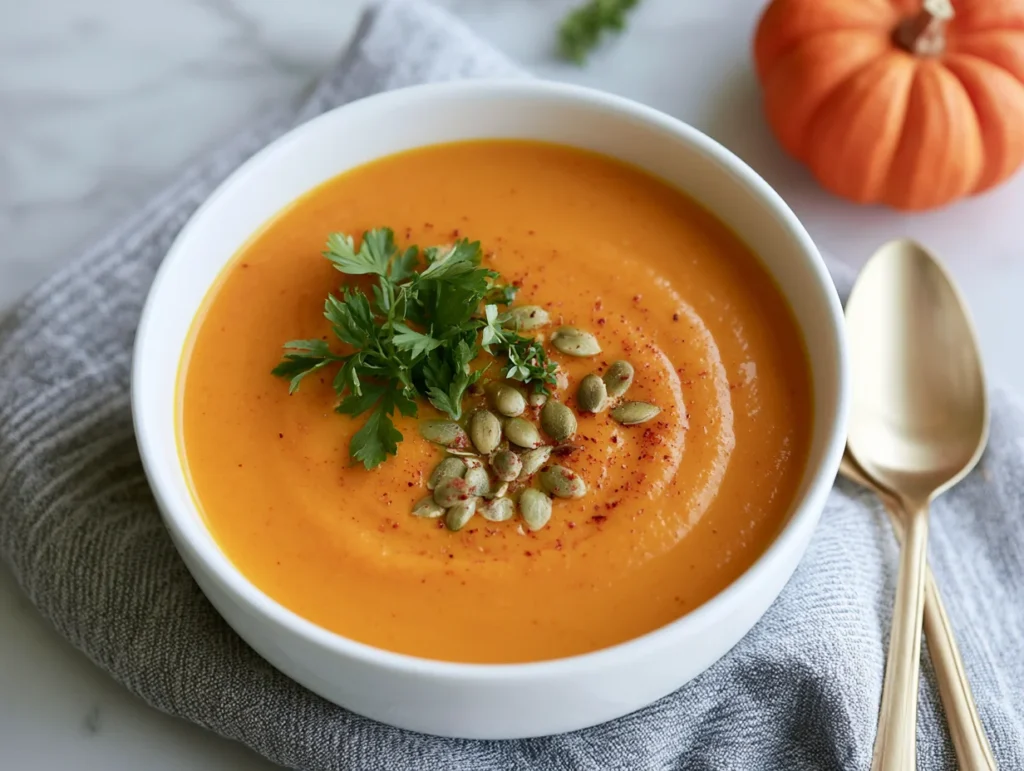
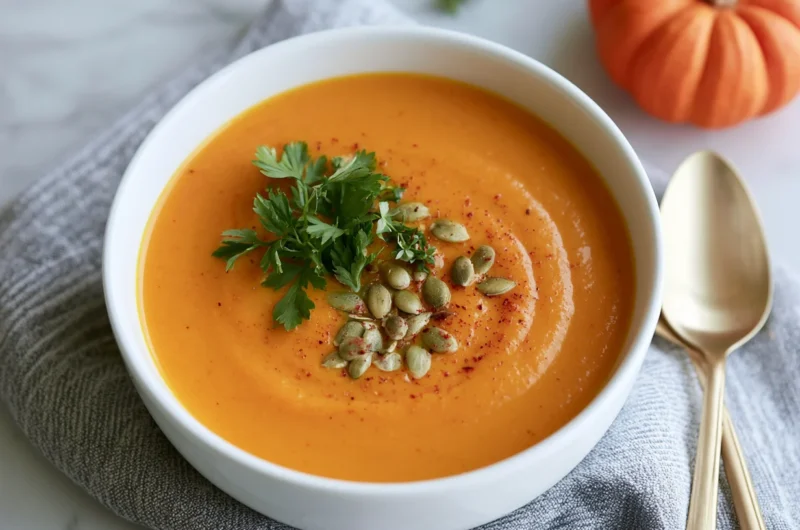
Bring the blended soup back to a gentle simmer over low heat for 3 to 5 minutes, stirring occasionally, just long enough to warm everything through and allow the coconut milk to fully incorporate. Taste one final time and adjust for salt, sweetness, or acidity. If you’re using apple cider vinegar, add it now, half a teaspoon at a time, until the soup tastes balanced and bright. Ladle into warmed bowls and finish with a swirl of cream or coconut milk, toasted pumpkin seeds, a pinch of smoked paprika, and fresh cracked black pepper. Serve immediately.
Cook Time
Total
Approximately 55 to 60 minutes from start to finish — a manageable, satisfying cook that rewards you generously for every minute invested.
Prep
15 to 20 minutes, including peeling, cubing, and measuring out all aromatics and spices before anything hits the heat.
Bake
25 to 30 minutes for roasting the pumpkin at 400°F, which is where most of the deep flavor development happens.
Servings
This recipe makes a generous pot of soup, designed to feed a table comfortably or stock your fridge for a week of effortless meals. The yield is satisfying without requiring you to double anything — though doubling is absolutely an option if you are hosting a crowd.
Makes approximately 4 to 6 servings, depending on bowl size and whether it is served as a starter or a main course. As a starter, you will comfortably serve 6. As a full meal paired with crusty bread or a side salad, it serves 4 generously.
Each serving is approximately 1 to 1.5 cups of finished soup. To scale it up, simply double all ingredients — the cooking time remains largely the same, though you may need a few extra minutes of simmering to bring a larger volume of liquid up to temperature.
Common Mistakes in This Recipe
One of the most frequent errors home cooks make with pumpkin soup is skipping the roasting step and boiling the pumpkin instead. Boiled pumpkin becomes waterlogged and bland — it loses the depth and concentrated sweetness that makes this soup genuinely memorable. Roasting takes an extra 30 minutes but transforms the flavor entirely.
Another common mistake is over-spicing too early. Adding all the spices at the beginning of cooking and then continuing to simmer for a long time can result in a bitter, muddy flavor profile. Spices bloom beautifully when added with the aromatics, but they should not simmer aggressively for extended periods.
Many people also blend the soup immediately after roasting and sautéing without a proper simmering phase. Skipping the 10 to 15 minute simmer means the flavors never fully merge. The soup ends up tasting like separate ingredients rather than a unified, cohesive dish with real depth.
Lastly, under-seasoning at the end is a mistake that quietly ruins an otherwise perfect soup. Pumpkin is naturally mild and sweet, and it needs salt, acid, and sometimes a touch of sweetness to taste complete. Skipping a final taste-and-adjust before serving leaves the soup feeling flat, no matter how good the base technique was.
Solutions to Common Mistakes
Always roast the pumpkin before adding it to the pot. The caramelization that happens in the oven cannot be replicated in a pot of broth. If you are short on time, canned pure pumpkin is an acceptable alternative — just toast it briefly in the dry pot for 2 to 3 minutes before adding broth to mimic some of that roasted depth.
For the spices, add them to the pot along with the aromatics and let them bloom in the oil for 60 seconds before adding liquid. After that, they need only enough heat to meld — the simmering phase is sufficient, and no further intense cooking is required.
Never skip the simmering phase. Even 10 minutes makes a significant difference in how cohesive and rounded the final soup tastes. Think of it as the moment all the individual components stop being separate and start becoming one dish.
At the very end, taste critically. Season with salt, add a squeeze of lemon or a splash of apple cider vinegar if the soup tastes flat or one-dimensional, and adjust sweetness with maple syrup if needed. These final micro-adjustments are what separate good soup from truly great soup.
Nutritional Information (approx. per serving)
- Calories: 210 kcal
- Total Fat: 12g (Saturated Fat: 7g)
- Carbohydrates: 24g
- Dietary Fiber: 4g
- Natural Sugars: 9g
- Protein: 3g
- Sodium: 380mg (using low-sodium broth)
- Vitamin A: 245% of Daily Value
- Vitamin C: 18% of Daily Value
- Potassium: 520mg
- Iron: 10% of Daily Value
- Calcium: 6% of Daily Value
Pumpkin is one of the most nutrient-dense vegetables you can put in a pot. It is extraordinarily high in beta-carotene, the compound your body converts into Vitamin A, which supports eye health, immune function, and skin integrity. A single serving of this soup delivers well over double your daily recommended intake.
The coconut milk in this recipe contributes medium-chain triglycerides, a form of fat that the body metabolizes efficiently and that may support sustained energy levels. Unlike heavy cream, coconut milk also adds a dose of manganese and keeps the recipe naturally dairy-free for those who need it.
The addition of ginger and garlic brings genuine anti-inflammatory compounds — gingerols and allicin — that have been studied extensively for their role in supporting immune health and reducing oxidative stress. These are not just flavor-builders; they are functional ingredients doing real work.
Together, this soup delivers a meal that is high in fiber, naturally low in refined sugar, and loaded with micronutrients that support everything from digestion to immunity. It is genuinely nourishing in a way that feels indulgent but isn’t.
Storage Instructions
This soup stores exceptionally well, which makes it one of the best recipes you can add to a weekly meal-prep routine. Once cooled to room temperature, transfer it to an airtight container and refrigerate for up to 5 days. The flavor actually deepens overnight as the spices continue to meld, making day-two soup arguably better than the freshly made version.
For longer storage, this soup freezes beautifully. Pour cooled soup into freezer-safe containers or zip-lock bags, leaving about an inch of headspace to allow for expansion. Freeze for up to 3 months. Label with the date so you are not left guessing in February.
To reheat from the refrigerator, warm gently on the stovetop over medium-low heat, stirring occasionally, until heated through. Add a splash of broth or water if the soup has thickened in the fridge — it will naturally become a bit denser after sitting. Avoid boiling during reheating, as high heat can dull the spices and cause the coconut milk to separate.
To reheat from frozen, thaw overnight in the refrigerator and then follow the same stovetop method. Alternatively, place the frozen container in a bowl of cold water for a few hours to speed things up. Do not microwave from fully frozen, as uneven heating can affect the texture and flavor of the finished soup.
Suggestions
This soup is a natural canvas for toppings, and the right garnish can completely elevate the eating experience. A swirl of coconut cream or a drizzle of good olive oil adds richness and visual appeal. Toasted pumpkin seeds — pepitas — provide a satisfying crunch that contrasts beautifully with the silky texture of the soup beneath. A pinch of smoked paprika and a few fresh thyme leaves make it look effortlessly elegant.
For a heartier meal, serve this soup alongside a thick slice of crusty sourdough bread or warm naan. The bread is perfect for scooping and soaking, and it turns what could be a light starter into a genuinely filling lunch or dinner. A simple arugula salad with lemon vinaigrette on the side also pairs wonderfully, cutting through the richness of the soup with bitterness and acid.
If you want to make this recipe feel more substantial without adding a side dish, stir in a can of drained white beans before blending — they add protein, creaminess, and body without affecting the flavor profile. Alternatively, a handful of cooked red lentils blended directly into the soup boosts both protein and fiber significantly.
For a dinner party or holiday table, consider serving this soup in small cups as an amuse-bouche or pre-dinner sip. It is impressive, warmly flavored, and utterly elegant in miniature. Top each cup with a single pepita and a thread of cream for a presentation that looks far more involved than it actually is.
Seasonal Relevance
Pumpkin soup is most naturally at home in the fall, when sugar pumpkins and pie pumpkins flood farmers markets and grocery stores from September through November. This is when pumpkin is at its peak sweetness and most readily available fresh, and the cool air outside makes a bowl of warm, velvety soup feel like exactly the right thing to eat.
That said, this recipe is not limited to autumn. Thanks to the widespread availability of canned pure pumpkin year-round, you can make this soup in January or July without compromising on flavor. Canned pumpkin is consistent, convenient, and in many ways even easier to work with than fresh — just be sure to buy pure pumpkin purée, not pumpkin pie filling, which contains added sugar and pre-mixed spices.
In winter, this soup fits naturally into holiday menus as a first course before roasted meats or a vegetarian centerpiece at a Christmas gathering. In spring, lighten it by finishing with a squeeze of lemon and a handful of fresh herbs rather than the warming spices. In summer, it can even be served chilled, thinned slightly and topped with a drizzle of herb oil for a sophisticated seasonal twist.
The flavors in this recipe — warming spices, sweet pumpkin, creamy coconut, savory aromatics — are ones that transcend any single season. Once you learn this recipe, you will find yourself making it all year long, adjusting the garnishes and finishing touches to match whatever season you happen to be cooking in.
Final Words
There are certain recipes that become pillars — the ones you return to again and again because they are reliable, satisfying, and genuinely delicious every single time. This creamy pumpkin soup is one of those recipes. It is straightforward enough to make on a Tuesday evening after work and impressive enough to serve to guests at a dinner party without a second thought.
What I love most about this soup is that it rewards intention. Every small decision — roasting instead of boiling, simmering long enough for the flavors to merge, tasting and adjusting at the end — shows up in the final bowl. It is the kind of recipe that teaches you to cook better simply by making it, and it becomes second nature after the first or second attempt.
If you make this recipe, I would encourage you not to rush it. Give the pumpkin time in the oven. Let the aromatics soften fully before adding anything else. Take a moment at the end to taste and balance. These are the habits that separate a good cook from a great one, and this soup is a beautiful recipe in which to practice them.
Thank you for cooking with me today. I hope this creamy pumpkin soup brings the same warmth to your table that it has brought to mine over the years. Share it with people you love, make a big pot, and do not forget to save some for yourself the next day — it is even better then.
Frequently Asked Questions
Can I use butternut squash instead of pumpkin in this recipe?
Absolutely. Butternut squash is an excellent substitute and behaves almost identically to pumpkin in this recipe. It is slightly sweeter and a bit less earthy, which produces a soup with a touch more natural sweetness. Roast it exactly the same way — the method and timing are identical to fresh pumpkin.
How do I make this soup thicker or thinner to my preference?
For a thicker consistency, reduce the amount of broth by half a cup during cooking, or simmer the blended soup uncovered for an additional 5 to 10 minutes to allow it to reduce and concentrate. For a thinner soup, simply add more warm broth, a quarter cup at a time, after blending until you reach your preferred consistency.
Is this creamy pumpkin soup recipe vegan and gluten-free?
Yes, when made as written with coconut milk and maple syrup, this recipe is fully vegan and naturally gluten-free. The only thing to watch is your broth — always check that your vegetable broth is labeled gluten-free, as some brands use additives that may not be suitable for those with celiac disease or gluten sensitivity.
Creamy Pumpkin Soup Recipe
4
servings20
minutes40
minutes210
kcal1
hourA velvety, warming pumpkin soup made with roasted pumpkin, aromatic spices, and creamy coconut milk. Naturally vegan, gluten-free, and deeply satisfying — ready in under an hour with simple pantry staples.
Ingredients
Base ingredients
2 lbs fresh pumpkin, peeled and cubed (or 15 oz pure pumpkin purée)
2 tablespoons olive oil
1 medium yellow onion, diced
4 cloves garlic, minced
1 teaspoon fresh ginger, grated
4 cups low-sodium vegetable broth
1 cup full-fat coconut milk
1 teaspoon ground cumin
½ teaspoon ground cinnamon
¼ teaspoon ground nutmeg
Salt and black pepper to taste
1 tablespoon maple syrup or honey
Optional add-ins
½ teaspoon smoked paprika
1 tablespoon apple cider vinegar
¼ teaspoon cayenne pepper
2 tablespoons unsalted butter
Fresh thyme sprigs
1 small carrot, diced
Directions
- Toss pumpkin cubes with 1 tbsp olive oil, salt, and cinnamon. Roast at 400°F (200°C) for 25–30 minutes until caramelized and fork-tender.
- Heat remaining olive oil in a large pot over medium heat. Sauté diced onion for 5–7 minutes until softened and golden. Add garlic and ginger, cook for 1 minute until fragrant.
- Add roasted pumpkin to the pot. Pour in vegetable broth and stir in cumin, cinnamon, nutmeg, and any optional add-ins. Bring to a gentle boil, then simmer uncovered for 10–15 minutes.
- Remove from heat. Use an immersion blender to blend until completely smooth. For a countertop blender, work in batches with the lid held firmly.
- Return to low heat. Stir in coconut milk and maple syrup. Simmer for 3–5 minutes. Taste and adjust salt, pepper, or acid. Serve immediately with toppings of choice.
Recipe Video
Notes
- Always roast fresh pumpkin — it builds caramelized depth that boiled or canned pumpkin cannot replicate.
- If using canned pumpkin, toast it dry in the pot for 2–3 minutes before adding broth to deepen the flavor.
- Add spices early and bloom them in oil for 60 seconds before adding any liquid for best flavor development.
- Finish with a splash of apple cider vinegar or lemon juice if the soup tastes flat — acid is the missing link.
- Soup thickens overnight in the fridge; loosen with a splash of warm broth when reheating.
- Freezes well for up to 3 months in airtight containers. Always label with the date.
- For a protein boost, blend in a drained can of white beans before serving — it adds creaminess without changing the flavor.