A truly memorable Easter cake is not just baked, it is composed with intention, balance, and a sense of seasonal storytelling. As a recipe author and professional baking writer, I approach this Easter Cake Recipe Soft and Festive as more than dessert,it is a celebration centerpiece designed to reflect spring’s lightness and renewal.
The structure of this cake is intentionally soft, moist, and layered with delicate flavor notes of vanilla, citrus, and almond. Each element is crafted to ensure bakery-level quality at home, without unnecessary complexity. What makes this recipe stand out is its disciplined technique combined with festive charm, allowing both beginners and experienced bakers to achieve consistent results.
This cake is ideal for Easter gatherings where presentation matters as much as taste, offering elegance, softness, and a refined sweetness that lingers beautifully on the palate.
? For a light and fruity dessert option, check out our Easy Lemon Bundt Cake Recipe
The Hidden Baking Error That Ruins Easter Cakes
In my experience writing and testing cake recipes professionally, the most frequent mistake in Easter cake preparation is overmixing the batter once flour is introduced. Many assume that extended mixing improves smoothness, but in reality it activates excessive gluten development, which results in a dense and chewy structure rather than a soft, airy crumb.
Another overlooked issue is the misuse of temperature-sensitive ingredients. When butter, eggs, or milk are used straight from the refrigerator, emulsification becomes unstable, leading to uneven texture and inconsistent rise during baking. I also see frequent errors in oven temperature calibration, where home bakers rely on assumption rather than accuracy.
This causes cakes to bake unevenly, with dry edges and undercooked centers. These mistakes may seem minor individually, but together they significantly compromise the refined, delicate texture expected from a properly executed Easter cake.
Professional Fixes for a Perfectly Soft Easter Cake
As a recipe developer, I always emphasize that precision transforms ordinary baking into professional-quality results. The first corrective step is ensuring all ingredients are fully brought to room temperature before mixing begins, allowing proper emulsification and structural stability. Butter should be soft but not melted, enabling it to trap air efficiently when creamed with sugar.
Flour must always be incorporated gradually and folded gently rather than aggressively mixed, preserving the delicate crumb structure. Oven preheating is equally critical, as stable heat ensures even rising from the moment the batter enters the oven.
I also recommend using digital weighing scales for accuracy, as volume measurements often introduce inconsistencies. Finally, monitoring bake time closely and testing doneness slightly before completion prevents dryness. These refinements collectively ensure a soft, moist, and refined Easter cake with consistent bakery-standard results every time.
Ingredients List
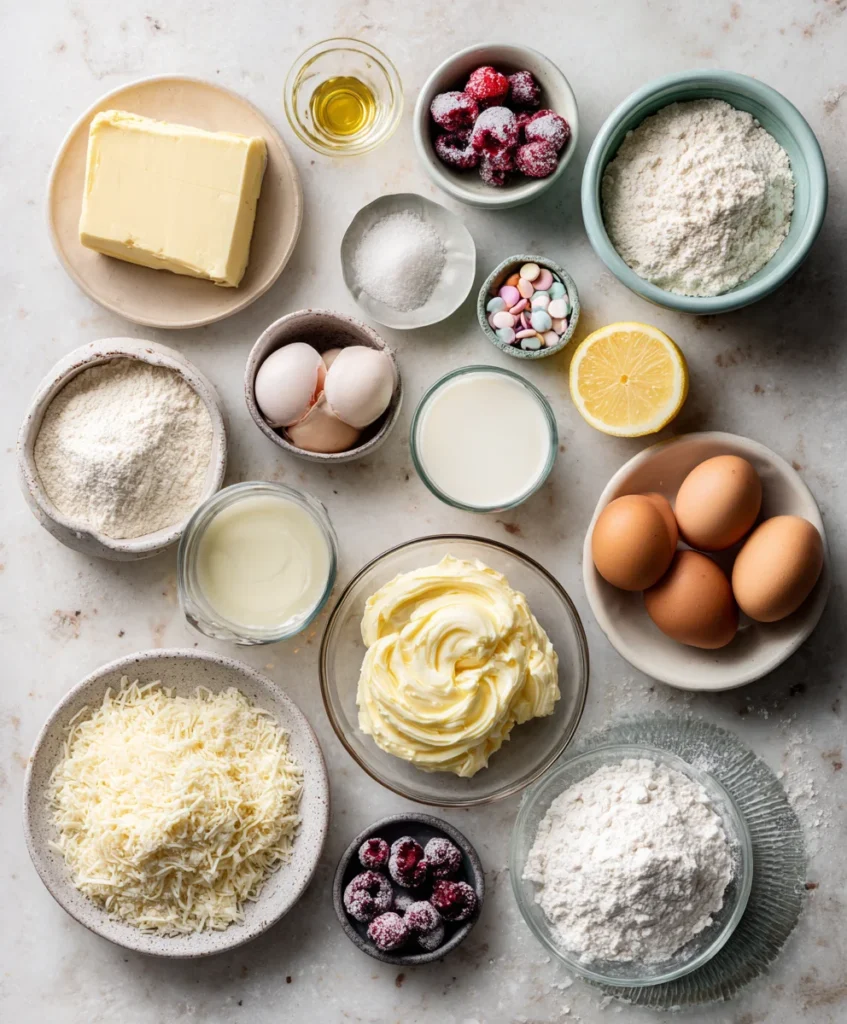
Base Ingredients:
- 2½ cups all-purpose flour
- 1 cup unsalted butter (softened)
- 1¾ cups fine granulated sugar
- 4 large eggs (room temperature)
- 1 cup whole milk
- 2 tsp pure vanilla extract
- 2 tsp baking powder
- ½ tsp salt
- 1 tbsp fresh lemon zest
- ½ tsp almond extract
Optional Add-ins:
- Pastel sugar sprinkles
- White chocolate chips
- Candied fruit pieces
- Shredded coconut
- Cream cheese frosting
- Fresh seasonal berries
- Edible flowers
- Mini chocolate eggs
Step-by-Step Instructions
Prepare the Baking Base
I always begin by preparing the baking environment before touching the ingredients, as this sets the foundation for consistency. Preheating the oven to 350°F ensures stable thermal conditions, while properly greasing and lining cake pans guarantees clean release after baking. In a separate bowl, I combine flour, baking powder, and salt, ensuring even distribution of leavening agents.
In another bowl, butter and sugar are creamed together until pale and aerated, which is essential for building structure and lightness. Eggs are added one at a time to maintain emulsification stability, followed by vanilla, almond extract, and lemon zest for aromatic depth. This stage is not rushed, as proper aeration and balance at this point directly influence the final texture. Every movement in this phase is intentional, because the base determines whether the cake achieves elegance or falls into heaviness during baking.
Create the Smooth Cake Batter
At this stage, precision becomes even more important. I incorporate the dry ingredients into the butter mixture gradually, alternating with milk to maintain smooth consistency and prevent separation. The process begins and ends with flour to stabilize the batter structure. I always mix on low speed or fold manually to avoid overdevelopment of gluten, which would compromise softness.
The batter should remain creamy, thick, and uniform without any visible streaks of flour. Optional inclusions such as white chocolate or sprinkles can be folded in gently at this point to maintain texture integrity. Overmixing is strictly avoided because it directly impacts crumb tenderness. The goal here is balance,ensuring all ingredients are fully integrated while preserving airiness. A well-prepared batter at this stage guarantees a refined, moist crumb after baking.
? If you love rich chocolate desserts, you’ll also like our Best Chocolate Cake Recipe
Bake the Cake Layers Evenly
Once the batter is prepared, I divide it evenly between the pans to ensure uniform baking and structural symmetry. The surfaces are smoothed gently to promote even rise and prevent doming. The pans are placed centrally in the oven to maintain balanced heat exposure. During baking, I avoid opening the oven door unnecessarily, as temperature fluctuations can disrupt rising and texture formation.
The baking process typically takes around thirty to thirty-five minutes, but I always rely on visual and physical testing rather than time alone. A toothpick inserted into the center should return with a few moist crumbs, indicating perfect doneness. After baking, the cakes rest in their pans briefly before being transferred to a cooling rack. Proper cooling is essential because it stabilizes structure and prevents moisture loss before decoration begins.
Decorate with a Festive Easter Finish
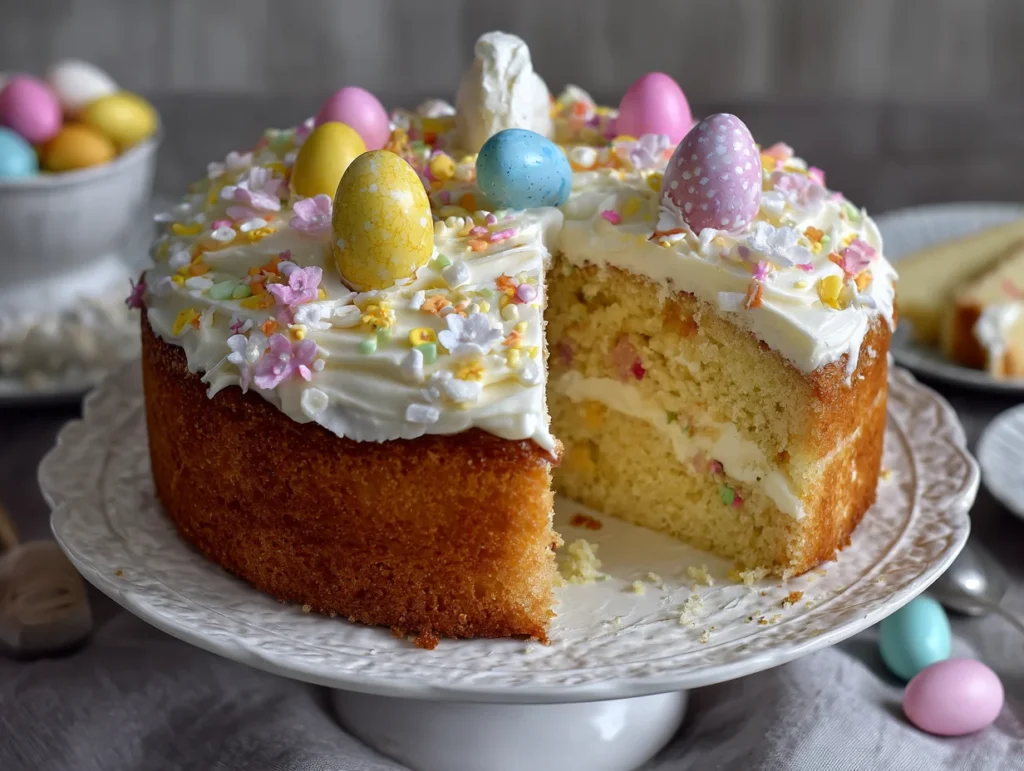
Decoration is where the cake transforms from a baked product into a celebratory centerpiece. I begin with a smooth layer of cream cheese frosting, applied evenly between layers and across the exterior. The goal is a clean, polished finish that reflects professional presentation standards. Easter-themed decorations such as pastel tones, berries, coconut, or edible flowers are then added thoughtfully rather than excessively.
I always advise restraint in decoration, as visual balance enhances elegance. Mini chocolate eggs can be placed strategically for seasonal character. For best results, the cake is briefly chilled before final detailing to improve frosting stability. Slicing should be done with a warm knife to preserve clean edges and reveal the soft interior crumb. This final stage completes the transformation into a refined Easter dessert suitable for formal and family celebrations.
Cook Time
Total: 55 minutes
Prep: 20 minutes
Bake: 35 minutes
Servings
From a professional standpoint, this Easter cake is designed to comfortably serve 10 to 12 people, depending on portion sizing and presentation style. The texture is light yet satisfying, making it suitable for both small family gatherings and larger festive tables. In my recipe development experience, cakes with this structure perform well in shared settings because they maintain moisture even after slicing.
The balanced sweetness ensures that servings remain enjoyable without overwhelming the palate. When presented as part of an Easter spread, this cake holds its structure well and pairs beautifully with beverages such as tea or coffee. It can also be scaled for larger events without compromising quality. Each slice reflects consistency in crumb, flavor, and moisture, which is a hallmark of professionally developed celebration cakes.
Nutritional Information (approx. per serving)
- Calories: 390
- Protein: 5g
- Carbohydrates: 48g
- Fat: 19g
- Sugar: 31g
- Fiber: 1g
- Sodium: 220mg
From a nutritional perspective, this Easter cake offers a balanced indulgence suitable for festive occasions. While it is a dessert, it contains wholesome ingredients such as eggs, milk, and butter that contribute to texture and energy. The inclusion of citrus zest provides a natural freshness that enhances flavor without relying solely on sweetness. In moderation, this cake fits comfortably within celebratory meals, especially when paired with fresh fruit or lighter accompaniments. Homemade preparation also allows greater control over ingredient quality compared to commercial alternatives. The richness of the cake is intentional, designed to reflect its role as a seasonal centerpiece rather than an everyday dessert, making it both satisfying and occasion-appropriate.
? For another holiday-inspired treat, don’t miss our Delicious Easter Cookie Cake Recipe
Storage Instructions
Proper storage is essential to preserve both texture and flavor integrity. I recommend storing the cake in an airtight container at room temperature for short-term use, ideally up to two days. If environmental conditions are warm, refrigeration becomes necessary to maintain frosting stability and prevent spoilage. Before serving chilled cake, it should be allowed to rest at room temperature to restore softness and enhance flavor expression.
For longer storage, unfrosted layers can be frozen securely and thawed when needed without quality loss. In professional baking practice, freezing layers is often used for advanced preparation, especially during high-demand festive seasons. Careful wrapping prevents moisture loss and protects structural integrity. When stored correctly, this Easter cake retains its softness, aroma, and visual appeal even after several days of preparation.
Suggestions
In my professional experience, presentation elevates this cake as much as flavor does. I often recommend pairing it with lightly flavored cream cheese frosting enhanced with vanilla or citrus for depth. Fresh berries and edible flowers create a natural spring aesthetic that aligns beautifully with Easter themes. A light syrup brush can also be applied to intensify moisture retention without altering flavor balance. Coconut flakes add texture contrast and seasonal character, especially when paired with pastel decoration schemes. For serving, a minimalistic presentation approach works best, allowing the cake’s structure and color palette to stand out. This recipe also adapts well to brunch settings, pairing elegantly with warm beverages. The key suggestion is restraint,allowing simplicity, freshness, and seasonal identity to define the final presentation rather than overwhelming decoration.
Seasonal Relevance
From a culinary writing perspective, this cake is deeply aligned with the seasonal identity of Easter and spring celebrations. The flavor profile,light citrus notes, soft vanilla base, and delicate sweetness,reflects the freshness associated with the season. Spring baking emphasizes renewal and brightness, and this recipe captures that philosophy through both taste and presentation.
Easter gatherings often prioritize visually appealing desserts that feel celebratory yet refined, making this cake an ideal centerpiece. Ingredients such as berries, coconut, and floral decorations further reinforce seasonal relevance. In professional recipe development, seasonal alignment is crucial for engagement, and this cake performs exceptionally well in that context. It transitions seamlessly across different spring events, from Easter brunches to outdoor gatherings, making it both versatile and thematically consistent.
As a recipe author, I view this Easter Cake Recipe Soft and Festive as a carefully balanced composition of technique, flavor, and seasonal artistry. Every step,from ingredient preparation to final decoration,is designed to produce a cake that is soft, moist, and visually elegant. The emphasis on controlled mixing, accurate measurements, and thoughtful presentation ensures consistent results at a professional level.
This cake is not simply a dessert; it is a structured baking experience that reflects care and culinary understanding. Its versatility makes it suitable for both intimate family gatherings and larger festive occasions. When executed correctly, it delivers a refined texture and memorable flavor profile that aligns perfectly with Easter celebrations. Ultimately, it stands as a reliable, elegant, and seasonally expressive recipe that embodies both tradition and modern baking discipline.
? If you enjoy festive desserts with a creamy twist, try our Easy Strawberry Cheesecake Cupcakes Recipe
Frequently asked questions
1. Can I replace butter with oil in this Easter cake?
Yes, oil can be used as a substitute, but it will slightly alter the texture. Butter provides structure and flavor depth, while oil creates a softer but less rich crumb. For best results, a partial substitution is recommended rather than full replacement.
2. Why did my cake sink in the center?
A sunken center usually indicates underbaking or opening the oven door too early. It can also result from incorrect leavening measurements. Ensuring stable oven temperature and proper baking time prevents this structural issue.
3. Can I make this cake gluten-free?
Yes, a high-quality gluten-free flour blend can be used. However, texture may vary slightly. Adding a binding agent such as xanthan gum helps maintain structure and prevents excessive crumbling in the final cake.
4. What is the best way to frost this cake smoothly?
For a smooth finish, ensure the cake is fully cooled before frosting. Applying a crumb coat first and chilling briefly helps stabilize layers. Using an offset spatula allows controlled and even spreading for professional results.
5. Can I flavor this cake differently for other occasions?
Absolutely. This base recipe is highly adaptable. You can replace lemon zest with orange, add spices like cinnamon, or incorporate cocoa for variation. The structure supports multiple flavor profiles without affecting texture quality.
