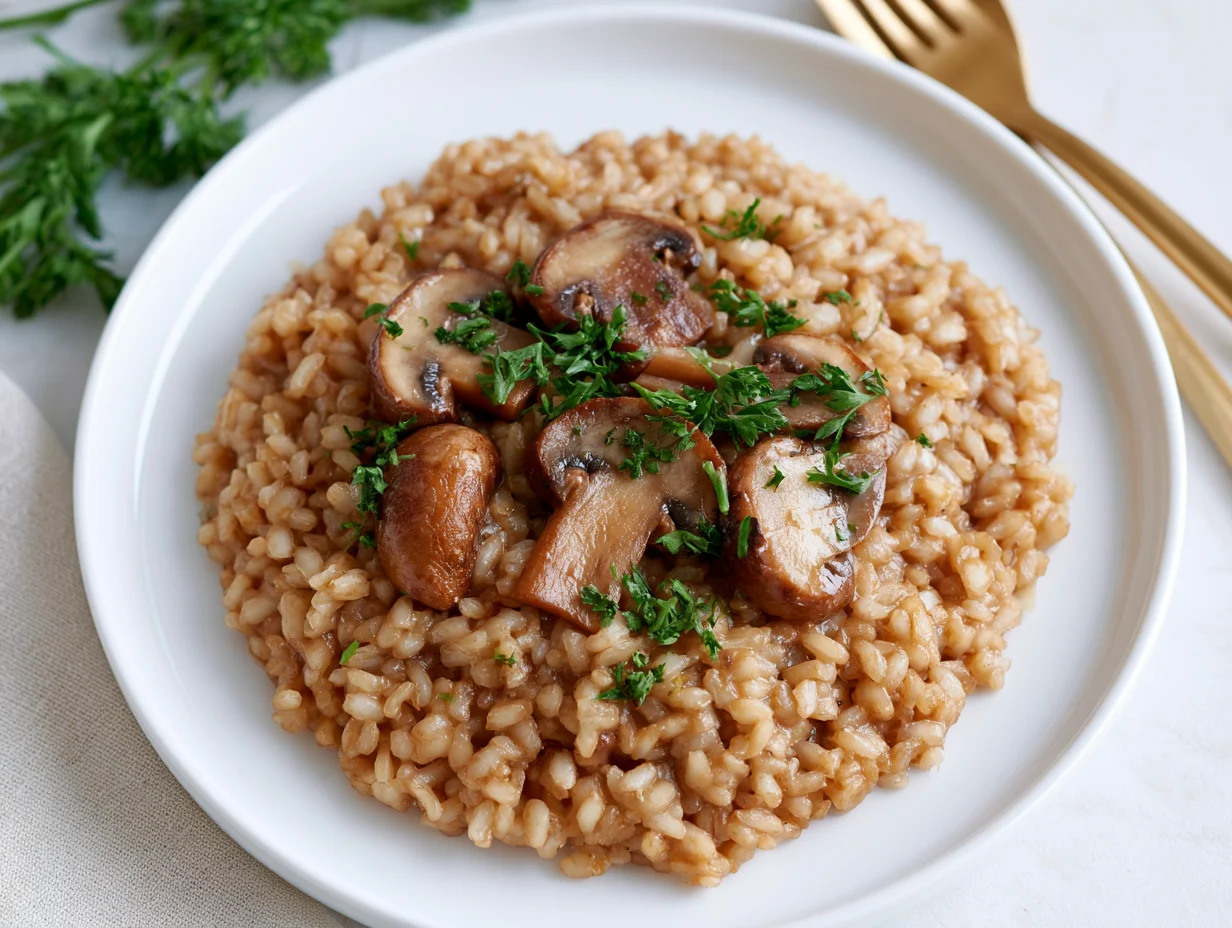
Healthy Mushroom Risotto Recipe
Risotto has a reputation for being a restaurant-only dish, something reserved for special occasions or candlelit dinners. That reputation is undeserved. This healthy mushroom risotto strips away the heavy cream and excessive butter that traditional versions rely on, replacing them with smart techniques that still deliver that signature silky, spoon-coating texture.
What makes this version different is balance. Earthy mushrooms bring deep umami flavor, while a lighter broth-to-rice ratio keeps the dish satisfying without leaving you feeling weighed down. It’s comfort food rewritten with intention, not deprivation.
This is the kind of recipe that rewards patience. Risotto isn’t difficult, but it does ask for your attention, a wooden spoon, and about thirty minutes of stirring that turns into something close to meditation. The payoff is a creamy, restaurant-quality plate made entirely in your own kitchen.
Whether you’re cooking for a weeknight dinner or plating something special for guests, this recipe holds its own. It’s nutritious enough for regular rotation and elegant enough to impress anyone sitting at your table.
Ingredients You’ll Need
Great risotto starts long before the rice ever touches the pan, and the secret lies in a short list of honest, unfussy ingredients that do all the heavy lifting.
One of the things I love about this recipe is that it uses simple pantry ingredients. You probably already have most of them in your kitchen.
Base Ingredients
- 1 ½ cups Arborio rice
- 4 cups low-sodium vegetable broth, warmed
- 2 cups mixed mushrooms (cremini, shiitake, button), sliced
- 1 small yellow onion, finely diced
- 2 cloves garlic, minced
- ½ cup dry white wine
- 2 tablespoons olive oil
- 1 tablespoon unsalted butter
- ¼ cup grated Parmesan cheese
- 2 tablespoons fresh parsley, chopped
- Salt, to taste
- Black pepper, to taste
Optional Add-ins
- 1 cup baby spinach, wilted in at the end
- 2 tablespoons nutritional yeast, for a dairy-light version
- ½ teaspoon truffle oil, drizzled before serving
- ¼ cup toasted pine nuts, for added crunch
- 1 tablespoon lemon zest, for brightness
- ¼ cup dried porcini mushrooms, rehydrated and chopped
Step-by-Step Instructions
Step 1: Prepare the Broth and Mushrooms
Warm the vegetable broth in a saucepan over low heat and keep it simmering throughout the cooking process. Cold broth shocks the rice and slows even cooking. In a separate skillet, heat one tablespoon of olive oil and sauté the mushrooms until golden and slightly crisp at the edges, roughly six to seven minutes. Season lightly with salt. Remove the mushrooms and set aside, leaving any flavorful browned bits in the pan for the next step.
Step 2: Build the Flavor Base
In the same pan used for the mushrooms, add the remaining olive oil and butter. Sauté the diced onion over medium heat until soft and translucent, about four minutes. Stir in the minced garlic and cook for thirty seconds until fragrant, taking care not to let it brown or turn bitter. This base forms the foundation of flavor that the rice will absorb, so don’t rush through this stage.
Step 3: Toast the Rice
Add the Arborio rice directly to the onion and garlic mixture. Stir continuously for about two minutes, allowing each grain to become lightly toasted and coated in oil. This step matters more than most home cooks realize, as toasting the rice helps it hold its shape and release starch gradually rather than turning mushy during the long simmer ahead.
Step 4: Deglaze with Wine
Pour in the white wine and stir constantly as it bubbles and reduces. Let the alcohol cook off for about two minutes, scraping any browned bits from the bottom of the pan. The wine adds acidity and depth, balancing the richness that will build as the broth is incorporated. Skip this step only if necessary, and substitute with extra broth and a splash of lemon juice.
Step 5: Add Broth Gradually
Begin adding the warm broth one ladle at a time, stirring frequently and waiting until each addition is mostly absorbed before adding more. This slow process, typically eighteen to twenty minutes, coaxes starch from the rice and builds that signature creamy texture naturally, without relying on heavy cream.
Step 6: Finish and Serve
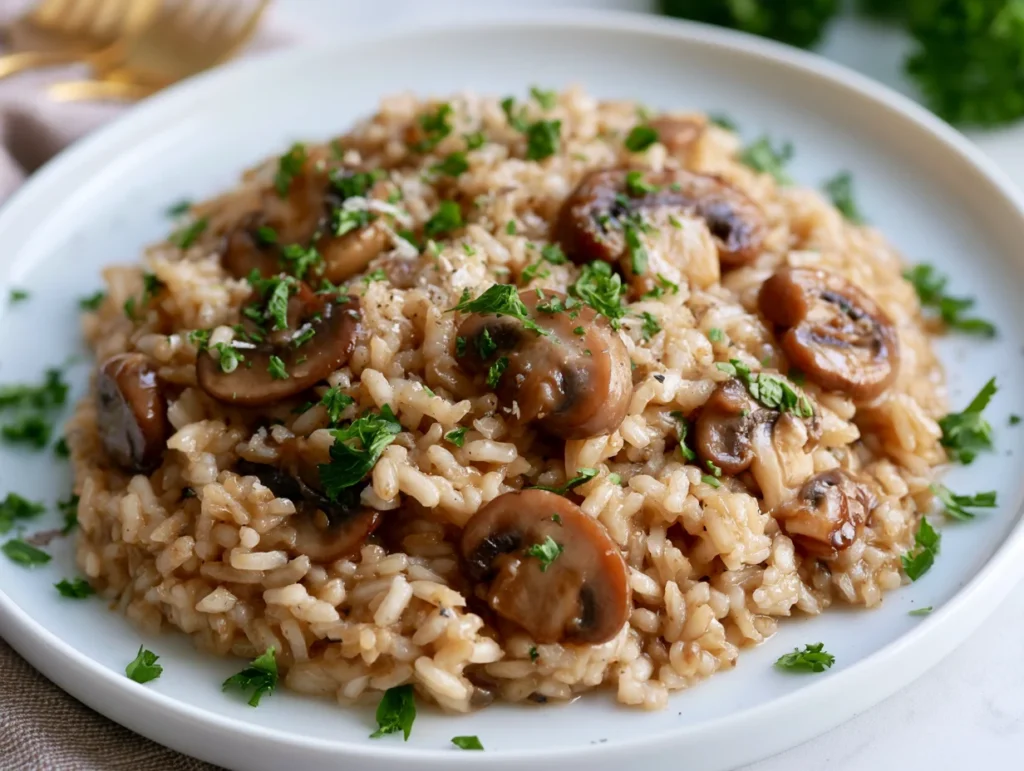
Once the rice is tender with a slight bite, fold in the cooked mushrooms, Parmesan, and chopped parsley. Adjust salt and pepper to taste. Remove from heat immediately, as risotto continues cooking even off the burner. Serve right away while it’s still loose and glossy, garnished with extra parsley or a light drizzle of olive oil.
Cook Time
Total:
45 minutes
Prep:
15 minutes
Bake:
Not applicable (stovetop only)
Servings
This recipe makes approximately 4 generous servings, making it ideal for a family dinner or a small gathering where everyone gets a satisfying portion without excess waste. Each serving lands comfortably as a main course, especially when paired with a simple green salad or crusty bread on the side.
If you’re cooking for two, the recipe halves cleanly without disrupting the broth-to-rice ratio that risotto depends on. For larger groups, doubling works well too, though it’s worth using a wider pan so the rice cooks evenly and the stirring stays manageable.
Leftovers, if any remain, reheat beautifully when treated gently. Adding a splash of warm broth while reheating restores the creamy consistency that risotto is known for, even on day two.
Common Mistakes in This Recipe
The most frequent mistake is adding cold broth straight from the refrigerator. This shocks the rice, halts the cooking process temporarily, and results in uneven texture, with some grains undercooked while others turn mushy. Always keep the broth simmering nearby.
Another common error is walking away from the pan for extended periods. Risotto needs frequent attention, not constant babysitting, but leaving it unstirred for too long allows rice to stick and scorch on the bottom, introducing a burnt flavor that’s difficult to mask.
Many home cooks also rinse the Arborio rice before cooking, assuming this is standard practice as with other rice varieties. Rinsing actually washes away the starch that gives risotto its creamy consistency, leading to a disappointingly thin, watery final dish.
Lastly, overcooking the mushrooms separately or adding them too early causes them to turn rubbery and lose their texture, diminishing the dish’s overall appeal and depth of flavor.
Solutions to Common Mistakes
Always warm your broth on the stove before you begin, keeping it at a gentle simmer in a separate pot throughout cooking. This single habit prevents temperature shock and keeps the rice cooking evenly from start to finish, with no surprises in texture.
To avoid scorching, stir every thirty to forty-five seconds rather than constantly or not at all. Use a wooden spoon and keep the heat at medium-low, which gives you enough time between stirs without risking a sticky, burnt bottom layer.
Skip rinsing the rice entirely. Arborio rice should go from package to pan untouched, preserving the starch that creates risotto’s signature creaminess. This small adjustment makes a noticeable difference in the final texture.
Cook mushrooms separately and add them back in during the final two minutes. This preserves their texture, prevents excess moisture from diluting the broth, and ensures every bite has that satisfying contrast between creamy rice and golden mushroom.
Nutritional Information (approx. per serving)
- Calories: 320
- Protein: 9g
- Carbohydrates: 48g
- Fat: 9g
- Saturated Fat: 3g
- Fiber: 3g
- Sodium: 410mg
- Sugar: 2g
Mushrooms bring more to the table than flavor alone. They’re a natural source of B vitamins, selenium, and antioxidants that support immune function, all while remaining low in calories and completely fat-free on their own.
This version of risotto trims back on heavy cream and excessive cheese, relying instead on technique to build creaminess. That means fewer saturated fats without sacrificing the comforting texture that makes risotto so beloved in the first place.
Using vegetable broth instead of cream-based liquid keeps sodium and fat in check, while still delivering a deeply savory base. It’s a simple swap that makes a noticeable nutritional difference across the entire dish.
Whole, recognizable ingredients dominate this recipe, from the rice to the garlic to the fresh herbs. There’s nothing processed weighing it down, which makes this a dish you can feel good about serving regularly, not just on occasion.
Storage Instructions
Risotto is best enjoyed fresh, but leftovers can be stored successfully with a little care. Transfer cooled risotto to an airtight container and refrigerate within two hours of cooking to maintain both safety and quality.
Stored properly, this dish keeps well in the refrigerator for up to three days. The texture will firm up as it chills, which is completely normal and easily reversed during reheating with the right approach.
To reheat, place risotto in a saucepan over low heat with a splash of warm broth or water, stirring gently until it loosens back into its original creamy consistency. Microwaving works in a pinch, though stovetop reheating yields noticeably better texture.
Freezing is possible but not ideal, as the rice can turn grainy upon thawing. If you do freeze it, portion it into individual containers and consume within one month for the best possible results.
Suggestions
Pair this risotto with a crisp white wine, the same variety used in the recipe, to tie the flavors together at the table. A light, acidic salad on the side also helps cut through the richness beautifully.
For added protein, consider topping each plate with a seared piece of chicken, shrimp, or a poached egg. The runny yolk in particular blends into the risotto, adding another layer of creaminess without extra effort.
If you’re entertaining, serve risotto in shallow, wide bowls rather than deep ones. This classic presentation allows the dish to spread slightly, cooling evenly and looking more elegant on the table.
Fresh herbs make a noticeable difference here. A final sprinkle of parsley, chives, or even microgreens right before serving adds color, freshness, and a professional finishing touch that elevates the entire plate.
Seasonal Relevance
Mushroom risotto shines brightest in the cooler months, when its warm, earthy character feels especially comforting. Autumn and winter bring out the best in this dish, pairing naturally with the season’s slower, cozier meals.
That said, this recipe isn’t strictly seasonal in terms of availability. Most mushroom varieties used here are sold year-round, making this a dish you can return to whenever the craving strikes, regardless of the calendar.
During spring, consider folding in fresh peas or asparagus alongside the mushrooms for a lighter, brighter variation that still keeps the creamy base intact while reflecting the season’s produce.
For holiday gatherings or special winter dinners, this risotto works beautifully as a sophisticated side dish or vegetarian main course, offering something heartier than a typical side without overshadowing the rest of the table.
Final Words
This healthy mushroom risotto proves that comfort food and mindful eating aren’t opposing ideas. With a few thoughtful swaps and proper technique, you get all the creaminess and satisfaction of classic risotto without the heaviness that often comes with it.
What makes this recipe worth returning to isn’t just the flavor, though that alone is reason enough. It’s the process itself, the slow stirring, the gradual transformation of simple ingredients into something rich and comforting.
Don’t be intimidated by risotto’s reputation. With warm broth nearby and a little patience, this dish comes together more easily than most people expect, rewarding effort with a genuinely impressive result.
Make this once, and it tends to earn a permanent spot in the rotation. It’s flexible, nourishing, and dependable, exactly the kind of recipe worth keeping close at hand.
Frequently Asked Questions
Can I make this risotto without wine? Yes, simply omit the wine and replace it with an equal amount of extra vegetable broth. Add a small squeeze of lemon juice afterward to mimic the acidity and brightness the wine would have otherwise contributed.
Why does my risotto turn out gluey instead of creamy? Gluey risotto usually results from overcooking or adding broth too quickly. Stir consistently, add broth gradually, and remove the pan from heat as soon as the rice reaches a tender, slightly firm bite.
Is Arborio rice the only rice that works for risotto? Arborio is the most common choice, but Carnaroli and Vialone Nano also work well. Both contain similar starch levels needed for creaminess. Avoid long-grain or basmati rice, as they lack the necessary starch content.
Healthy Mushroom Risotto Recipe
4
servings15
minutes30
minutes320
kcal45
minutesA creamy, restaurant-style mushroom risotto made lighter with smart swaps and patient technique. Earthy mushrooms, white wine, and Parmesan come together for a comforting, nourishing dish perfect for any night of the week.
Ingredients
1 ½ cups Arborio rice
4 cups low-sodium vegetable broth, warmed
2 cups mixed mushrooms (cremini, shiitake, button), sliced
1 small yellow onion, finely diced
2 cloves garlic, minced
½ cup dry white wine
2 tablespoons olive oil
1 tablespoon unsalted butter
¼ cup grated Parmesan cheese
2 tablespoons fresh parsley, chopped
Salt, to taste
Black pepper, to taste
Optional add-ins:
baby spinach
nutritional yeast
truffle oil
toasted pine nuts
lemon zest
dried porcini mushrooms
Directions
- Warm the vegetable broth in a saucepan and keep it simmering throughout cooking.
- Sauté the mushrooms in olive oil until golden, about 6-7 minutes; set aside.
- In the same pan, sauté the onion until soft, then add garlic and cook 30 seconds.
- Add Arborio rice and toast for 2 minutes, stirring constantly.
- Pour in the white wine and stir until mostly absorbed, about 2 minutes.
- Add warm broth one ladle at a time, stirring frequently, until rice is tender (18-20 minutes).
- Fold in cooked mushrooms, Parmesan, and parsley; season with salt and pepper.
- Remove from heat immediately and serve right away.
Recipe Video
Notes
- Keep broth warm at all times to avoid shocking the rice.
- Do not rinse the Arborio rice before cooking; this removes the starch needed for creaminess.
- Stir every 30-45 seconds, not constantly, to prevent sticking without overworking the rice.
- Risotto continues cooking off the heat, so remove it slightly before it looks fully done.
- Best eaten fresh; reheat leftovers gently with a splash of broth to restore creaminess.