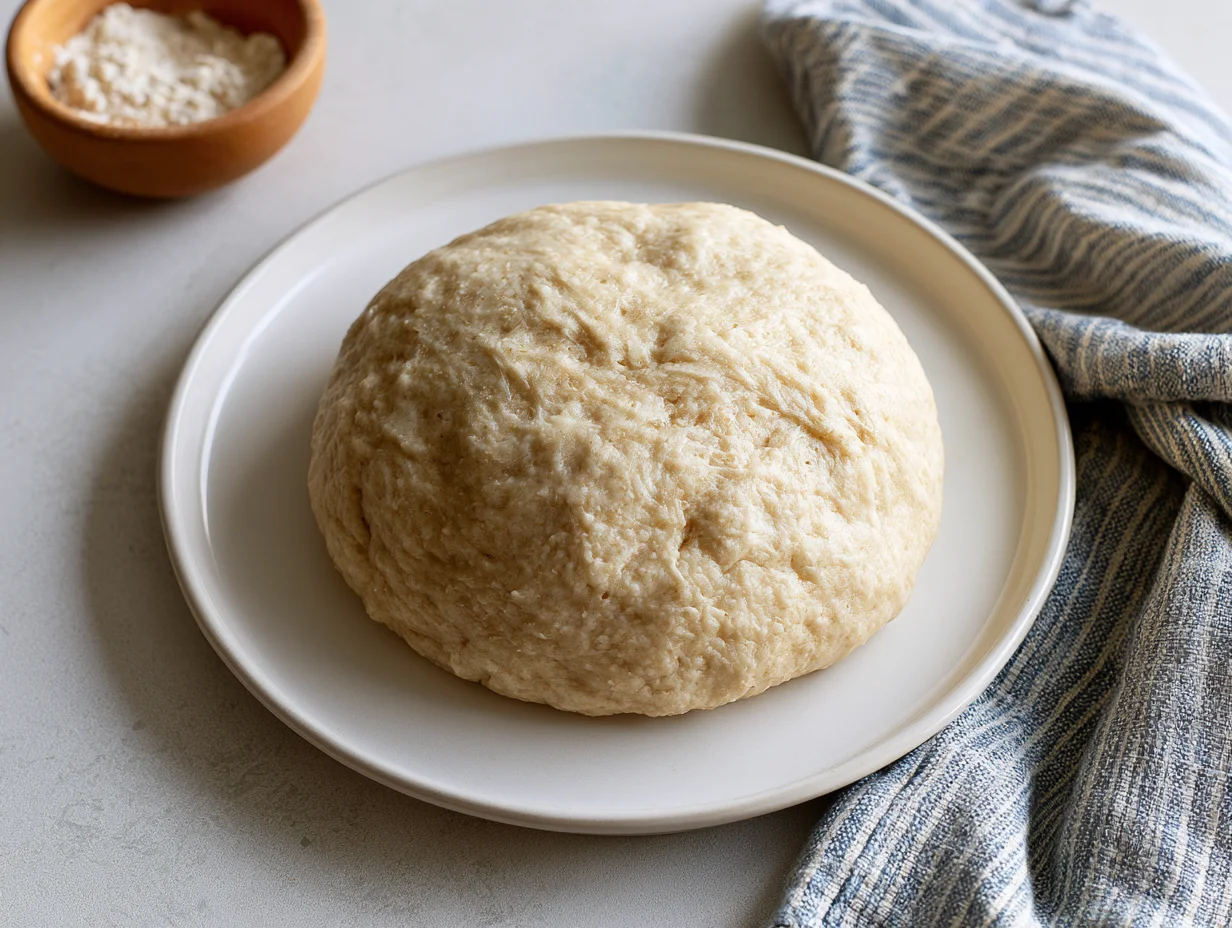
No-Yeast Pizza Dough Recipe
There are nights when pizza is the only answer, but the clock is not on your side. You have the sauce, the toppings, and the hunger — but not the hours it takes for yeast to do its slow, quiet work. That is exactly where this no-yeast pizza dough recipe comes in, and it changes everything.
This dough comes together in under fifteen minutes using nothing more than pantry staples. No proofing, no resting, no hoping the yeast wakes up. You mix it, you shape it, and you bake it — simple as that. The result is a crust that is golden on the outside, tender on the inside, and sturdy enough to hold whatever toppings you throw at it.
What makes this recipe stand apart is not just the speed, but the texture. Many yeast-free doughs end up dense, cracker-like, or flat in flavor. This one avoids all of that. A combination of baking powder and a touch of Greek yogurt gives the dough a subtle lift and a pleasant, slightly tangy depth that makes it taste far more developed than its prep time suggests.
Whether you are making a quick weeknight dinner, a Friday pizza night with the kids, or a last-minute gathering appetizer, this recipe delivers. It is reliable, it is fast, and once you try it, it will earn a permanent spot in your cooking rotation.
Ingredients You’ll Need
Every great pizza starts with a dough you can trust, and this one earns that trust from the very first ingredient you pull off the shelf.
One of the things I love about this recipe is that it uses simple pantry ingredients. You probably already have most of them in your kitchen.
Base Ingredients:
- 2 cups all-purpose flour, plus more for dusting
- 1 tablespoon baking powder
- 1 teaspoon fine sea salt
- 1 teaspoon garlic powder
- 1 teaspoon dried Italian seasoning
- 2 tablespoons olive oil
- ¾ cup plain Greek yogurt (full-fat preferred)
- 2 to 4 tablespoons water, as needed to adjust dough consistency
Optional Add-ins:
- 1 teaspoon dried oregano or rosemary for extra herbal flavor
- ½ teaspoon crushed red pepper flakes for a mild heat
- 1 tablespoon grated Parmesan, mixed directly into the dough
- 1 teaspoon honey, added to balance savory flavors in the base
- 1 teaspoon onion powder for a deeper aromatic layer
Step-by-Step Instructions
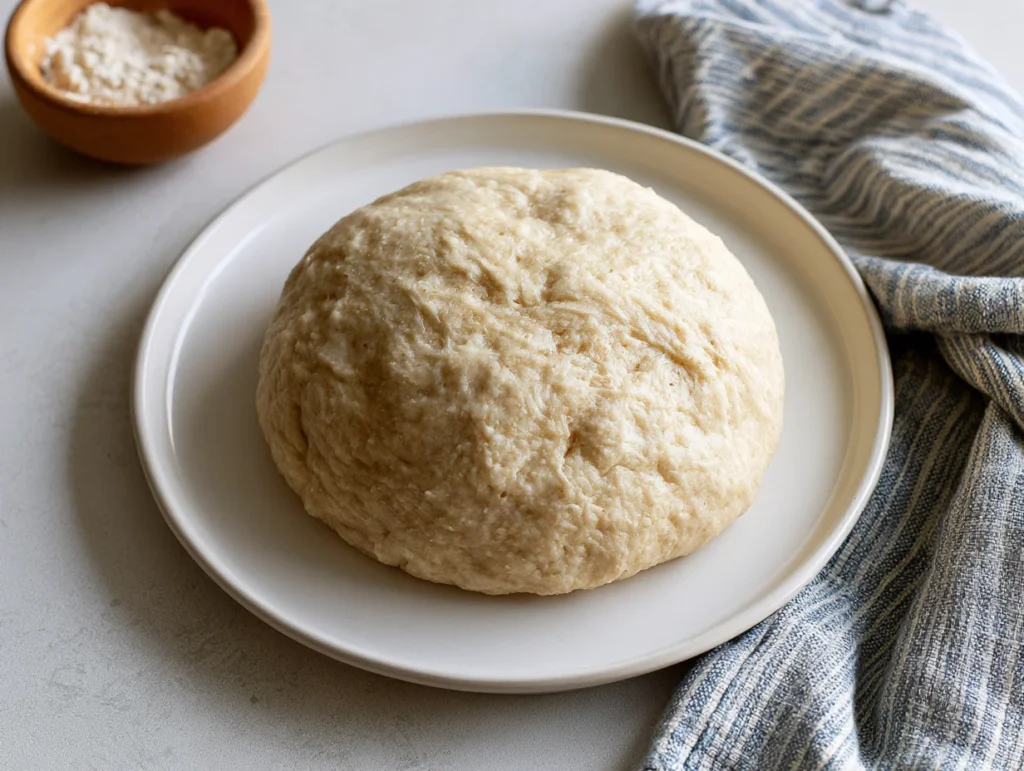
Step 1: Combine the Dry Ingredients
In a large mixing bowl, whisk together the all-purpose flour, baking powder, salt, garlic powder, and Italian seasoning. Mixing these dry ingredients first ensures the leavening and seasoning are evenly distributed throughout the dough before any wet ingredients are added. This step takes less than a minute but makes a real difference in the consistency of the final crust. Take your time here and make sure there are no dry pockets of baking powder sitting at the bottom of the bowl.
Step 2: Add the Wet Ingredients
Add the Greek yogurt and olive oil directly into the dry mixture. Use a fork or your hands to begin combining everything together. The yogurt will look chunky at first, but keep working it in. As the flour absorbs the moisture, the mixture will gradually come together into a shaggy, rough dough. If the dough feels too dry or crumbly after the yogurt and oil are fully incorporated, add water one tablespoon at a time until the dough holds together without falling apart.
Step 3: Knead the Dough
Turn the dough out onto a lightly floured surface and knead it for about two to three minutes. You are not developing gluten the way you would with a yeast dough, so the goal here is simply to bring everything together into a smooth, cohesive ball. The dough should feel soft but not sticky. If it sticks to your hands or the surface, dust lightly with flour. Avoid over-flouring — you want a soft, pliable dough, not a stiff one. Once it is smooth and consistent, it is ready to use immediately.
Step 4: Shape the Dough
Lightly flour your work surface or line a baking sheet with parchment paper. Place the dough ball in the center and use a rolling pin or your hands to press and stretch it into your desired shape. For a thin and crispy crust, aim for about a quarter-inch thickness. For something more substantial and chewy, keep it closer to a half-inch. This dough is forgiving and easy to work with. It will not snap back the way yeast dough sometimes does, making it especially beginner-friendly.
Step 5: Top and Bake
Transfer the shaped dough to your prepared baking surface. Add your sauce, cheese, and toppings, keeping in mind that less is more — an overloaded pizza will steam instead of crisp. For best results, pre-bake the plain dough for five minutes before adding toppings. This sets the base and prevents a soggy center. Then add your toppings and finish baking. The pizza is done when the edges are deep golden brown and the cheese is bubbling and lightly caramelized in spots.
Cook Time
Total:
25 to 30 minutes
Prep:
10 to 12 minutes
Bake:
15 to 18 minutes at 425°F (220°C)
Servings
This recipe makes one standard pizza that comfortably serves two to three people as a main meal, or four as part of a larger spread with salads and sides. The yield depends on how thin or thick you roll the dough, so a very thin crust will produce a slightly larger pizza, while a thicker one will be smaller in diameter but more filling per slice.
If you are cooking for a bigger group, the recipe doubles easily without any adjustment to ratios or technique. Simply double every ingredient and divide the dough into two portions before rolling.
Makes approximately 6 to 8 slices, depending on crust thickness and the size of your pizza.
Common Mistakes in This Recipe
One of the most frequent issues home cooks run into with no-yeast pizza dough is adding too much flour. When the dough feels sticky, the instinct is to keep dusting the surface and your hands. But too much extra flour makes the crust dry, dense, and brittle rather than tender and slightly chewy.
Skipping the pre-bake step is another common mistake. Many people add all their toppings right away and bake everything at once. The result is often a pale, undercooked center that cannot support the weight of the sauce and cheese.
Overworking the dough is a subtle but damaging error. Unlike yeast dough, which benefits from extensive kneading to build structure, this dough only needs a brief knead to come together. Kneading for too long creates a tough, rubbery crust that does not bake up properly.
Rolling the dough too thick in the center without thinning the edges is also a problem that leads to uneven baking. The center ends up doughy and underdone while the edges brown too quickly.
Solutions to Common Mistakes
To avoid the over-flouring problem, trust the texture of the dough rather than how it looks. A slightly tacky dough that does not actively stick to clean, dry hands is exactly right. Keep flour use minimal and add it only half a teaspoon at a time.
Always pre-bake the plain dough for five minutes before adding toppings. This small step firms up the base, allows moisture to escape, and creates the foundation for a crispier, sturdier crust that holds up well under sauce and cheese.
Stop kneading as soon as the dough looks smooth and comes together into a cohesive ball. Set a timer if needed — two to three minutes is the target. The moment it looks uniform, it is ready.
When shaping the dough, apply slightly more pressure at the center and ease off toward the edges. This creates a naturally even thickness across the whole surface, giving you consistent baking from edge to center.
Nutritional Information (approx. per serving)
- Calories: 220 kcal
- Total Fat: 6g
- Saturated Fat: 1g
- Carbohydrates: 34g
- Dietary Fiber: 1.2g
- Sugars: 1g
- Protein: 7g
- Sodium: 310mg
- Calcium: 90mg
- Iron: 2mg
Greek yogurt brings more to this dough than just moisture. It is a meaningful source of protein and calcium, both of which support muscle function and bone density. Because this recipe skips the yeast and the long rise, it also contains no added sugars or fermentation byproducts.
Olive oil contributes heart-healthy monounsaturated fats, which have been linked to reduced inflammation and improved cardiovascular health when consumed as part of a balanced diet. Even in small quantities, it enhances the fat profile of the dough.
Using all-purpose flour provides a reliable source of complex carbohydrates, which offer sustained energy. For those looking to increase the fiber and nutrient content, substituting up to half the flour with whole wheat flour is an easy and effective option.
Baking at a high temperature without deep frying means this pizza is naturally lower in fat than most takeout alternatives. Made at home with quality ingredients, it gives you full control over what goes into every bite.
Storage Instructions
Once baked, leftover pizza slices should be stored in an airtight container or tightly wrapped in foil and refrigerated within two hours of baking. Stored properly, the pizza keeps well in the refrigerator for up to three days without significant loss of texture or flavor.
To reheat, avoid the microwave if possible. A dry skillet over medium heat for two to three minutes, or a few minutes in a 375°F oven, will restore most of the crust’s original crispness. The microwave tends to make the crust soft and chewy rather than crisp.
If you want to store unbaked dough, wrap it tightly in plastic wrap and refrigerate it for up to 24 hours. The baking powder will still be effective within that window, and the cold rest can actually improve the flavor slightly. Let it come to room temperature for about ten minutes before rolling it out.
For longer storage, the baked pizza freezes well. Wrap individual slices tightly in plastic wrap, then place them in a freezer-safe bag. They will keep for up to one month and reheat beautifully directly from frozen in a 400°F oven for eight to ten minutes.
Suggestions
This dough is a wonderfully versatile base that works far beyond the traditional pizza. Try it as a base for white garlic pizzas with ricotta, caramelized onions, and fresh arugula. Or go Mediterranean with hummus, roasted red peppers, olives, and crumbled feta for something completely unexpected.
For a simple weeknight flatbread, skip the sauce entirely and brush the baked dough with olive oil and a sprinkle of flaky sea salt right out of the oven. Add a few fresh herbs or thin slices of prosciutto for an elegant appetizer that takes almost no effort.
The dough also works well as a base for dessert pizza. Brush it lightly with melted butter, dust with cinnamon sugar, and top with sliced bananas or fresh strawberries after baking. A drizzle of honey and a dollop of mascarpone turns it into a genuinely impressive finish to a casual dinner.
Do not be afraid to experiment with the dough itself. Mixing in a tablespoon of sun-dried tomato paste, a handful of finely grated Parmesan, or a teaspoon of smoked paprika before rolling creates a flavored crust that elevates the whole pizza without any additional effort.
Seasonal Relevance
This no-yeast pizza dough shines in every season, but it earns its place most naturally in the warmer months when you want a home-cooked meal without turning the kitchen into a hot, slow process. Summer tomatoes, fresh basil, and mozzarella on this quick crust is one of the most satisfying ways to use peak-season produce.
In autumn, the dough becomes a canvas for richer, more warming combinations. Roasted butternut squash, caramelized onions, goat cheese, and a drizzle of balsamic reduction transform it into a seasonal centerpiece that feels entirely intentional and sophisticated.
Winter calls for heartier toppings, and this crust holds up beautifully under a heavier load. Think spicy Italian sausage, roasted mushrooms, fontina, and fresh thyme. The crust bakes up sturdy and golden, standing up to every generous layer.
Spring is the time to go light and bright — shaved asparagus, lemon zest, ricotta, and a shower of fresh pea shoots make for a pizza that genuinely tastes like the season. This dough is ready for all of it, any time of year.
Final Words
No-yeast pizza dough is one of those recipes that quietly earns a reputation in a household. It starts as a solution to a problem — no time, no yeast, hungry family — and quickly becomes the preferred method simply because it works so well and so consistently.
What I appreciate most about this recipe is how honest it is. It does not try to replicate a long-fermented Neapolitan crust. It has its own identity: quick, clean, slightly tangy from the yogurt, with a satisfying golden edge and a tender crumb. It is built for real life and real kitchens.
Cooking should feel accessible, not intimidating. A recipe like this one removes the barrier and gets food on the table without sacrificing quality. The fact that it is faster than delivery and uses ingredients you already own makes it one of the most genuinely practical things you can keep in your repertoire.
If you try this recipe, I hope it becomes as reliable for you as it has been for me. Make it your own — change the seasonings, experiment with the toppings, adapt it to what you have on hand. That is exactly what good home cooking looks like.
Frequently Asked Questions
Can I use regular yogurt instead of Greek yogurt in this recipe?
Regular yogurt has a higher water content than Greek yogurt, which will make the dough too wet and difficult to handle. If Greek yogurt is unavailable, strain regular plain yogurt through a cheesecloth or fine mesh sieve for at least 30 minutes before using it to remove excess liquid.
Why is my no-yeast pizza crust turning out too hard and dense?
A hard, dense crust is usually the result of too much flour, over-kneading, or baking at too low a temperature. Use only enough flour to prevent sticking, knead briefly for two to three minutes, and bake at a minimum of 425°F for the best texture and color.
Can I make this dough ahead of time and use it the next day?
Yes. Wrap the dough tightly in plastic wrap and refrigerate it for up to 24 hours. The baking powder remains active within that window. Let the dough sit at room temperature for about ten minutes before rolling it out, which makes it easier to shape and prevents tearing.
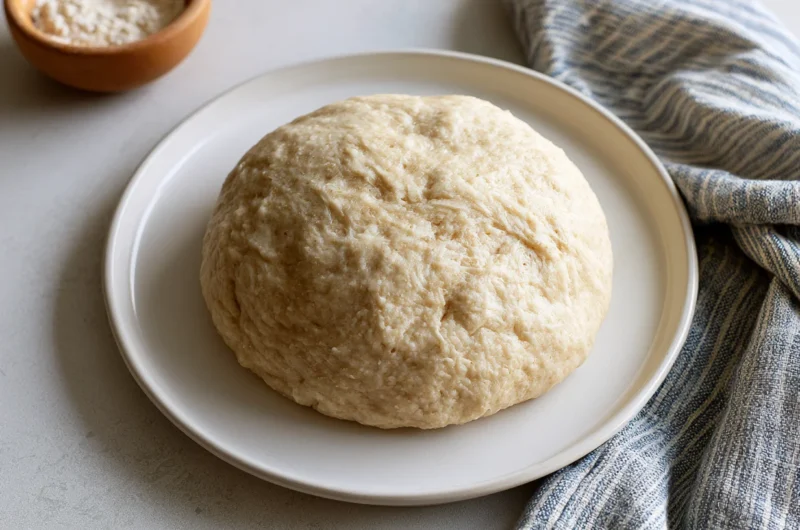
No-Yeast Pizza Dough Recipe
6
servings10
minutes15
minutes220
kcal25
minutesA fast, foolproof pizza dough that skips the yeast entirely. Made with Greek yogurt and baking powder, it delivers a golden, tender crust in under 30 minutes — perfect for weeknight dinners, quick gatherings, or any time pizza craving strikes.
Ingredients
Base ingredients
2 cups all-purpose flour
1 tbsp baking powder
1 tsp fine sea salt
1 tsp garlic powder
1 tsp dried Italian seasoning
2 tbsp olive oil
¾ cup plain Greek yogurt
2–4 tbsp water (as needed)
Optional add-ins
1 tsp dried oregano or rosemary
½ tsp crushed red pepper flakes
1 tbsp grated Parmesan
1 tsp honey
1 tsp onion powder
Directions
- Whisk together flour, baking powder, salt, garlic powder, and Italian seasoning in a large bowl until evenly combined.
- Add Greek yogurt and olive oil. Mix with a fork or hands until a rough, shaggy dough forms. Add water one tablespoon at a time if the dough is too dry.
- Turn dough onto a lightly floured surface and knead for 2–3 minutes until smooth and cohesive. Do not over-knead.
- Roll or press dough into your desired shape — about ¼ inch for thin crust, ½ inch for thicker. Transfer to a parchment-lined baking sheet.
- Pre-bake the plain dough at 425°F (220°C) for 5 minutes to set the base and prevent sogginess.
- Add sauce, cheese, and toppings. Return to oven and bake for 10–13 more minutes until edges are deep golden and cheese is bubbly.
- Remove from oven, rest for 2 minutes, slice, and serve hot.
Recipe Video
Notes
- Full-fat Greek yogurt gives the best texture. Low-fat works but produces a slightly drier dough.
- Do not skip the 5-minute pre-bake — it is the key to a crisp, non-soggy center.
- Add water slowly. The dough should feel soft but not sticky to clean, dry hands.
- Dough can be refrigerated (wrapped tightly) for up to 24 hours. Rest at room temperature for 10 minutes before rolling.
- For extra flavor, mix 1 tbsp Parmesan or a pinch of smoked paprika directly into the dry ingredients.
- Baked slices freeze well for up to 1 month. Reheat at 400°F for 8–10 minutes directly from frozen.