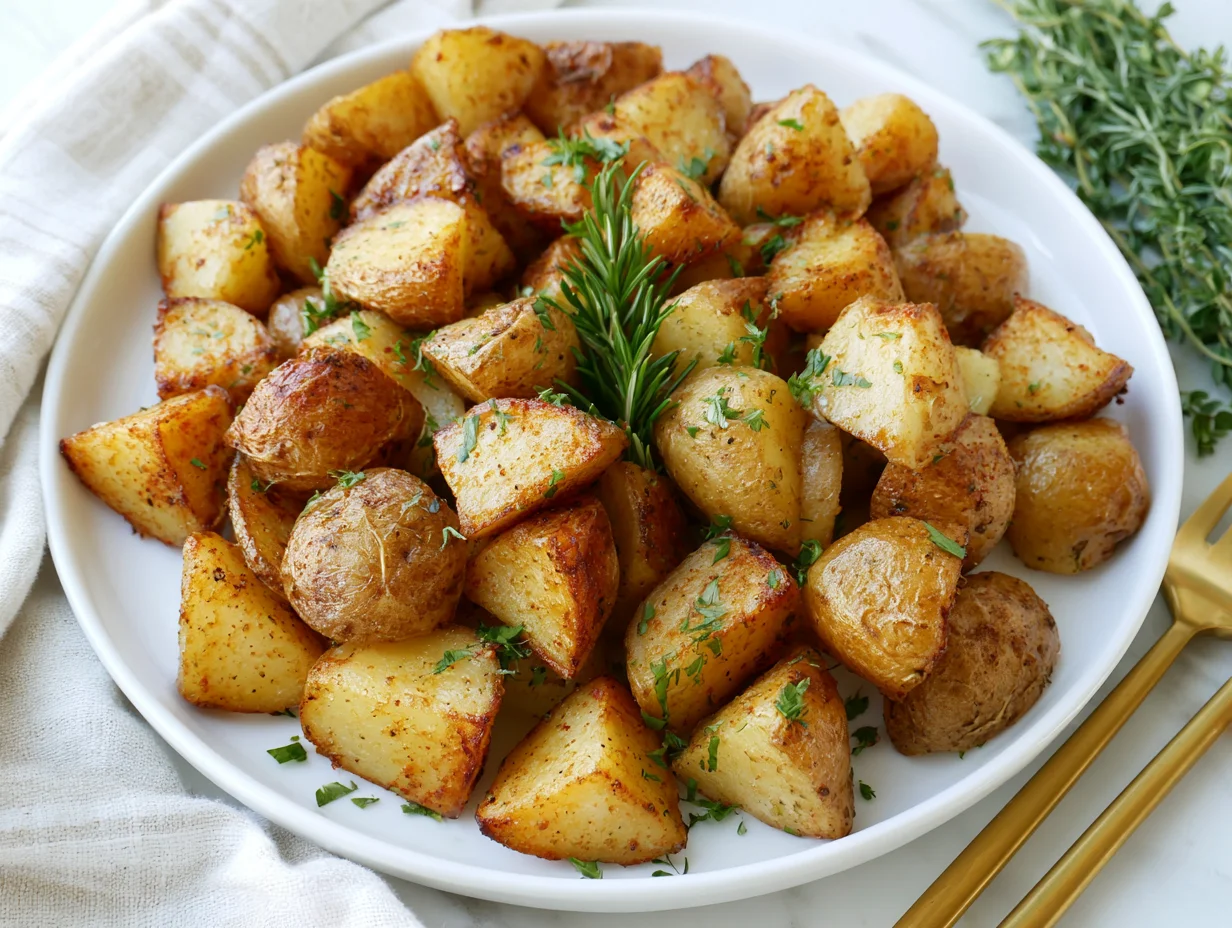
Roasted Yukon Gold Potato Recipe
There’s a reason Yukon Gold potatoes have earned a permanent spot in professional kitchens. Their naturally buttery flesh, thin golden skin, and remarkable ability to crisp on the outside while staying creamy on the inside make them unlike any other variety. This isn’t just a side dish. It’s the kind of recipe that quietly steals the spotlight at the dinner table.
Roasting potatoes sounds simple, and in many ways it is. But there’s a difference between potatoes that come out pale, mushy, and forgettable and ones that emerge from the oven with shatteringly crisp edges and a pillowy, melt-in-your-mouth center. That difference comes down to technique, and this recipe covers every detail.
What makes this version stand out is the intentional simplicity. No complicated marinades. No obscure spices you’ll only use once. Just honest ingredients, precise timing, and a method rooted in how professional chefs actually think about roasting vegetables.
Whether you’re pairing these with a Sunday roast, a weeknight protein, or serving them as part of a holiday spread, this recipe delivers every single time. Once you make Yukon Golds this way, you’ll find it hard to go back to anything else.
Ingredients You’ll Need
You don’t need a specialty grocery run to make these potatoes extraordinary — everything on this list is likely sitting in your kitchen right now, waiting to do its best work.
One of the things I love about this recipe is that it uses simple pantry ingredients. You probably already have most of them in your kitchen.
Base Ingredients:
- 2 lbs Yukon Gold potatoes
- 3 tablespoons olive oil
- 1 teaspoon kosher salt
- ½ teaspoon black pepper
- 1 teaspoon garlic powder
- 1 teaspoon smoked paprika
- 1 tablespoon fresh rosemary, chopped
- 1 tablespoon fresh thyme leaves
Optional Add-ins:
- 2 tablespoons grated Parmesan cheese
- ½ teaspoon onion powder
- ¼ teaspoon crushed red pepper flakes
- 1 tablespoon unsalted butter, melted
- 2 cloves fresh garlic, minced
- 1 tablespoon fresh parsley, chopped (for garnish)
- 1 teaspoon lemon zest
Step-by-Step Instructions
Step 1: Preheat and Prep Your Oven
Set your oven to 425°F (220°C). This high heat is non-negotiable — it’s what drives the moisture out of the potato’s surface quickly, allowing the exterior to caramelize and crisp up rather than steam. Place a large rimmed baking sheet inside the oven as it preheats. A hot pan means your potatoes start searing the moment they touch the surface, and that contact is what builds the crust you’re after.
Step 2: Cut the Potatoes
Wash and dry your Yukon Golds thoroughly. Cut them into uniform 1.5-inch chunks. If you cut them too small, they’ll dry out. Too large, and the centers won’t cook through before the outside burns. Leaving the skin on is deliberate — it adds texture, flavor, and holds the potato together during roasting. No need to peel. The skin of a Yukon Gold is thin, tender, and delicious when roasted.
Step 3: Parboil for the Perfect Interior
Bring a large pot of salted water to a boil. Add your potato pieces and cook for exactly 7 minutes. You’re not cooking them through — you’re giving the interior a head start so it turns creamy and fluffy in the oven. Drain immediately and let them sit in the colander for two full minutes. This step is what separates good roasted potatoes from exceptional ones. Skipping it is the most common mistake home cooks make with this dish.
Step 4: Rough Up the Edges
Once the potatoes have steam-dried, return them to the empty pot. Cover with the lid and give them a firm shake. You’ll see the edges roughen and fluff up — that’s exactly what you want. Those ragged, starchy edges are what create the signature crispy crust once they hit the hot oil. It might look a little messy. It’s supposed to. This technique is borrowed directly from restaurant prep and makes a visible difference in the final texture.
Step 5: Season and Coat
Drizzle the olive oil over your roughed-up potatoes and toss to coat evenly. Add the salt, black pepper, garlic powder, smoked paprika, and fresh herbs. Toss again until every surface is coated. At this stage, you can also add the optional Parmesan, minced garlic, or butter if using. The fat needs to touch every surface of every piece — that’s what transmits heat evenly and creates a uniform golden crust throughout.
Step 6: Roast to Golden Perfection
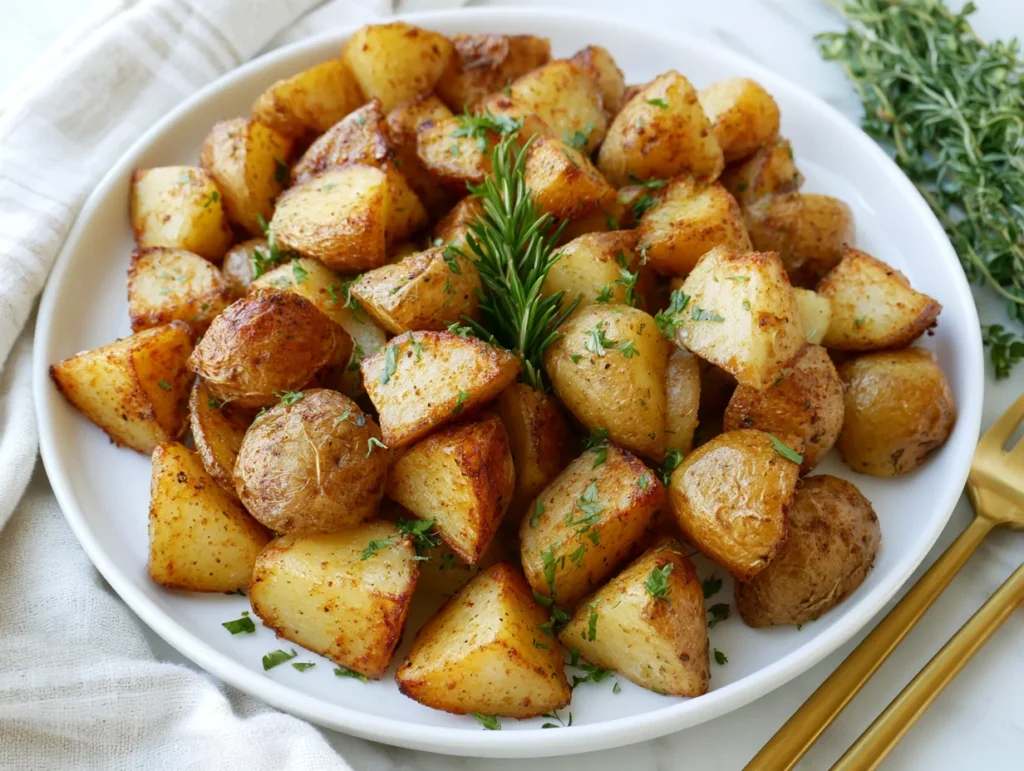
Carefully remove the preheated baking sheet from the oven and spread the potatoes out in a single layer. Do not crowd the pan. If they’re touching or overlapping, they’ll steam rather than roast. Use two pans if needed. Roast for 25 minutes, then flip each piece and return to the oven for another 15 to 20 minutes. By the end, they should be deeply golden with crisp, craggy edges and a tender, yielding center. Taste and adjust seasoning immediately while hot.
Cook Time
Total:
50 to 55 minutes
Prep:
10 minutes (plus 7 minutes parboiling)
Bake:
40 to 45 minutes at 425°F (220°C)
Servings
This recipe makes enough to serve four people as a satisfying side dish alongside a main course. If you’re building a full dinner plate — think roasted chicken, grilled steak, or baked salmon — these potatoes hold their own as the star side.
Makes approximately 4 servings.
You can scale the recipe up easily. Double the batch and use two large baking sheets, rotating them halfway through for even roasting. Just be careful not to crowd the pans regardless of how much you’re making. Crowding is the one thing that will ruin an otherwise perfect batch.
If you’re cooking for a crowd or a holiday meal, Yukon Golds also hold well. You can roast them slightly under, keep them warm in a low oven at around 200°F, and finish with a quick blast of high heat right before serving. They reheat remarkably well compared to other potato varieties.
Common Mistakes in This Recipe
The most common pitfall is skipping the parboiling step. Many home cooks go straight from raw potato to the oven, which results in a center that’s dense and undercooked by the time the exterior browns. Parboiling for just seven minutes changes everything.
Another frequent mistake is using a cold baking sheet. Placing potatoes on a cold pan means they sit in their own steam for the first several minutes of roasting, which prevents crust formation entirely. Always preheat the pan.
Overcrowding is a silent recipe killer. When potatoes are too close together, moisture has nowhere to escape, and you end up with steamed, soft potatoes instead of roasted, crispy ones. Even a small amount of overlap significantly affects the outcome.
Finally, many people under-season at the coating stage and then try to compensate after roasting. Salt applied to the surface of a finished potato doesn’t penetrate the way it does when it’s present during cooking. Season generously before the oven, and taste again once they come out.
Solutions to Common Mistakes
Always parboil. Set a timer for seven minutes and don’t skip it, no matter how short on time you are. This single step is responsible for roughly 50% of the final texture quality and is entirely worth the extra ten minutes from start to finish.
Preheat your baking sheet in the oven for at least 15 minutes before adding the potatoes. You should hear a sizzle when the oiled potatoes hit the pan. If you don’t, the pan wasn’t hot enough.
Use two baking sheets before you use one overcrowded one. Potatoes should be in a single layer with at least half an inch of space between each piece. Spread them out confidently — they’ll shrink slightly as they roast, and airflow around each piece is critical for crisping.
Season in two stages: once before roasting with oil, salt, and spices, and again after removing from the oven with a pinch of flaky salt and fresh herbs. This builds layered flavor that stays bright and lively rather than flat and one-dimensional.
Nutritional Information (approx. per serving)
- Calories: 230 kcal
- Total Fat: 10g
- Saturated Fat: 1.5g
- Carbohydrates: 32g
- Dietary Fiber: 3g
- Sugars: 2g
- Protein: 4g
- Sodium: 390mg
- Potassium: 620mg
- Vitamin C: 20% of Daily Value
- Vitamin B6: 15% of Daily Value
- Iron: 8% of Daily Value
Yukon Gold potatoes are a genuinely nourishing food, not just a comfort one. They’re a natural source of potassium, which supports healthy blood pressure and muscle function, and their vitamin C content rivals that of many fruits commonly associated with the nutrient.
The resistant starch found in cooked and cooled potatoes acts as a prebiotic, feeding beneficial gut bacteria and supporting digestive health over time. Roasting rather than frying keeps the calorie count reasonable while preserving micronutrients that can be lost in boiling.
Olive oil, the primary fat in this recipe, brings its own set of well-documented benefits. Rich in monounsaturated fats and antioxidants, it contributes to heart health and reduces inflammation when used regularly as part of a balanced diet.
The fresh herbs — rosemary and thyme — are more than garnish. Both contain potent antioxidant compounds and have been studied for their antimicrobial and anti-inflammatory properties. When you season generously with fresh herbs, you’re adding real nutritional value alongside unmistakable flavor.
Storage Instructions
Once roasted, allow the potatoes to cool completely before transferring to an airtight container. Store in the refrigerator for up to four days. Stacking them warm will create condensation, which softens the crust and makes reheating less effective. A few minutes of cooling time on the pan makes a meaningful difference.
To reheat and restore crispiness, the oven is always the best option. Spread the potatoes in a single layer on a baking sheet and roast at 400°F for 10 to 12 minutes. Avoid the microwave if possible — it reheats the interior well but turns the exterior soft and slightly gummy, which undoes the best part of the recipe.
For longer storage, roasted Yukon Golds freeze reasonably well. Let them cool fully, lay them flat on a parchment-lined sheet and freeze until solid (about two hours), then transfer to a freezer-safe bag. They’ll keep for up to two months. Reheat directly from frozen in a 400°F oven for 15 to 20 minutes.
If you’re meal prepping, you can parboil and rough up the potatoes a day in advance, store them unroasted in the fridge, and roast them fresh when needed. This approach gives you the texture of freshly roasted potatoes with a fraction of the weeknight effort.
Suggestions
These roasted Yukon Golds are incredibly versatile at the table. Serve them alongside herb-roasted chicken or a simply seared steak and they become the kind of side that guests ask about specifically. The flavors are complementary to almost any savory main course without competing for attention.
For a more elevated presentation, finish the potatoes with a drizzle of truffle oil and a generous shaving of Parmesan right as they come out of the oven. The residual heat melts the cheese just enough and the truffle oil adds a richness that makes an ordinary weeknight feel like a restaurant experience.
If you want to turn this into a complete one-pan meal, add sliced sausage, halved cherry tomatoes, and thick rings of red onion to the baking sheet. Everything roasts together at the same temperature and you have a full dinner with minimal cleanup.
For a brunch application, serve these potatoes warm alongside poached eggs and a handful of wilted spinach with a squeeze of lemon. They also make an excellent base for a loaded potato bowl — topped with Greek yogurt instead of sour cream, avocado, and a soft-boiled egg for a balanced, satisfying lunch.
Seasonal Relevance
Yukon Gold potatoes are available year-round, which makes this recipe perpetually relevant. But there are certain seasons when roasted potatoes feel especially right, and leaning into that seasonal energy can shape how you present and serve them.
In the fall and winter, these potatoes belong on the table alongside braised short ribs, roasted root vegetables, and hearty stews. The warmth of smoked paprika and rosemary reads as deeply comforting when the weather turns cold. This is when roasted Yukon Golds are at their most satisfying — eaten slowly, beside a fire or under warm kitchen lighting.
Spring and early summer call for a slightly lighter approach. Swap the rosemary for fresh dill, add lemon zest to the seasoning, and finish with a handful of chopped fresh chives. The potatoes take on a brightness that pairs beautifully with grilled fish, spring asparagus, and lighter sauces.
Summer is also when new potatoes — the freshest, youngest Yukon Golds — arrive at farmers’ markets. These smaller, more delicate tubers roast in less time and have an almost sweet, waxy quality that’s worth seeking out. If you find them, keep the seasoning simple so their natural flavor leads. A great potato at peak season needs very little encouragement.
Final Words
Roasted Yukon Gold potatoes are the kind of recipe that becomes part of your cooking identity. Once you find a version that works, you come back to it again and again — for weeknight dinners, holiday feasts, casual gatherings, and the quiet Sunday meals that end up being the most memorable.
What makes this recipe worth returning to is that it respects the ingredient. Yukon Golds don’t need to be rescued by complicated flavor combinations or clever tricks. They just need the right technique applied with some care and attention. The parboiling, the hot pan, the generous space on the baking sheet — these aren’t arbitrary steps. Each one exists for a reason and has a visible, measurable effect on the finished dish.
Feel free to make this recipe your own over time. Once you’ve mastered the base version, you have a reliable framework to build from. The optional add-ins and serving suggestions in this article are starting points, not instructions. Trust your palate and let the season and the meal guide the flavors.
If you try this recipe, I’d love to know how it turned out. Every kitchen is different, every oven runs slightly differently, and every cook brings something personal to the process. That’s what makes cooking endlessly interesting — and what makes a humble roasted potato endlessly worth returning to.
Frequently Asked Questions
Do I really need to parboil the potatoes before roasting?
Yes, and it makes a significant difference. Parboiling for seven minutes gives the interior a head start so it turns fluffy and creamy in the oven. It also softens the exterior starch, which, once roughed up and coated in oil, forms the crispy, craggy crust this recipe is known for. Skip it and you’ll get denser, less textured results.
Can I use a different type of potato if I can’t find Yukon Golds?
You can, but the results will differ. Russets roast well but tend to be fluffier and drier on the inside with a thicker skin. Red potatoes hold their shape better but don’t crisp the same way. Yukon Golds sit at the ideal midpoint of starchy and waxy, which is precisely why they roast so beautifully. If you can find them, use them.
Why do my roasted potatoes sometimes turn out soggy instead of crispy?
The most likely causes are a cold baking sheet, a crowded pan, or potatoes that weren’t fully dried after parboiling. All three trap moisture and prevent the surface from crisping. Make sure your pan is preheated, your potatoes are dry and well-spaced, and your oven is genuinely at 425°F before the pan goes in. An oven thermometer can be a worthwhile investment if you roast often.
Roasted Yukon Gold Potato Recipe
4
servings10
minutes40
minutes320
kcal50
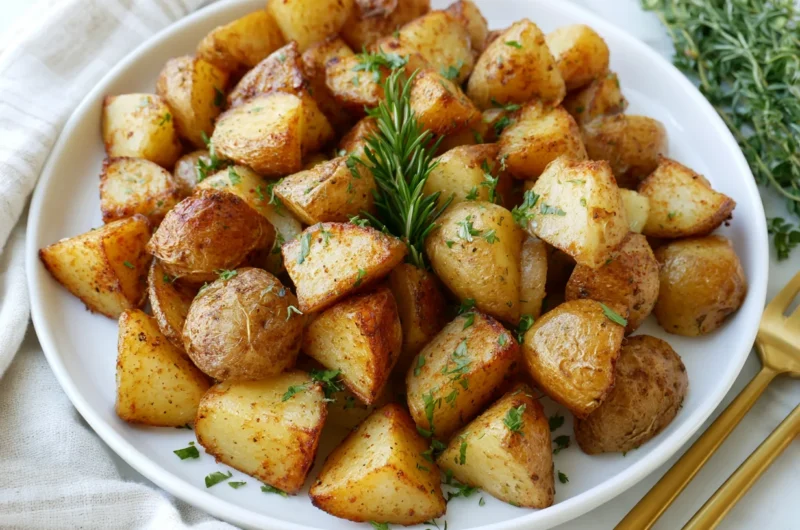
minutesCrispy on the outside, buttery and creamy on the inside — these oven-roasted Yukon Gold potatoes use a simple parboil-then-roast technique to deliver restaurant-quality results with everyday pantry ingredients every single time.
Ingredients
2 pounds Yukon Gold potatoes
3 tablespoons olive oil
1 teaspoons kosher salt
0.5 teaspoons black pepper
1 teaspoons garlic powder
1 teaspoons smoked paprika
1 tablespoons fresh rosemary, chopped
1 tablespoons fresh thyme leaves
2 tablespoons grated Parmesan cheese (optional)
0.5 teaspoons onion powder (optional)
0.3 teaspoons crushed red pepper flakes (optional)
1 tablespoons unsalted butter, melted (optional)
2 fresh garlic cloves, minced (optional)
1 tablespoons fresh parsley, chopped — for garnish (optional)
1 teaspoons lemon zest (optional)
Directions
- Preheat Oven & Pan: Preheat your oven to 425°F (220°C). Place a large rimmed baking sheet inside the oven while it heats. A hot pan is essential — it creates an immediate sear on the potatoes the moment they make contact, building the crispy crust from the very first second.
- Cut the Potatoes: Wash and thoroughly dry your 2 pounds Yukon Gold potatoes. Cut into uniform 1.5-inch chunks, leaving the skin on. Uniform sizing ensures even cooking — pieces that are too small dry out, and pieces that are too large won’t cook through before the exterior browns.
- Parboil: Bring a large pot of salted water to a boil. Add the potato chunks and cook for 7 minutes. Drain and let them sit in the colander for 2 full minutes to steam-dry. This step is critical for a fluffy interior and sets up the crust formation in the oven.
- Rough Up the Edges: Return the drained potatoes to the empty pot. Cover with the lid and shake firmly several times. The edges will roughen and fluff up — these ragged, starchy surfaces are what create the signature crispy crust once they hit the hot oil and oven heat.
- Season & Coat: Drizzle 3 tablespoons olive oil over the potatoes and toss to coat every surface. Add 1 teaspoons kosher salt, 0.5 teaspoons black pepper, 1 teaspoons garlic powder, 1 teaspoons smoked paprika, 1 tablespoons fresh rosemary, chopped, and 1 tablespoons fresh thyme leaves. Toss again until evenly coated. If using optional add-ins like 2 tablespoons grated Parmesan cheese (optional), 2 fresh garlic cloves, minced (optional), or 1 tablespoons unsalted butter, melted (optional), mix them in at this stage
- First Roast: Remove the preheated baking sheet from the oven carefully. Spread the seasoned potatoes in a single layer — do not crowd the pan. Use two sheets if needed. Roast at 425°F for 25 minutes without disturbing them.
- Flip & Finish: After 17m 30s flip each potato piece to expose the other side to direct pan heat. Return to the oven and roast for another 15 to 20 minutes until deeply golden, crispy on the edges, and tender in the center.
- Season & Serve: Remove from the oven and immediately season with a pinch of flaky salt. Garnish with 1 tablespoons fresh parsley, chopped — for garnish (optional) and 1 teaspoons lemon zest (optional) if desired. Serve hot for the best texture. The crust softens as they cool, so bring them straight from oven to table.
Recipe Video
Notes
- Use a hot baking sheet. Preheat it in the oven for at least 15 minutes. You should hear a sizzle when the potatoes hit the pan — that’s how you know it’s ready.
- Don’t skip the parboil. Seven minutes is the sweet spot. Less and the interior stays dense; more and the potatoes fall apart when shaken.
- One layer, always. Crowding the pan is the most common reason roasted potatoes turn out soft and steamed instead of crispy. Give every piece space.
- Season in two rounds. Season generously before roasting, then finish with flaky salt and fresh herbs right after they come out of the oven for layered, vibrant flavor.
- Reheat the right way. Spread leftovers on a baking sheet and reheat at 400°F for 10–12 minutes. Avoid the microwave — it softens the crust and undoes the best part.
- Make-ahead tip. Parboil and rough up the potatoes up to a day ahead. Store unroasted in the fridge and roast fresh when needed for weeknight ease without sacrificing texture.