Baked Salmon with Herb Crust Recipe
Some recipes exist purely to impress, and others exist to nourish. This Baked Salmon with Herb Crust does both, effortlessly. It is the kind of dish that looks like it came out of a restaurant kitchen but comes together in your home oven with ingredients you likely already have on hand.
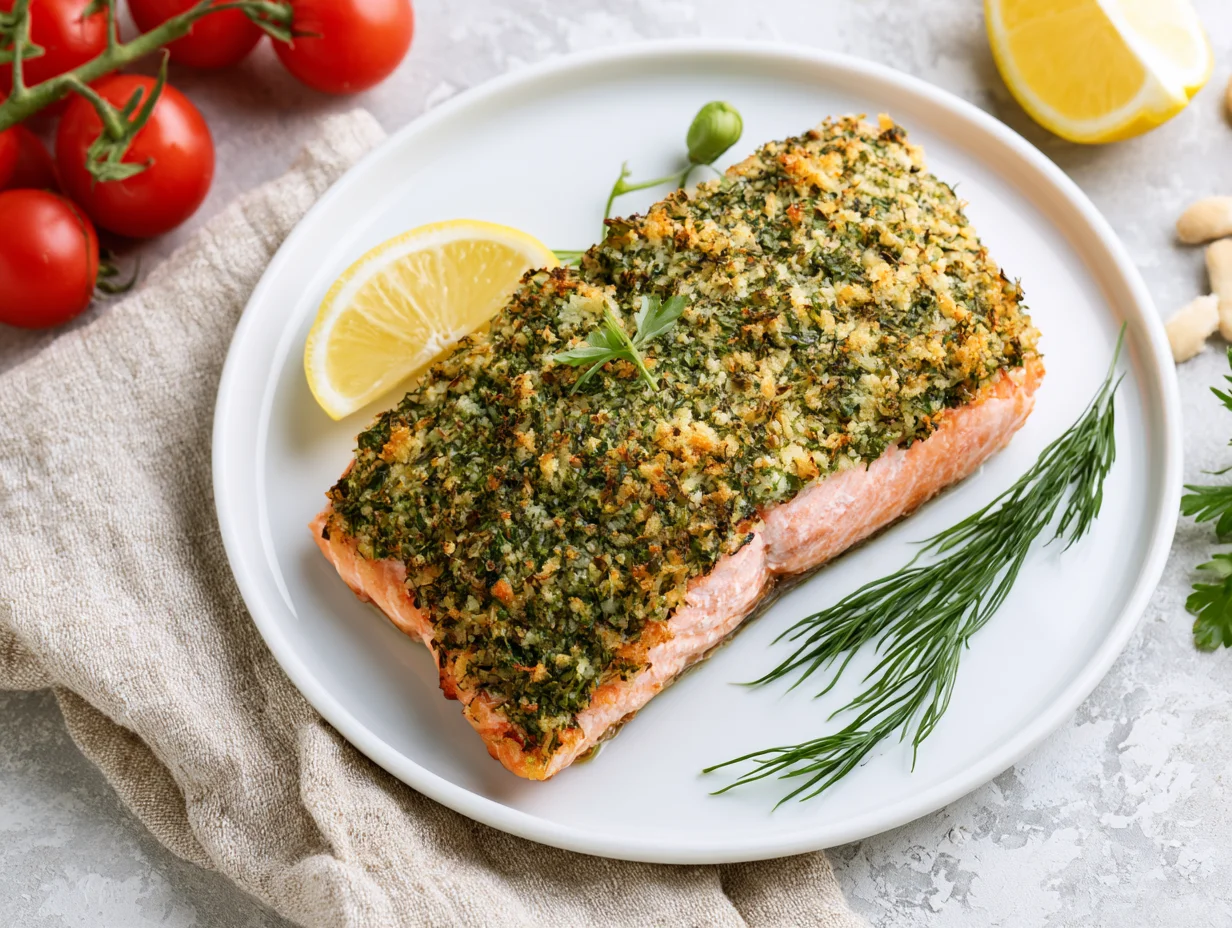
The herb crust is where this recipe earns its reputation. A finely blended mixture of fresh herbs, garlic, lemon zest, and breadcrumbs presses into the surface of the salmon and bakes into a fragrant, golden shell that seals in moisture while adding an incredible layer of texture and flavor. Every bite delivers that contrast between the crisp crust and the tender, flaky fish beneath it.
This is also one of those recipes that fits seamlessly into both weeknight cooking and special occasion menus. It requires no advanced technique, no complicated equipment, and no lengthy prep. What it does require is fresh salmon, good herbs, and about thirty minutes of your time.
If you have been looking for a salmon recipe that earns a permanent spot in your rotation — one that is elegant enough for guests but easy enough for a Tuesday night — this is exactly that recipe.
Ingredients You’ll Need
Every element on this ingredient list has a job to do, and together they build something far greater than the sum of their parts.
One of the things I love about this recipe is that it uses simple pantry ingredients. You probably already have most of them in your kitchen.
Base Ingredients:
- 4 salmon fillets (6 oz each), skin-on
- 1 cup fresh breadcrumbs (or panko)
- 3 tbsp fresh flat-leaf parsley, finely chopped
- 2 tbsp fresh dill, finely chopped
- 1 tbsp fresh thyme leaves
- 3 cloves garlic, minced
- 2 tbsp olive oil
- 1 tbsp Dijon mustard
- 1 tsp lemon zest, freshly grated
- 1 tbsp lemon juice, freshly squeezed
- ½ tsp salt
- ¼ tsp black pepper
Optional Add-ins:
- 2 tbsp grated Parmesan cheese for a richer, nuttier crust
- 1 tsp capers, finely chopped for a briny depth
- ½ tsp red pepper flakes for a gentle heat
- 1 tbsp pine nuts, finely crushed for added texture
- 1 tsp honey mixed into the mustard for a subtle sweetness
- 1 tbsp fresh chives, chopped for a mild onion finish
Step-by-Step Instructions
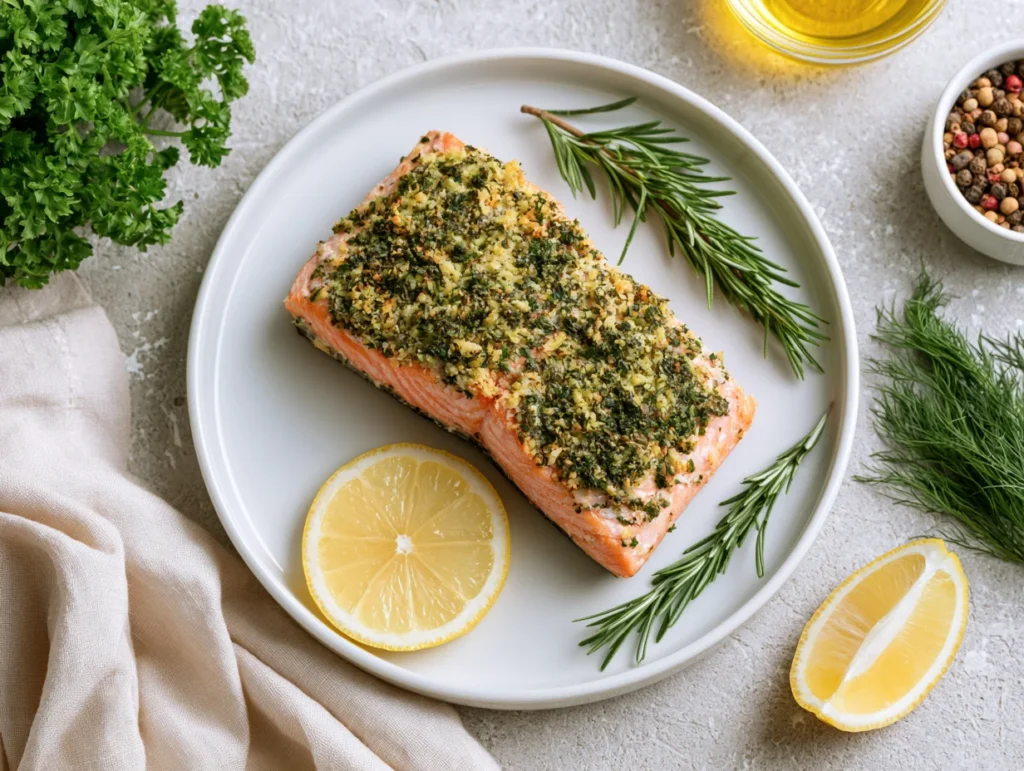
Step 1: Preheat and Prepare the Baking Tray
Set your oven to 400°F (200°C) and allow it to fully preheat before the salmon goes in. Line a rimmed baking sheet with parchment paper or lightly grease it with olive oil. Take your salmon fillets out of the refrigerator at least ten minutes before baking to allow them to come closer to room temperature. This helps the fish cook more evenly throughout, preventing an overcooked exterior while the center is still underdone. Pat each fillet dry with paper towels to remove any surface moisture.
Step 2: Make the Herb Crust Mixture
In a mixing bowl, combine the fresh breadcrumbs, chopped parsley, dill, thyme, minced garlic, lemon zest, olive oil, salt, and black pepper. Mix thoroughly until the olive oil is evenly distributed and the herbs are fully incorporated into the crumbs. The mixture should feel slightly damp and hold together loosely when pressed between your fingers. If it feels too dry, add a small drizzle of additional olive oil. Taste the mixture at this stage and adjust seasoning if needed — it should be well-seasoned and fragrant.
Step 3: Brush the Salmon with Mustard
Place the dried salmon fillets skin-side down on the prepared baking sheet. Using a pastry brush or the back of a spoon, spread a thin, even layer of Dijon mustard across the top surface of each fillet. The mustard serves two purposes here — it acts as a natural adhesive that helps the herb crust bond firmly to the fish, and it contributes a quiet, tangy depth of flavor that complements the richness of the salmon without competing with the fresh herbs.
Step 4: Apply the Herb Crust
Divide the herb breadcrumb mixture evenly among the four fillets. Press it gently but firmly onto the mustard-coated surface of each piece of salmon, forming a compact, even layer that covers the entire top. Do not pile it too thick — a layer of roughly half an inch is ideal. You want full surface coverage without creating a crust so heavy it slides off during baking. Once all four fillets are crusted, drizzle a small amount of olive oil over the top of each to encourage even browning in the oven.
Step 5: Bake and Rest Before Serving
Slide the baking sheet into the preheated oven and bake for 12 to 15 minutes, depending on the thickness of your fillets. The crust should be golden and lightly crisp, and the salmon should flake easily when pressed gently with a fork at its thickest point. Avoid overbaking — salmon continues to cook slightly after it leaves the oven. Remove from heat and allow the fillets to rest on the pan for two to three minutes before plating. Finish with a squeeze of fresh lemon juice just before serving.
Cook Time
Total:
25 to 30 minutes
Prep:
10 to 15 minutes
Bake:
12 to 15 minutes
Servings
This recipe is written to serve four people as a main course, with one generously sized fillet per person. Paired with a side of roasted vegetables, a simple green salad, or steamed rice, it makes a complete and well-balanced meal that does not leave anyone hungry.
For a dinner party setting, the recipe doubles cleanly. Simply use a second baking sheet and rotate both trays halfway through baking for even results. The herb crust mixture also scales up easily without any adjustments to technique.
Makes approximately 4 main-course servings. If serving as part of a larger spread alongside multiple dishes, the four fillets can be sliced into smaller portions and presented as a plated starter or a shared centerpiece on the table.
Common Mistakes in This Recipe
One of the most common errors is skipping the step of patting the salmon dry before applying the mustard and herb crust. Excess surface moisture prevents the mustard from adhering properly and causes the breadcrumb crust to become soggy during baking rather than crisping into that golden, textured shell the recipe is known for.
Another frequent mistake is applying the herb crust to cold salmon straight from the refrigerator. Cold fish goes into thermal shock in a hot oven, leading to uneven cooking — a dry, overdone exterior and an underdone center. Allowing the salmon to rest at room temperature before baking is a small step that makes a meaningful difference.
Many home cooks also overbake their salmon, leaving it dry, chalky, and flavorless. Salmon is a forgiving fish but only to a point. A few extra minutes in the oven past the ideal internal temperature can completely change the texture from silky and moist to tight and dry.
Finally, using dried herbs instead of fresh ones significantly diminishes the quality of the crust. Dried herbs lack the moisture and essential oils that fresh herbs release during baking, resulting in a crust that tastes flat and lacks the vibrant, aromatic quality that defines this recipe.
Solutions to Common Mistakes
Always pat each salmon fillet completely dry with paper towels before seasoning. This takes less than a minute and makes a direct, measurable difference in how well the mustard layer adheres and how evenly the crust crisps up during baking. Do not skip this step, even when pressed for time.
Remove the salmon from the refrigerator at least ten minutes before it goes into the oven. This short resting period at room temperature allows the fish to cook more uniformly from edge to center, giving you that perfectly flaky texture throughout without any hot or cold spots.
Use an instant-read thermometer to take the guesswork out of doneness. Salmon is perfectly cooked at an internal temperature of 125°F to 130°F (52°C to 54°C) for a slightly translucent, silky center, or 145°F (63°C) for fully opaque and flaky. Pull it from the oven a degree or two early and let carry-over heat do the rest.
Invest in fresh herbs for this recipe. Parsley, dill, and thyme are widely available year-round and make an enormous difference to the final flavor. If fresh dill is unavailable, fresh tarragon is an excellent substitute that pairs equally well with salmon.
Nutritional Information (approx. per serving)
- Calories: 390 kcal
- Protein: 36g
- Total Fat: 21g
- Saturated Fat: 4g
- Carbohydrates: 12g
- Dietary Fiber: 1g
- Sugars: 1g
- Sodium: 360mg
- Omega-3 Fatty Acids: 2,200mg
- Vitamin D: 70% DV
- Vitamin B12: 120% DV
- Potassium: 890mg
- Selenium: 85% DV
Salmon is one of the most nutrient-dense proteins available, and baking it — rather than frying — preserves the integrity of its natural fats without adding unnecessary calories. The omega-3 fatty acids in salmon are among the most bioavailable in any food source, supporting heart health, brain function, and the reduction of systemic inflammation.
The fresh herbs in the crust contribute more than flavor. Parsley is rich in vitamin K and vitamin C, both of which support bone density and immune resilience. Dill contains flavonoids with antioxidant properties, while thyme has long been associated with antimicrobial and respiratory health benefits in culinary medicine traditions.
Garlic, even in the small quantities used here, delivers meaningful amounts of allicin — a sulfur compound linked to improved cardiovascular health and immune function. Combined with the anti-inflammatory properties of olive oil, this recipe offers a genuinely therapeutic nutritional profile that goes well beyond its calorie count.
The lemon juice and zest provide a burst of vitamin C that enhances iron absorption from the herbs and supports collagen synthesis. For a dish this flavorful and this simple to prepare, the nutritional return is exceptional.
Storage Instructions
Baked salmon is best eaten the day it is made, while the herb crust is still crisp and the fish is at peak moisture. However, leftovers store and reheat reasonably well when handled correctly, making this recipe a solid option for meal prep if you plan ahead.
Allow cooked salmon to cool completely before storing. Transfer the fillets to an airtight container and refrigerate within two hours of cooking. Stored properly, baked salmon will keep in the refrigerator for up to three days. The herb crust will soften overnight due to moisture from the fish, but the flavor remains excellent.
To reheat, avoid the microwave if you can — it tends to dry the fish out quickly and unevenly. Instead, place the salmon in a covered oven-safe dish and warm it at 275°F (135°C) for about ten minutes, until just heated through. A splash of water or a small drizzle of olive oil in the dish helps retain moisture during reheating.
For longer storage, salmon can be frozen after baking, though the texture of the herb crust will suffer upon thawing. If you plan to freeze it, wrap each fillet individually in plastic wrap before placing in a freezer-safe bag. Frozen baked salmon will keep for up to one month and is best thawed overnight in the refrigerator before reheating.
Suggestions
This baked salmon pairs beautifully with simple, clean sides that allow the herb crust to remain the focal point of the meal. Roasted asparagus with a squeeze of lemon, steamed green beans with olive oil, or a warm farro salad with cucumber and olives are all excellent companions that complement rather than compete with the fish.
For a more substantial dinner, serve the fillets over a bed of creamy mashed cauliflower or buttery Yukon gold mashed potatoes. The richness of a smooth puree alongside the crispy, herbaceous crust creates one of the most satisfying flavor and texture contrasts you can put on a dinner plate.
If you are entertaining and want to elevate the presentation, plate each fillet on a warmed dish, lean a lemon wedge against the side, and garnish with a small sprig of fresh dill and a few capers scattered around the plate. A light drizzle of good olive oil just before serving adds a beautiful sheen and an extra layer of flavor.
The leftovers also work wonderfully flaked over a salad the next day. Break the cooled salmon into large chunks over mixed greens, shaved fennel, and thinly sliced radishes, then dress simply with olive oil, lemon juice, salt, and pepper. The herb crust crumbles into the salad as a natural seasoning that makes the whole bowl taste considered and complete.
Seasonal Relevance
This recipe performs brilliantly across all four seasons, but it reaches its highest expression in spring and early summer when fresh herbs are at their most vibrant and aromatic. During this time, farmers markets overflow with bunches of dill, parsley, and thyme that are noticeably more fragrant and flavorful than their off-season counterparts, and that quality comes through directly in the finished crust.
In the summer months, this dish fits naturally into lighter, produce-forward menus. Serve it alongside a fresh tomato and cucumber salad or grilled corn, and the whole meal feels effortlessly seasonal. The fact that it bakes in the oven rather than on a stovetop also makes it less intrusive on a warm evening when you want minimal time over heat.
Autumn brings an opportunity to shift the accompaniments and give the recipe a warmer, heartier character. Roasted root vegetables — carrots, parsnips, and sweet potato — alongside the herb-crusted salmon create a deeply satisfying plate that suits the cooler weather without requiring a different recipe.
In winter, this dish shines as an elegant alternative to the heavy, meat-centered meals that tend to dominate the season. Salmon is one of the few proteins that feels genuinely special on a cold evening, and the golden herb crust adds a visual warmth to the plate that makes it feel celebratory and considered even on an ordinary weeknight.
Final Words
This Baked Salmon with Herb Crust is one of those recipes that rewards you every time you make it. The technique is simple, the ingredients are approachable, and the result is consistently impressive — which is exactly what you want from a recipe you plan to return to again and again.
What makes it stand out beyond the flavor is how adaptable it is. The herb combination can shift based on what you have available, the optional add-ins allow you to customize the crust to your own taste preferences, and the sides you choose can completely transform the character of the meal from casual to celebratory.
There is something deeply satisfying about a recipe that asks very little of you technically but gives back so much on the plate. This is not a dish that requires years of kitchen experience to execute well. What it requires is good-quality salmon, fresh herbs, and the attention to follow a few small but important steps correctly.
I hope this becomes a recipe you reach for often — for quiet weeknight dinners, for guests you want to impress, and for those evenings when you simply want to eat something genuinely delicious without spending hours in the kitchen. It delivers every single time.
Frequently Asked Questions
Can I use frozen salmon fillets for this recipe, and do I need to thaw them first?
Yes, frozen salmon works well in this recipe, but it must be fully thawed before cooking. Thaw overnight in the refrigerator for the best texture. Pat the fillets very dry after thawing, as frozen fish releases more moisture, which can prevent the herb crust from adhering and crisping properly.
What type of breadcrumbs works best for the herb crust — fresh, panko, or dried?
Fresh breadcrumbs or panko both produce excellent results. Fresh breadcrumbs create a slightly denser, more cohesive crust, while panko yields a lighter, crispier finish. Avoid using fine dried breadcrumbs — they tend to produce a powdery, compact crust that lacks the open, golden texture this recipe is known for.
How do I know when the salmon is perfectly cooked without cutting into it?
The most reliable method is an instant-read thermometer inserted at the thickest point. Aim for 125°F to 130°F for a silky, slightly translucent center or 145°F for fully cooked. Alternatively, press the fillet gently — it should yield and begin to flake apart with very light pressure when done.
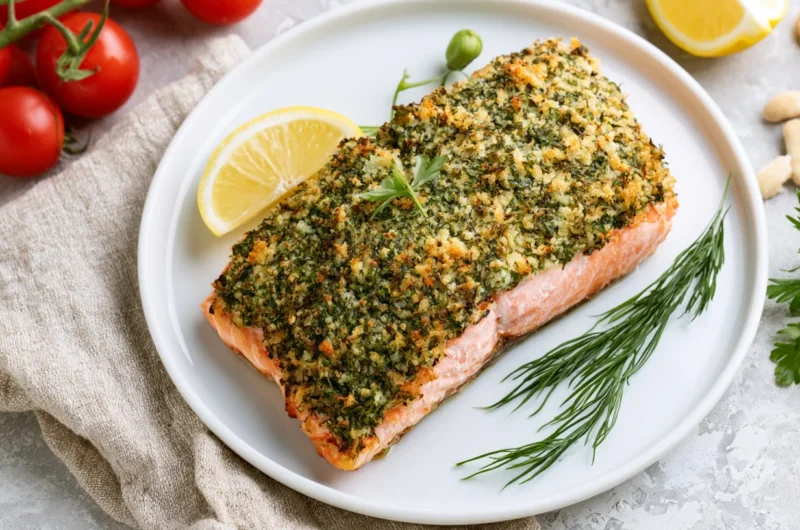
Baked Salmon with Herb Crust Recipe
4
servings10
minutes15
minutes390
kcal25
minutesGolden herb-crusted salmon baked to flaky perfection in under 30 minutes. Fresh herbs, garlic, lemon zest, and Dijon mustard create a fragrant, crispy crust that seals in moisture and delivers restaurant-quality flavor right from your home oven.
Ingredients
Base Ingredients:
4 salmon fillets (6 oz each), skin-on
1 cup fresh breadcrumbs (or panko)
3 tbsp fresh flat-leaf parsley, finely chopped
2 tbsp fresh dill, finely chopped
1 tbsp fresh thyme leaves
3 cloves garlic, minced
2 tbsp olive oil
1 tbsp Dijon mustard
1 tsp lemon zest, freshly grated
1 tbsp lemon juice, freshly squeezed
½ tsp salt
¼ tsp black pepper
Optional Add-ins:
2 tbsp grated Parmesan cheese
1 tsp capers, finely chopped
½ tsp red pepper flakes
1 tbsp pine nuts, finely crushed
1 tsp honey mixed into the mustard
1 tbsp fresh chives, chopped
Directions
- Preheat the oven to 400°F (200°C). Line a rimmed baking sheet with parchment paper or lightly grease it with olive oil. Remove salmon fillets from the refrigerator and let them rest at room temperature for 10 minutes. Pat each fillet completely dry with paper towels.
- In a mixing bowl, combine fresh breadcrumbs, chopped parsley, dill, thyme, minced garlic, lemon zest, olive oil, salt, and black pepper. Mix well until the olive oil is evenly distributed and the herbs are fully incorporated. The mixture should feel slightly damp and hold together when pressed.
- Place the dried salmon fillets skin-side down on the prepared baking sheet. Using a pastry brush or the back of a spoon, spread a thin, even layer of Dijon mustard across the top surface of each fillet.
- Divide the herb breadcrumb mixture evenly among the four fillets. Press it gently but firmly onto the mustard-coated surface of each piece, forming a compact, even layer. Drizzle a small amount of olive oil over each crusted fillet.
- Bake in the preheated oven for 12 to 15 minutes, until the crust is golden and the salmon flakes easily when pressed with a fork at its thickest point. Remove from the oven and rest for 2 to 3 minutes before plating. Finish with a squeeze of fresh lemon juice just before serving.
Recipe Video
Notes
- Always pat the salmon fillets completely dry before applying the mustard — surface moisture prevents the crust from adhering and crisping properly.
- Remove salmon from the refrigerator at least 10 minutes before baking to ensure even cooking from edge to center.
- Do not overbake. Salmon is perfectly done at an internal temperature of 125°F to 130°F for a silky center or 145°F for fully cooked and flaky.
- Use fresh herbs, not dried. Fresh parsley, dill, and thyme deliver a significantly more vibrant and aromatic crust than their dried equivalents.
- Press the herb crust firmly onto the mustard layer before baking so it bonds well and does not slide off during cooking.
- For a richer crust, stir in 2 tablespoons of grated Parmesan cheese into the breadcrumb mixture before applying.
- Leftovers keep well in an airtight container in the refrigerator for up to 3 days. Reheat at 275°F (135°C) in a covered dish for best results.
- Frozen salmon must be fully thawed and thoroughly patted dry before use, as it releases more moisture than fresh fillets.