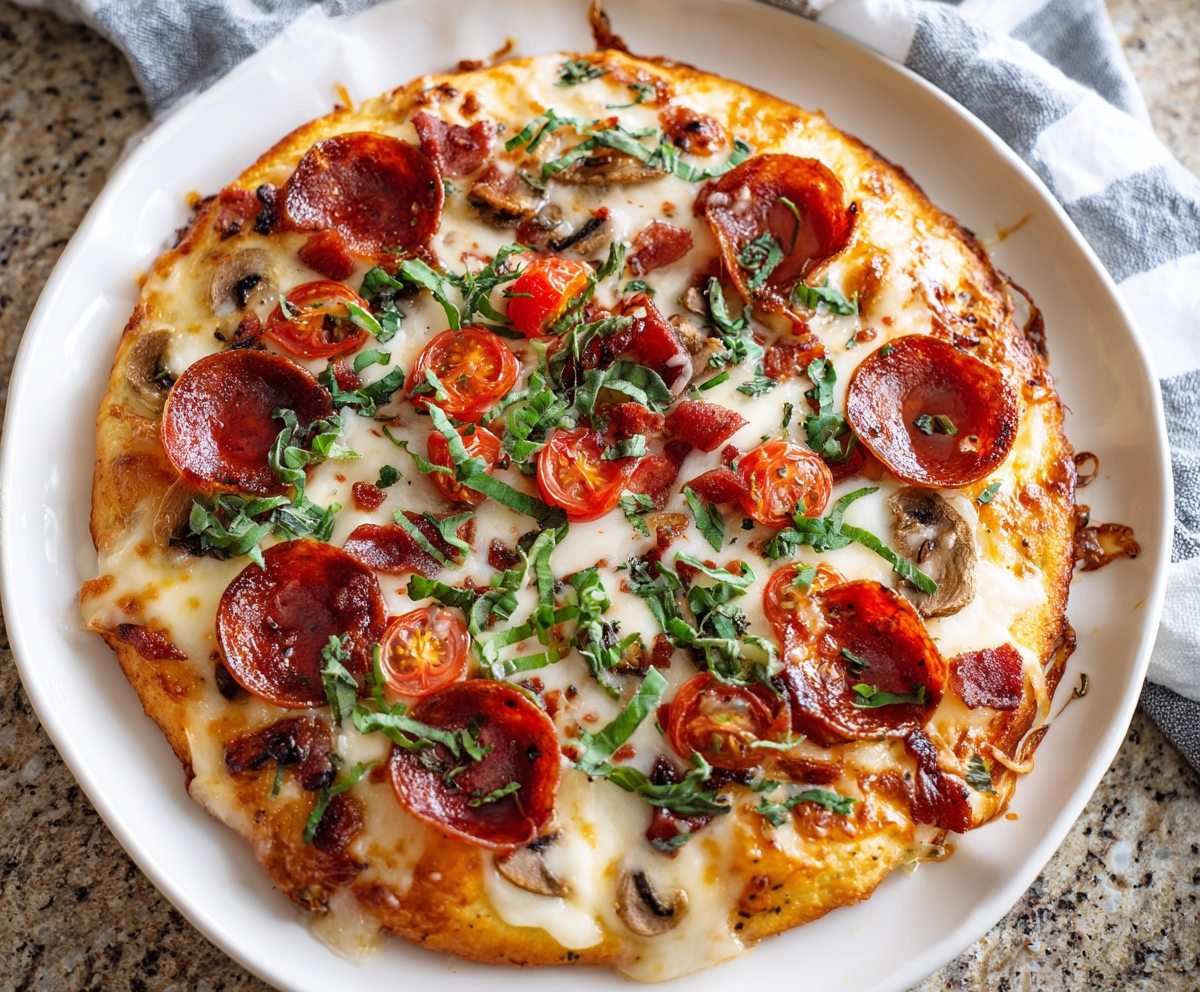
There is something incredibly comforting about homemade pizza night. The bubbling cheese, crispy golden edges, and warm aroma filling the kitchen make it almost impossible to resist. But if you are following a keto lifestyle, traditional pizza crust can quickly turn into a carb-heavy cheat meal. That is exactly why this Keto-Friendly Pizza Crust Recipe deserves a permanent place in your recipe collection. It gives you everything you love about pizza while keeping things low-carb, gluten-free, and surprisingly easy to make at home.
This crust is crisp around the edges, soft and chewy in the center, and sturdy enough to hold all your favorite toppings without falling apart. Unlike many store-bought keto crusts filled with preservatives and artificial ingredients, this homemade version uses simple pantry staples for fresh flavor and better texture. Whether you are craving classic pepperoni pizza, veggie-loaded slices, or a cheesy garlic pizza night, this keto crust makes it possible to enjoy pizza completely guilt-free.
Ingredients
This keto pizza crust comes together with a handful of simple low-carb ingredients that create a perfectly chewy and crispy texture.
Main Ingredients
- 2 cups almond flour (200 g)
- 1 1/2 cups shredded mozzarella cheese (170 g)
- 2 oz cream cheese (56 g)
- 2 large eggs, room temperature
- 1 tbsp psyllium husk powder
- 1 tsp baking powder
Optional Flavor Boosters
- 1 tsp garlic powder
- 1 tsp Italian seasoning
- 2 tbsp grated parmesan cheese
- Pinch of red chili flakes
Ingredient Tips for Best Results
Choose Fine Almond Flour: Use superfine almond flour instead of almond meal for a smoother dough and better texture. Almond meal can make the crust feel grainy and heavy.
Use Room Temperature Eggs: Room temperature eggs blend more easily into the warm cheese mixture and help create a smoother dough.
Use Good Quality Cheese: Freshly shredded mozzarella melts better and creates the best stretchy texture. Pre-shredded cheese often contains anti-caking agents that can affect the dough consistency.
Common Keto Pizza Crust Issues & How to Fix Them
Even simple keto crusts can sometimes need a little troubleshooting. Here are the most common problems and the easiest ways to fix them.
Crust Too Soggy
A soggy crust usually happens when the dough is not pre-baked or when too many wet toppings are added.
Fix:
- Pre-bake the crust before adding toppings
- Use parchment paper for better crisping
- Avoid watery sauces or vegetables
Crust Cracks or Falls Apart
Low-carb dough can sometimes become dry or crumbly if there is not enough moisture or binding ingredients.
Fix:
- Add a little extra mozzarella cheese
- Increase psyllium husk slightly
- Knead the dough until fully combined
Crust Too Chewy
Overworking or overbaking the dough can create a dense, chewy texture.
Fix:
- Roll the dough evenly
- Avoid baking too long
- Bake just until lightly golden
Crust Does Not Rise
If the crust feels flat and dense, the baking powder may not be active.
Fix:
- Use fresh baking powder
- Allow dough to rest before baking
- Bake in a fully preheated oven
Step-by-Step Instructions
Step 1: Preheat the Oven
Preheat your oven to 425°F (220°C). Line a baking tray or pizza stone with parchment paper.
Step 2: Mix the Dry Ingredients
In a large bowl, combine almond flour, psyllium husk powder, baking powder, garlic powder, and Italian seasoning.
Step 3: Melt the Cheese
In a microwave-safe bowl, combine mozzarella and cream cheese. Microwave in 30-second intervals until fully melted and smooth.
Step 4: Combine Everything
Add the melted cheese mixture and eggs into the dry ingredients. Mix until a dough forms, then knead gently until smooth.
Let the dough rest for 5 minutes so the psyllium husk absorbs moisture.
Step 5: Shape the Crust
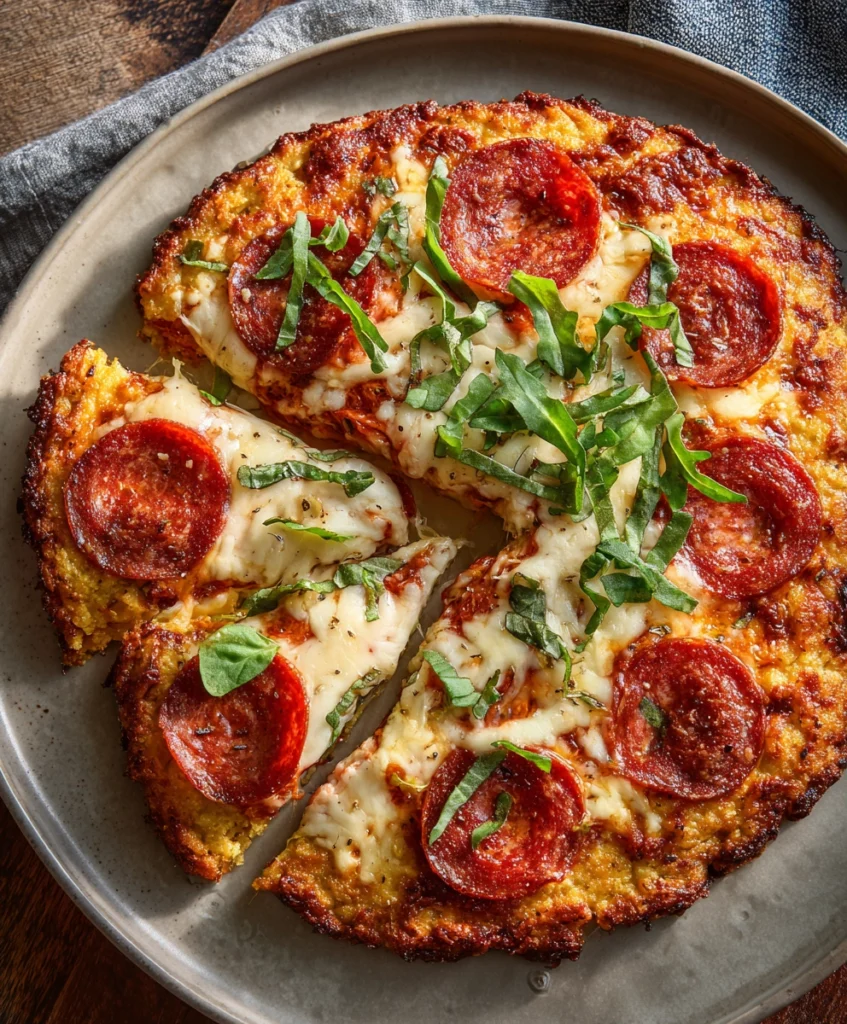
Place the dough onto parchment paper and flatten into your desired pizza shape. Roll evenly for the best texture.
Pre-bake the crust for 8–10 minutes until lightly golden around the edges.
Step 6: Add Toppings & Bake
Remove from the oven and add your favorite keto-friendly toppings. Bake again for 8–12 minutes until the cheese is melted and bubbly.
Let the pizza cool slightly before slicing.
Secrets to Perfect Keto Crust
The difference between a good keto crust and an amazing one often comes down to a few small details.
Combine Almond & Coconut Flour: A small amount of coconut flour can improve the structure and create a texture closer to traditional pizza crust.
Let the Dough Rest: Allowing the dough to sit for a few minutes helps the psyllium husk absorb moisture, making the crust easier to shape and less sticky.
Use Mozzarella & Cream Cheese Together: This combination creates the soft, stretchy texture that makes keto pizza feel surprisingly close to classic pizza dough.
Bake at High Heat: A hot oven helps create crispy edges while keeping the center soft and tender instead of dry.
Variations & Flavor Ideas: One of the best things about keto pizza crust is how customizable it is. Once you master the base recipe, you can easily create different flavors and styles.
Cauliflower Keto Crust: For an even lighter option, replace part of the almond flour with well-drained cauliflower rice for a veggie-packed crust.
Garlic Herb Crust: Add extra Italian seasoning, roasted garlic, and parmesan cheese for a rich garlic bread-inspired flavor.
Parmesan Crust: Sprinkle parmesan around the edges before baking for an extra crispy, cheesy crust.
Keto-Friendly Topping Ideas
- Pepperoni and mozzarella
- Mushrooms and spinach
- Grilled chicken Alfredo
- Bacon and jalapeños
- Fresh basil and cherry tomatoes
Thin Crust vs Thick Crust
- Roll dough thin for crispy pizza
- Keep dough thicker for a soft and chewy crust
Storage & Reheating Tips
This keto pizza crust stores beautifully, making it perfect for meal prep and quick dinners.
Refrigerator Storage: Store leftover pizza in an airtight container in the fridge for 3–4 days.
Freezer Storage: Freeze baked crusts or fully assembled pizza slices for up to 2 months. Wrap tightly in plastic wrap and foil for best freshness.
Reheat pizza in:
- Air fryer for crispy edges
- Oven at 375°F
- Skillet for a crispy bottom crust
Avoid microwaving if possible since it can soften the crust too much.
Nutritional Benefits & Keto Info
This keto-friendly pizza crust is satisfying, low in carbs, and packed with protein and healthy fats.
Why This Crust Works for Keto
- Low in net carbs
- High in healthy fats
- Gluten-free
- Grain-free
- Protein-rich and filling
Estimated Nutrition Per Slice
- Calories: 210
- Protein: 10g
- Fat: 17g
- Net Carbs: 4g
- Fiber: 3g
This makes it ideal for keto, low-carb, and gluten-free lifestyles while still feeling indulgent and comforting.
Conclusion
This Keto-Friendly Pizza Crust Recipe proves that you do not have to give up pizza to enjoy a low-carb lifestyle. It is crispy, cheesy, satisfying, and surprisingly simple to make with everyday keto ingredients.
Whether you keep it classic with pepperoni or load it with fresh vegetables and creative toppings, this homemade keto crust makes pizza night feel exciting again without the extra carbs.
If you loved this recipe, save it for later, pin it to your favorite keto Pinterest board, and share it with fellow pizza lovers looking for a delicious low-carb alternative.