Baked Shrimp with Garlic and Lemon Recipe
Few ingredients respond to heat as quickly and as generously as shrimp. In the time it takes to preheat your oven, you can have this dish fully assembled, seasoned, and ready to bake. That kind of efficiency, paired with a flavor payoff that consistently exceeds expectations, is exactly what makes this Baked Shrimp with Garlic and Lemon a recipe worth knowing by heart.
The garlic and lemon combination here is not accidental — it is one of the most time-tested pairings in coastal cooking across multiple culinary traditions. The garlic roasts gently in the oven alongside the shrimp, mellowing from sharp and pungent to sweet and deeply savory. The lemon cuts through the richness of the butter and amplifies the natural brininess of the shrimp in a way that makes every bite taste bright, clean, and considered.
What makes this recipe stand apart from a basic shrimp bake is the layering. The shrimp are seasoned directly, then bathed in a garlic butter sauce that concentrates in the pan as it bakes, creating a glossy, intensely flavored cooking liquid that doubles as a sauce for serving. Nothing is wasted and everything works together.
This recipe is fast enough for a weeknight dinner and impressive enough for a dinner party. It requires no special equipment, minimal preparation, and delivers restaurant-quality results in under twenty-five minutes from start to finish.
Ingredients You’ll Need
Rarely does a dish with this much presence on the plate ask so little of the pantry — and that is precisely what makes it one of the most reliable recipes you will ever add to your collection.
One of the things I love about this recipe is that it uses simple pantry ingredients. You probably already have most of them in your kitchen.
Base Ingredients:
- 1½ lbs large shrimp (16 to 20 count), peeled and deveined, tails on
- 4 tbsp unsalted butter, melted
- 5 cloves garlic, minced
- 2 tbsp olive oil
- 2 tbsp lemon juice, freshly squeezed
- 1 tsp lemon zest, freshly grated
- 1 tsp smoked paprika
- ½ tsp dried oregano
- ½ tsp red pepper flakes
- ½ tsp salt
- ¼ tsp black pepper
- 2 tbsp fresh flat-leaf parsley, finely chopped for finishing
Optional Add-ins:
- 2 tbsp dry white wine added to the butter sauce for depth
- ¼ cup grated Parmesan cheese scattered over the shrimp before baking
- 1 tbsp capers, rinsed for a briny, Mediterranean finish
- ½ tsp Old Bay seasoning in place of smoked paprika for a coastal variation
- 1 tbsp honey drizzled over for a subtle sweet heat contrast
- 1 tbsp fresh dill, chopped as an alternative herb finish
- ½ tsp Worcestershire sauce stirred into the butter for added umami depth
Step-by-Step Instructions
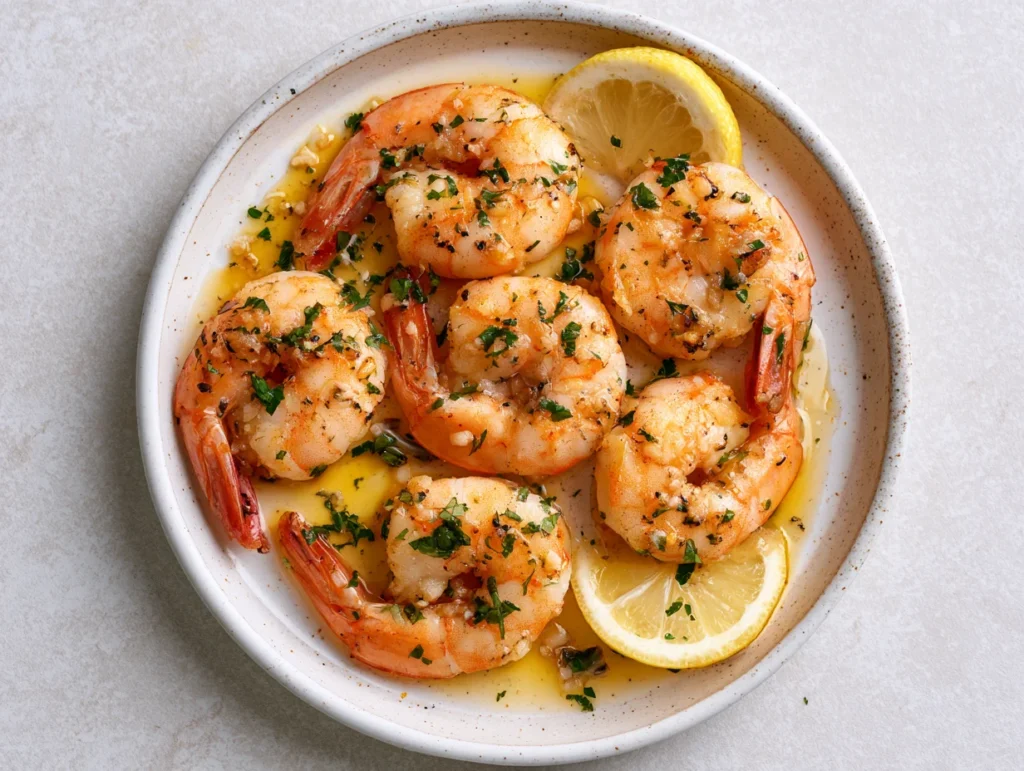
Step 1: Preheat the Oven and Prepare the Baking Dish
Set your oven to 400°F (200°C) and allow it to reach full temperature before the shrimp go in. High heat is essential for baking shrimp correctly — a properly hot oven cooks them quickly and evenly without drying them out. Lightly grease a 9×13 inch baking dish or a large rimmed sheet pan with a drizzle of olive oil. Spread it evenly across the surface. A wide, shallow pan is preferable to a deep dish here because it allows the heat to circulate around the shrimp rather than trapping steam underneath them.
Step 2: Prepare and Season the Shrimp
Pat the peeled and deveined shrimp thoroughly dry with paper towels. Removing surface moisture is critical — wet shrimp steam in the oven rather than roasting, which results in a rubbery texture and diluted flavor. Place the dried shrimp in a large bowl and season directly with smoked paprika, dried oregano, red pepper flakes, salt, and black pepper. Toss until every shrimp is evenly coated in the spice blend. This direct seasoning of the shrimp before they meet the sauce ensures the flavor penetrates from the inside out rather than sitting only on the surface.
Step 3: Make the Garlic Butter Sauce
In a small saucepan over low heat, melt the butter and add the minced garlic. Cook gently for one to two minutes, stirring constantly, until the garlic softens and becomes fragrant but does not brown. Remove from heat and stir in the olive oil, freshly squeezed lemon juice, and lemon zest. The combination of butter and olive oil creates a sauce with the richness of a classic beurre blanc and the stability of an olive oil dressing — it coats the shrimp beautifully and will not break during baking.
Step 4: Assemble the Dish
Arrange the seasoned shrimp in a single, even layer across the prepared baking dish. Spacing matters here — shrimp that overlap or crowd together trap steam and cook unevenly. Pour the garlic butter sauce evenly over the arranged shrimp, making sure every piece is coated. Use a spatula or spoon to redistribute any pooled sauce from the edges toward the center of the dish. The sauce will bubble and reduce slightly as it bakes, concentrating the garlic and lemon flavors into a rich, glossy pan sauce that forms naturally around the shrimp.
Step 5: Bake and Finish
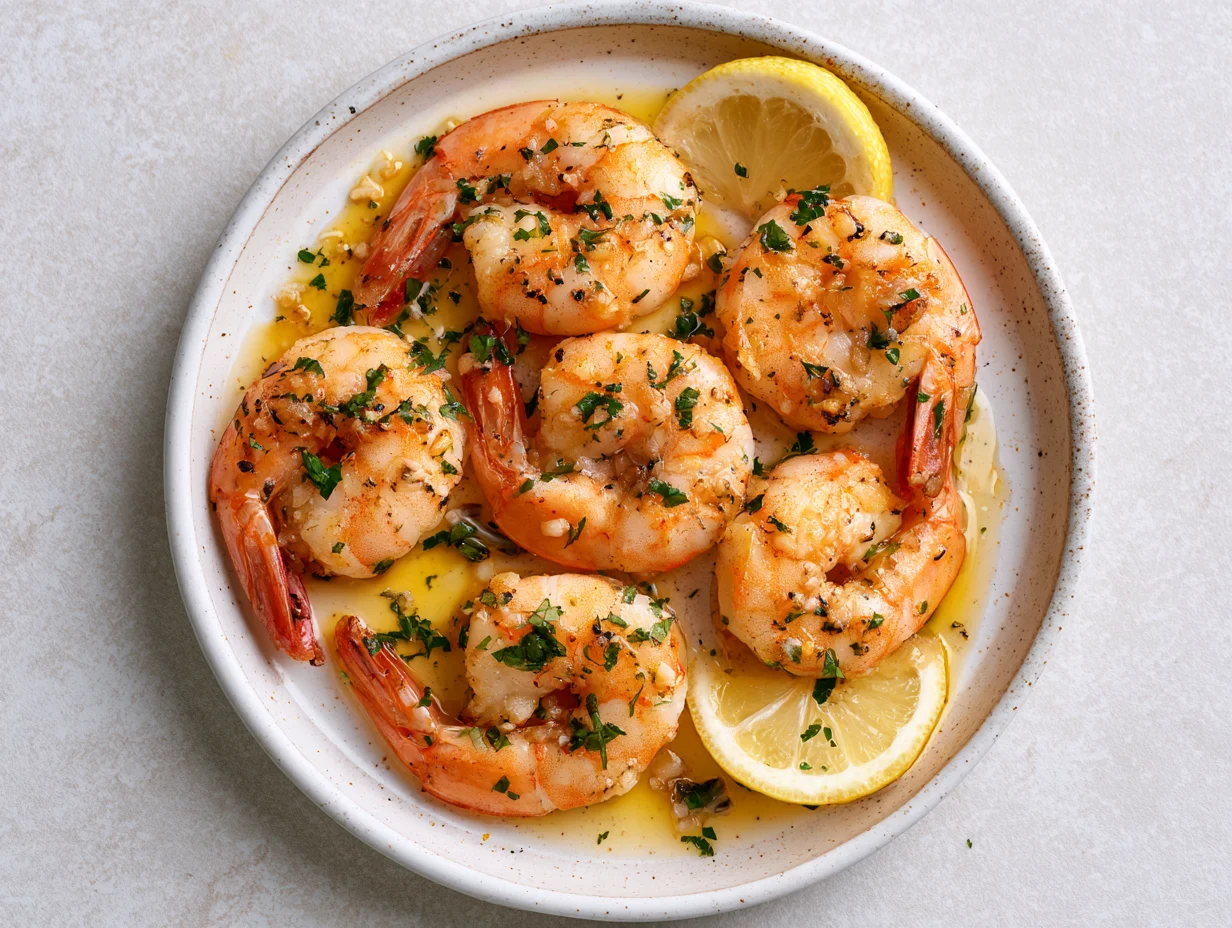
Slide the dish into the fully preheated oven and bake for 8 to 10 minutes, depending on the size of your shrimp. Large shrimp at 16 to 20 count are perfectly cooked at eight minutes — they should be opaque throughout, tightly curled, and pink with a light golden tint at the edges. Do not overbake. Shrimp go from perfectly cooked to rubbery in under sixty seconds, so pull the dish from the oven the moment they are just opaque. Scatter freshly chopped parsley over the top immediately and serve directly from the baking dish with lemon wedges alongside.
Cook Time
Total:
20 to 25 minutes
Prep:
10 to 12 minutes
Bake:
8 to 10 minutes
Servings
This recipe serves four as a main course when paired with a side dish such as crusty bread, rice, or a simple salad. The shrimp are generously portioned at one and a half pounds, and the garlic butter sauce that pools in the baking dish is flavorful enough to serve as a light but satisfying sauce over whatever accompaniment you choose.
As a starter or appetizer at a dinner party, this quantity serves six to eight guests comfortably, particularly when presented in the baking dish at the center of the table alongside bread for dipping. The presentation is casual, generous, and immediately inviting.
Makes approximately 4 main-course servings or 6 to 8 appetizer portions. The recipe doubles without any adjustment to technique — simply use two baking dishes side by side in the oven rather than one overcrowded pan, and rotate them once halfway through baking for even results.
Common Mistakes in This Recipe
The most damaging mistake in this recipe is overbaking the shrimp. Shrimp are among the fastest-cooking proteins available, and even two extra minutes in the oven at this temperature can transform them from tender and juicy to tight, rubbery, and dry. The window between perfectly cooked and overdone is genuinely narrow, and it closes faster than most home cooks expect.
Skipping the step of patting the shrimp dry is another error that directly compromises the finished dish. Shrimp hold a significant amount of surface moisture, and when that moisture is not removed before seasoning and baking, it releases into the pan during cooking — diluting the garlic butter sauce and creating a watery, steamed result rather than the glossy, concentrated pan sauce the recipe is designed to produce.
Using pre-minced jarred garlic instead of freshly minced cloves is a subtle but meaningful mistake in a recipe where garlic is one of only a handful of core flavors. Jarred garlic has been acidified for preservation, which dulls its sweetness and reduces the depth of flavor it contributes when cooked. In a dish this simple, the quality of individual ingredients is directly visible in the finished result.
Many cooks also use bottled lemon juice in place of fresh, which produces a noticeably flat and slightly artificial citrus note. Fresh lemon juice and zest work together in this recipe in a way that bottled juice cannot replicate — the zest carries the essential oils of the lemon skin, which add an aromatic brightness that is entirely absent from any processed alternative.
Solutions to Common Mistakes
Set a timer the moment the baking dish goes into the oven and check the shrimp at the eight-minute mark regardless of what they look like from the outside. The visual cues to look for are opacity throughout the thickest part of the shrimp and a firm, tight curl. If even one or two shrimp in the center of the dish still show translucency, give them sixty more seconds and check again immediately.
Always dry your shrimp thoroughly before seasoning. Press paper towels gently against the surface of each shrimp and allow them to air-dry on the paper towel for two to three minutes after patting. This two-stage drying approach removes both surface water and the thin liquid film that forms on shrimp after thawing, ensuring the seasoning adheres properly and the sauce concentrates as intended during baking.
Buy whole heads of garlic and mince the cloves yourself immediately before cooking. Freshly minced garlic releases allicin — the sulfur compound responsible for garlic’s depth and sweetness — at a level that jarred garlic simply cannot match. The difference in the finished sauce is immediately apparent and makes a measurable impact on the overall quality of the dish.
Squeeze lemons fresh for every batch. Roll the lemon firmly on the counter before cutting to release maximum juice, then zest it before halving — it is significantly easier to zest a whole lemon than a cut one. A medium lemon yields approximately two tablespoons of juice, which is exactly what this recipe calls for. Keep a wedge or two aside for serving — a squeeze of fresh lemon at the table brightens the dish further at the moment of eating.
Nutritional Information (approx. per serving)
- Calories: 290 kcal
- Protein: 32g
- Total Fat: 17g
- Saturated Fat: 7g
- Carbohydrates: 3g
- Dietary Fiber: 0.3g
- Sugars: 0.5g
- Sodium: 520mg
- Cholesterol: 245mg
- Omega-3 Fatty Acids: 540mg
- Selenium: 90% DV
- Iodine: 45% DV
- Vitamin B12: 35% DV
- Phosphorus: 30% DV
- Vitamin C: 18% DV
Shrimp is one of the leanest, most protein-dense seafood options available, delivering over thirty grams of complete protein per serving with a calorie count that remains well below most other animal proteins. The amino acid profile is comprehensive and highly bioavailable, supporting muscle synthesis, immune function, and cellular repair with exceptional efficiency.
Selenium, present in this dish at ninety percent of the daily value per serving, is a trace mineral with powerful antioxidant properties. It works alongside vitamin E to protect cells from oxidative damage, supports thyroid hormone metabolism, and has been associated with reduced risk of certain inflammatory conditions in multiple clinical studies.
Garlic contributes allicin and a range of sulfur-containing compounds that have been extensively studied for their cardiovascular benefits. Regular consumption of cooked garlic has been linked to modest reductions in blood pressure and LDL cholesterol, as well as improved platelet function — all meaningful benefits from an ingredient that costs almost nothing and adds enormous flavor.
Lemon juice and zest deliver a meaningful dose of vitamin C alongside flavonoids and limonene — a compound found in citrus peel that has demonstrated anti-inflammatory and antioxidant activity in research settings. The combination of seafood-derived iodine, selenium, and omega-3 fatty acids makes this dish a genuinely therapeutic meal for thyroid health and cardiovascular function.
Storage Instructions
Baked shrimp is at its absolute best the moment it comes out of the oven, and it is strongly recommended to serve it immediately while the texture is at peak tenderness and the garlic butter sauce is at its most aromatic and glossy. Like all cooked shellfish, shrimp do not hold or reheat with the same quality as other proteins.
That said, leftovers store safely and can be enjoyed the following day with the right approach. Allow the cooked shrimp to cool completely before transferring to an airtight container. Refrigerate promptly within two hours of cooking. Stored properly, baked shrimp will keep in the refrigerator for up to two days. Beyond this window, the texture begins to degrade and the flavor becomes increasingly less appealing.
When reheating, avoid high heat entirely. The best method is a gentle warm-up in a skillet over low heat with a small knob of butter and a splash of water or white wine, covered with a lid for two to three minutes. This creates a gentle steam environment that warms the shrimp through without tightening the proteins further. The microwave is a last resort — use fifty percent power for thirty-second intervals only.
Cooked shrimp do not freeze well once baked. Freezing causes ice crystals to rupture the delicate cell structure of the shrimp, resulting in a mushy, waterlogged texture upon thawing that cannot be corrected through any reheating method. If you anticipate leftovers, it is far better to cook a smaller quantity of shrimp fresh than to freeze and reheat a larger batch.
Suggestions
The garlic butter pan sauce that develops in the baking dish during cooking is one of the most valuable byproducts of this recipe and should never be left behind in the dish. Pour it over whatever starch or vegetable you are serving alongside — it soaks into crusty bread, rice, or pasta with an intensity of flavor that elevates the simplest side dish into something genuinely memorable.
For a complete one-pan dinner, add halved cherry tomatoes and thin asparagus spears to the baking dish alongside the shrimp before it goes into the oven. The tomatoes burst and release their juices into the garlic butter sauce as everything bakes, creating a naturally thickened, slightly sweet base that makes the finished dish taste considerably more complex than the preparation time would suggest.
This recipe also works exceptionally well as the protein component in a larger composed dish. Serve the baked shrimp over a bed of creamy polenta, cauliflower mash, or herbed couscous, spooning the pan sauce liberally over everything. Alternatively, pile the shrimp into warm flour tortillas with shredded cabbage, sliced avocado, and a drizzle of chipotle crema for a fast and impressive shrimp taco dinner.
When entertaining, serve the shrimp directly in the baking dish placed at the center of the table alongside a large bowl of crusty sourdough bread cut into thick slices for dipping. Add a plate of lemon wedges, a small bowl of extra chopped parsley, and a bottle of chilled white wine. The presentation is effortless, the flavor is extraordinary, and the format naturally encourages the kind of relaxed, communal eating that makes a dinner gathering feel genuinely warm and inviting.
Seasonal Relevance
This Baked Shrimp with Garlic and Lemon is one of those rare recipes that adapts to every season with equal confidence. Its core flavor profile — bright citrus, deeply savory garlic, and the clean brininess of good shrimp — is universally appealing regardless of the time of year, which makes it one of the most versatile seafood recipes in regular rotation cooking.
In spring and summer, this dish feels entirely at home on a warm evening table. The lemon-forward brightness of the sauce, the freshness of the parsley garnish, and the light, clean protein of the shrimp align naturally with the season’s appetite for food that is flavorful but not heavy. Serve it alongside a crisp cucumber salad or grilled corn and the meal feels genuinely seasonal and considered.
Autumn brings an opportunity to deepen the flavor profile of this recipe without changing its essential character. Stir a tablespoon of Worcestershire sauce into the garlic butter, increase the smoked paprika slightly, and serve over creamy polenta with roasted cherry tomatoes. The same core recipe takes on a warmer, more substantial quality that suits the shift in the season’s palate perfectly.
In winter, baked shrimp earns its place as an elegant, low-effort alternative to the heavier meat-centered dishes that dominate cold-weather cooking. It bakes in under ten minutes, requires minimal cleanup, and presents beautifully — making it a particularly smart choice for winter holiday entertaining when the kitchen is already busy and time and oven space are both at a premium.
Final Words
This Baked Shrimp with Garlic and Lemon is the kind of recipe that makes you look like a significantly more accomplished cook than the preparation time would justify. It is fast, it is direct, and it delivers a depth of flavor that consistently surprises people who assume that quick cooking means compromised results.
What I find most satisfying about this dish is how clearly it demonstrates the value of quality ingredients handled well. There is no complicated technique concealing mediocre produce here. The garlic needs to be fresh, the lemon needs to be real, the shrimp need to be good — and when those three things come together in a hot oven with butter and the right spices, the result speaks entirely for itself.
The recipe is also a masterclass in restraint. It does not pile on ingredients or techniques to manufacture complexity. The complexity here is earned through the correct application of heat, the layering of seasoning, and the natural flavors of the ingredients themselves. That kind of cooking — honest, precise, and ingredient-led — is the most satisfying kind.
Make this recipe once and you will understand why it earns a permanent place in the repertoire of anyone who cooks regularly. It answers the question of what to make on a busy evening, what to serve to guests with minimal effort, and what to reach for when you want something genuinely delicious without a lengthy commitment in the kitchen.
Frequently Asked Questions
Can I use frozen shrimp for this recipe, and does it affect the final flavor or texture?
Frozen shrimp works very well provided it is fully thawed and thoroughly patted dry before use. Thaw overnight in the refrigerator or under cold running water for fifteen minutes. The key is removing all surface moisture after thawing — frozen shrimp release more water than fresh, which can dilute the garlic butter sauce if not properly dried first.
Should I leave the tails on or remove them before baking, and does it make a difference to the cooking?
Leaving the tails on during baking adds visual appeal and helps the shrimp hold their shape as they cook. For a dinner party presentation, tails on is the preferred choice. For a practical weeknight meal where the shrimp will be tossed with pasta or rice, removing the tails before baking makes eating considerably more convenient with no impact on flavor.
What size shrimp works best for this recipe, and how do I adjust the baking time for different sizes?
Large shrimp at 16 to 20 count per pound is the ideal size — substantial enough to remain juicy and easy to handle without requiring extended baking time. Jumbo shrimp at 13 to 15 count need ten to twelve minutes. Medium shrimp at 21 to 25 count need only six to seven minutes. Always check for full opacity rather than relying solely on timing.
Baked Shrimp with Garlic and Lemon
4
servings10
minutes10
minutes290
kcal20
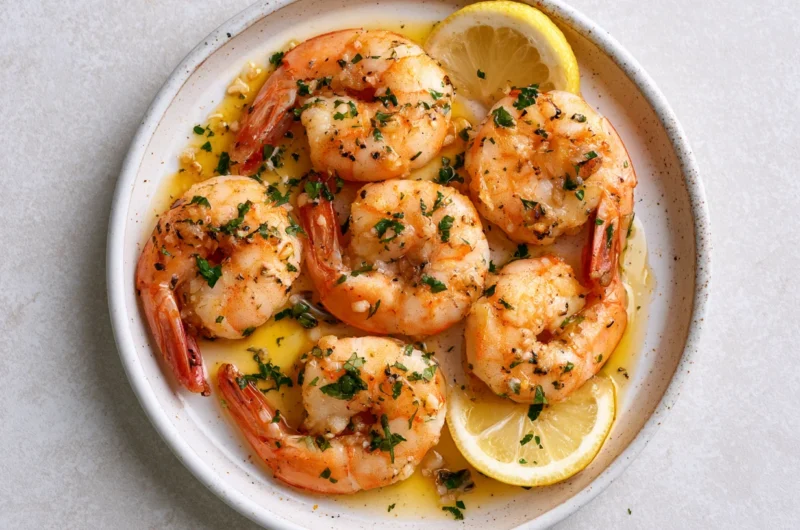
minutesJuicy, garlicky baked shrimp bathed in a rich lemon butter sauce and finished with fresh parsley — ready in just 25 minutes. A fast, elegant, and endlessly versatile seafood recipe perfect for weeknights and entertaining alike.
Ingredients
Base Ingredients:
1½ lbs large shrimp (16 to 20 count), peeled and deveined, tails on
4 tbsp unsalted butter, melted
5 cloves garlic, minced
2 tbsp olive oil
2 tbsp lemon juice, freshly squeezed
1 tsp lemon zest, freshly grated
1 tsp smoked paprika
½ tsp dried oregano
½ tsp red pepper flakes
½ tsp salt
¼ tsp black pepper
2 tbsp fresh flat-leaf parsley, finely chopped for finishing
Optional Add-ins:
2 tbsp dry white wine added to the butter sauce
¼ cup grated Parmesan cheese scattered over shrimp before baking
1 tbsp capers, rinsed
½ tsp Old Bay seasoning in place of smoked paprika
1 tbsp honey drizzled over for sweet heat contrast
1 tbsp fresh dill, chopped as an alternative herb finish
½ tsp Worcestershire sauce stirred into the butter
Directions
- Preheat the oven to 400°F (200°C) and allow it to reach full temperature. Lightly grease a 9×13 inch baking dish or large rimmed sheet pan with a drizzle of olive oil, spreading it evenly across the surface.
- Pat the peeled and deveined shrimp thoroughly dry with paper towels to remove all surface moisture. Place the dried shrimp in a large bowl and season directly with smoked paprika, dried oregano, red pepper flakes, salt, and black pepper. Toss until every shrimp is evenly and fully coated in the spice blend.
- In a small saucepan over low heat, melt the butter and add the minced garlic. Cook gently for 1 to 2 minutes, stirring constantly, until the garlic softens and becomes fragrant but does not brown. Remove from heat and stir in the olive oil, freshly squeezed lemon juice, and lemon zest until fully combined.
- Arrange the seasoned shrimp in a single, even layer across the prepared baking dish, ensuring no shrimp overlap. Pour the garlic butter sauce evenly over the arranged shrimp, making sure every piece is well coated. Use a spatula to redistribute any pooled sauce from the edges toward the center.
- Slide the dish into the fully preheated oven and bake for 8 to 10 minutes, until the shrimp are opaque throughout, tightly curled, and pink with a light golden tint at the edges. Check at the 8-minute mark and do not overbake.
- Remove from the oven immediately once the shrimp are just opaque. Scatter freshly chopped parsley generously over the top and serve directly from the baking dish with lemon wedges alongside for squeezing at the table.
Notes
- Always pat shrimp completely dry before seasoning — surface moisture prevents proper roasting and dilutes the garlic butter sauce during baking, resulting in a steamed rather than roasted finish.
- Do not overbake. Check shrimp at the 8-minute mark and pull the dish from the oven the moment they turn fully opaque — they continue cooking briefly from residual heat after leaving the oven.
- Use freshly minced garlic cloves, not pre-minced jarred garlic. Fresh garlic delivers a significantly deeper sweetness and aroma that is directly visible in the quality of the finished butter sauce.
- Always use freshly squeezed lemon juice and fresh zest — bottled lemon juice produces a flat, artificial citrus note that cannot replicate the brightness of real lemon in this recipe.
- A wide, shallow baking dish or sheet pan is preferable to a deep dish — it allows heat to circulate properly around the shrimp rather than trapping steam underneath them.
- For a complete one-pan dinner, add halved cherry tomatoes and thin asparagus spears to the baking dish alongside the shrimp before baking.
- Leftovers keep in the refrigerator for up to 2 days in an airtight container. Reheat gently in a covered skillet over low heat with a small knob of butter — avoid high heat or microwaving at full power.
- Cooked shrimp do not freeze well once baked. Cook only what you plan to eat fresh for the best possible texture and flavor.