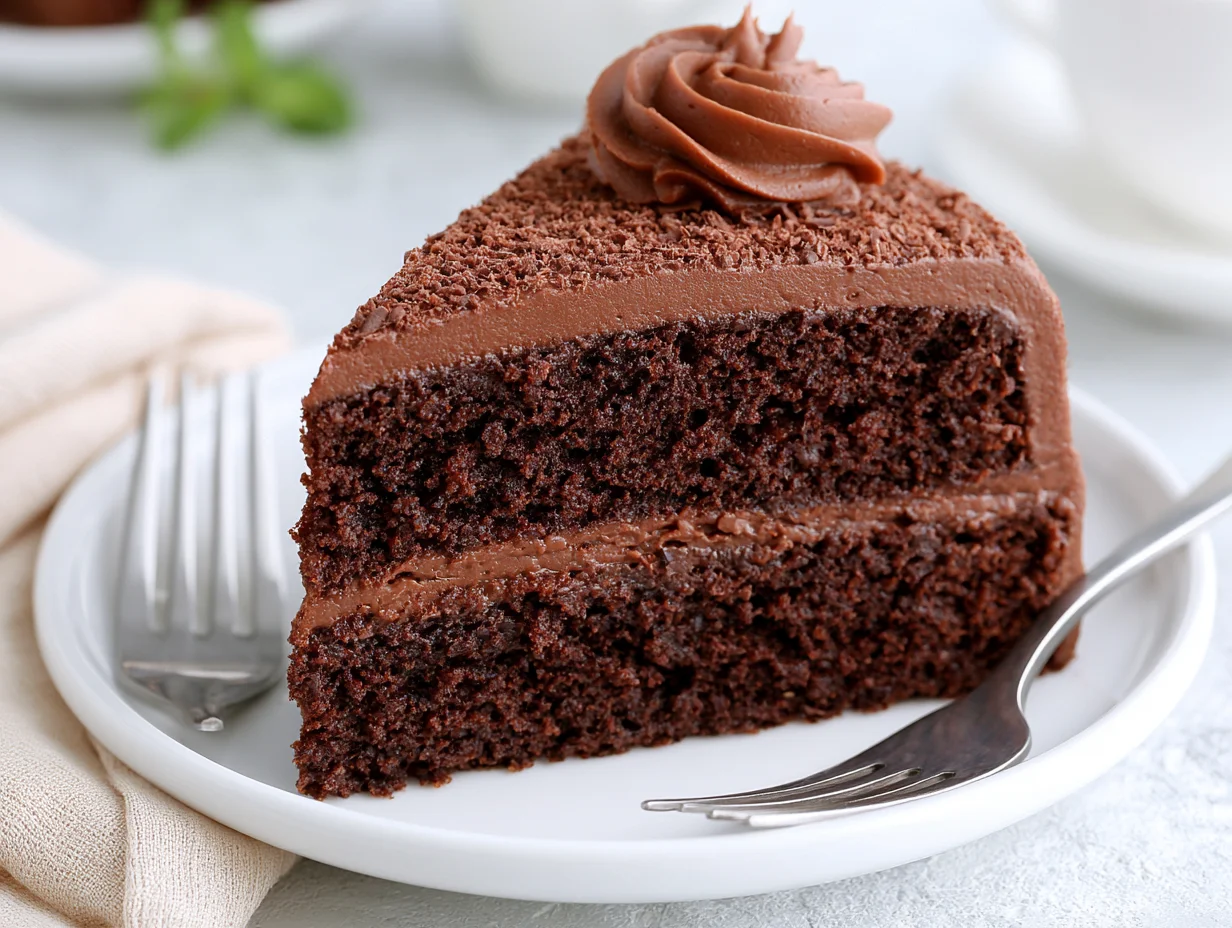
Best Chocolate Cake Recipe
There are chocolate cakes, and then there is the chocolate cake — the kind that silences the room the moment it hits the table. This recipe is that cake.
I’ve tested more chocolate cake recipes than I can count. Dense ones, dry ones, cakes that looked beautiful but tasted like cardboard, and cakes that were sweet but entirely forgettable. After years of baking professionally and obsessing over every variable — cocoa type, fat ratio, liquid temperature — I finally landed on a version that is nothing short of perfect.
What makes this cake different is not a gimmick ingredient or a complicated technique. It’s precision. It’s understanding why each element matters and making sure nothing is left to guesswork. The result is a cake with a tender, moist crumb, a deep chocolate flavor that lingers, and a fudgy texture that holds beautifully whether you’re serving it warm or the next day.
Whether you’re making this for a birthday, a celebration, or simply because you deserve a great dessert on a Tuesday afternoon, this recipe will become the only one you ever need. Let’s bake something worth remembering.
Ingredients You’ll Need
Every ingredient in this recipe is doing real work — nothing is filler, and nothing can be skipped without a consequence you’ll taste in every bite.
One of the things I love about this recipe is that it uses simple pantry ingredients. You probably already have most of them in your kitchen.
Base Ingredients:
- 2 cups all-purpose flour
- 2 cups granulated sugar
- ¾ cup unsweetened cocoa powder (Dutch-process preferred)
- 2 tsp baking soda
- 1 tsp baking powder
- 1 tsp fine sea salt
- 2 large eggs, room temperature
- 1 cup buttermilk, room temperature
- 1 cup strong brewed coffee, hot
- ½ cup neutral vegetable oil
- 2 tsp pure vanilla extract
Optional Add-ins:
- ½ cup dark chocolate chips (folded into batter for extra richness)
- ¼ tsp espresso powder (intensifies chocolate depth)
- 1 tsp instant coffee granules (dissolved in hot water as coffee substitute)
- 2 tbsp sour cream (for an even more tender crumb)
Step-by-Step Instructions
Step 1: Prepare Your Pans and Preheat
Preheat your oven to 350°F (175°C). Grease two 9-inch round cake pans generously with butter or non-stick spray, then line the bottoms with parchment paper circles and grease the parchment too. Dust lightly with cocoa powder instead of flour — this prevents any white residue on the finished cake edges and keeps that deep chocolate color intact all the way through.
Step 2: Mix the Dry Ingredients
In a large mixing bowl, whisk together the flour, sugar, cocoa powder, baking soda, baking powder, and salt. Take a full minute to do this properly. You want the leavening agents and salt distributed evenly so the cake rises uniformly and every slice tastes exactly the same. Sifting is ideal if your cocoa tends to clump — a lumpy batter at this stage is harder to fix later.
Step 3: Combine the Wet Ingredients
In a separate medium bowl or large measuring jug, whisk together the eggs, buttermilk, oil, and vanilla extract until smooth and fully combined. Keep these ingredients at room temperature before you begin — cold eggs and cold buttermilk can cause the batter to seize slightly and affect how the cake bakes through the center. Temperature uniformity here is one of the small but meaningful steps that separates a good cake from a great one.
Step 4: Bring the Batter Together
Pour the wet ingredients into the dry and mix with a whisk or rubber spatula just until no dry streaks remain. Then carefully stream in the hot coffee while stirring gently. The batter will look thin — almost alarmingly so. This is entirely correct. The coffee amplifies the cocoa’s natural bitterness in the best possible way and ensures the final crumb stays moist for days. Do not overmix at this stage; stop the moment the batter is smooth.
Step 5: Bake and Cool
Divide the batter evenly between your two prepared pans. Tap each pan gently on the counter two or three times to release any large air bubbles. Bake at 350°F for 30 to 35 minutes, or until a toothpick inserted in the center comes out with just a few moist crumbs — not wet batter. Allow the cakes to cool in the pans for exactly 10 minutes, then turn them out onto a wire rack. Cool completely before frosting — this step is non-negotiable.
Step 6: Frost and Assemble
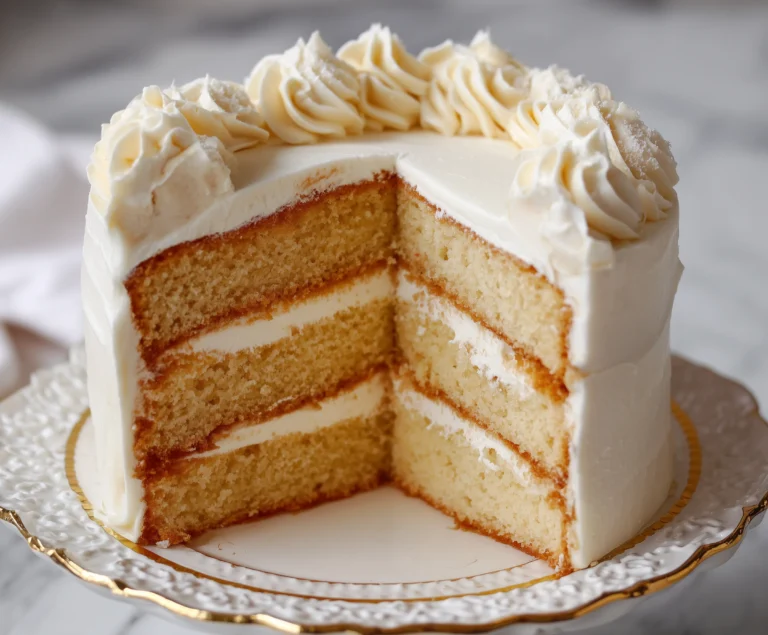
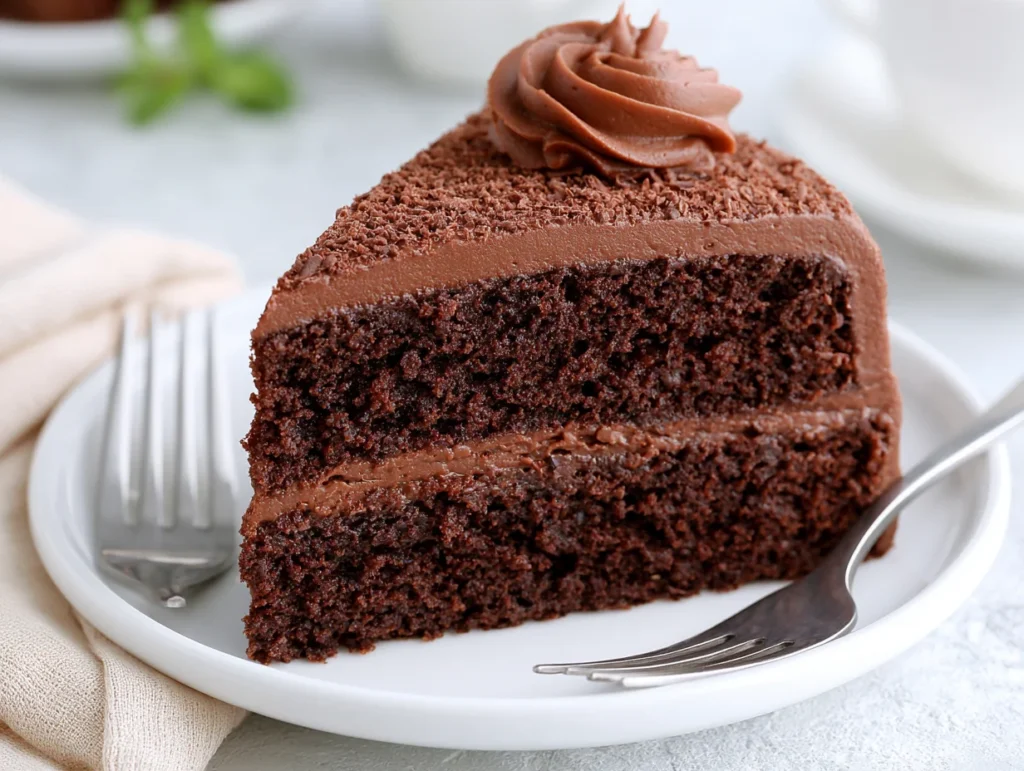
Once both layers are fully cooled to room temperature, place one layer flat-side-up on your serving plate or cake board. Spread a generous, even layer of your chosen frosting — a classic chocolate buttercream or a silky ganache both work beautifully here. Place the second layer on top, flat-side-down, and apply a thin crumb coat all over the cake. Refrigerate for 15 minutes to set the crumb coat, then apply your final layer of frosting smoothly and confidently.
Cook Time
Total:
Approximately 1 hour 5 minutes (including cooling time for assembly readiness)
Prep:
20 minutes
Bake:
30 to 35 minutes
Servings
This recipe makes two 9-inch round cake layers, which when assembled yields a standard double-layer cake perfect for most occasions. Sliced generously, it serves around 10 to 12 people with ease.
Makes approximately 10 to 12 servings.
For larger gatherings or a three-tier cake, the recipe scales up cleanly by 1.5x or 2x. Just be sure to adjust your pan sizes accordingly and keep a close eye on bake time, as a deeper batter may need 5 to 8 extra minutes in the oven.
Common Mistakes in This Recipe
The most frequent mistake bakers make is using cold eggs and cold buttermilk straight from the refrigerator. When cold wet ingredients meet the dry mixture, the fats in the batter don’t emulsify properly, leading to uneven texture and a dense crumb that doesn’t spring back the way it should.
Another common error is substituting regular cocoa for Dutch-process without adjusting the leavening. Dutch-process cocoa is pH-neutral and behaves differently in batter than natural cocoa, which is acidic. Using the wrong type without compensating can result in a cake that doesn’t rise properly or tastes slightly off.
Overmixing the batter after adding the wet ingredients is a mistake that ruins many otherwise well-made chocolate cakes. Excess mixing develops gluten, turning a tender crumb into a rubbery, tough layer. Many bakers mistake “thorough” for “well-developed,” but in cake baking, less stirring is almost always better.
Finally, pulling the cake from the oven too early because the timer goes off is a surprisingly common problem. Oven temperatures vary, and relying on time alone without checking with a toothpick leads to underbaked centers that collapse as the cake cools. Always trust the toothpick test over the clock.
Solutions to Common Mistakes
The fix for cold ingredients is simple: plan ahead. Pull your eggs and buttermilk out of the refrigerator at least 30 minutes before you begin baking. If you forget, place the eggs in a bowl of warm water for 5 minutes and microwave the buttermilk in 10-second intervals until it reaches room temperature.
For the cocoa powder issue, check your packaging before you begin. If your recipe calls for Dutch-process and you only have natural cocoa, reduce the baking soda slightly and add a small pinch of baking powder to compensate for the pH difference. It’s not a perfect swap, but it keeps the chemistry close enough.
To avoid overmixing, switch to a rubber spatula once the wet and dry ingredients are combined and fold rather than stir. Stop the moment you stop seeing dry flour — a few gentle folds is all it takes.
For the underbaking problem, start testing at the 28-minute mark. Insert a toothpick into the center and check both layers. Moist crumbs are fine; wet batter means it needs more time.
Nutritional Information (approx. per serving)
- Calories: 420 kcal
- Total Fat: 18g
- Saturated Fat: 4g
- Carbohydrates: 62g
- Sugars: 44g
- Protein: 5g
- Fiber: 3g
- Sodium: 380mg
- Cholesterol: 38mg
Dark chocolate and cocoa powder are genuinely rich in flavonoids — antioxidants that have been studied for their role in supporting cardiovascular health and reducing oxidative stress in the body.
Eggs contribute high-quality complete protein and are a natural source of choline, a nutrient important for brain function and cellular membrane integrity that many people don’t get enough of in their daily diet.
The small amount of coffee used in this recipe doesn’t just enhance flavor — caffeine in moderate quantities is associated with improved focus and alertness, and coffee itself contains chlorogenic acids that act as antioxidants.
Finally, buttermilk brings probiotics and active cultures that support gut health, along with calcium and phosphorus for bone strength. The fact that this cake delivers any nutritional benefit at all feels like a bonus worth celebrating.
Storage Instructions
Once assembled and frosted, the cake keeps beautifully at room temperature under a cake dome or airtight container for up to two days. The moisture sealed in by the frosting actually keeps the crumb tasting fresh longer than an unfrosted layer would on its own.
For longer storage, refrigerate the cake in an airtight container or wrapped tightly with plastic wrap for up to five days. Before serving, let refrigerated slices sit at room temperature for 20 to 30 minutes — cold cake loses some of its texture and flavor nuance, and it deserves to be tasted at its best.
Unfrosted cake layers freeze exceptionally well. Wrap each layer individually in two layers of plastic wrap, then a layer of aluminum foil, and freeze for up to three months. Thaw overnight in the refrigerator, then bring to room temperature before frosting and assembling.
Frosted cake can also be frozen if needed — freeze it uncovered for one hour until the frosting sets firm, then wrap carefully. When thawing, remove the wrapping before it fully defrosts to prevent the frosting from sticking or smearing.
Suggestions
This cake pairs brilliantly with a scoop of vanilla bean ice cream or a generous pour of warm salted caramel sauce right before serving. The contrast between the cold cream or warm sauce and the room-temperature cake creates an experience that goes well beyond the cake alone.
If you want to elevate the frosting, consider a whipped dark chocolate ganache instead of traditional buttercream. It’s made simply by whipping heavy cream and melted dark chocolate together after they cool, and the result is lighter, silkier, and less sweet than buttercream while still being deeply chocolatey.
For a textural contrast, scatter flaky sea salt across the top of the frosted cake just before serving. The salt doesn’t overpower anything — it sharpens the chocolate flavor and adds a subtle crunch that makes each bite feel more intentional and sophisticated.
This cake also works beautifully as a single-layer sheet cake for larger, casual gatherings. Baked in a 9×13-inch pan, it requires no layering or assembly, and a simple poured ganache on top turns it into something that looks effortlessly impressive.
Seasonal Relevance
While chocolate cake is genuinely timeless, this recipe feels especially at home in the colder months of fall and winter. The warmth of the coffee, the depth of dark cocoa, and the richness of the frosting all align beautifully with the flavors and comfort food energy of October through February.
During the holiday season, this cake becomes an ideal centerpiece. Dressed up with piped rosettes, chocolate shards, or a dusting of edible gold, it reads elegant and celebratory without requiring advanced decorating skills. It’s one of those recipes that looks far more impressive than the effort it demands.
Spring and summer versions work just as well with a lighter touch. Swap the chocolate buttercream for a whipped cream cheese frosting, add a thin layer of raspberry jam between the layers, and suddenly this winter cake becomes a spring showstopper that feels seasonal and fresh rather than heavy.
In any season, this is the cake people remember. It’s the one that shows up in requests — “can you make that chocolate cake again?” — and the one that earns the kind of silence at the table that tells you everything went exactly right.
Final Words
This chocolate cake recipe represents the kind of baking that I believe every home cook deserves access to — not complicated, not precious, but deeply thoughtful in every element. The ingredients are humble. The method is clear. The result is extraordinary.
What I love most about this recipe is how forgiving it becomes once you understand the logic behind it. Follow the temperature guidance, don’t overmix, trust the toothpick test, and this cake will reward you every single time. Baking is a skill that improves with repetition, and this is a recipe worth repeating often.
If you make this cake, I hope you take a moment to enjoy the process, not just the result. The smell when it comes out of the oven, the way the layers level perfectly, the first clean slice — these are small pleasures that a recipe this well-built delivers reliably.
Share it with someone you love, or keep it entirely to yourself. Either choice is completely valid. Just make sure you bake it at least once. I promise you won’t regret it.
Frequently Asked Questions
Can I make this cake without coffee?
Yes, but I’d encourage you to try it first. Hot coffee doesn’t make the cake taste like coffee — it amplifies the cocoa flavor. If you prefer to skip it, substitute an equal amount of hot water. The cake will still be good, just slightly less complex in flavor depth.
Can I use oil instead of butter in the frosting?
Oil is for the cake batter, not the frosting. For buttercream, you need actual butter — it’s what creates the structure and that characteristic creamy, spreadable texture. Oil-based frostings don’t set properly and tend to feel greasy rather than rich. Stick with unsalted butter at room temperature for best results.
Why did my cake sink in the middle after baking?
This usually happens for one of three reasons: underbaking, overmixing the batter, or opening the oven door too early during baking. Make sure your oven is fully preheated, don’t open the door before the 25-minute mark, and always verify doneness with a toothpick before removing the pans.
Best Chocolate Cake Recipe
4
servings30
minutes40
minutes300
kcal1
hour10
minutesIngredients
Base ingredients
2 cups all-purpose flour
2 cups granulated sugar
¾ cup unsweetened cocoa powder
2 tsp baking soda
1 tsp baking powder
1 tsp fine sea salt
2 large eggs, room temperature
1 cup buttermilk, room temperature
1 cup strong brewed coffee, hot
½ cup neutral vegetable oil
2 tsp pure vanilla extract
Optional add-ins
½ cup dark chocolate chips
¼ tsp espresso powder
1 tsp instant coffee granules
2 tbsp sour cream
Directions
- Preheat oven to 350°F (175°C). Grease two 9-inch round pans, line with parchment, and dust with cocoa powder.
- Whisk together flour, sugar, cocoa powder, baking soda, baking powder, and salt in a large bowl until evenly combined.
- In a separate bowl, whisk eggs, buttermilk, oil, and vanilla until smooth. All ingredients should be at room temperature.
- Pour wet ingredients into dry and stir until just combined. Slowly stream in hot coffee while mixing gently. Batter will be thin — this is correct.
- Divide batter evenly between pans. Tap gently on the counter to release air bubbles. Bake 30–35 minutes until a toothpick comes out with moist crumbs.
- Cool in pans for 10 minutes, then turn out onto a wire rack. Cool completely before frosting. Apply a crumb coat, chill 15 minutes, then finish with final frosting layer.
Recipe Video
Notes
- Always use room-temperature eggs and buttermilk. Cold dairy prevents proper emulsification and results in a dense crumb.
- Hot coffee amplifies cocoa flavor without making the cake taste like coffee. Do not substitute cold coffee — the temperature matters.
- If you don’t have buttermilk, stir 1 tbsp white vinegar into 1 cup of whole milk and let it sit for 5 minutes before using.
- Start toothpick-testing at 28 minutes. Moist crumbs are fine; wet batter means more bake time is needed. Don’t rely on the timer alone.
- Unfrosted cake layers freeze well for up to 3 months. Wrap in double plastic wrap then foil. Thaw overnight in the fridge before assembling.
- Finish the frosted cake with flaky sea salt for a sophisticated contrast that sharpens the chocolate flavor without adding sweetness.