Chunky Beef Vegetable Soup Recipe
There’s a particular kind of cooking that doesn’t try to impress you with technique — it just shows up, warm and generous, and reminds you why a pot on the stove can feel like home. Chunky beef vegetable soup is that kind of dish. It’s built on browned beef, root vegetables, and a slow simmer that turns ordinary ingredients into something deeply satisfying.
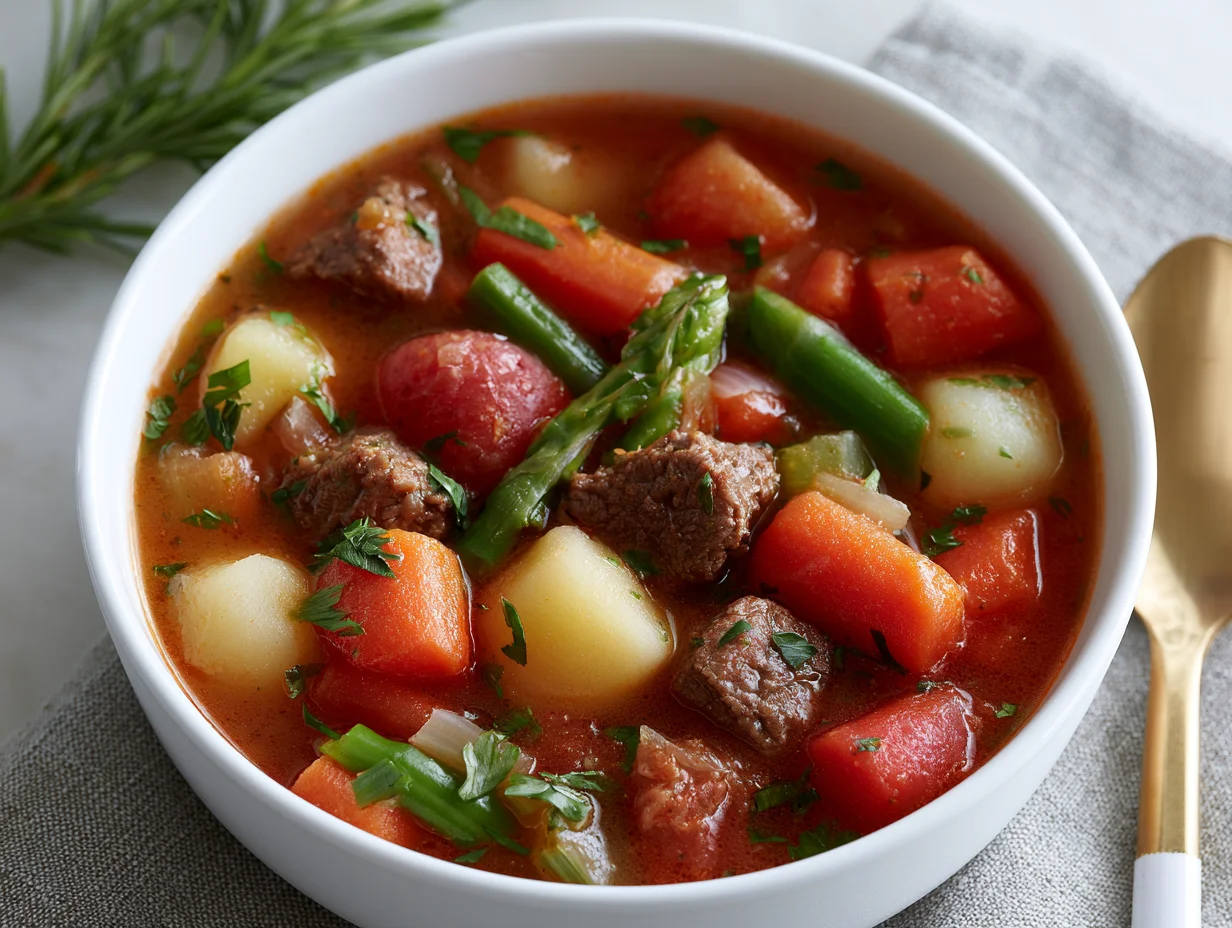
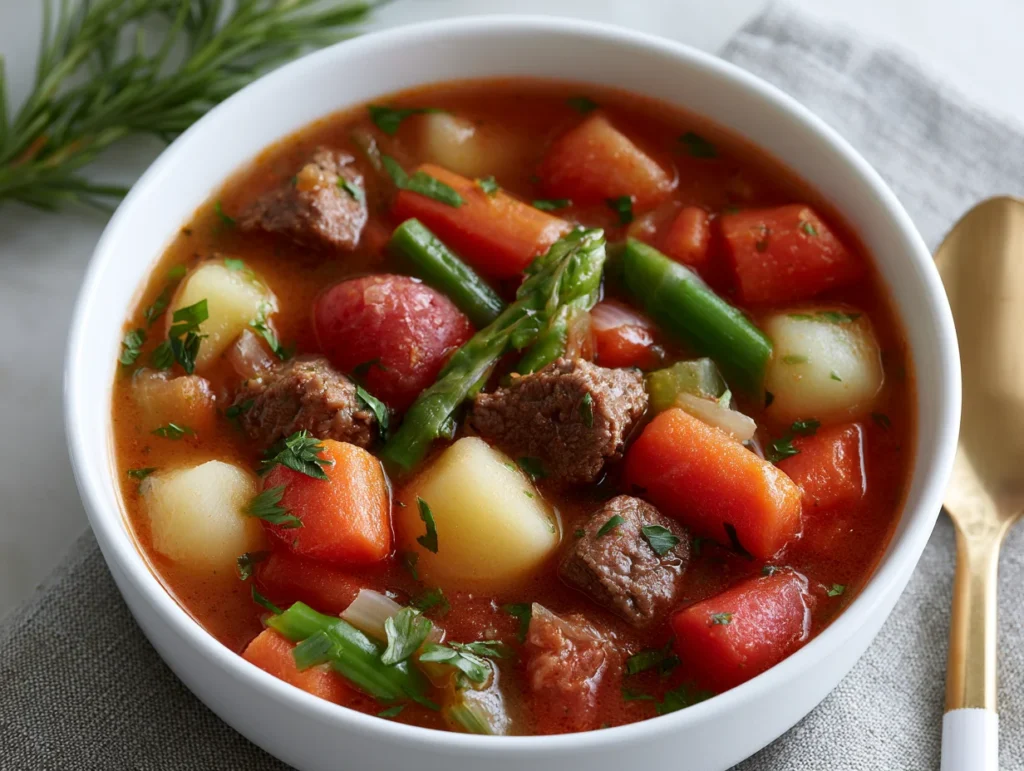
This isn’t a thin broth you sip politely. It’s a hearty, spoon-standing-up bowl loaded with tender beef chunks, soft carrots, potatoes, and a tomato-rich base that thickens as it cooks. Every bite delivers texture and substance, which is exactly what makes it a year-round favorite rather than a seasonal afterthought.
What sets a great version apart isn’t a long ingredient list — it’s patience. Searing the meat properly, layering the vegetables at the right time, and letting the pot simmer untouched builds flavor that no shortcut can replicate. The result tastes like it took all day, because in the best way, it did.
Whether you’re feeding a family on a busy weeknight or meal-prepping for the week ahead, this recipe rewards you with minimal effort and maximum payoff. Below, you’ll find everything you need to make it exactly right, the first time.
Ingredients You’ll Need
A great pot of soup starts long before the simmer — it starts with what’s sitting in your fridge and pantry right now, waiting to be turned into something better than the sum of its parts.
Base Ingredients
- 2 pounds beef chuck, cut into 1-inch cubes
- 2 tablespoons olive oil
- 1 large yellow onion, diced
- 3 cloves garlic, minced
- 3 medium carrots, sliced
- 3 stalks celery, sliced
- 4 medium potatoes, peeled and cubed
- 1 can (14.5 ounces) diced tomatoes
- 6 cups beef broth
- 2 tablespoons tomato paste
- 1 teaspoon dried thyme
- 1 teaspoon dried rosemary
- 2 bay leaves
- 1 teaspoon salt
- 1/2 teaspoon black pepper
Optional Add-ins
- 1 cup frozen green peas
- 1 cup frozen corn kernels
- 1 cup green beans, trimmed and chopped
- 1/2 cup pearl barley
- 1 tablespoon Worcestershire sauce
- 1/4 cup fresh parsley, chopped
Step-by-Step Instructions
Step 1: Sear the Beef
Pat the beef cubes dry with a paper towel — moisture prevents browning. Heat olive oil in a large pot or Dutch oven over medium-high heat. Working in batches, sear the beef on all sides until deeply browned, about 6 to 8 minutes per batch. Don’t overcrowd the pot, or the meat will steam instead of sear. Remove the beef and set it aside; this browning step builds the foundation of flavor for the entire soup.
Step 2: Build the Aromatic Base
In the same pot, reduce heat to medium and add the diced onion. Cook for 3 to 4 minutes until softened, scraping up the browned bits from the bottom of the pot. Add the garlic and cook for 30 seconds until fragrant. Stir in the tomato paste and cook for another minute to deepen its flavor. This layering technique is what separates a flat-tasting soup from one with real depth.
Step 3: Combine and Simmer
Return the beef to the pot. Add the diced tomatoes, beef broth, thyme, rosemary, bay leaves, salt, and pepper. Stir well and bring the mixture to a boil. Once boiling, reduce the heat to low, cover, and let it simmer gently for 1.5 hours. Stir occasionally to prevent sticking. This slow simmer is essential for breaking down the beef chuck into tender, fork-friendly pieces.
Step 4: Add the Vegetables
After the initial simmer, add the carrots, celery, and potatoes to the pot. Continue simmering uncovered for 30 to 40 minutes, until the vegetables are tender but not mushy. If using barley, add it now, since it needs time to cook through. Taste the broth at this stage and adjust salt and pepper as needed before moving forward.
Step 5: Finish and Serve
Stir in any optional add-ins like peas, corn, or green beans during the final 10 minutes of cooking. Remove the bay leaves before serving. Ladle the soup into bowls while hot, and finish with a sprinkle of fresh parsley. Serve with crusty bread on the side to soak up every bit of the rich, savory broth.
Cook Time
Total
2 hours 25 minutes
Prep
20 minutes
Bake
Not applicable — this recipe is stovetop-only, simmered rather than baked
Servings
This recipe makes approximately 8 generous servings, making it ideal for family dinners, casual gatherings, or a week’s worth of lunches. Each bowl is substantial enough to serve as a complete meal on its own, especially when paired with crusty bread or a simple side salad.
Because the soup is so hearty, portion sizes tend to run smaller than you’d expect compared to a brothy soup. A standard 1.5 to 2 cup serving is usually enough to satisfy, which means this batch comfortably stretches across multiple meals without feeling repetitive.
If you’re cooking for a smaller household, the recipe halves easily without compromising flavor. Alternatively, doubling it works just as well for larger gatherings, provided you have a stockpot large enough to accommodate the extra volume.
Common Mistakes in This Recipe
The most frequent mistake is skipping or rushing the searing step. Tossing raw beef directly into broth might save ten minutes, but it sacrifices the deep, roasted flavor that searing locks in. Many home cooks also overcrowd the pot while browning, which causes the meat to steam rather than develop a proper crust.
Another common issue is adding all the vegetables at the same time as the beef. Carrots and celery can handle a long simmer, but potatoes often turn mushy and disintegrate if added too early, leaving the soup starchy and cloudy instead of clean and chunky.
Under-seasoning is also a frequent problem. Because the soup simmers for so long, flavors mellow out, and a dish that tasted properly seasoned at the start can taste flat by the end. Many cooks forget to taste and adjust seasoning at multiple stages of cooking.
Finally, using a tough, lean cut of beef instead of chuck is a mistake that leads to dry, stringy meat, since lean cuts lack the connective tissue needed to break down properly during a long simmer.
Solutions to Common Mistakes
To fix the searing issue, always pat the beef dry before cooking and sear it in small batches over medium-high heat, allowing space between pieces. This ensures a proper caramelized crust forms, which translates directly into a richer-tasting broth.
For vegetable timing, follow the staged approach outlined in the steps above. Add hardy root vegetables like potatoes and carrots later in the cooking process so they hold their shape and texture rather than breaking down into mush.
Address under-seasoning by tasting the soup at least twice — once after the initial simmer and again near the end. Salt, pepper, and even a splash of Worcestershire sauce can be adjusted gradually rather than all at once.
Lastly, always choose beef chuck or another well-marbled cut for this recipe. The fat and connective tissue render down during the long simmer, resulting in beef that’s tender, juicy, and full of flavor rather than chewy or dry.
Nutritional Information (approx. per serving)
- Calories: 320
- Protein: 28g
- Carbohydrates: 24g
- Fat: 12g
- Fiber: 4g
- Sodium: 680mg
- Sugar: 5g
This soup delivers a well-rounded nutritional profile, with beef providing a strong source of protein and iron that supports muscle maintenance and energy levels throughout the day. The vegetables contribute fiber, potassium, and a range of vitamins, particularly from carrots and potatoes, which support digestive health and steady energy release.
Because the recipe relies on whole, minimally processed ingredients, it avoids the excess sodium and preservatives common in canned or packaged soups. Using low-sodium broth allows for better control over salt intake without sacrificing flavor.
The combination of protein and complex carbohydrates also makes this soup naturally filling, which can help with portion control and reduce the likelihood of snacking shortly after a meal.
For those managing dietary restrictions, the recipe is easily adapted to be gluten-free by omitting barley, making it a flexible option for a wide range of nutritional needs.
Storage Instructions
This soup stores exceptionally well, which makes it a strong candidate for meal prep. Allow it to cool to room temperature before transferring it to airtight containers, then refrigerate for up to 4 days. The flavor often improves by the second day, as the ingredients continue to meld together.
For longer storage, this soup freezes beautifully. Portion it into freezer-safe containers or heavy-duty freezer bags, leaving some room for expansion, and freeze for up to 3 months. Label each container with the date so you can track freshness easily.
When reheating from frozen, it’s best to thaw the soup overnight in the refrigerator before warming it on the stovetop over medium-low heat. This gradual approach helps maintain the texture of the vegetables and prevents the beef from becoming tough.
If the soup thickens too much during storage, simply stir in a splash of beef broth or water while reheating to bring it back to your preferred consistency.
Suggestions
Pair this soup with a thick slice of crusty sourdough or a warm baguette to soak up the rich broth — it transforms the meal into something far more substantial and satisfying.
A simple green salad with a sharp vinaigrette makes an excellent side, offering a fresh, acidic contrast to the deep, savory flavors of the soup itself.
For an extra layer of richness, consider topping each bowl with a small spoonful of grated Parmesan or a dollop of sour cream just before serving, which adds creaminess without overpowering the dish.
If you’re cooking for guests, serve the soup directly from the pot at the table. It creates a casual, communal dining experience that fits perfectly with the rustic, comforting nature of the dish.
Seasonal Relevance
While this soup is satisfying any time of year, it truly shines during the colder months, when its warmth and heartiness feel especially welcome after a long day outdoors.
Autumn brings an abundance of fresh root vegetables, making it the ideal season to source carrots, potatoes, and celery at their peak flavor and lowest cost, which directly improves the quality of the finished dish.
Winter holidays and gatherings also benefit from a large pot of this soup, since it can be made ahead, reheats well, and easily feeds a crowd without requiring last-minute attention in the kitchen.
Even in spring, a lighter version with fresh peas and green beans offers a seasonal twist, proving that this recipe adapts gracefully across the calendar rather than being confined to a single season.
Final Words
Chunky beef vegetable soup is the kind of recipe that earns a permanent place in your rotation. It’s forgiving, adaptable, and built on techniques that reward patience rather than complexity, which makes it approachable for cooks of every skill level.
What makes this dish special isn’t a rare ingredient or a complicated method — it’s the careful layering of flavor at each stage, from searing the beef to simmering the vegetables just long enough to soften without losing their character.
This is a recipe meant to be revisited, adjusted, and made your own. Swap in seasonal vegetables, experiment with herbs, or add a grain like barley for extra heartiness, and the dish will continue to deliver every time.
Ultimately, a good pot of soup is about more than the recipe itself. It’s about the time it gives back to you — minimal hands-on effort, maximum comfort, and a meal that feels like it was made with care.
Frequently Asked Questions
Can I make this soup in a slow cooker instead of the stovetop?
Yes. Sear the beef first for flavor, then transfer everything to a slow cooker. Cook on low for 7 to 8 hours, adding potatoes during the last 2 hours so they hold their shape and texture properly.
What’s the best way to thicken the broth if it turns out too thin?
Mash a few of the cooked potato cubes directly in the pot, or stir in a cornstarch slurry made from 1 tablespoon cornstarch mixed with 2 tablespoons cold water near the end of cooking.
Can I substitute a different cut of beef if I don’t have chuck?
Brisket or short ribs work well as substitutes, since both contain enough connective tissue to break down during a long simmer. Avoid lean cuts like sirloin, which tend to dry out and turn tough.
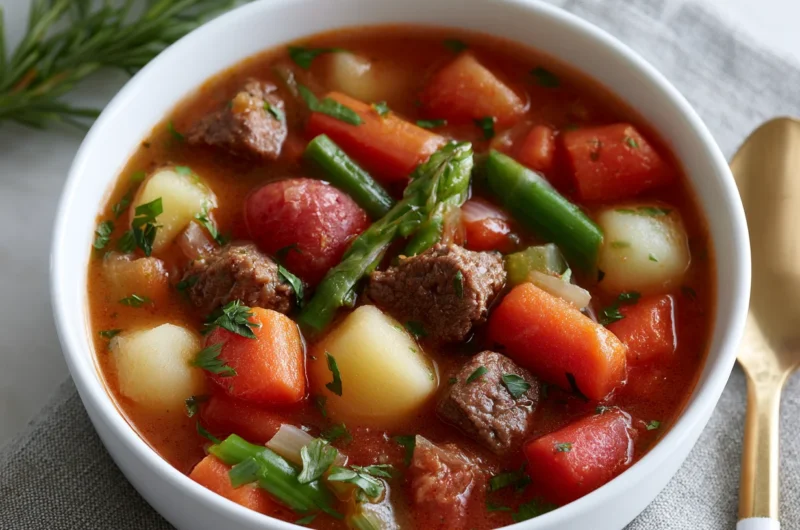
Chunky Beef Vegetable Soup Recipe
8
servings20
minutes2
hours5
minutes320
kcal2
hours25
minutesA hearty, slow-simmered beef vegetable soup loaded with tender chuck beef, carrots, potatoes, and a rich tomato broth. Comforting, filling, and perfect for chilly days or easy meal prep.
Ingredients
2 pounds beef chuck, cut into 1-inch cubes
2 tablespoons olive oil
1 large yellow onion, diced
3 cloves garlic, minced
3 medium carrots, sliced
3 stalks celery, sliced
4 medium potatoes, peeled and cubed
1 can (14.5 ounces) diced tomatoes
6 cups beef broth
2 tablespoons tomato paste
1 teaspoon dried thyme
1 teaspoon dried rosemary
2 bay leaves
1 teaspoon salt
1/2 teaspoon black pepper
1 cup frozen green peas (optional)
1 cup frozen corn kernels (optional)
1 cup green beans, trimmed and chopped (optional)
1/2 cup pearl barley (optional)
1 tablespoon Worcestershire sauce (optional)
1/4 cup fresh parsley, chopped (optional)
Directions
- Pat beef cubes dry and sear in batches in hot olive oil until browned on all sides. Set aside.
- Sauté onion in the same pot until softened, then add garlic and cook until fragrant.
- Stir in tomato paste and cook 1 minute to deepen flavor.
- Return beef to the pot; add diced tomatoes, broth, thyme, rosemary, bay leaves, salt, and pepper.
- Bring to a boil, reduce heat, cover, and simmer on low for 1.5 hours.
- Add carrots, celery, and potatoes; simmer uncovered 30–40 minutes until tender.
- Stir in optional add-ins (peas, corn, green beans, barley) during the last 10 minutes.
- Remove bay leaves, taste and adjust seasoning, then garnish with fresh parsley.
- Ladle hot soup into bowls and serve with crusty bread.
Recipe Video
Notes
- Sear beef in small batches to avoid steaming the meat.
- Add potatoes later in cooking to prevent them from turning mushy.
- Use beef chuck for the best tenderness; avoid lean cuts.
- Soup thickens as it sits — thin with extra broth when reheating.
- Freezes well for up to 3 months in airtight containers.