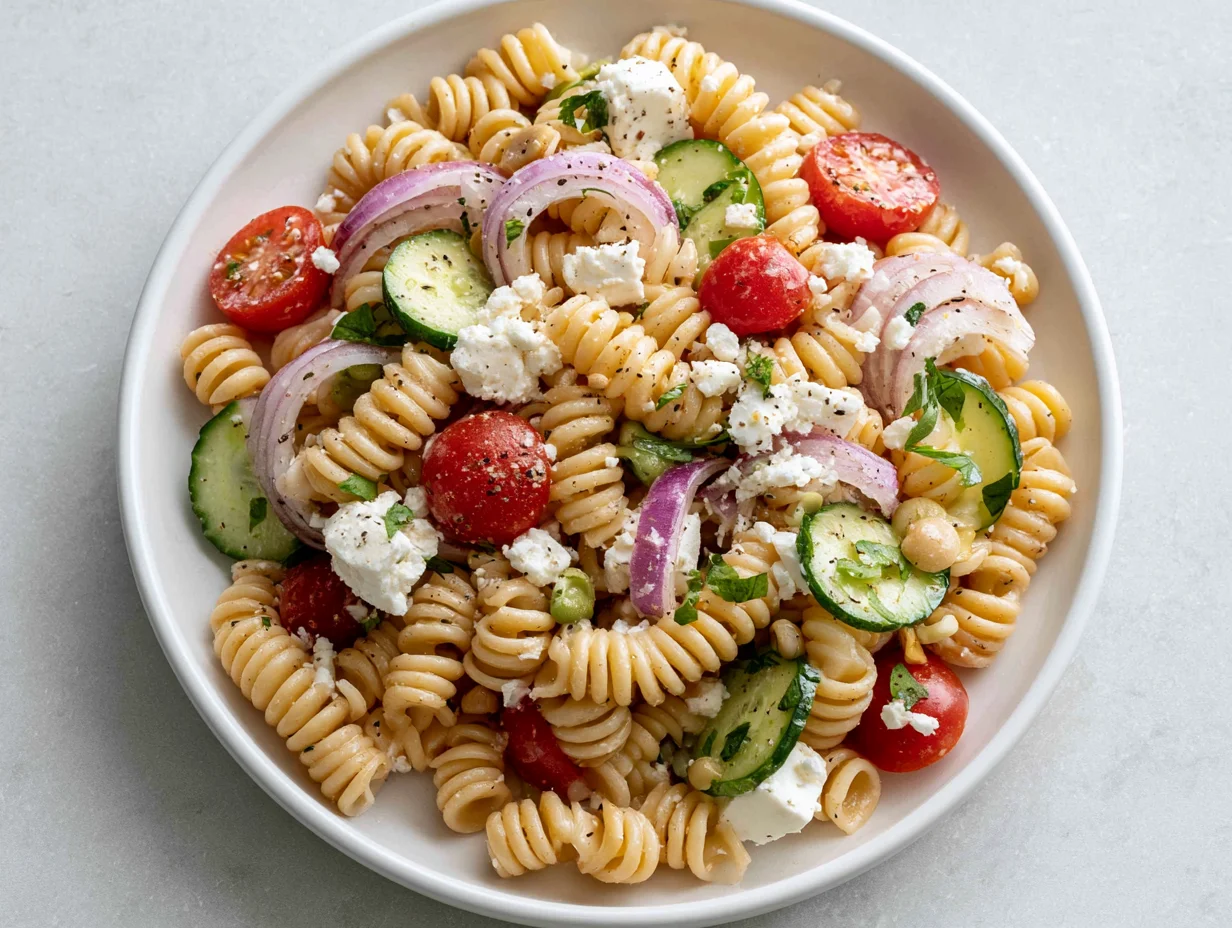
Classic Pasta Salad Recipe
There are recipes that follow trends, and then there are recipes that simply endure. Classic pasta salad is one of those dishes that has earned a permanent place at the table — not because it’s flashy, but because it’s genuinely good every single time.
I first made this recipe on a Saturday afternoon with nothing more than leftover rotini, a jar of olives, and a block of cheddar sitting in my fridge. What came together in that bowl was something I’ve been refining ever since. It’s the kind of dish that tastes like it took effort, even when it didn’t.
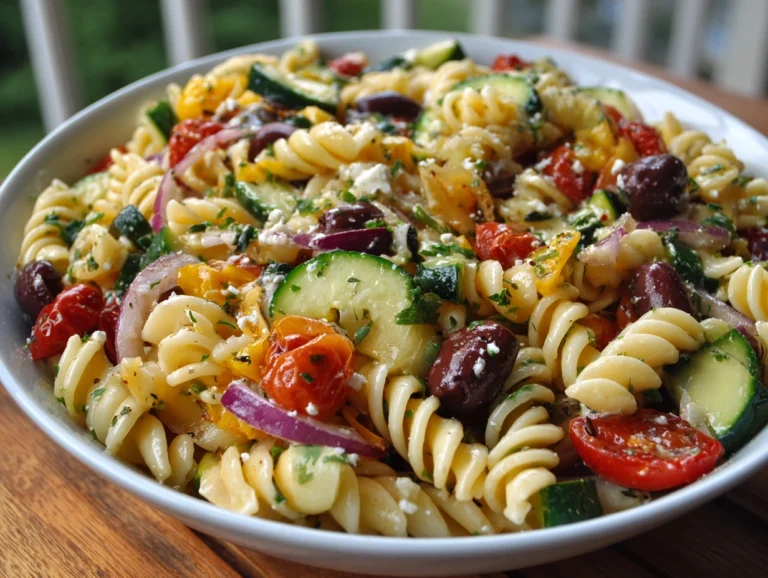
This pasta salad is cold, crisp, and layered with flavor from the very first bite. The vegetables stay bright, the pasta holds its texture, and the dressing ties everything together in a way that feels cohesive rather than thrown together. That balance is exactly what makes this recipe worth making again and again.
Whether you’re prepping for a backyard cookout, a weekday lunch, or a potluck where you want to bring something that actually gets finished, this is the recipe to reach for. It feeds a crowd, keeps well in the fridge, and somehow tastes even better the next day.
Ingredients You’ll Need
Every ingredient in this bowl pulls its weight — no unnecessary extras, just a well-edited lineup that delivers real flavor with very little fuss.
Base Ingredients:
- 3 cups rotini pasta (uncooked)
- 1 cup cherry tomatoes, halved
- 1 cup cucumber, diced
- ½ cup black olives, sliced
- ½ cup red bell pepper, chopped
- ½ cup yellow bell pepper, chopped
- ½ cup red onion, finely diced
- ¾ cup cheddar cheese, cubed
- ½ cup salami or pepperoni, sliced
- ⅓ cup Italian dressing (store-bought or homemade)
- 2 tablespoons red wine vinegar
- 1 teaspoon dried oregano
- Salt and black pepper to taste
Optional Add-ins:
- ¼ cup sun-dried tomatoes, chopped
- ¼ cup artichoke hearts, quartered
- 2 tablespoons fresh basil, torn
- ¼ cup banana peppers, sliced
- ¼ cup Kalamata olives
- 2 tablespoons grated Parmesan cheese
- ½ cup marinated mushrooms
Step-by-Step Instructions
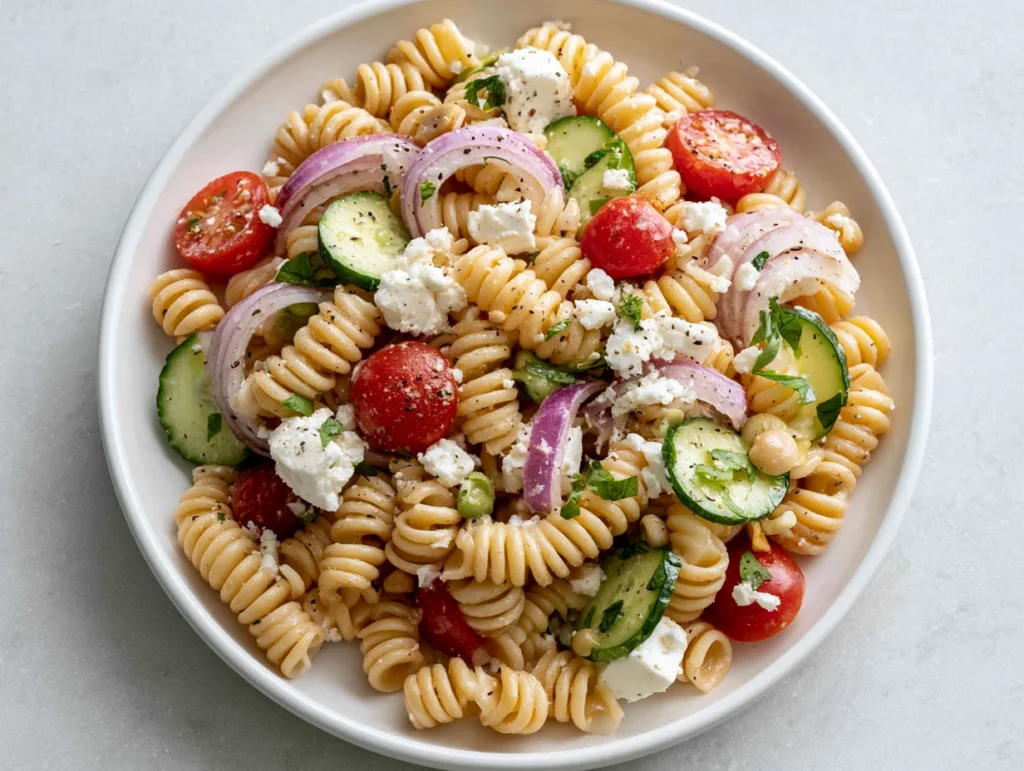
Step 1: Cook the Pasta
Bring a large pot of salted water to a boil. Add the rotini and cook according to the package instructions until just al dente — usually 8 to 9 minutes. You want the pasta firm, not mushy, because it will continue to soften slightly as it absorbs the dressing while chilling. Drain the pasta well and rinse under cold water immediately to halt the cooking process. Shake off the excess water and let it air out for a few minutes before tossing.
Step 2: Prep the Vegetables
While the pasta cooks and cools, prep all your vegetables. Halve the cherry tomatoes, dice the cucumber, chop both bell peppers, and finely mince the red onion. The key here is uniformity — aim for similar bite-sized pieces so every forkful delivers a balanced mix. Slice the olives and cut the salami into small strips or quarter-rounds. Cube the cheddar into roughly half-inch pieces so the cheese holds up without crumbling into the salad.
Step 3: Build the Dressing
In a small bowl, whisk together the Italian dressing and red wine vinegar. Add the dried oregano, a pinch of salt, and a generous crack of black pepper. Taste the dressing before it goes into the salad — this is your one opportunity to adjust the acid and seasoning before everything gets combined. If it needs brightness, add a little more vinegar. If it feels flat, a pinch more salt will do the work.
Step 4: Toss and Chill
Add the cooled pasta to a large mixing bowl. Layer in the vegetables, salami, and cheese. Pour the dressing over the top and toss everything together gently but thoroughly, making sure the dressing coats every piece of pasta and vegetable. Cover the bowl with plastic wrap and refrigerate for at least one hour before serving. This rest time is not optional — it’s where the real flavor development happens.
Step 5: Final Taste and Serve
Before serving, pull the salad out of the fridge and give it another toss. The pasta will have absorbed some of the dressing during chilling, so taste it again and adjust with a splash more Italian dressing, a crack of pepper, or a pinch of oregano if needed. A final drizzle of dressing right before serving keeps the salad looking fresh and glossy. Serve cold, straight from the bowl.
Cook Time
Total:
1 hour 25 minutes (including chilling time)
Prep:
15 minutes
Bake:
Cook time: 10 minutes (stovetop)
Servings
This recipe is built for sharing. The ingredient quantities are designed to produce a generous, well-portioned salad that works equally well as a side dish alongside grilled proteins or as a standalone lunch.
Makes approximately 6 to 8 servings as a side dish, or 4 to 5 servings as a main course. If you’re serving this at a large gathering or potluck, the recipe doubles cleanly without any adjustments to the method.
Leftovers keep well in the refrigerator for up to three days, making this one of the more practical recipes in your rotation. Day-two pasta salad, once refreshed with a little extra dressing, is genuinely one of the better cold lunches you’ll find.
Common Mistakes in This Recipe
Overcooking the pasta is the most damaging mistake you can make in this recipe. Soft, overcooked pasta becomes waterlogged after sitting in the dressing and loses all structural integrity by the time the salad is served. The texture turns unpleasant quickly, and no amount of seasoning fixes it.
Skipping the chill time is another error that shortchanges the entire dish. Some cooks toss the salad and serve it immediately, but this doesn’t give the dressing time to penetrate the pasta and vegetables. The result is a salad that tastes underdressed and flat rather than cohesive and well-seasoned.
Using too much dressing at the start is a common overcorrection. Many home cooks assume more dressing equals more flavor, but overdressing makes the salad soggy and heavy. The pasta absorbs dressing as it sits, so what seems like the right amount initially will become too much by the time the salad is served.
Cutting vegetables into inconsistent sizes creates an uneven eating experience. If some pieces are too large and others too small, the salad never comes together as a unified dish. Every component should be roughly the same size so each bite delivers a balanced combination of pasta, vegetable, cheese, and dressing.
Solutions to Common Mistakes
Always pull the pasta off the heat one minute before the package’s recommended cook time. It will continue cooking in the hot water and then again slightly as it chills. Aim for firm with a very slight chew — that’s the sweet spot for pasta salad.
Plan around the rest time, not against it. Make the salad at least an hour before you intend to serve it, and if the schedule allows, prepare it the evening before. The overnight rest is genuinely the best version of this recipe.
Start with two-thirds of the dressing, toss, chill, and then re-dress before serving. This two-stage dressing approach keeps the salad moist without ever becoming waterlogged. Reserve a few tablespoons specifically for that final pre-serve toss.
Use a sharp knife and take your time with prep. Uniform cuts are a discipline, not a decoration. Once you build the habit of consistent sizing, your salads will improve noticeably in both texture and presentation.
Nutritional Information (approx. per serving)
- Calories: 320 kcal
- Total Fat: 14g
- Saturated Fat: 5g
- Carbohydrates: 36g
- Dietary Fiber: 3g
- Sugars: 4g
- Protein: 12g
- Sodium: 580mg
- Calcium: 120mg
- Iron: 2mg
Pasta salad made with whole ingredients offers more than just convenience — it delivers a genuinely nourishing meal. The bell peppers and cherry tomatoes contribute a substantial dose of vitamin C, which supports immune function and skin health.
The olive oil base in the dressing provides heart-healthy monounsaturated fats, while the cheese and salami add protein and calcium to support muscle function and bone density. When portioned thoughtfully, this dish fits comfortably within a balanced diet.
The fiber content from the pasta, vegetables, and olives supports healthy digestion and helps sustain energy levels, making this a practical lunch option that doesn’t leave you crashing an hour later.
Rotini pasta provides slow-releasing carbohydrates that fuel sustained energy without the sharp insulin spike associated with refined or heavily processed foods. Pair it with a protein source and you have a genuinely well-rounded plate.
Storage Instructions
Transfer any leftover pasta salad into an airtight container before placing it in the refrigerator. Wide, flat containers work better than deep bowls because they allow the salad to chill evenly and are easier to toss when you’re ready to serve again.
The pasta salad will keep in the refrigerator for up to three days. By day two, the pasta will have absorbed a good portion of the dressing, which is completely normal. Simply add a tablespoon or two of fresh Italian dressing before serving and toss to refresh the consistency and flavor.
Avoid storing the salad in the same bowl used to serve it, especially if that bowl was out at room temperature for more than two hours during a gathering. Transfer leftovers to a clean, sealed container promptly to maintain food safety.
This salad is not suitable for freezing. The vegetables lose their texture when frozen and thawed, and the pasta becomes soft and grainy. Plan to enjoy it fresh within the three-day window for the best results.
Suggestions
This pasta salad pairs naturally with grilled chicken, burgers, or barbecued ribs at a summer cookout. The cool, tangy salad provides a refreshing counterbalance to anything coming off a hot grill, making it one of the most practical sides you can bring to an outdoor meal.
For a more substantial meal, serve a generous scoop of pasta salad alongside a thick slice of garlic bread and a wedge of romaine with Caesar dressing. The combination requires almost no additional cooking and comes together quickly on a weeknight.
If you’re customizing for dietary needs, the salami can be swapped for grilled chickpeas or roasted red pepper strips to create a satisfying vegetarian version. The structure of the salad holds just as well with plant-based additions.
Pasta salad also works beautifully as a meal-prep base. Prepare the pasta and vegetables ahead, store the dressing separately, and combine them the morning of the day you plan to eat. This keeps everything fresher and gives you a ready-to-go lunch with minimal morning effort.
Seasonal Relevance
Classic pasta salad is most closely associated with summer, and for good reason. It requires no oven, travels well, and tastes best served cold — all qualities that matter enormously when temperatures are high and the last thing you want to do is heat up the kitchen.
From Memorial Day through Labor Day, this recipe earns regular rotation at cookouts, pool parties, beach picnics, and family reunions. It sits happily in a cooler for hours and looks just as good at the end of the meal as it did at the start.
In spring, the recipe adapts well with the addition of fresh peas, asparagus tips, or thinly sliced radishes. These vegetables bring a brightness and lightness that feels appropriate for the season and pairs well with the tangy Italian dressing base.
Even in cooler months, this salad holds its own as a hearty, filling lunch. Swap the fresh cucumber and tomatoes for roasted red peppers, sun-dried tomatoes, and marinated artichoke hearts for a version that feels more suited to fall and winter palates while still delivering the same satisfying depth.
Final Words
What makes a recipe truly great isn’t complexity — it’s consistency. This classic pasta salad is one of those dishes that delivers a reliable, satisfying result every time you make it, and that kind of dependability is genuinely hard to find in home cooking.
The recipe scales up without effort, welcomes substitutions generously, and improves with the small refinements you develop each time you make it. After two or three rounds, you’ll find yourself adjusting the dressing ratio, experimenting with add-ins, and making it entirely your own.
That ownership is the real reward. What starts as following a recipe becomes a dish you actually know — one you can make from memory, adapt on the fly, and share with confidence at any table.
Keep this one in your regular rotation. It earns its place not just for what it is, but for how reliably it shows up when you need it most. And it will.
Frequently Asked Questions
Can I make classic pasta salad the night before?
Yes, and it’s actually recommended. Preparing it the night before gives the dressing time to fully absorb into the pasta and vegetables, resulting in deeper, more cohesive flavor. Just reserve a small amount of dressing to refresh it before serving, as the pasta will absorb most of it overnight.
What pasta shape works best for pasta salad?
Rotini is the top choice because its spiral shape grips the dressing and holds small pieces of vegetable and cheese in its curves. Farfalle, penne, and fusilli are excellent alternatives. Avoid long pasta shapes like spaghetti or linguine — they don’t hold the other ingredients well.
How do I keep pasta salad from drying out?
The key is a two-stage dressing approach. Use about two-thirds of the dressing when you first toss the salad, then add the remaining portion right before serving. This ensures the pasta never goes dry while also preventing the salad from becoming oversaturated during the chilling period.
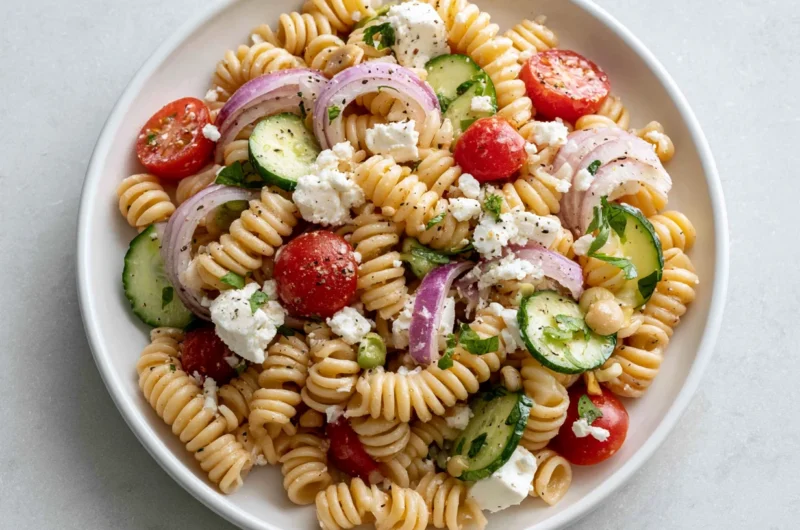
Classic Pasta Salad Recipe
6
servings15
minutes10
minutes320
kcal25
minutesA vibrant, crowd-pleasing pasta salad loaded with crisp vegetables, savory salami, and tangy Italian dressing. Easy to make ahead, perfect for cookouts, potlucks, and weekday lunches — and it only gets better overnight.
Ingredients
Base ingredients
3 cups rotini pasta, uncooked
1 cup cherry tomatoes, halved
1 cup cucumber, diced
½ cup black olives, sliced
½ cup red bell pepper, chopped
½ cup yellow bell pepper, chopped
½ cup red onion, finely diced
¾ cup cheddar cheese, cubed
½ cup salami or pepperoni, sliced
⅓ cup Italian dressing
2 tablespoons red wine vinegar
1 teaspoon dried oregano
Salt and black pepper to taste
Optional add-ins
¼ cup sun-dried tomatoes, chopped
¼ cup artichoke hearts, quartered
2 tablespoons fresh basil, torn
¼ cup banana peppers, sliced
¼ cup Kalamata olives
2 tablespoons grated Parmesan cheese
½ cup marinated mushrooms
Directions
- Bring a large pot of salted water to a boil. Cook rotini until just al dente, about 8–9 minutes. Drain and rinse under cold water immediately to stop cooking. Shake off excess water and let the pasta air-dry for a few minutes before using.
- While pasta cools, halve the cherry tomatoes, dice the cucumber, chop both bell peppers, and finely dice the red onion. Slice the olives and salami, and cube the cheddar into half-inch pieces. Keep all cuts uniform and bite-sized for balanced flavor in every forkful.
- In a small bowl, whisk together the Italian dressing and red wine vinegar. Stir in dried oregano, salt, and a generous crack of black pepper. Taste and adjust — add vinegar for brightness or a pinch more salt if it falls flat. This is the foundation of the whole dish.
- Add the cooled pasta to a large mixing bowl. Fold in all the vegetables, salami, and cheese. Pour about two-thirds of the dressing over the top and toss gently but thoroughly until everything is evenly coated. Reserve the remaining dressing for before serving.
- Cover the bowl with plastic wrap and refrigerate for at least 1 hour. This rest period is essential — it allows the dressing to penetrate the pasta and vegetables, building depth and cohesion that you simply cannot achieve by serving it fresh.
- Before serving, remove the salad from the refrigerator and give it a thorough toss. Add the reserved dressing, taste again, and adjust with extra oregano, a crack of pepper, or a splash more vinegar if needed. Serve cold, straight from the bowl.
Recipe Video
Notes
- Always cook pasta al dente — it firms up further during chilling. Pull it off the heat one minute before the package time.
- Use a two-stage dressing method: two-thirds before chilling, the rest right before serving. This prevents sogginess without leaving the salad dry.
- The salad tastes significantly better after an overnight rest. If time allows, make it the evening before and refrigerate overnight.
- Cut all vegetables to a similar, bite-sized shape. Inconsistent sizing creates uneven texture and an imbalanced eating experience.
- For a vegetarian version, swap salami for roasted chickpeas or extra marinated artichoke hearts — the salad holds up beautifully without the meat.
- Store leftovers in a flat, airtight container for up to 3 days. Do not freeze — the vegetables lose texture and the pasta turns grainy after thawing.
- If the salad looks dry on day two, a tablespoon of fresh Italian dressing and a quick toss will restore it completely.