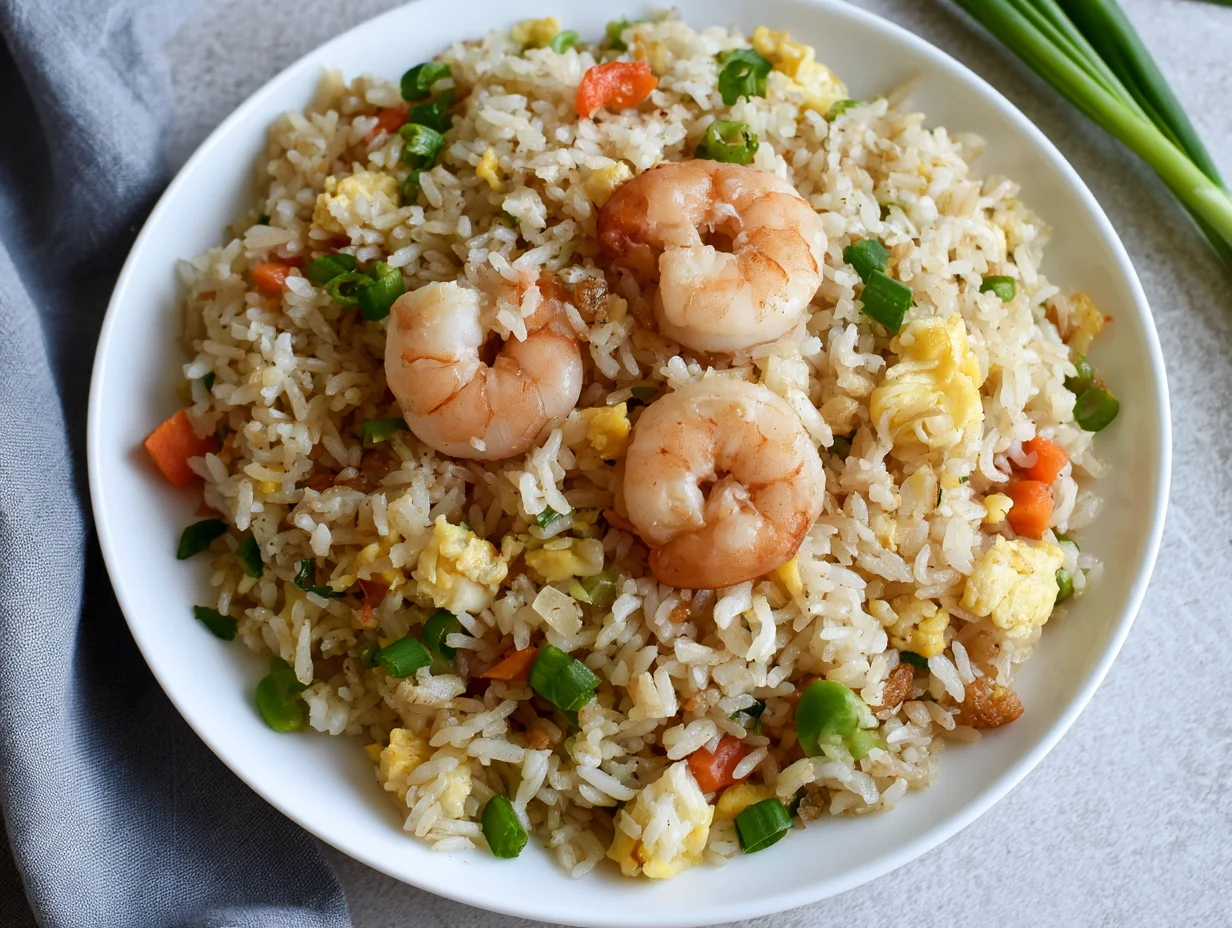
Classic Shrimp Fried Rice Recipe
Great fried rice is deceptively simple to describe and surprisingly difficult to get right. This Classic Shrimp Fried Rice solves that problem entirely — delivering restaurant-quality results with a method that anyone can master in their own kitchen.
The difference between mediocre fried rice and exceptional fried rice almost always comes down to technique, not ingredients. High heat, properly cooled rice, and the right sequence of additions transform a handful of basics into something with real depth and character.
This is also one of the most efficient meals you can make. It comes together in under 25 minutes, uses ingredients you likely already have, and turns leftover rice into something far more exciting than its humble origins suggest.
Whether you are using up extra rice from last night’s dinner or building a meal from scratch, this fried rice delivers bold, savory flavor with perfectly plump shrimp in every single bite. It is fast, dependable, and genuinely satisfying — exactly what a great weeknight recipe should be.
Ingredients You’ll Need
Fried rice rewards precision more than complexity, and this version proves that a short list of well-chosen ingredients can produce something that tastes far more involved than it actually is.
One of the things I love about this recipe is that it uses simple pantry ingredients. You probably already have most of them in your kitchen.
Base Ingredients:
- 3 cups cooked, day-old white rice (preferably jasmine)
- 1 lb (450g) shrimp, peeled and deveined
- 3 large eggs, lightly beaten
- 3 tbsp neutral oil (vegetable or avocado), divided
- 1 cup frozen peas and carrots, thawed
- 4 green onions, sliced (whites and greens separated)
- 3 garlic cloves, minced
- 1 tsp fresh ginger, grated
- 3 tbsp soy sauce
- 1 tbsp oyster sauce
- 1 tsp sesame oil
- Salt and white pepper to taste
Optional Add-ins:
- ½ cup diced yellow onion
- ½ cup corn kernels
- ½ cup diced pineapple
- 1 tsp chili garlic sauce or sriracha
- 2 tbsp chopped roasted cashews or peanuts
- 1 tsp Shaoxing wine
- ½ tsp five-spice powder
- Lime wedges, for serving
Step-by-Step Instructions
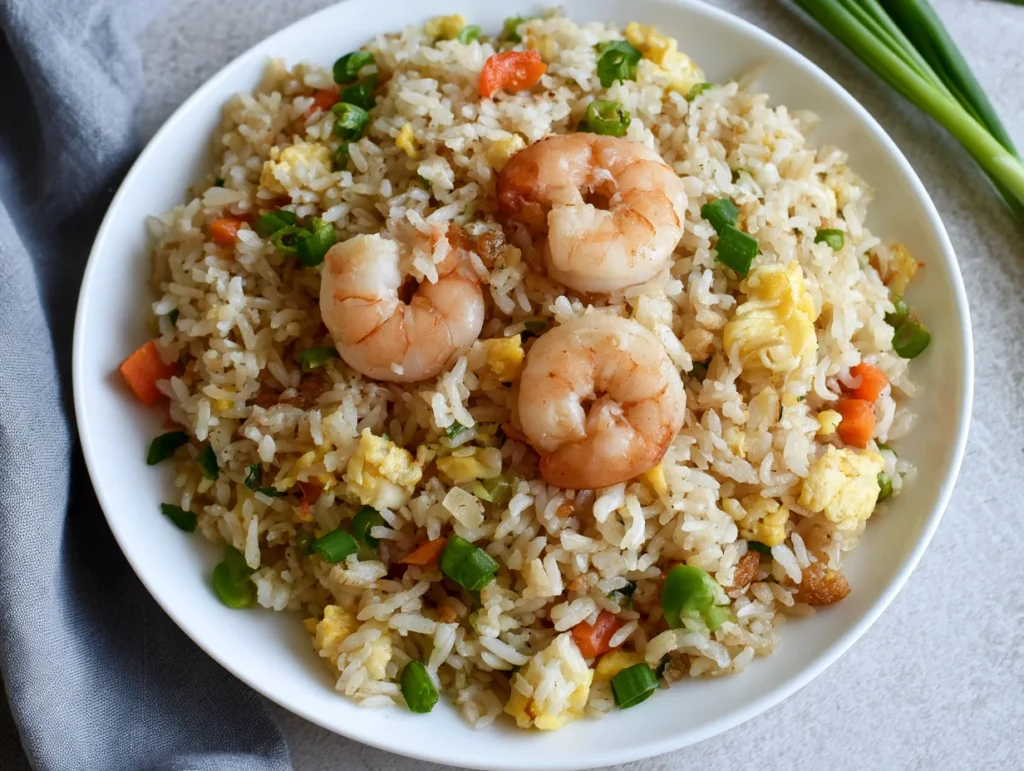
Step 1: Prepare the Rice and Shrimp
Use rice that has been cooked and refrigerated for at least several hours, ideally overnight. Cold rice has less surface moisture, which prevents clumping and allows each grain to fry independently. Break up any clumps with your hands before cooking. Pat the shrimp completely dry with paper towels and season lightly with salt and white pepper. Dry shrimp sear better and avoid releasing excess water into the pan, which would otherwise steam the rice instead of frying it.
Step 2: Cook the Shrimp First
Heat 1 tablespoon of oil in a large wok or wide skillet over high heat until shimmering. Add the shrimp in a single layer and sear for 90 seconds per side, until pink and just cooked through. Do not overcrowd the pan — work in batches if needed. Remove the shrimp immediately to a plate to prevent overcooking. This step locks in their texture and keeps them plump rather than rubbery once they return to the dish later.
Step 3: Scramble the Eggs
In the same hot pan, add a small drizzle of oil if needed. Pour in the beaten eggs and let them sit undisturbed for 10 seconds before scrambling gently with a spatula. Cook just until soft curds form, about 30 to 45 seconds — they will continue cooking later. Transfer the eggs to the same plate as the shrimp. Undercooking slightly at this stage prevents the eggs from turning rubbery by the time the dish is fully assembled.
Step 4: Fry the Aromatics and Rice
Add the remaining oil to the pan along with the garlic, ginger, and the white parts of the green onions. Stir-fry for 30 seconds until fragrant, being careful not to let the garlic burn. Add the cold rice, breaking up any remaining clumps with the back of your spatula. Spread it across the pan and let it sit undisturbed for 60 to 90 seconds before tossing. This brief contact with the hot pan is what creates the slightly crisp, toasted texture that defines great fried rice.
Step 5: Combine and Finish
Add the peas and carrots, soy sauce, and oyster sauce to the rice, tossing continuously to coat every grain evenly. Return the shrimp and eggs to the pan and toss everything together for 1 to 2 minutes until heated through. Drizzle with sesame oil and toss once more. Remove from heat, stir in the green onion tops, and taste for seasoning. Serve immediately while the rice is still hot and the shrimp are at their most tender.
Cook Time
Total:
25 minutes
Prep:
10 minutes
Bake:
15 minutes (stovetop cook time)
Servings
This recipe is built for an efficient, satisfying meal without unnecessary bulk. Made in a standard wok or large skillet, it produces a hearty portion that works equally well as a main course or a generous side dish.
Makes approximately 4 servings as a main course, or 6 servings as a side dish.
Because fried rice scales easily and reheats well, it is one of the most practical recipes for batch cooking. Doubling the recipe works seamlessly as long as you cook the rice in two separate batches to maintain that essential high-heat sear rather than overcrowding the pan.
Common Mistakes in This Recipe
The single most common mistake in fried rice is using freshly cooked, warm rice. Warm rice carries excess moisture and a soft, sticky structure that turns into a gummy, clumped mess the moment it hits the pan. This is the number one reason homemade fried rice often falls short of the restaurant version.
Overcrowding the pan is another frequent issue. When too much rice, shrimp, or vegetables are added at once, the pan temperature drops significantly, and the ingredients steam rather than fry. This produces soggy, flavorless rice instead of the slightly crisp, individually separated grains that define the dish.
Many home cooks also add the sauce too early or all at once without tossing continuously. This results in uneven seasoning, where some bites taste overly salty while others are bland. Soy sauce and oyster sauce need to be distributed actively, not poured and left to settle.
Overcooking the shrimp is a final common pitfall. Because shrimp cook in just a few minutes, leaving them in the pan throughout the entire cooking process turns them tough and rubbery by the time the dish is finished and ready to serve.
Solutions to Common Mistakes
To solve the rice issue, always cook your rice at least a few hours in advance, ideally the night before, and refrigerate it uncovered or loosely covered. This allows excess moisture to evaporate, resulting in firmer, drier grains that fry beautifully rather than clumping together in the pan.
To prevent overcrowding, use a wok or the widest skillet available, and work in batches if your pan is smaller. Keep the heat on high throughout and resist the urge to add everything at once. A properly hot, spacious pan is what produces that signature toasted flavor.
For even seasoning, add your sauces directly over the rice rather than pouring them into one spot, and toss continuously and vigorously for at least a full minute afterward. This ensures every grain receives equal coverage and prevents pockets of overly salty or under-seasoned rice.
To keep shrimp tender, always cook them first, remove them from the pan immediately, and add them back only in the final one to two minutes of cooking. This brief return is enough to reheat them fully without pushing them past that perfect, just-cooked texture.
Nutritional Information (approx. per serving)
- Calories: 410 kcal
- Protein: 24 g
- Carbohydrates: 45 g
- Total Fat: 14 g
- Saturated Fat: 2.5 g
- Dietary Fiber: 2 g
- Sugar: 3 g
- Sodium: 780 mg
- Cholesterol: 215 mg
- Vitamin A: 35% DV
- Iron: 12% DV
- Selenium: 60% DV
Shrimp is one of the leanest sources of high-quality protein available, delivering a substantial protein boost with relatively few calories. It is also exceptionally rich in selenium, a trace mineral that plays a key role in supporting immune function and thyroid health, making this dish more nutritionally valuable than its simplicity suggests.
The eggs in this recipe contribute additional complete protein along with choline, a nutrient important for brain and liver function that many people do not get enough of through diet alone. Combined with the shrimp, this dish delivers a particularly strong protein profile for a rice-based meal.
Peas and carrots add a meaningful dose of vitamin A and dietary fiber, supporting eye health and digestion respectively. While modest in quantity, they round out the dish nutritionally and add color, texture, and a touch of natural sweetness that balances the savory soy and oyster sauce.
Using day-old rice rather than freshly steamed rice also has a practical nutritional benefit. Cooled and reheated rice forms more resistant starch, a type of starch that digests more slowly and has a comparatively gentler effect on blood sugar than freshly cooked rice.
Storage Instructions
Allow the fried rice to cool to room temperature before transferring it to an airtight container — this typically takes about 20 to 30 minutes. Storing it while still hot traps steam inside the container, which can make the rice soggy and encourage bacterial growth. Refrigerated, it stays fresh for up to 4 days.
When reheating, use a hot skillet or wok rather than a microwave whenever possible. A quick stir-fry over medium-high heat for 3 to 4 minutes with a small splash of water or oil restores much of the original texture far better than microwaving, which tends to make the rice unevenly soft in spots.
This dish can be frozen, though shrimp-based fried rice is best consumed within 1 month for optimal texture and flavor. Freeze in a flat, airtight container or freezer bag with as much air removed as possible. Thaw overnight in the refrigerator before reheating on the stovetop.
If you know in advance that you will be storing leftovers, consider slightly undercooking the shrimp during the initial cook. They will finish cooking gently during the reheating process and are less likely to turn rubbery after a full freeze-and-thaw cycle.
Suggestions
This fried rice is a complete meal on its own, but a few thoughtful additions elevate it further. A fried egg with a runny yolk placed directly on top adds richness and a built-in sauce that coats each bite as you break into it — a simple but genuinely impressive finishing touch.
For extra heat and brightness, serve with a side of chili garlic sauce, sriracha, or a squeeze of fresh lime juice at the table. The acidity cuts through the richness of the shrimp and eggs and keeps each bite feeling fresh rather than heavy, particularly toward the end of the meal.
Pair this dish with a light cucumber salad or a simple miso soup for a more complete, restaurant-style spread. Both options are quick to prepare and complement the savory depth of the fried rice without competing with it or requiring significant additional cooking time.
For a more indulgent version, top with crispy fried shallots or toasted sesame seeds just before serving. Both add textural contrast and a subtle nutty flavor that pairs beautifully with the existing soy and sesame oil base, rounding out the dish with very little extra effort.
Seasonal Relevance
Shrimp fried rice works exceptionally well in warmer months, when shrimp is at its freshest and most readily available at reasonable prices. Spring and summer markets typically offer the best quality shrimp, making this the ideal season to prepare this dish using fresh rather than frozen shellfish for the best possible texture and flavor.
In the cooler months, this recipe shifts into comfort food territory. The warmth of the wok, the richness of the eggs, and the satisfying heft of the rice make it a genuinely cozy option for fall and winter dinners, particularly on nights when a lighter summer meal would not feel substantial enough.
This dish also has strong ties to celebratory and holiday cooking in many households, frequently appearing at Lunar New Year gatherings and other festive occasions where fried rice symbolizes abundance and prosperity. Its make-ahead-friendly nature with day-old rice makes it particularly practical for entertaining during busy holiday periods.
Ultimately, shrimp fried rice is one of those rare dishes that performs consistently well across every season. Its core technique does not depend on seasonal produce, and its quick cook time makes it equally appropriate for a humid summer evening or a cold winter night when comfort food is the priority.
Final Words
If you have been looking for a fried rice recipe that finally replicates that restaurant-quality result at home, this is the one to commit to memory. The techniques involved are not complicated, but they matter enormously, and once you understand why each step exists, you will never go back to guessing.
What sets this recipe apart is the attention paid to sequencing — cooking the shrimp and eggs separately, frying the rice properly before combining everything, and seasoning with intention rather than convenience. These small decisions are what separate forgettable fried rice from the version people request again and again.
I encourage you to treat this recipe as a flexible framework rather than a rigid formula. Swap in chicken, vegetables, or tofu when the mood strikes, adjust the heat level to your preference, or add pineapple for a sweeter, brighter variation. The technique remains the constant that makes it work every time.
Above all, trust the process, particularly the cold rice and high heat. These two elements alone are responsible for most of what makes great fried rice great, and once mastered, they will serve you well far beyond this single recipe.
Frequently Asked Questions
Can I use freshly cooked rice if I don’t have leftovers on hand?
Yes, but spread the freshly cooked rice on a baking sheet and refrigerate it uncovered for 30 to 45 minutes before using it. This rapidly cools the rice and reduces surface moisture, mimicking the texture of day-old rice closely enough to still achieve good results in the pan.
What is the best type of rice to use for fried rice?
Long-grain rice such as jasmine or basmati works best because the grains stay separate and firm rather than clumping together. Short-grain or sticky rice varieties hold too much moisture and starch, making them significantly harder to fry into individual, well-textured grains.
Can I use pre-cooked or frozen shrimp instead of raw shrimp?
Yes, though raw shrimp delivers better texture and flavor. If using pre-cooked shrimp, add them only in the final minute of cooking to warm through without overcooking. Thaw frozen shrimp completely and pat them very dry before adding them to the pan to avoid excess moisture.
Classic Shrimp Fried Rice Recipe
4
servings10
minutes15
minutes410
kcal25
minutesRestaurant-style shrimp fried rice made with day-old rice, plump shrimp, and scrambled eggs in a savory soy-sesame sauce. Ready in 25 minutes — a quick, satisfying weeknight meal that beats takeout every time.
Ingredients
Base ingredients
3 cups cooked, day-old white rice
1 lb shrimp, peeled and deveined
3 large eggs, lightly beaten
3 tbsp neutral oil, divided
1 cup peas and carrots, thawed
4 green onions, sliced (whites/greens separated)
3 garlic cloves, minced
1 tsp fresh ginger, grated
3 tbsp soy sauce
1 tbsp oyster sauce
1 tsp sesame oil
Salt & white pepper to taste
Optional add-ins
½ cup diced yellow onion
½ cup corn kernels
½ cup diced pineapple
1 tsp chili garlic sauce or sriracha
2 tbsp chopped cashews or peanuts
1 tsp Shaoxing wine
½ tsp five-spice powder
Lime wedges, for serving
Directions
- Use rice that has been refrigerated for several hours or overnight. Break up clumps. Pat shrimp completely dry and season with salt and white pepper.
- Heat 1 tbsp oil in a wok over high heat. Sear shrimp 90 seconds per side until pink. Remove immediately to a plate to prevent overcooking.
- In the same pan, pour in the beaten eggs. Let sit 10 seconds, then scramble gently into soft curds, about 30 to 45 seconds. Transfer to the same plate as the shrimp.
- Add remaining oil with garlic, ginger, and white parts of green onions. Stir-fry 30 seconds until fragrant, then add cold rice, breaking up clumps. Let sit undisturbed 60 to 90 seconds.
- Add peas and carrots, soy sauce, and oyster sauce. Toss continuously to coat every grain evenly for 1 to 2 minutes.
- Return shrimp and eggs to the pan and toss until heated through. Drizzle with sesame oil, stir in green onion tops, taste, and adjust seasoning. Serve hot immediately.
Recipe Video
Notes
- Always use cold, day-old rice. Warm or freshly cooked rice carries too much moisture and will turn clumpy and soggy instead of frying properly.
- If you only have fresh rice, spread it on a baking sheet and refrigerate uncovered for 30 to 45 minutes to mimic day-old texture.
- Cook the shrimp and eggs separately and set them aside — adding them back only in the final minutes keeps them tender instead of rubbery.
- Use a wok or the widest skillet available and avoid overcrowding the pan. Work in batches if needed to maintain high, even heat.
- Long-grain rice such as jasmine or basmati works best. Short-grain or sticky rice holds too much starch and will clump together.
- Leftovers keep refrigerated for up to 4 days. Reheat in a hot skillet rather than a microwave to restore the original texture.
- This dish freezes well for up to 1 month. Thaw overnight in the refrigerator and reheat on the stovetop for best results.