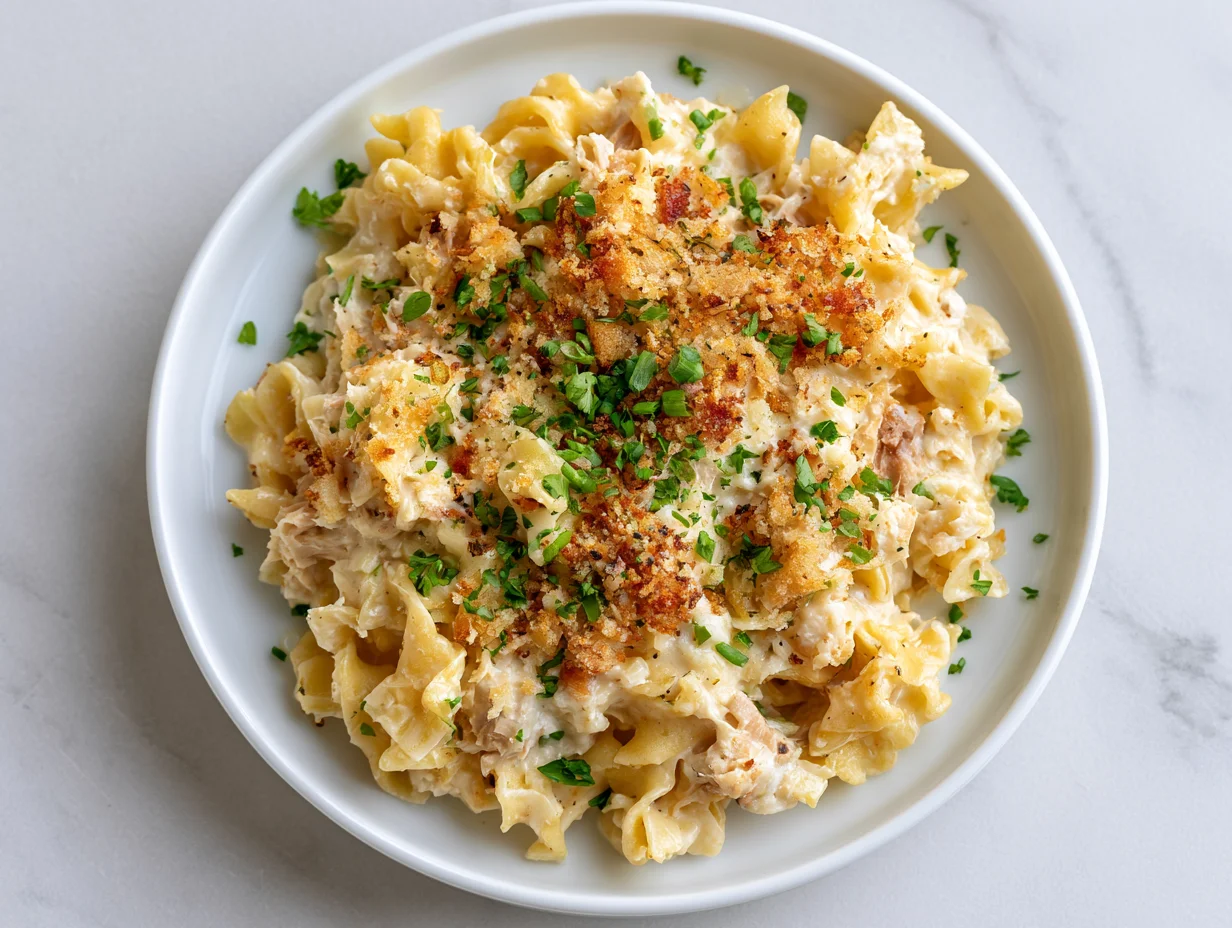
Creamy Tuna Noodle Casserole Recipe
There is something deeply satisfying about a dish that asks nothing of you but still delivers everything. Creamy tuna noodle casserole is that dish — the kind that fills the kitchen with warmth before it even reaches the table. It is old-fashioned comfort food in the truest sense, and it never goes out of style.
This recipe has been a staple in American home kitchens for decades, and for good reason. It brings together pantry ingredients that most people already have, turns them into something rich and layered, and requires very little effort in return. That balance of ease and reward is rare in cooking, and it is why this casserole keeps earning a place at the dinner table.
What makes this version stand out is the sauce. Rather than relying on a can of condensed soup and calling it done, this recipe builds a creamy, well-seasoned base from scratch. It takes a few extra minutes, but the result is a casserole that tastes intentional — something you made, not something you assembled.
Whether you are feeding a family on a weeknight or bringing a dish to a gathering, this casserole does the job with quiet confidence. It is the kind of recipe you make once, write down, and keep coming back to. Let’s get into it.
Ingredients You’ll Need
Pull open your pantry and your refrigerator, because chances are this meal is already halfway made without you knowing it.
One of the things I love about this recipe is that it uses simple pantry ingredients. You probably already have most of them in your kitchen.
Base Ingredients:
- 12 oz egg noodles, wide cut
- 2 cans (5 oz each) tuna in water, drained well
- 3 tablespoons unsalted butter
- 1 medium yellow onion, finely diced
- 3 garlic cloves, minced
- 3 tablespoons all-purpose flour
- 2 cups whole milk, warmed
- 1 cup chicken broth or vegetable broth
- 1 cup sour cream
- 1 cup shredded sharp cheddar cheese, divided
- 1 cup frozen peas, thawed
- 1 teaspoon Dijon mustard
- 1 teaspoon Worcestershire sauce
- Salt and black pepper to taste
- 1 cup crushed Ritz crackers or buttered breadcrumbs, for topping
Optional Add-ins:
- 1/2 cup sliced mushrooms, sautéed
- 1/4 cup diced pimentos or roasted red pepper
- 1/2 teaspoon smoked paprika, for depth
- 1/4 teaspoon cayenne pepper, for a gentle kick
- 1/2 cup cream cheese, softened, for extra richness
- 1 tablespoon fresh dill or parsley, chopped, for brightness
Step-by-Step Instructions
Step 1: Cook the Noodles
Bring a large pot of well-salted water to a rolling boil. Add the egg noodles and cook them for two minutes less than the package directions suggest. You want them slightly underdone at this stage since they will continue cooking inside the casserole in the oven. Drain the noodles well and toss them lightly with a small drizzle of olive oil to prevent sticking. Set them aside while you work on the sauce.
Step 2: Build the Creamy Sauce
In a large, oven-safe skillet or wide saucepan, melt the butter over medium heat. Add the diced onion and cook for about four to five minutes, stirring occasionally, until it turns soft and translucent. Add the minced garlic and cook for another minute until fragrant. Sprinkle in the flour and stir constantly for one to two minutes to cook out the raw flour taste. This step builds the foundation of your sauce and should not be rushed.
Step 3: Add the Liquids
With your roux ready, slowly pour in the warmed milk, a little at a time, whisking continuously to keep the sauce smooth and lump-free. Once the milk is incorporated, add the chicken broth and continue whisking over medium heat. Allow the sauce to simmer for three to four minutes, stirring often, until it thickens to a consistency that coats the back of a spoon. Remove the pan from the heat before adding any dairy.
Step 4: Finish the Sauce
Off the heat, stir in the sour cream, half of the cheddar cheese, Dijon mustard, and Worcestershire sauce. Season generously with salt and black pepper. The residual heat will melt the cheese and bring everything together smoothly. Taste the sauce at this point and adjust the seasoning as needed. It should be well-seasoned, slightly tangy from the sour cream, and rich without being heavy. This is where the casserole earns its character.
Step 5: Combine and Assemble
Preheat your oven to 375°F. Fold the drained tuna and thawed peas into the sauce, breaking up any large chunks of tuna gently so they distribute evenly throughout. Add the cooked noodles and stir everything together until fully combined and coated. Transfer the mixture into a lightly buttered 9×13-inch baking dish. Spread it out into an even layer using a spatula. Top with the remaining shredded cheddar.
Step 6: Add the Topping and Bake
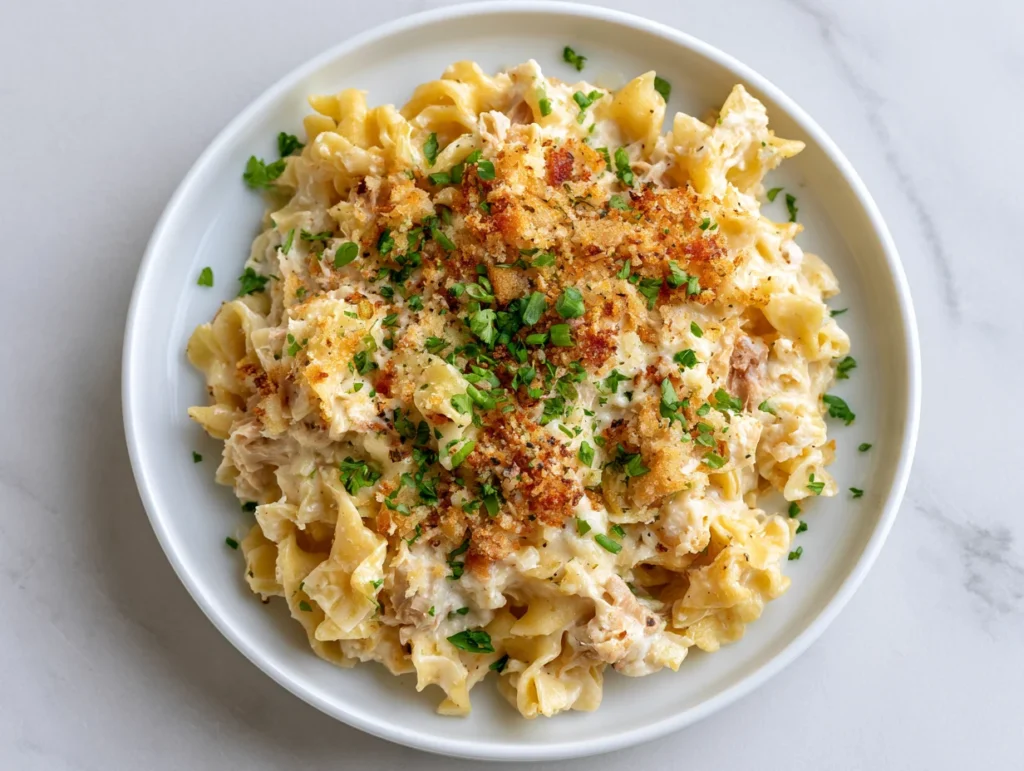
Combine the crushed crackers or breadcrumbs with a tablespoon of melted butter and mix well. Scatter this mixture evenly over the top of the casserole. This creates the golden, crunchy crust that provides contrast to the creamy filling underneath — do not skip it. Place the dish on the center rack of the preheated oven and bake until the topping is deep golden brown and the filling is bubbling around the edges. Let it rest for at least five minutes before serving.
Cook Time
Total:
55 minutes
Prep:
20 minutes
Bake:
35 minutes
Servings
This casserole is generous by design. It is the kind of recipe that feeds a hungry family without requiring you to stretch or compromise. A standard 9×13-inch baking dish will give you hearty, satisfying portions that hold together well when served.
Makes approximately 6 to 8 servings, depending on portion size. For smaller households, it divides into excellent leftovers — arguably better the next day once the flavors have had time to settle and deepen overnight.
If you are feeding a larger group or want to bring this dish to a potluck or family gathering, the recipe scales up cleanly. Simply double the ingredients and use two baking dishes, or a larger roasting pan. The cooking time stays roughly the same, though you may need a few extra minutes in the oven if the dish is very full.
Common Mistakes in This Recipe
One of the most frequent issues home cooks run into is overcooking the noodles before the casserole even goes into the oven. Since the pasta continues to cook during baking, starting with fully cooked noodles results in a mushy, unpleasant texture. This is the single biggest reason casseroles come out soft when they should be tender.
Another common error is skipping the roux or not cooking it long enough. Adding flour directly to the liquids without properly building a cooked roux leads to a sauce that tastes raw, starchy, or thin. The butter and flour must be cooked together for at least one to two minutes before any liquid is added.
Many people also add the sour cream and cheese directly to a boiling sauce. High heat causes dairy to curdle and split, leaving the sauce grainy instead of smooth. Dairy additions should always happen off the heat or over very low heat to keep the texture silky.
Finally, skimping on seasoning is a mistake that costs the dish its depth. Tuna casserole needs adequate salt, and the sauce benefits from the brightness of Dijon and Worcestershire. Without these, the casserole can taste flat and one-dimensional no matter how carefully everything else is done.
Solutions to Common Mistakes
The fix for overcooked noodles is simple: pull them from the boiling water two full minutes early. They will look slightly underdone, and that is exactly right. They will absorb the sauce and finish cooking in the oven, resulting in a perfectly tender bite throughout the baked casserole.
To build a smooth, flavorful sauce, give the roux the time it needs. Cook the butter and flour together while stirring constantly, and watch for it to turn a light golden color. When you add the liquid, do it gradually and whisk firmly — this step takes patience but guarantees a lump-free result.
Always remove the sauce from the heat before folding in sour cream and cheese. Stir them in off the burner and let the residual warmth do the work. If the sauce cools too much, return it briefly to the lowest heat setting and stir gently — never boil it again after the dairy has been added.
Season at every stage: the pasta water, the roux, and especially the finished sauce. Taste before assembling. The Dijon and Worcestershire are not optional extras — they lift the entire dish and make it taste complex rather than simple.
Nutritional Information (approx. per serving)
- Calories: 480 kcal
- Protein: 28g
- Carbohydrates: 42g
- Total Fat: 20g
- Saturated Fat: 10g
- Fiber: 3g
- Sodium: 620mg
- Calcium: 220mg
- Iron: 2.4mg
- Vitamin D: 1.8mcg
Tuna is one of the most protein-dense, low-calorie ingredients available, and it makes this casserole genuinely nourishing rather than just indulgent. A single serving delivers close to 30 grams of complete protein, supporting muscle repair and satiety throughout the day.
The egg noodles provide a source of sustained energy, while the peas add plant-based fiber and essential micronutrients including vitamin K, folate, and manganese. Together, these ingredients make a balanced meal rather than an empty comfort food.
Cheddar cheese and sour cream contribute calcium and fat-soluble vitamins, particularly vitamins A and B12, which are essential for immune function and nerve health. The fat content also helps with the absorption of fat-soluble nutrients present elsewhere in the dish.
When made with whole milk and real butter, this casserole delivers richness that actually satisfies — meaning you are less likely to go back for seconds out of habit than you would be with highly processed alternatives. Real food, made properly, keeps you full.
Storage Instructions
Allow the casserole to cool completely before covering or transferring to storage containers. Sealing it while still hot traps steam, which softens the topping and dilutes the texture of the filling. Give it at least 30 minutes at room temperature before refrigerating.
Stored in an airtight container or tightly covered with plastic wrap, leftover casserole keeps well in the refrigerator for up to four days. The flavors continue to develop overnight, and many people find the second-day version even more satisfying than the first.
For longer storage, this casserole freezes beautifully. Portion it into individual freezer-safe containers or wrap the whole baking dish tightly with two layers of plastic wrap followed by aluminum foil. It will keep in the freezer for up to three months without significant loss of quality.
To reheat from the refrigerator, cover the dish with foil and warm it in a 350°F oven for 20 to 25 minutes until heated through. Remove the foil for the last five minutes to re-crisp the topping. For frozen portions, thaw overnight in the refrigerator before reheating. Avoid microwaving large portions — it softens the crust and heats unevenly.
Suggestions
This casserole is easy to customize without disrupting its balance. If you want to increase the vegetable content, diced celery, corn, or sautéed mushrooms fold in beautifully during the assembly step. They add texture and nutrition without overwhelming the core flavor of the dish.
For those who prefer a lighter version, Greek yogurt can replace the sour cream with excellent results. It holds up well during baking, keeps the sauce tangy, and reduces the fat content without sacrificing creaminess. Low-fat milk works as well, though the sauce will be slightly thinner.
The topping is worth experimenting with. Crushed Ritz crackers give a buttery, golden crust that is hard to beat, but panko breadcrumbs with Parmesan create a more savory, crunchier result. You can also add a pinch of smoked paprika to the topping mixture for color and a subtle smokiness that elevates the presentation.
Serve this casserole alongside a simple green salad dressed with lemon vinaigrette to cut through the richness, or pair it with steamed broccoli and roasted cherry tomatoes for a complete plate. A glass of crisp white wine — a dry Chardonnay or Sauvignon Blanc — complements the creamy sauce remarkably well for adults at the table.
Seasonal Relevance
Tuna noodle casserole belongs to autumn and winter in the most natural way. When the days get shorter and the air turns cold, this is the kind of dish that makes coming home feel like an event. It is warm, filling, and deeply comforting in a way that lighter meals simply cannot replicate during the colder months.
That said, it is a year-round recipe in the best sense. During the spring, fresh peas can replace frozen ones for a brighter, more vibrant result. In the summer, the casserole can be assembled ahead of time and baked just before dinner, making it a practical option when the day has been long and the appetite is real.
Casseroles like this one are especially valuable during the holiday season when large gatherings call for dishes that can be prepared in advance, transported easily, and served to a crowd without elaborate last-minute effort. This recipe checks every one of those boxes.
From a practical standpoint, tuna is a pantry staple available year-round at consistent quality and price. That makes this recipe reliable regardless of the season, the budget, or what is available at the market. It is the kind of dish that never depends on a perfect day at the grocery store.
Final Words
Creamy tuna noodle casserole is not a recipe that needs reinvention — it needs respect. Respect for the technique behind a proper cream sauce, respect for the balance of textures that makes every bite satisfying, and respect for the ingredients that have made this dish a household classic for generations.
What this recipe offers is that rare combination of accessibility and quality. You do not need a culinary background to make it well, but the principles used here — building a roux, seasoning in layers, adding dairy off the heat — are the same ones used in far more complex dishes. Master this casserole and you master something real.
The beauty of cooking this kind of food is that it connects you to something larger than a single meal. It is a dish that most people have a memory tied to. Making it from scratch, rather than relying on shortcuts, is a way of honoring that memory and creating a new one for the people sitting at your table.
If you try this recipe, make it your own. Adjust the seasoning to your taste, try a different topping, add the vegetables your family loves. That is what cooking is supposed to be — not just following a recipe, but understanding it well enough to make it yours.
Frequently Asked Questions
Can I make this casserole ahead of time and refrigerate it before baking?
Yes, you can assemble the full casserole, cover it tightly, and refrigerate it for up to 24 hours before baking. When ready, let it sit at room temperature for 15 minutes, then bake as directed, adding 5 to 10 extra minutes to the baking time to ensure it heats through completely.
What type of tuna works best in this recipe — packed in water or packed in oil?
Tuna packed in water is the better choice here. Oil-packed tuna adds extra fat that can make the sauce feel greasy since the recipe already contains butter, sour cream, and cheese. Drain the water-packed tuna thoroughly and press it gently with a paper towel before adding it to the sauce.
Can I substitute the egg noodles with a different type of pasta?
Yes, though the texture and experience will differ slightly. Rotini, penne, or elbow macaroni all work well because their shapes hold the creamy sauce effectively. Avoid very thin pastas like spaghetti or angel hair, as they tend to clump and do not hold up as well inside a baked casserole.
Creamy Tuna Noodle Casserole Recipe
6
servings20
minutes35
minutes480
kcal55
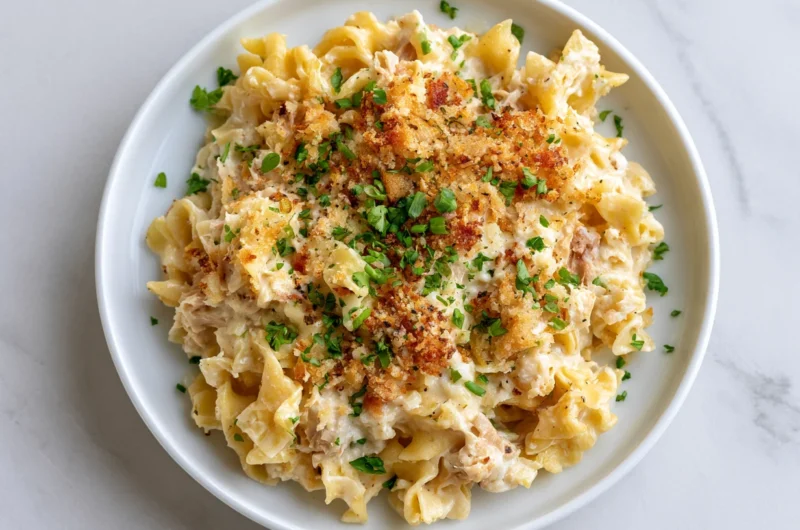
minutesA rich, from-scratch creamy tuna noodle casserole with tender egg noodles, flaky tuna, sweet peas, and a golden cracker crust — built on a properly made roux for a sauce that’s velvety, well-seasoned, and deeply satisfying.
Ingredients
Base ingredients
12 oz egg noodles, wide cut
2 cans (5 oz each) tuna in water, drained well
3 tablespoons unsalted butter
1 medium yellow onion, finely diced
3 garlic cloves, minced
3 tablespoons all-purpose flour
2 cups whole milk, warmed
1 cup chicken broth or vegetable broth
1 cup sour cream
1 cup shredded sharp cheddar cheese, divided
1 cup frozen peas, thawed
1 teaspoon Dijon mustard
1 teaspoon Worcestershire sauce
Salt and black pepper to taste
1 cup crushed Ritz crackers or buttered breadcrumbs, for topping
Optional add-ins
½ cup sliced mushrooms, sautéed
¼ cup diced pimentos or roasted red pepper
½ teaspoon smoked paprika
¼ teaspoon cayenne pepper
½ cup cream cheese, softened
1 tablespoon fresh dill or parsley, chopped
Directions
- Bring a large pot of well-salted water to a rolling boil. Cook egg noodles for 2 minutes less than the package directions. Drain, toss lightly with olive oil, and set aside.
- Melt butter in a large oven-safe skillet over medium heat. Add diced onion and cook for 4–5 minutes until soft. Add garlic and cook 1 minute. Sprinkle in flour and stir constantly for 1–2 minutes to form a golden roux.
- Slowly pour in the warmed milk, whisking continuously to prevent lumps. Add the broth and continue whisking over medium heat. Simmer for 3–4 minutes, stirring often, until the sauce thickens enough to coat the back of a spoon.
- Remove pan from heat. Stir in sour cream, half the cheddar, Dijon mustard, and Worcestershire sauce. Season well with salt and black pepper. Taste and adjust seasoning before proceeding.
- Preheat oven to 375°F (190°C). Fold drained tuna and thawed peas into the sauce. Add cooked noodles and stir until everything is evenly combined. Transfer to a lightly buttered 9×13-inch baking dish and spread level.
- Top with remaining cheddar. Mix crushed crackers or breadcrumbs with 1 tablespoon melted butter and scatter evenly over the top. Bake for 30–35 minutes until the topping is deep golden and the filling is bubbling at the edges.
- Remove from the oven and let the casserole rest for at least 5 minutes before serving. This helps the filling set and makes portioning cleaner.
Recipe Video
Notes
- Always undercook the noodles by 2 minutes before baking — they finish cooking in the oven and will turn mushy if pre-cooked fully.
- Add sour cream and cheese off the heat only. Direct high heat causes dairy to curdle and makes the sauce grainy.
- Use tuna packed in water, not oil. Oil-packed varieties add excess fat that makes the finished sauce feel heavy and greasy.
- Warm the milk before adding it to the roux. Cold milk added to hot butter-flour causes lumping and uneven thickening.
- The casserole can be assembled up to 24 hours ahead and refrigerated unbaked. Add 5–10 minutes to baking time if going straight from the fridge.
- Leftovers keep in the refrigerator for up to 4 days and freeze well for up to 3 months. Reheat covered in a 350°F oven for best texture.
- For a lighter version, substitute Greek yogurt for sour cream and use low-fat milk. The sauce will be slightly thinner but still flavorful.