Crispy Apple Fritters Recipe
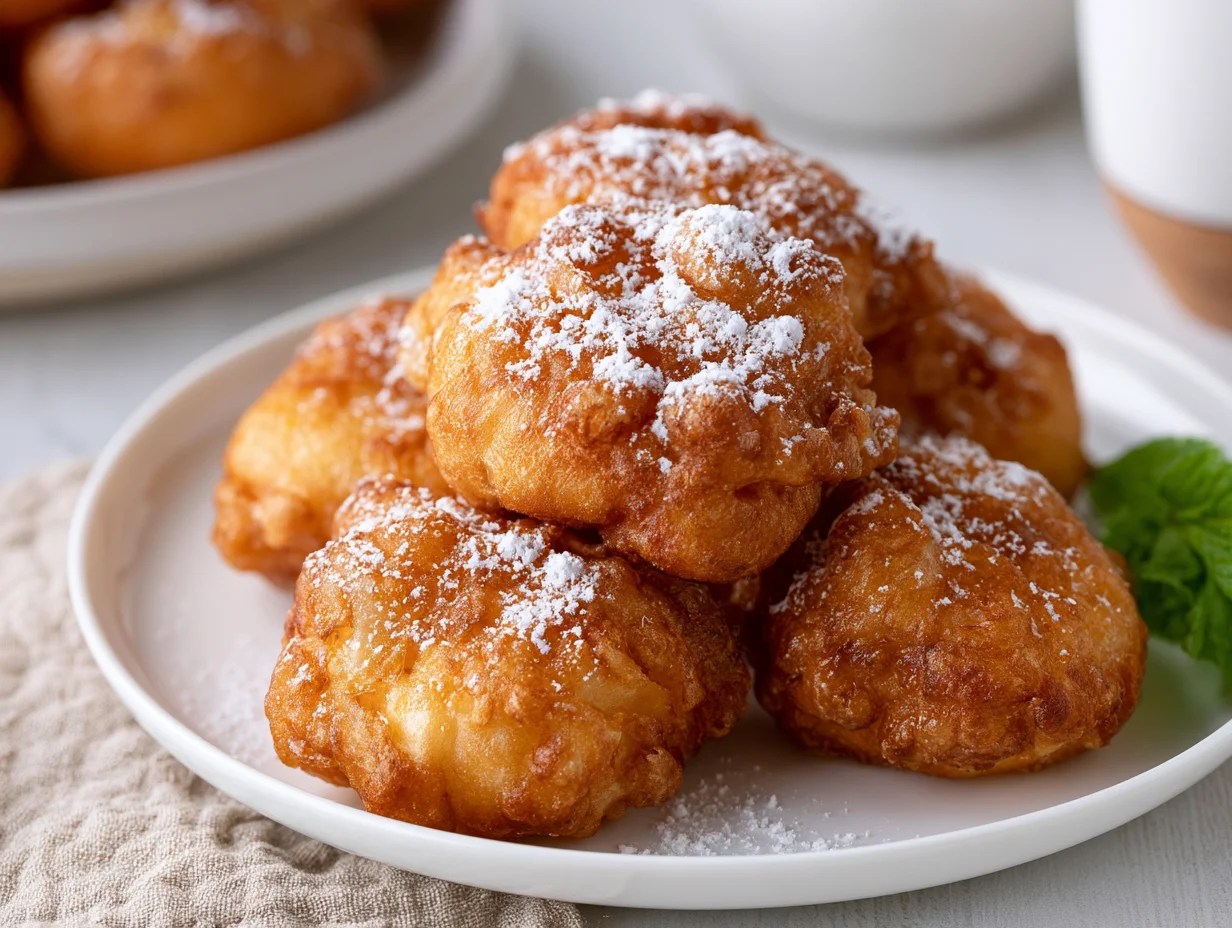
There are certain recipes that exist purely to remind you why home cooking matters. Apple fritters are one of them. Golden on the outside, tender and fragrant on the inside, and finished with a glaze that crackles when you bite through it — they are the kind of thing you make once and think about for weeks afterward.
What sets a truly great apple fritter apart from a mediocre one is texture. The batter needs to be thick enough to coat the apple without being heavy, and the oil needs to be hot enough to create that signature shatter on the crust. Get those two things right, and everything else falls into place.
This is not a complicated recipe. It does not require a stand mixer, a candy thermometer, or any specialized equipment. What it does require is a little attention and the willingness to fry with confidence — because hesitation in the kitchen rarely produces anything worth eating.
Whether you are making these for a weekend breakfast, a fall gathering, or simply because you have apples on the counter and thirty minutes to spare, this recipe will deliver something genuinely special every single time.
Ingredients You’ll Need
If there is one recipe that proves great food does not require a long shopping list, it is this one — every ingredient here earns its place.
One of the things I love about this recipe is that it uses simple pantry ingredients. You probably already have most of them in your kitchen.
Base Ingredients:
- 2 large apples (Honeycrisp or Granny Smith), peeled, cored, and diced into ½-inch pieces
- 1½ cups all-purpose flour
- 2 teaspoons baking powder
- 1 teaspoon ground cinnamon
- ¼ teaspoon ground nutmeg
- ¼ teaspoon fine sea salt
- 3 tablespoons granulated sugar
- 2 large eggs, at room temperature
- ½ cup whole milk
- 1 teaspoon pure vanilla extract
- 2 tablespoons unsalted butter, melted
- Vegetable oil, for frying (about 2–3 inches deep in the pan)
Optional Add-ins:
- ¼ teaspoon ground cardamom (for a warm, floral depth)
- 1 tablespoon dark rum or apple brandy (added to the batter)
- ¼ cup raisins or dried cranberries
- ½ teaspoon lemon zest (brightens the apple flavor considerably)
- ¼ cup chopped toasted walnuts or pecans
For the glaze:
- 1 cup powdered sugar, sifted
- 2 to 3 tablespoons whole milk
- ½ teaspoon pure vanilla extract
Step-by-Step Instructions
Step 1: Prepare the Apples
Start by peeling, coring, and dicing your apples into even ½-inch cubes. Uniformity matters here — pieces that are too large will not cook through before the batter browns, and pieces that are too small will disappear into the fritter entirely. Once diced, pat the apple pieces dry with a paper towel. Excess moisture on the surface of the apple will make the batter slide off and cause the oil to spit aggressively. Set the prepared apples aside while you build the batter.
Step 2: Mix the Dry Ingredients
In a large mixing bowl, whisk together the flour, baking powder, cinnamon, nutmeg, salt, and sugar. Take an extra thirty seconds to whisk thoroughly — this step distributes the leavening and spices evenly so every fritter tastes consistent. Clumps of baking powder in a batter are one of the leading causes of uneven rise and an unpleasant chemical aftertaste. Sifting the dry ingredients first is optional but recommended if your flour has been sitting in a humid kitchen for any length of time.
Step 3: Mix the Wet Ingredients
In a separate bowl, whisk together the eggs, whole milk, vanilla extract, and melted butter until completely combined. The butter should be warm but not hot — if it is too hot when it hits the eggs, it will begin to cook them, leaving you with tiny cooked egg specks in your batter. If you are using any liquid optional add-ins such as rum or apple brandy, stir them in at this stage. The wet mixture should look smooth, pale, and slightly frothy from the eggs.
Step 4: Combine and Fold in Apples
Pour the wet ingredients into the dry ingredients and stir until just combined. Do not overmix. A few streaks of flour remaining is perfectly acceptable — overmixing develops the gluten in the flour, which makes the fritters tough and dense rather than tender. Once the batter comes together, gently fold in the diced apple pieces using a rubber spatula. The batter will be thick, almost like a drop cookie dough consistency. This is correct. A thin batter will not hold the apples in suspension during frying.
Step 5: Heat the Oil
Pour vegetable oil into a heavy-bottomed pan or Dutch oven to a depth of about 2 to 3 inches. Heat over medium to medium-high heat until the oil reaches 375°F (190°C). If you do not have a thermometer, test the oil by dropping a small blob of batter into it — it should sizzle immediately and begin to float within a few seconds. Oil that is too cool will make greasy, pale fritters. Oil that is too hot will brown the outside before the inside is cooked. Steady, consistent temperature is everything here.
Step 6: Fry the Fritters
Using a large spoon or a ¼-cup measuring cup, carefully drop mounds of batter into the hot oil. Do not overcrowd the pan — fry in batches of 3 to 4 at a time depending on your pan size. Overcrowding drops the oil temperature and leads to greasy, uneven fritters. Fry for 2 to 3 minutes per side, turning once, until deeply golden brown on both sides. Transfer to a wire rack set over a baking sheet to drain. Never drain fried food on paper towels — they trap steam and make the crust soggy.
Step 7: Glaze and Serve
While the fritters are still warm, prepare the glaze by whisking together sifted powdered sugar, milk, and vanilla extract until smooth and pourable. The consistency should coat the back of a spoon. Dip each warm fritter into the glaze or drizzle it generously over the top using a spoon. The heat from the fritter will help the glaze set quickly into a thin, crackly shell. Serve immediately. Apple fritters are at their absolute peak within the first fifteen to twenty minutes of glazing — this is not a recipe to make ahead and serve cold.
Cook Time
Total:
30 minutes
Prep:
15 minutes
Bake:
15 minutes (frying time only — no oven required)
Servings
This recipe makes a generous batch suitable for a family breakfast or a casual brunch spread. The yield depends slightly on how large you portion each fritter — a standard ¼-cup scoop of batter produces a fritter roughly the size of a small fist, which is the ideal serving size.
For larger gatherings, the batter doubles well. Simply scale all ingredients proportionally and fry in batches, keeping finished fritters warm in a 200°F (93°C) oven on a wire rack while you complete the remaining batches.
Makes approximately 10 to 12 fritters.
Common Mistakes in This Recipe
The most damaging mistake home cooks make with apple fritters is not drying the apple pieces before folding them into the batter. Fresh apples release a surprising amount of surface moisture, and that moisture weakens the batter’s grip on the fruit, causing the coating to fall away during frying. A thirty-second pat-down with paper towels prevents this entirely.
A second common error is overmixing the batter. Unlike a pancake batter, which can handle a little extra stirring, fritter batter needs to be mixed minimally. Overworking the flour builds too much gluten, which makes the finished fritter chewy and dense rather than light and slightly crisp at the edges.
Frying at the wrong oil temperature is another frequent issue. Too cool, and the fritters absorb oil and come out pale and greasy. Too hot, and the exterior darkens before the center has time to set. Many home cooks skip the thermometer and pay for it with inconsistent results batch after batch.
Finally, draining fritters on paper towels instead of a wire rack is a subtle but impactful mistake. Paper towels trap the steam released by the hot batter, softening the crust almost immediately. A wire rack allows air to circulate underneath, keeping the exterior as crisp as possible for as long as possible.
Solutions to Common Mistakes
The moisture problem has a simple fix: after dicing your apples, spread them on a clean kitchen towel or a few layers of paper towel and press gently. Let them sit for two to three minutes while you prepare the batter. This brief drying window makes a noticeable difference in how well the batter adheres during frying.
For the overmixing issue, adopt the “just combined” rule as a non-negotiable habit. As soon as you no longer see dry streaks of flour, stop stirring. Switch to a rubber spatula for the final fold-in of apples — it gives you more control than a whisk and makes it easier to stop at the right moment.
Invest in a simple clip-on candy or fry thermometer. They cost very little and remove all the guesswork from oil temperature. Set your burner to medium-high, bring the oil to 375°F, then reduce the heat slightly to maintain it. Check the temperature between batches and adjust accordingly — the oil will cool when cold batter is added.
For drainage, set a wire cooling rack inside a rimmed baking sheet before you begin frying. Transfer fritters directly from the oil to the rack. This setup also makes it easy to keep fritters warm in a low oven while you finish the remaining batches without sacrificing any of the crust texture.
Nutritional Information (approx. per serving)
- Calories: 210 kcal
- Total Fat: 8g
- Saturated Fat: 2g
- Cholesterol: 38mg
- Sodium: 130mg
- Total Carbohydrates: 32g
- Dietary Fiber: 1.5g
- Sugars: 14g
- Protein: 4g
- Iron: 1.1mg
- Calcium: 60mg
- Vitamin C: 2mg
Apples are among the most fiber-rich fruits available, and much of that fiber — particularly pectin — survives the brief cooking time inside the fritter. Pectin is a soluble fiber that supports healthy digestion, helps regulate cholesterol levels, and contributes to a sustained feeling of fullness after eating.
The eggs in this recipe contribute high-quality complete protein alongside choline, a nutrient essential for brain health and liver function that most people do not consume in sufficient quantities. Two eggs in a batch of twelve fritters adds meaningful nutritional density without significantly impacting calorie count per serving.
Cinnamon, used generously in this recipe, contains cinnamaldehyde — the compound responsible for its flavor and aroma — which has been studied for its potential to support healthy blood sugar regulation. Using real ground cinnamon rather than cinnamon flavoring preserves these naturally occurring plant compounds.
Whole milk contributes calcium and fat-soluble vitamins A and D, which work together to support bone density and immune resilience. When consumed in moderation as part of a balanced diet, the fat in whole milk also helps the body absorb fat-soluble nutrients from the apples and spices more effectively.
Storage Instructions
Apple fritters are genuinely best eaten fresh, within the first hour of making them. That said, leftovers store reasonably well if handled correctly. Allow fritters to cool completely to room temperature before storing — trapping residual heat in a sealed container will create condensation that softens the glaze and makes the crust limp.
Once cooled, store in a single layer in an airtight container at room temperature for up to two days. If you need to stack them, place a sheet of parchment paper between each layer to prevent the glaze from sticking. Avoid refrigerating glazed fritters if possible — cold temperatures cause the glaze to become sticky and the interior to turn dense.
To revive day-old fritters, place them on a wire rack over a baking sheet and warm them in a 350°F (175°C) oven for 5 to 7 minutes. This restores much of the original crispness and warms the apple filling back to a soft, fragrant consistency. Do not microwave them — it will make them rubbery and collapse the crust entirely.
For longer storage, freeze unglazed fritters in a single layer on a baking sheet until solid, then transfer to a freezer bag for up to one month. Reheat directly from frozen in a 375°F (190°C) oven for 10 to 12 minutes, then glaze fresh before serving.
Suggestions
The vanilla glaze in this recipe is the classic choice, but it is far from the only option. A maple glaze made with pure maple syrup, powdered sugar, and a pinch of cinnamon adds a distinctly autumnal quality that pairs beautifully with Honeycrisp apples. Brown butter glaze — made by cooking butter until it smells nutty, then whisking it into powdered sugar — is richer and more complex, and genuinely extraordinary.
If you prefer a less sweet finish, skip the glaze entirely and dust the warm fritters with a mixture of cinnamon sugar immediately after they come out of the oil. The residual heat will melt the sugar slightly, creating a lightly caramelized coating that is just as satisfying in a more understated way.
Apple fritters also work exceptionally well as a dessert course. Serve two fritters warm alongside a scoop of vanilla bean ice cream and a drizzle of salted caramel sauce for a plated dessert that looks and tastes far more intentional than the effort it requires. A dollop of crème fraîche or lightly whipped cream is a more refined alternative.
For a savory twist that works remarkably well, omit the sugar and glaze from the batter and add sharp cheddar, fresh thyme, and a pinch of cayenne. The result is a savory apple-cheese fritter that holds its own as a cocktail snack or a side to a bowl of butternut squash soup.
Seasonal Relevance
Apple fritters belong most naturally to the fall season, and for good reason. The months of September through November bring the widest variety of fresh apples to farmers markets and grocery stores — Honeycrisp, Fuji, Braeburn, Pink Lady, and the irreplaceable Granny Smith, all at their peak flavor and firmness. This is the time of year when apple fritters taste exactly as they are meant to taste.
In the winter months, apple fritters shift from a harvest celebration to a comfort ritual. They are the kind of thing you make on a grey Saturday morning when the house is cold and the kitchen is the warmest room. The scent of cinnamon and frying dough is, genuinely, one of the most welcoming aromas a home can produce.
Come spring and early summer, fritters adapt beautifully to whatever stone fruit is at its peak. Substitute diced fresh peaches, nectarines, or even ripe pears using the exact same batter and method. The technique is identical; only the fruit changes. This makes the recipe a true year-round workhorse once you have it in your rotation.
Late summer brings the earliest apple varieties — Zestar, Lodi, and early Galas — which are softer and sweeter than their fall counterparts and produce a slightly different fritter texture. More tender, less structured, but no less delicious. Every season offers its own version of this recipe, and every version is worth making.
Final Words
A good apple fritter is one of those rare things in the kitchen that manages to be both humble and impressive at the same time. It does not require technique developed over years. It does not ask for expensive equipment or hard-to-find ingredients. What it asks for is a little confidence, a hot pan of oil, and the willingness to pay attention.
What I find most satisfying about this recipe — and why I keep returning to it — is how reliably it produces something that tastes like it came from a very good bakery. There is a specific kind of satisfaction in that. In closing the gap between what you imagine tasting and what actually comes out of your own kitchen.
If this is your first time making fried dough of any kind, let this be your entry point. The technique is forgiving enough that even an imperfect first batch will still be deeply good. And by the second batch, you will already understand what adjustments to make. That is how cooking works, and apple fritters are a wonderfully low-stakes way to practice it.
Come back to this recipe as the seasons change. Try it with different apple varieties. Experiment with the glaze. Make it your own version of something already excellent. The foundation is solid — everything beyond that is yours to explore.
Frequently Asked Questions
What is the best apple variety to use for apple fritters?
Honeycrisp and Granny Smith are the top choices. Honeycrisp offers natural sweetness and holds its shape well under heat. Granny Smith provides tartness that balances the sweet batter and glaze. Avoid soft varieties like McIntosh, which break down too quickly and turn mushy inside the fritter.
Can I make apple fritters without a deep fryer?
Absolutely. A heavy-bottomed skillet or Dutch oven works perfectly. Fill it with 2 to 3 inches of vegetable oil and use a thermometer to maintain 375°F. A cast iron pan is ideal because it retains heat evenly and recovers temperature quickly between batches, giving you consistent results throughout.
Can the batter be made ahead of time?
It is best made fresh. The baking powder begins reacting the moment it contacts liquid, so batter that sits too long loses its leavening power and produces flat, dense fritters. If needed, mix dry and wet ingredients separately up to an hour ahead and combine just before frying.
Crispy Apple Fritters Recipe
10
servings15
minutes15
minutes210
kcal30
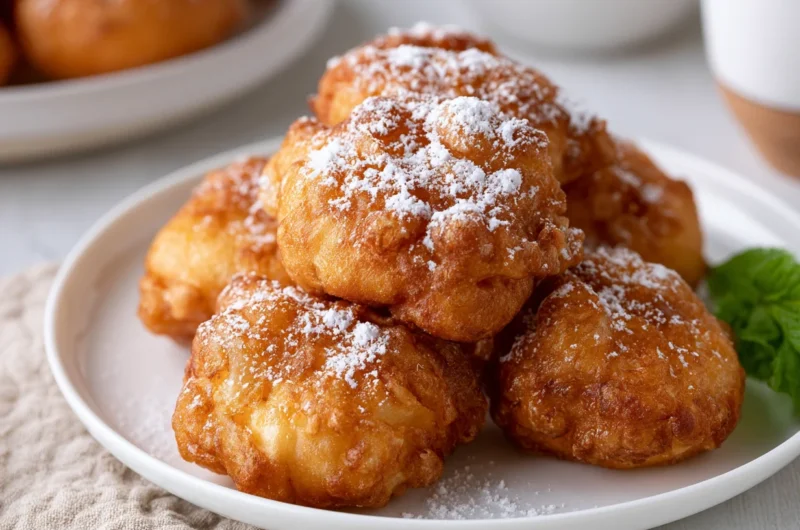
minutesGolden, crispy apple fritters made with cinnamon-spiced batter and fresh diced apples, finished with a vanilla glaze. Ready in 30 minutes using simple pantry staples — perfect for breakfast, brunch, or dessert any time of year.
Ingredients
Base ingredients
2 large apples (Honeycrisp or Granny Smith), peeled, cored, and diced into ½-inch pieces
1½ cups all-purpose flour
2 teaspoons baking powder
1 teaspoon ground cinnamon
¼ teaspoon ground nutmeg
¼ teaspoon fine sea salt
3 tablespoons granulated sugar
2 large eggs, at room temperature
½ cup whole milk
1 teaspoon pure vanilla extract
2 tablespoons unsalted butter, melted
Vegetable oil, for frying (2–3 inches deep)
Optional add-ins
¼ teaspoon ground cardamom
1 tablespoon dark rum or apple brandy
¼ cup raisins or dried cranberries
½ teaspoon lemon zest
¼ cup chopped toasted walnuts or pecans
For the glaze
1 cup powdered sugar, sifted
2 to 3 tablespoons whole milk
½ teaspoon pure vanilla extract
Directions
- Peel, core, and dice apples into even ½-inch pieces. Pat completely dry with paper towels to remove surface moisture. Set aside while you prepare the batter.
- In a large bowl, whisk together flour, baking powder, cinnamon, nutmeg, salt, and sugar until fully combined with no clumps remaining.
- In a separate bowl, whisk eggs, whole milk, vanilla extract, and melted butter until smooth and slightly frothy. Add any liquid optional add-ins at this stage.
- Pour the wet ingredients into the dry and stir until just combined — a few streaks of flour are fine. Fold in the diced apples gently with a rubber spatula. Batter will be thick.
- Heat vegetable oil in a heavy-bottomed pan to 375°F (190°C). Test by dropping a small blob of batter — it should sizzle and float within seconds.
- Drop ¼-cup mounds of batter into the oil in batches of 3 to 4. Fry 2 to 3 minutes per side until deeply golden. Transfer to a wire rack to drain — never paper towels.
- Whisk together powdered sugar, milk, and vanilla into a smooth glaze. Dip or drizzle over warm fritters and serve immediately within 15 to 20 minutes for peak crispness.
Recipe Video
Notes
- Always pat diced apples dry before folding into the batter — surface moisture causes the coating to slip off during frying.
- Do not overmix the batter. Stir only until no dry streaks remain; overworking the flour makes fritters tough and dense instead of tender.
- Use a thermometer to maintain oil at a steady 375°F (190°C). Too cool = greasy fritters. Too hot = raw centers with burnt exteriors.
- Honeycrisp and Granny Smith are the best apple choices. Avoid soft varieties like McIntosh — they break down and turn mushy inside the fritter.
- Drain on a wire rack, never paper towels. Paper towels trap steam and soften the crust immediately after frying.
- Fritters are best eaten within 20 minutes of glazing. To revive day-old fritters, warm in a 350°F oven for 5 to 7 minutes on a wire rack.
- For freezing, freeze unglazed fritters on a baking sheet first, then transfer to a bag. Reheat from frozen at 375°F for 10 to 12 minutes, then glaze fresh.
- For milk chocolate ganache, adjust to a 2:1 chocolate-to-cream ratio to ensure a proper set without runniness.