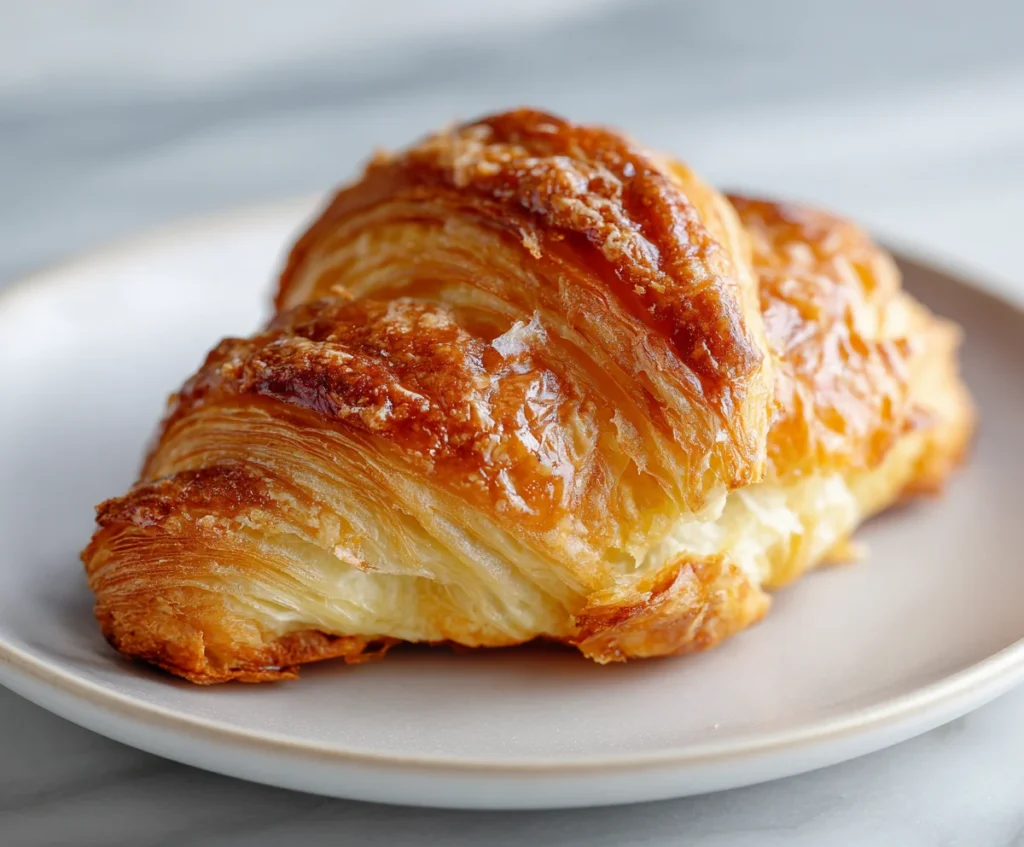
The Croissant Cookie is where classic French lamination meets the comfort of a bakery-style cookie. Imagine the shattering crispness of a croissant fused with the golden edges and caramelized base of a perfectly baked cookie. This recipe is designed with precision,controlled butter temperature, intentional folds, and balanced sweetness—so you achieve defined layers without sacrificing tenderness. The result is architectural, buttery, and unapologetically refined.
Ingredients List
- 2 ½ cups all-purpose flour
- 2 tablespoons granulated sugar
- 1 teaspoon fine sea salt
- 1 tablespoon instant yeast
- ¾ cup whole milk, cold
- ½ cup unsalted butter, softened (for dough)
- 1 cup unsalted European-style butter, cold (for lamination)
- ½ cup light brown sugar (for rolling)
- ¼ cup granulated sugar (for rolling)
- 1 teaspoon pure vanilla extract
- Optional: ½ cup dark chocolate chips or chopped chocolate
- Optional: flaky sea salt for finishing
Step-by-Step Instructions
1. Prepare the Dough Base
In a mixing bowl, combine flour, sugar, salt, and yeast. Add cold milk, softened butter, and vanilla. Mix until a smooth dough forms. Knead for 6–8 minutes until elastic but not sticky. Shape into a rectangle, wrap, and chill for 1 hour.
2. Prepare the Butter Block
Place the cold European-style butter between two sheets of parchment. Pound and roll into a thin 6×8-inch rectangle. Chill until firm but pliable—this temperature balance is critical for clean layers.
3. Laminate the Dough
Roll chilled dough into a rectangle twice the size of the butter block. Place butter in the center and fold dough over it like an envelope. Roll out gently and perform a single fold (letter fold). Chill 30 minutes. Repeat this process twice more for defined lamination.
4. Sweet Roll and Shape
After the final chill, roll dough to ¼-inch thickness. Sprinkle evenly with brown sugar and granulated sugar, pressing lightly so it adheres. Add chocolate if using. Cut into rounds using a biscuit cutter.
5. Final Chill
Place rounds on a parchment-lined tray and refrigerate for 20–30 minutes. This prevents butter leakage and maintains structure.
6. Bake to Golden Perfection
Preheat oven to 375°F (190°C). Bake for 14–18 minutes until deeply golden with crisp, caramelized edges. Cool slightly before serving. Finish with flaky sea salt if desired.
Cook Time
- Preparation Time: 30 minutes
- Chilling & Lamination Time: 2 hours
- Baking Time: 14–18 minutes
- Total Time: Approximately 3 hours
Servings
Makes 12–14 croissant cookies.
Nutritional Information (approx. per serving)
- Calories: 310 kcal
- Carbohydrates: 32 g
- Protein: 5 g
- Fat: 18 g
- Saturated Fat: 11 g
- Sugar: 10 g
- Sodium: 210 mg
Values are estimates and may vary depending on ingredient brands.
Storage Instructions
Store at room temperature in an airtight container for up to 2 days.
For best texture, reheat in a 300°F (150°C) oven for 5 minutes before serving.
Unbaked laminated dough rounds can be frozen for up to 1 month and baked directly from frozen with 2–3 extra minutes.
Suggestions
- Use high-fat European butter for superior layering and flavor.
- Incorporate finely grated orange zest into the sugar for a citrus nuance.
- Dip half of each baked cookie in tempered dark chocolate for a patisserie-style finish.
- Pair with espresso or a cappuccino for an elevated café experience.
Seasonal Relevance
These cookies transition seamlessly across seasons. In autumn and winter, their buttery richness complements warm beverages and holiday tables. In spring, lighter flavor additions like citrus zest refresh the profile. Their laminated elegance makes them suitable for festive gatherings year-round.
Conclusion
The Flaky Croissant Cookie is a technical bake disguised as comfort food. By respecting lamination principles and temperature control, you create a pastry-cookie hybrid with distinct layers, caramelized edges, and luxurious depth. It’s not just a trend-driven bake,it’s a mastery of butter, structure, and restraint. Once perfected, it becomes a signature creation worthy of any artisan bakery display.
FAQs
1. Can I make the dough overnight?
Yes. After the final fold, wrap tightly and refrigerate overnight. Shape and bake the next day for enhanced flavor development.
2. Why did my layers disappear during baking?
This usually occurs if the butter was too warm during lamination or the dough was overworked. Keep everything well chilled between folds.
3. Can I make this recipe without yeast?
Yeast contributes subtle lift and structure. While possible to adapt, removing it will result in a denser, more cookie-like texture rather than a true croissant hybrid.