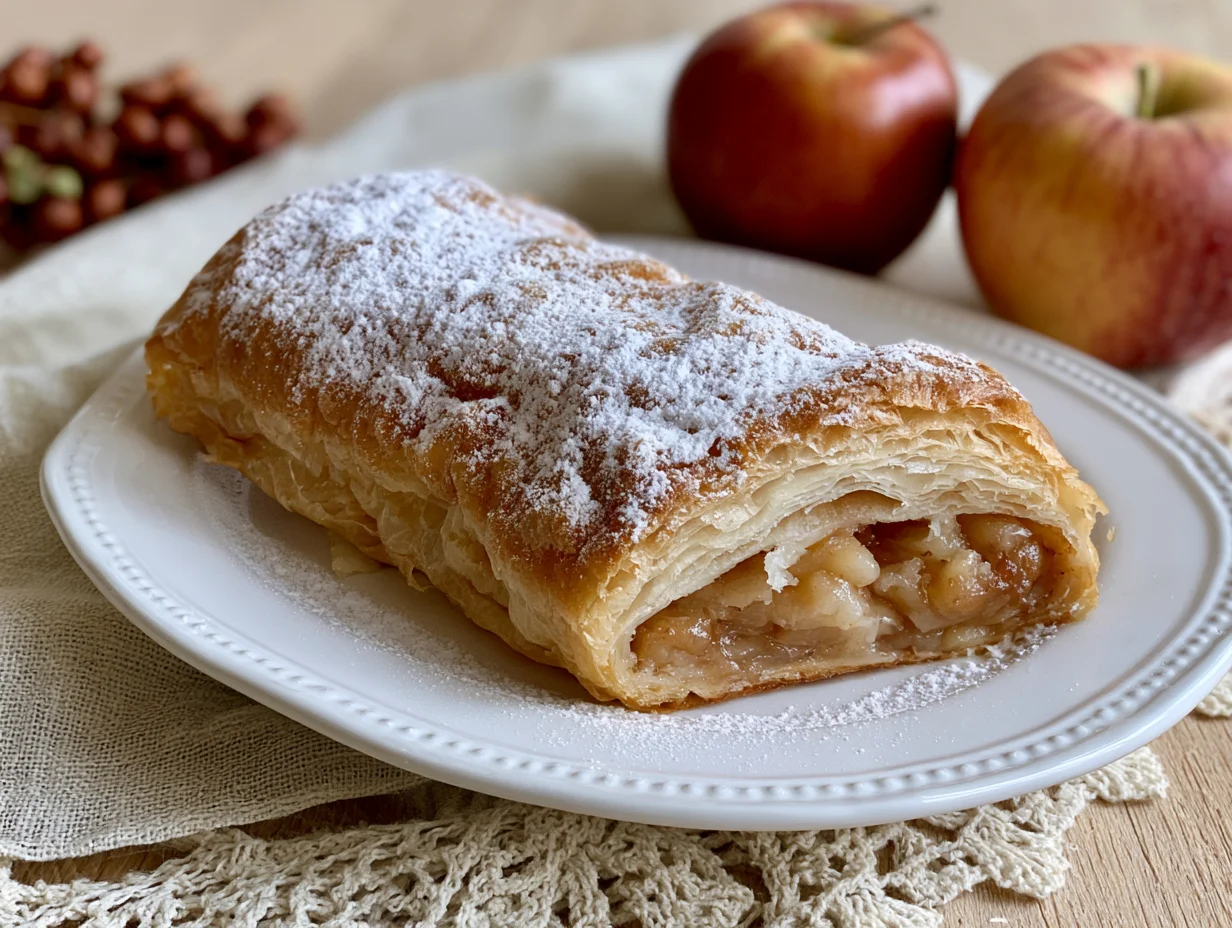
Flaky Apple Strudel Recipe
There’s a particular sound a great strudel makes when you cut into it — a soft, papery crackle that tells you the pastry did its job. That sound is the entire promise of this dessert, and it’s one that store-bought versions almost never deliver. Apple strudel isn’t a fussy bakery showpiece; it’s a centuries-old Austrian classic built on technique, patience, and a handful of honest ingredients.
What separates a memorable strudel from a mediocre one isn’t a secret ingredient. It’s the way the dough is stretched paper-thin, the way the apples are seasoned without drowning in syrup, and the way the whole roll is baked until the layers shatter under a fork. Get those three things right, and everything else follows.
This recipe walks through every stage with the kind of detail a home cook actually needs — not vague suggestions, but real timing, real texture cues, and real troubleshooting. Whether you’re making this for a holiday table or a quiet Sunday afternoon, the process is far more forgiving than its reputation suggests.
By the end of this guide, you’ll have a strudel with a golden, blistered crust and a warm, spiced apple filling that holds its shape without turning mushy. No shortcuts that compromise flavor — just a method that actually works.
Ingredients You’ll Need
Good strudel starts long before the oven — it starts with ingredients that already know how to work together, and this list proves that simplicity, done right, beats complexity every time.
Base Ingredients
- 6 medium Granny Smith apples, peeled and thinly sliced
- 1/3 cup granulated sugar
- 1 teaspoon ground cinnamon
- 1/4 teaspoon ground nutmeg
- 2 tablespoons fresh lemon juice
- 1/2 cup breadcrumbs, plain
- 1/2 cup unsalted butter, melted
- 8 sheets phyllo dough, thawed
- 1/3 cup raisins
- 1/3 cup chopped walnuts
- 1 tablespoon powdered sugar, for dusting
- 1 pinch fine sea salt
Optional Add-ins
- 1/4 cup dried cranberries
- 2 tablespoons apricot jam, warmed
- 1/2 teaspoon ground cardamom
- 1 tablespoon dark rum
- 2 tablespoons toasted almond flakes
- 1 teaspoon orange zest
Step-by-Step Instructions
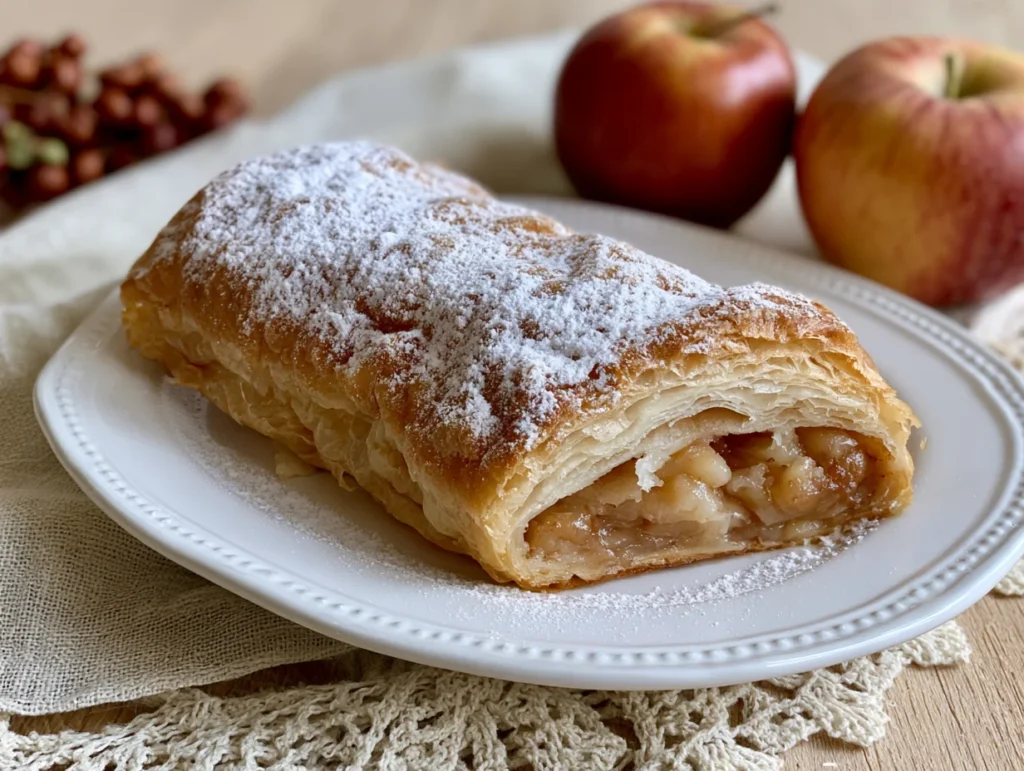
Prepare the Apple Filling
Toss the sliced apples with lemon juice immediately to prevent browning. In a large bowl, combine the apples with sugar, cinnamon, nutmeg, and a pinch of salt. Let this mixture sit for 10 minutes so the apples release some moisture, then drain off any excess liquid. Stir in the raisins and chopped walnuts. This resting step is essential — it keeps the strudel from turning watery once baked, ensuring the filling stays structured rather than soggy when sliced.
Toast the Breadcrumbs
In a dry skillet over medium heat, toast the breadcrumbs for 2 to 3 minutes until lightly golden and fragrant. Stir constantly to avoid burning. Set aside to cool completely before use. These toasted crumbs will be layered between the phyllo sheets, where they absorb excess moisture from the apples during baking. This small but crucial step is what keeps the pastry crisp instead of turning gummy near the center of the roll.
Layer the Phyllo Sheets
Lay a clean kitchen towel on your work surface and place one phyllo sheet on top. Brush generously with melted butter, then sprinkle a thin layer of toasted breadcrumbs. Repeat this process, stacking all eight sheets, brushing and sprinkling between each one. Work quickly, since phyllo dries out fast. Keep unused sheets covered with a damp towel at all times to maintain the pliability needed for rolling without cracking or tearing.
Add the Filling and Roll
Spoon the apple filling along one long edge of the layered phyllo, leaving a two-inch border. Using the towel underneath as support, gently lift and roll the pastry away from you, tucking the edges as you go. Roll firmly but without squeezing, keeping the log even. Transfer the strudel seam-side down onto a parchment-lined baking sheet, curving slightly if needed to fit, and brush the entire surface generously with the remaining melted butter.
Bake Until Golden
Preheat your oven to 375°F (190°C). Bake the strudel for 35 to 40 minutes, rotating the tray halfway through for even browning. The pastry should turn deep golden with visible flaky layers and a few blistered spots. Avoid opening the oven door during the first 20 minutes, as sudden temperature drops can cause uneven puffing. Once done, the crust should sound crisp when lightly tapped with a spoon.
Cool and Finish
Let the strudel rest on the baking sheet for at least 15 minutes before slicing — cutting too early causes the filling to spill and the layers to collapse. Once cooled slightly, dust generously with powdered sugar. For an extra glossy finish, brush warmed apricot jam thinly over the top before dusting. Slice with a sharp serrated knife in a gentle sawing motion to preserve the flaky structure of each individual layer.
Cook Time
Total:
1 hour 5 minutes
Prep:
25 minutes
Bake:
40 minutes
Servings
This recipe makes approximately 8 generous servings, making it ideal for a family dessert table or a small gathering where everyone wants a proper slice rather than a sliver. Each portion delivers a satisfying balance of warm spiced apple and shattering pastry, without feeling overly heavy or excessively sweet.
If you’re serving a larger crowd, this strudel doubles easily — simply prepare two separate rolls rather than one oversized version, since a thinner log bakes more evenly and holds its shape better when sliced. Two smaller strudels also reheat more predictably than one large one.
For smaller households, the strudel keeps well enough that eight servings rarely go to waste. It reheats beautifully for breakfast, makes an elegant afternoon tea pairing, and holds its texture far longer than most fruit-based pastries typically do.
Common Mistakes in This Recipe
The single most frequent mistake is overfilling the strudel. Cooks often assume more apple filling means more flavor, but excess filling weighs down the phyllo layers, causing tears during rolling and a soggy center after baking. The pastry needs room to expand and crisp, not a dense, overstuffed core.
Another common error is skipping the resting period for the apple mixture. Sliced apples release a surprising amount of liquid once sugared, and if that moisture isn’t drained, it seeps directly into the phyllo layers, undermining the crispness everyone bakes strudel for in the first place.
Many home cooks also rush the phyllo layering process, leaving sheets uncovered while working. Phyllo dries out within minutes once exposed to air, becoming brittle and impossible to roll without cracking. This single oversight is responsible for more ruined strudels than any other step in the entire process.
Lastly, slicing the strudel immediately after baking is a near-universal mistake, causing structural collapse and a messy presentation that undersells an otherwise excellent bake.
Solutions to Common Mistakes
To avoid overfilling, measure the apple filling loosely along the phyllo rather than piling it thickly. A modest, evenly distributed layer rolls more cleanly and bakes more consistently than a generous but uneven mound.
For watery filling, always rest the sugared apples for the full 10 minutes and discard the released liquid before assembling. This single habit dramatically improves the final texture, keeping every layer crisp rather than damp.
Keep phyllo sheets covered with a slightly damp towel at all times, removing only one sheet at a time as you work. Working in a cool, low-humidity area also helps the dough stay pliable longer.
Finally, always allow the baked strudel to rest for at least 15 minutes before slicing. This brief pause lets the filling set and the layers stabilize, resulting in clean, photogenic slices instead of a collapsed mess.
Nutritional Information (approx. per serving)
- Calories: 265 kcal
- Carbohydrates: 34g
- Protein: 3g
- Fat: 13g
- Saturated Fat: 6g
- Fiber: 3g
- Sugar: 18g
- Sodium: 95mg
Apples contribute meaningful dietary fiber and natural sweetness, which means this dessert relies less on refined sugar than many comparable pastries, while still delivering a satisfying, rounded flavor in every bite.
The walnuts folded into the filling add a dose of healthy unsaturated fats and a subtle earthy crunch, balancing the softness of the cooked apples and giving the dessert more nutritional substance than typical sugar-heavy bakes.
Cinnamon and nutmeg aren’t just flavor enhancers here — both spices carry recognized anti-inflammatory properties, making this strudel a comparatively thoughtful indulgence rather than an empty-calorie treat.
Because phyllo is naturally lower in fat than puff pastry, this strudel offers that signature flaky texture without the heavier richness, making it a lighter option for those who still want a true bakery-style dessert experience.
Storage Instructions
Once fully cooled, store leftover strudel loosely covered with foil or parchment at room temperature for up to one day. Avoid airtight plastic wrap, which traps moisture and softens the delicate phyllo layers, undoing much of the crispness you worked to achieve.
For longer storage, refrigerate the strudel in a loosely covered container for up to three days. The texture will soften slightly, but a quick reheat restores much of its original crispness without drying out the apple filling inside.
To reheat, place slices in a 350°F oven for 8 to 10 minutes rather than using a microwave, which turns the pastry chewy instead of crisp. This short reheating window is enough to revive the flaky structure fully.
If freezing, wrap the unbaked, assembled strudel tightly in plastic and foil before freezing for up to one month. Bake directly from frozen, adding roughly 10 extra minutes to the original bake time.
Suggestions
Serve warm slices with a small scoop of vanilla bean ice cream — the contrast between the hot, spiced apple filling and the cold cream is genuinely one of the best pairings in classic European baking.
A light drizzle of warm caramel sauce elevates the presentation considerably, especially for dinner parties or holiday gatherings where a slightly more polished dessert finish feels appropriate without requiring extra effort.
For a lighter alternative, a dollop of lightly sweetened whipped cream or a spoon of mascarpone offers richness without overwhelming the apple’s natural flavor, making it a versatile pairing for both casual and formal settings.
Pair the strudel with a hot cup of black tea or a lightly spiced chai, both of which complement the cinnamon and nutmeg in the filling beautifully without competing with the dessert’s flavor profile.
Seasonal Relevance
Apple strudel finds its natural home in autumn, when Granny Smith and other tart baking apples are at their peak freshness, flavor concentration, and affordability across most local markets and grocery stores.
That said, this dessert performs equally well through the winter holiday season, often appearing on Thanksgiving and Christmas dessert tables as a slightly less expected alternative to traditional pie, while still delivering familiar, comforting flavors.
During warmer months, the recipe adapts easily by using a lighter hand with sugar and serving slices chilled alongside fresh berries, making it a surprisingly refreshing option even outside its traditional cold-weather context.
Because phyllo and apples are both widely available year-round in most regions, this strudel never truly falls out of season — it simply shifts its supporting flavors and serving style to match whatever month it’s made in.
Final Words
This strudel rewards patience far more than it demands skill. Once you understand how the phyllo behaves and how the apple filling needs to rest, the entire process becomes far more intuitive than intimidating.
What makes this recipe worth returning to isn’t just the flavor — it’s the visible, audible payoff of flaky layers done correctly. Few desserts offer that kind of sensory satisfaction with such accessible, pantry-friendly ingredients.
Don’t be discouraged if your first attempt isn’t picture-perfect. Even a slightly uneven roll bakes into something delicious, and each attempt teaches you more about handling phyllo confidently and efficiently.
Make this strudel once with full attention to the details outlined here, and it will likely become a recurring request at your table — a dessert simple enough for weeknights, yet impressive enough for guests.
Frequently Asked Questions
Can I use a different type of apple instead of Granny Smith?
Yes, Honeycrisp or Braeburn apples work well too. They hold their shape during baking and offer a slightly sweeter flavor profile, though Granny Smith remains preferred for its firm texture and balanced tartness.
Why did my strudel crack open while baking?
Cracking usually happens when the roll is too tightly packed or the phyllo dried out before assembly. Keep sheets covered while working, and roll gently rather than tightly to allow room for natural expansion.
Can I make this strudel ahead of time without baking it immediately?
Yes, assemble the strudel up to a day ahead and refrigerate it tightly covered. Bake directly from the refrigerator, adding a few extra minutes to account for the colder pastry and filling temperature.
Flaky Apple Strudel Recipe
8
servings25
minutes40
minutes265
kcal1
hour5
minutesA classic Austrian-style apple strudel with paper-thin phyllo layers wrapped around a warm, spiced apple filling. Crisp, golden, and buttery — finished with a delicate dusting of powdered sugar for an elegant homemade dessert.
Ingredients
Base Ingredients:
6 medium Granny Smith apples, peeled and thinly sliced
1/3 cup granulated sugar
1 teaspoon ground cinnamon
1/4 teaspoon ground nutmeg
2 tablespoons fresh lemon juice
1/2 cup breadcrumbs, plain
1/2 cup unsalted butter, melted
8 sheets phyllo dough, thawed
1/3 cup raisins
1/3 cup chopped walnuts
1 tablespoon powdered sugar, for dusting
1 pinch fine sea salt
Optional Add-ins:
1/4 cup dried cranberries
2 tablespoons apricot jam, warmed
1/2 teaspoon ground cardamom
1 tablespoon dark rum
2 tablespoons toasted almond flakes
1 teaspoon orange zest
Directions
- Toss sliced apples with lemon juice, then mix with sugar, cinnamon, nutmeg, and salt; let rest 10 minutes and drain excess liquid.
- Stir raisins and walnuts into the apple mixture.
- Toast breadcrumbs in a dry skillet for 2–3 minutes until golden; cool completely.
- Layer phyllo sheets one at a time, brushing each with melted butter and sprinkling with toasted breadcrumbs; keep unused sheets covered with a damp towel.
- Spoon the apple filling along one long edge, leaving a two-inch border.
- Roll the phyllo firmly using the towel for support, tucking edges as you go.
- Place seam-side down on a parchment-lined baking sheet and brush with remaining butter.
- Bake at 375°F (190°C) for 35–40 minutes, rotating halfway, until golden and flaky.
- Rest for at least 15 minutes before slicing.
- Dust with powdered sugar and serve warm.
Recipe Video
Notes
- Always drain the apple mixture to prevent a soggy filling.
- Keep phyllo covered at all times to avoid cracking.
- Don’t overfill — a thin, even layer rolls and bakes more evenly.
- Let the strudel rest before slicing to preserve clean, flaky layers.
- Reheat leftovers in the oven, not the microwave, to maintain crispness.