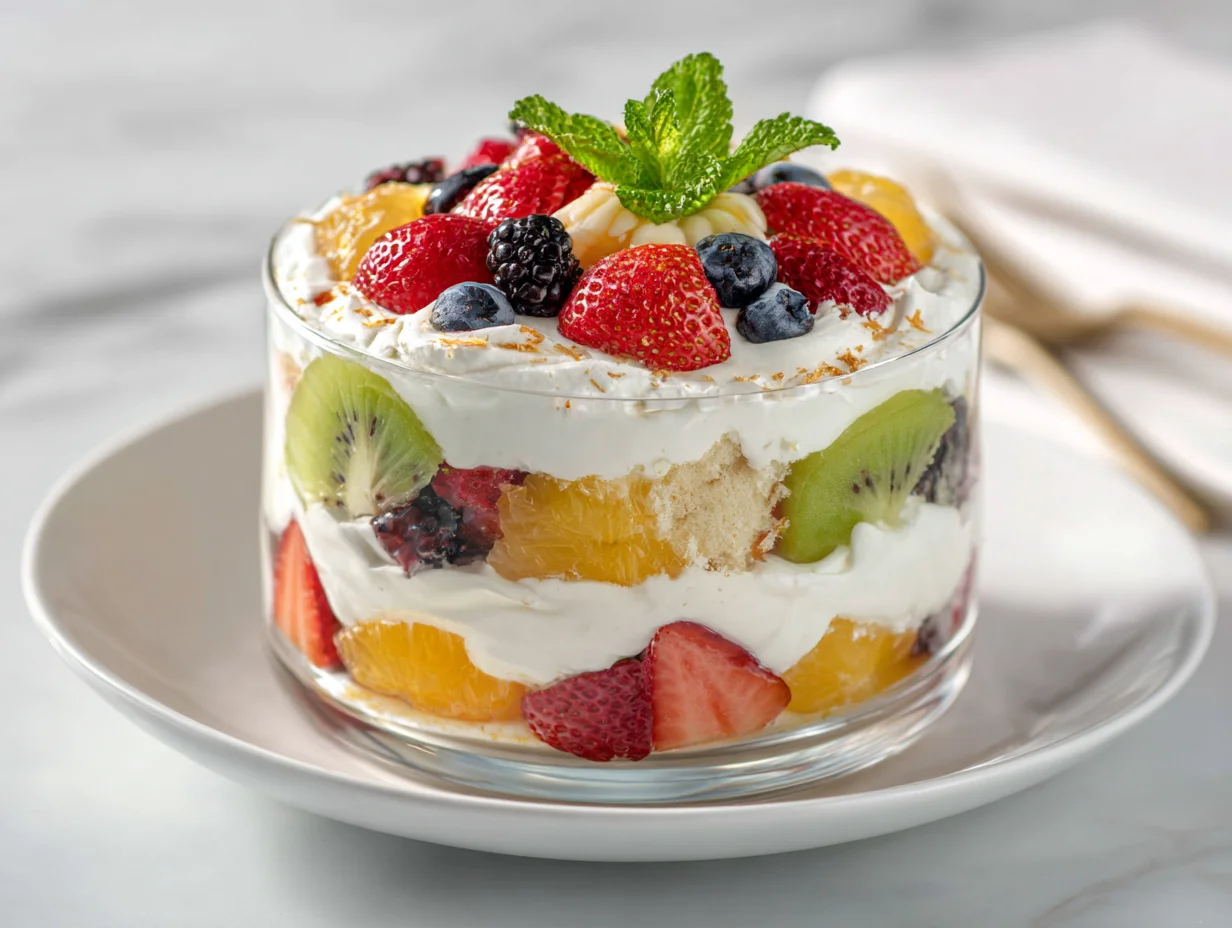
Fruit trifles are the epitome of elegance in a dessert glass—layers of moist sponge, luscious cream, and vibrant fruits that excite both the eyes and the palate. Perfect for dinner parties, festive occasions, or a simple family treat, this recipe elevates a classic dessert into a show-stopping delight. Every spoonful offers a delicate balance of sweetness, creaminess, and freshness, leaving a memorable impression on anyone who tastes it.
What sets a perfect fruit trifle apart is not just the ingredients but the precision in layering. Achieving the ideal harmony of textures—from soft sponge to airy cream to crisp, juicy fruit—requires understanding a few subtle techniques that even seasoned home chefs sometimes overlook. This guide will walk you through each step, ensuring your trifle is visually stunning, decadent, and utterly irresistible.
Beyond taste, a homemade fruit trifle offers flexibility. You can customize the cake base, choose seasonal fruits, and adjust sweetness to suit your preference. Whether it’s a summer berry medley or tropical fruit infusion, this recipe allows you to experiment while guaranteeing consistent, impressive results every time.
Common Mistake in Fruit Trifle Preparation
One of the most frequent mistakes when making a fruit trifle is over-soaking the cake or sponge layers. Many cooks believe saturating the sponge with juice or sherry enhances flavor, but excessive soaking leads to a soggy, unstructured dessert that lacks the clean, layered appearance that makes trifles so appealing.
Another error is uneven layering of cream and fruit. Overfilling or spreading uneven layers causes the dessert to collapse, and the flavors blend improperly instead of giving distinct, harmonious bites. This can ruin both presentation and eating experience.
Additionally, using overly watery fruits can result in excess liquid pooling at the bottom, making it messy and difficult to serve. Fruits like melons or citrus segments need careful draining or light maceration to prevent this issue.
Finally, rushing assembly without chilling components beforehand often produces a trifle that is too soft to hold its shape. The cream may not set properly, and the layers may merge, losing the visual appeal that is characteristic of this dessert.
How to Avoid Common Mistakes in Fruit Trifle
To prevent over-soaking, lightly drizzle sponge layers instead of pouring liquid, ensuring they remain moist but firm. Measure carefully and let each layer absorb gradually.
Always layer ingredients evenly. Use a spatula to gently spread creams and fruits, maintaining consistent thickness to keep each bite balanced. Patience is key—rushing can compromise both structure and taste.
Select fruits wisely. Drain juicy fruits or macerate them in small amounts of sugar to draw out excess liquid. This prevents the dessert from becoming watery while enhancing natural flavors.
Chill components separately before assembly. Cold cream holds its shape better, and pre-chilled cake maintains texture. Layering in this order ensures a neat, visually appealing trifle that stands up to serving.
Ingredients You’ll Need
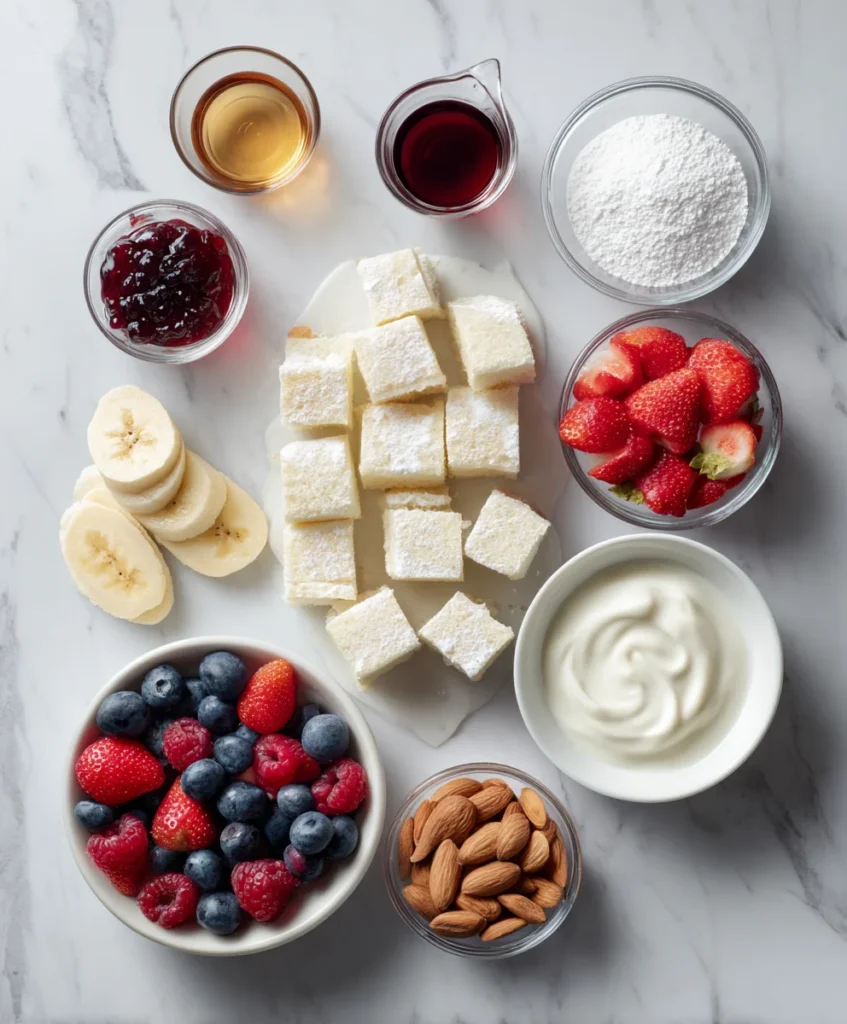
Base Ingredients
- 200g sponge cake, cut into cubes
- 250ml heavy cream
- 2 tbsp powdered sugar
- 1 tsp vanilla extract
- 100ml fruit juice or sherry (optional)
Optional Add-ins
- 150g mixed berries (strawberries, blueberries, raspberries)
- 1 banana, sliced
- 50g toasted almonds or nuts
- 2 tbsp fruit preserves or jelly
Step-by-Step Instructions
Step 1: Prepare the Cream
Whip the heavy cream with powdered sugar and vanilla extract until soft peaks form. Avoid over-whipping, which can turn the cream grainy. Set aside in the fridge for at least 15 minutes before assembling layers to ensure firmness and a stable texture.
Step 2: Cut and Lightly Soak the Cake
Cut sponge cake into uniform cubes. Lightly drizzle with fruit juice or sherry, just enough to add flavor without sogginess. Let cubes absorb the liquid for a minute, then place the first layer at the bottom of your serving dish, forming a solid foundation for subsequent layers.
Step 3: Layer Fruits and Cream
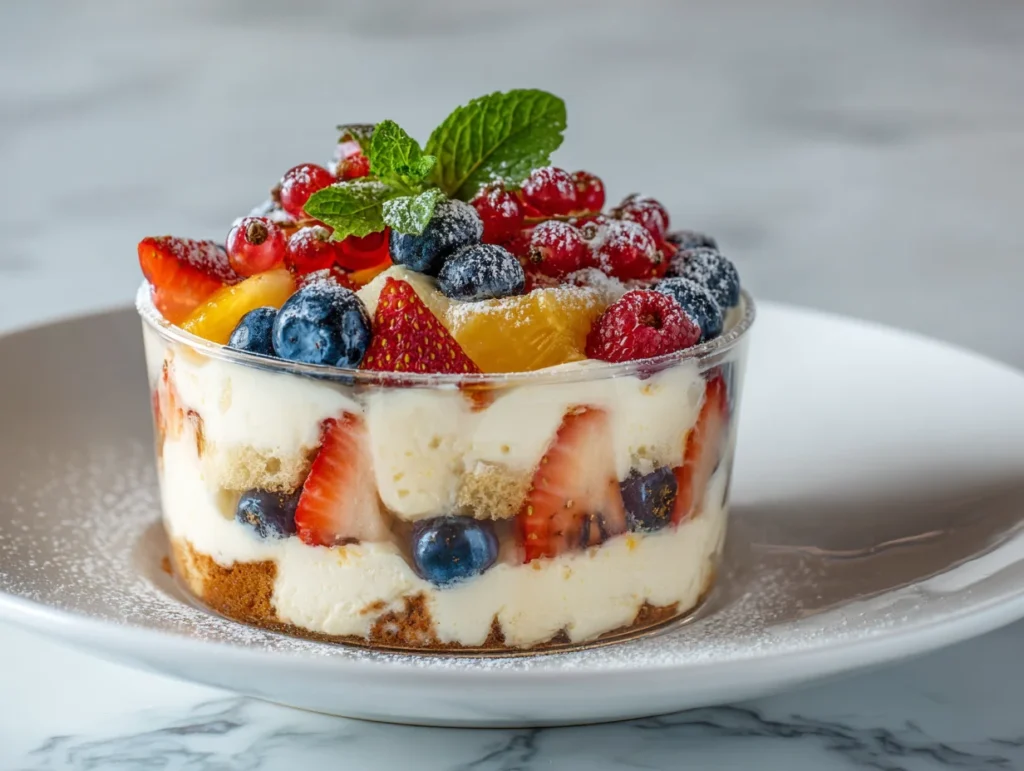
Spread a portion of the whipped cream evenly over the sponge. Add a layer of prepared fruits, arranging them to display vibrant colors. Alternate layers of sponge, cream, and fruit until the dish is full, keeping layers consistent in thickness for visual appeal.
Step 4: Garnish and Chill
Finish the trifle with a final layer of cream. Garnish with sliced fruits, berries, or nuts. Cover the dish and refrigerate for at least 2–3 hours before serving to allow flavors to meld and layers to set properly.
Cook Time
Total: 20 minutes prep + 2–3 hours chilling
Prep: 20 minutes
Bake: optional (if making sponge cake from scratch) 25–30 minutes
Servings
This recipe serves 6–8 people, making it perfect for family gatherings, dinner parties, or festive occasions. The layers are generous, offering a decadent yet balanced portion in each serving.
The modular nature of trifles allows for scalability—double the recipe for a larger crowd or create individual portions in small glasses for a sophisticated presentation.
It’s ideal for those seeking a visually stunning dessert that combines fresh, wholesome ingredients with indulgent cream and soft sponge layers. Each serving is a balanced combination of flavors and textures, sure to delight guests and family alike.
Makes approximately 6–8 servings
Nutritional Information (approx. per serving)
- Calories: 250–280 kcal
- Protein: 4g
- Fat: 15g
- Carbohydrates: 30g
- Fiber: 2g
Benefits
Fruit trifle incorporates fresh fruits, providing antioxidants, vitamins, and dietary fiber. It delivers moderate protein from cream and cake, balancing indulgence with nutrition.
By controlling sugar content and portion size, trifles can be a healthier dessert choice without compromising on flavor.
The variety of fruits and optional nuts adds essential nutrients, making it a dessert that nourishes as well as delights.
Storage Instructions
Store leftover trifle in an airtight container in the refrigerator to maintain freshness. Avoid leaving it at room temperature for long periods, as the cream may spoil quickly.
Consume within 2–3 days for optimal flavor and texture. Beyond this, the sponge may absorb too much moisture, and fruits may become watery.
If storing individual servings, cover each glass or dish with plastic wrap to prevent odor absorption and maintain presentation quality.
Do not freeze the trifle, as cream layers separate and fruits lose texture, affecting both taste and appearance.
Suggestions
Experiment with seasonal fruits for variety—berries in summer, stone fruits in spring, or citrus in winter.
For added depth, drizzle a light custard or fruit syrup between layers.
Use flavored sponge cakes or alternative creams, such as mascarpone or yogurt-based cream, for creative twists.
Top with toasted nuts or chocolate shavings to enhance flavor and add textural contrast to the creamy, fruity layers.
Seasonal Relevance
Fruit trifle is highly versatile and works year-round. Summer fruits like berries, peaches, or mangoes make it light and refreshing.
Autumn fruits such as apples and pears can be paired with spices for a seasonal twist.
Winter versions can incorporate citrus fruits and pomegranate, adding brightness and festive appeal.
Spring trifles benefit from soft fruits like strawberries and kiwis, giving a fresh, colorful presentation perfect for celebrations.
Final Words
A well-made fruit trifle combines artistry, technique, and flavor. Proper layering ensures it not only tastes amazing but looks spectacular.
By selecting quality ingredients and taking care in preparation, even a beginner can create a dessert worthy of professional presentation.
The beauty of a fruit trifle is its adaptability—it can be tailored to suit dietary preferences, seasonal fruits, and occasion themes.
With attention to detail and patience, your fruit trifle becomes a centerpiece dessert that impresses visually and satisfies every palate.
Frequently Asked Questions
Can I make fruit trifle ahead of time?
Yes, fruit trifle can be assembled a few hours in advance and stored in the fridge. Chilling allows flavors to meld and layers to set. Serve within 2–3 days for best texture and freshness.
What type of cake is best for a trifle?
Sponge cake or pound cake works best. They are light, absorb flavors without becoming soggy, and support layered cream and fruits effectively.
Can I use frozen fruits in a trifle?
Yes, but thaw and drain frozen fruits before layering. This prevents excess liquid, which can make the trifle watery and affect texture.
Is there a non-dairy option for the cream?
Absolutely. Use coconut cream or almond-based whipped cream to create a rich, dairy-free alternative without compromising flavor.
How can I make individual servings of trifle?
Use small glass cups or jars. Layer sponge, cream, and fruit in the same order. This allows for elegant presentation and portion control, ideal for parties or gatherings.
