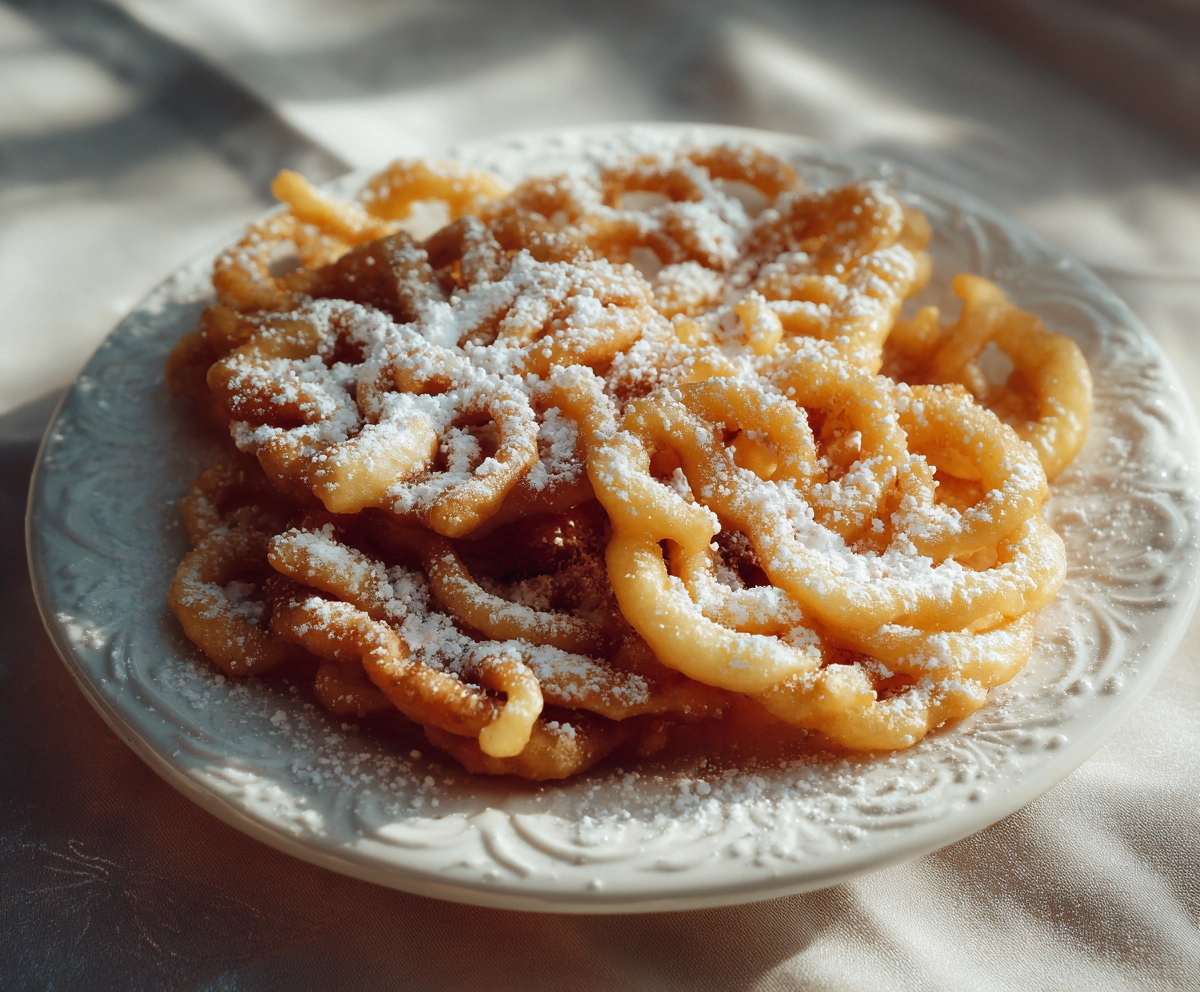
Funnel Cakes Crispy Fair Style Treat
Funnel cakes have always held a special place in my kitchen because they capture that fairground excitement in the simplest way. The moment batter touches hot oil and forms those delicate golden strands, the entire process feels rewarding. Over the years, I have tested different methods to achieve the perfect balance between crisp edges and a soft, airy center. A well made funnel cake should never feel heavy or greasy. It should be light, structured, and beautifully crisp with every bite. With the right technique, consistent heat, and a smooth batter, recreating that authentic fair style treat at home becomes surprisingly simple. Every step matters, and once you understand the small details, the results become consistent and impressive every single time.
Where Most Funnel Cakes Go Wrong
From my experience, the most common issue comes down to oil temperature and batter consistency. Many times, I have seen funnel cakes turn out heavy because the oil was not hot enough. When that happens, the batter absorbs oil instead of crisping up quickly. Another mistake is pouring batter too thick, which prevents the center from cooking properly. I have also noticed that overmixing the batter creates a dense texture, which takes away that light structure everyone expects. Timing plays a role as well. Leaving the cake too long in oil darkens the outside while the inside remains undercooked. Each of these small mistakes can completely change the final result, making the difference between a crisp, fair style treat and something that feels disappointing.
How I Fix Texture for Perfect Crisp Results
Getting the perfect funnel cake comes down to control and balance. I always make sure the oil stays at a steady medium high temperature so the batter cooks quickly and forms a crisp outer layer. The batter itself should flow smoothly without being too thick or too thin. I mix it just enough to combine the ingredients while keeping it light. When pouring, I move in a steady circular motion to create thin overlapping strands. This allows even cooking and keeps the texture airy. Flipping at the right time ensures both sides develop that golden finish. Once removed, I let it rest briefly on paper towels to remove excess oil. These small adjustments consistently give me a light, crisp funnel cake that feels close to what you would expect at a fair.
Ingredients List
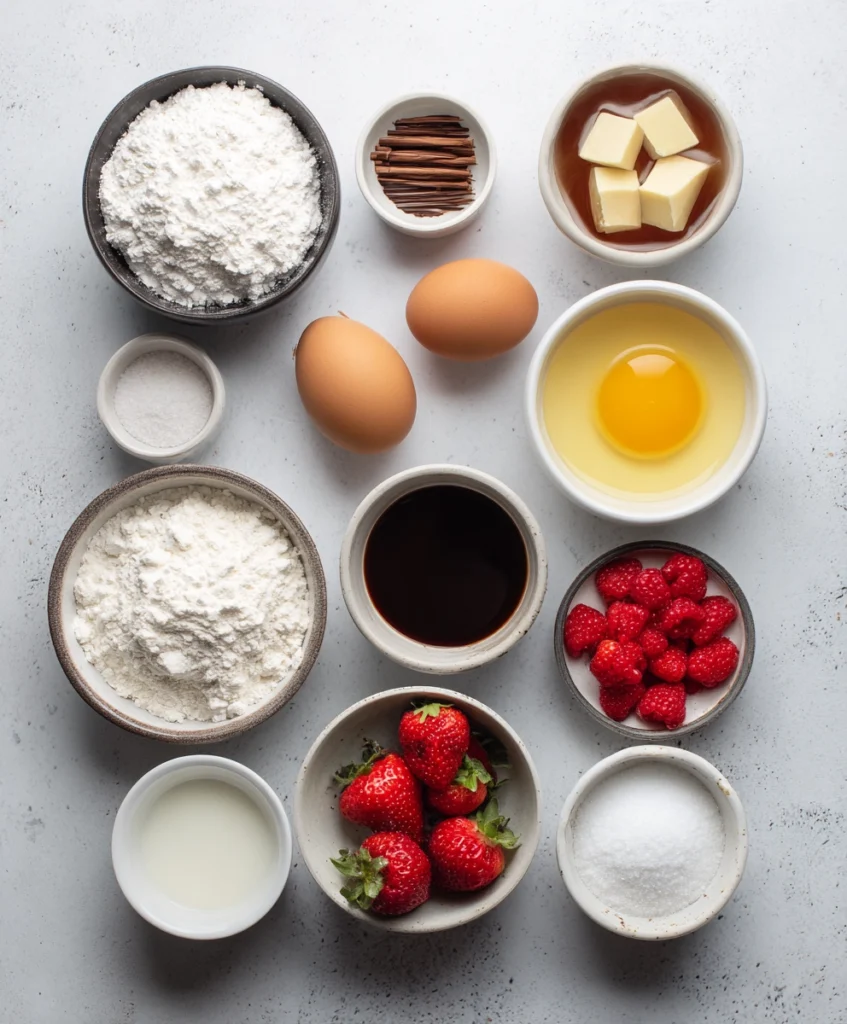
Base Ingredients:
- 2 cups all purpose flour
- 2 tablespoons sugar
- 1 teaspoon baking powder
- 1/2 teaspoon salt
- 2 large eggs
- 1 1/2 cups milk
- 1 teaspoon vanilla extract
- Oil for frying
Optional Add-ins:
- Powdered sugar for topping
- Cinnamon sugar
- Chocolate drizzle
- Caramel sauce
- Fresh berries
Step-by-Step Instructions
Prepare the Batter
I start by combining the dry ingredients in a large bowl and whisking them evenly. In another bowl, I mix eggs, milk, and vanilla until smooth. Slowly, I bring the wet mixture into the dry ingredients while stirring gently. I never overmix at this stage because it affects the final texture. The batter should feel smooth and flow easily, similar to a slightly thick liquid. Letting it rest for a few minutes helps everything settle and improves the structure during frying. A properly prepared batter always gives me better control when pouring and creates even strands that cook beautifully.
Heat the Oil
Heating the oil correctly is one of the most important steps I focus on. I use a deep pan and bring the oil to a steady medium high temperature. To check readiness, I drop a small amount of batter into the oil. If it rises quickly and begins to cook, the oil is ready. Keeping the temperature stable is key because sudden drops can ruin the texture. If the oil is too hot, it burns quickly. If it is too cool, the cake becomes oily. Maintaining that balance allows every funnel cake to cook evenly and develop a golden crisp surface.
Shape and Fry the Funnel Cake
When shaping the funnel cake, I pour the batter in a circular motion, starting from the center and moving outward. I keep the flow steady so the strands remain thin and even. Overlapping slightly creates that classic pattern. I let one side cook until it turns golden before flipping it carefully. Giving enough space in the pan helps maintain the oil temperature and prevents sticking. Each cake should have enough room to expand and cook evenly. This step is where the structure forms, and with practice, it becomes easier to control the shape and consistency every time.
Drain and Finish
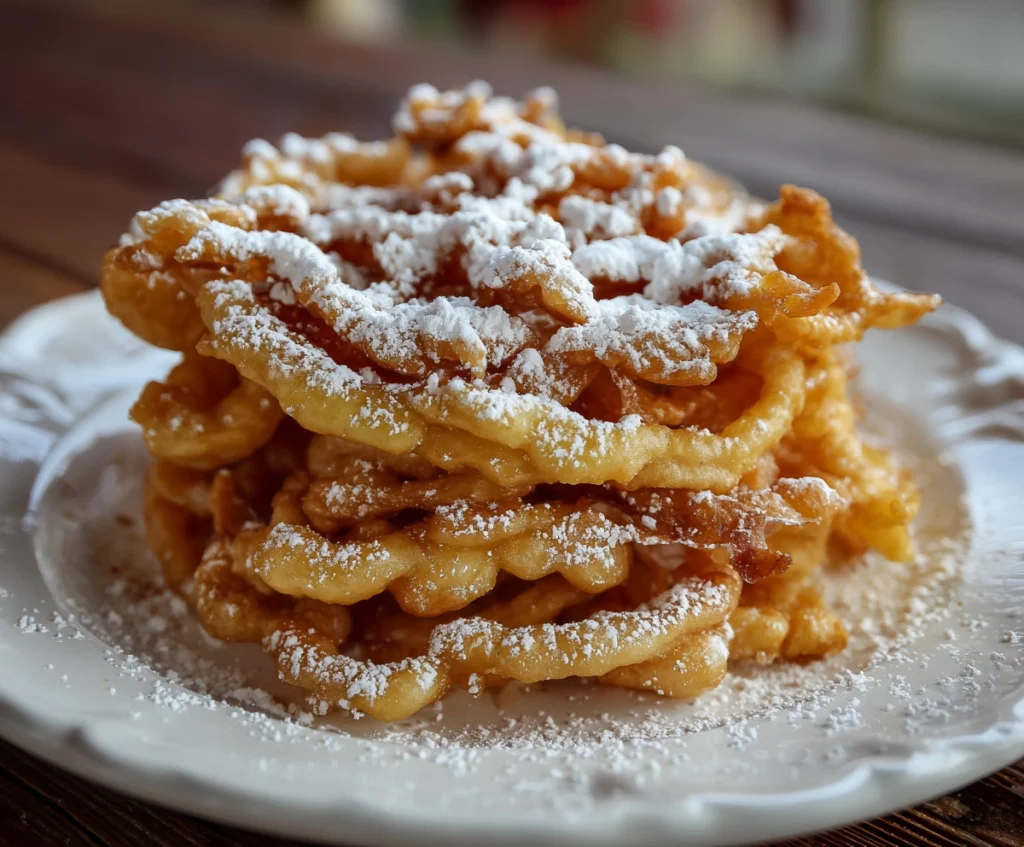
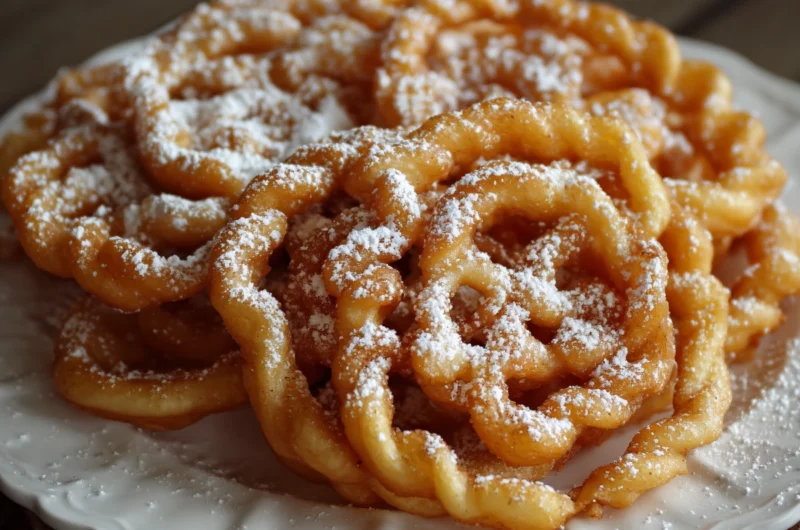
After frying, I remove the funnel cake and place it on paper towels to drain. This step helps remove excess oil and keeps the texture clean. I let it rest briefly before transferring it to a plate. A generous dusting of powdered sugar gives it that classic look and enhances the overall experience. Sometimes I add simple toppings, but I often keep it plain to highlight the crisp texture. Serving it warm always makes a difference, as the contrast between crisp edges and soft interior is at its best right after frying.
Cook Time
Total: 20 minutes
Prep: 10 minutes
Bake: 10 minutes
Servings
When I prepare funnel cakes, I usually aim for balanced portions that keep the texture at its best. From this recipe, I typically get around four medium sized cakes. The size can vary depending on how I pour the batter, but I prefer keeping them moderate so they cook evenly. Serving them fresh always gives the best result, especially when they are still warm and crisp. Larger portions can sometimes lose their structure as they cool, so I find smaller, well shaped cakes work better. Presentation also plays a role, and I like serving them immediately with a light topping. Makes approximately 4 servings.
Nutritional Information (approx. per serving)
- Calories: 280 to 320 kcal
- Carbohydrates: 35 g
- Protein: 6 g
- Fat: 12 g
- Sugar: 10 g
From my perspective, funnel cakes are meant to be enjoyed as an occasional treat rather than an everyday option. They provide quick energy due to their carbohydrate content, which makes them satisfying in small portions. The eggs and milk add some nutritional value, while the frying process contributes to richness. I always recommend enjoying them fresh and in moderation. Pairing them with lighter toppings such as fruit can create a more balanced experience. Keeping portions controlled allows you to enjoy the texture and taste without going overboard.
Storage Instructions
In my kitchen, I always prefer serving funnel cakes fresh because that is when they taste best. If I need to store them, I let them cool completely before placing them in an airtight container. Keeping them at room temperature for a short time works better than refrigeration, as cold storage affects the texture. When reheating, I use an oven instead of a microwave because it helps bring back some crispness. I avoid stacking too many pieces together since moisture can build up and soften them. While they can be stored for a short period, freshly made funnel cakes always deliver the best result in terms of texture and overall quality.
Suggestions
Over time, I have found that keeping funnel cakes simple often gives the best experience. Powdered sugar remains my go to topping because it highlights the crisp texture without overpowering it. For variation, I sometimes add fresh fruit or a light drizzle of chocolate. Serving them with ice cream creates a contrast that works well for gatherings. I also recommend preparing small batches instead of making too many at once, as it helps maintain quality. Paying attention to batter consistency and oil temperature makes a noticeable difference. With these small adjustments, the results stay consistent and enjoyable every time.
Seasonal Relevance
Funnel cakes remind me of outdoor fairs and summer evenings, but I enjoy making them throughout the year. In warmer months, they bring that lively, festive feeling into any gathering. During cooler seasons, serving them warm creates a comforting experience that fits perfectly with indoor occasions. I often adjust toppings based on the time of year, using fresh fruits in summer and warm sauces in winter. Their versatility makes them suitable for different occasions, from casual treats to celebrations. No matter the season, the key remains the same, keeping them fresh, crisp, and served at the right moment.
Conclusion
From my experience, funnel cakes are one of those recipes where simple ingredients come together to create something memorable. The process becomes easier with practice, and small details make a big difference in the final result. Maintaining proper heat, using the right batter consistency, and serving them fresh are the factors I always focus on. Once these basics are in place, the outcome stays consistent. Making funnel cakes at home brings a sense of satisfaction, especially when the texture turns out just right. With the right approach, they become a reliable and enjoyable treat that feels both classic and rewarding.
Frequently Asked Questions
What is the best way to pour batter without a funnel?
I usually use a squeeze bottle because it gives better control and makes shaping easier. A piping bag also works well. The goal is to create thin, even strands that cook quickly and hold their structure properly in hot oil.
Why does my funnel cake turn dark too quickly?
When the oil is too hot, the outside cooks faster than the inside. I always monitor the temperature closely and adjust the heat as needed. Keeping the oil steady ensures even cooking and prevents burning.
Can I make funnel cakes without eggs?
Yes, it is possible to use substitutes like milk and a small amount of baking powder adjustment. The texture may differ slightly, but it still works. I recommend testing small batches to get the right consistency.
How do I keep funnel cakes crispy after frying?
I place them on paper towels immediately after frying to remove excess oil. Serving them right away also helps maintain crispness. If they sit too long, they naturally soften due to moisture in the air.
Is it possible to bake funnel cakes instead of frying?
Baking does not give the same texture as frying because the crisp outer layer forms differently in oil. While it can be attempted, the result will not match the traditional structure and lightness of a classic funnel cake.
Funnel Cakes Crispy Fair Style Treat
4
servings10
minutes10
minutes1100
kcal20
minutesFunnel Cakes Crispy Fair Style Treat delivers a light, golden dessert with crisp edges and a soft interior that recreates the classic fair experience at home. Made with simple pantry ingredients, the batter fries into delicate strands that hold their structure while staying airy. Perfect for quick desserts, gatherings, or special treats, this recipe focuses on balanced texture and consistent results.
Ingredients
2 cups all purpose flour
2 tablespoons sugar
1 teaspoon baking powder
1/2 teaspoon salt
2 large eggs
1 1/2 cups milk
1 teaspoon vanilla extract
Oil for frying
- Optional
Powdered sugar
Cinnamon sugar
Chocolate drizzle
Caramel sauce
Fresh berries
Directions
- In a large bowl, whisk together flour, sugar, baking powder, and salt until evenly combined. In another bowl, mix eggs, milk, and vanilla extract until smooth. Gradually add the wet mixture into the dry ingredients while stirring gently to form a smooth batter without overmixing.
- Heat oil in a deep pan over medium high heat until ready for frying. Test by dropping a small amount of batter into the oil. If it rises and sizzles, the oil is ready.
- Pour batter into a funnel or squeeze bottle and drizzle into hot oil in a circular motion, creating overlapping strands. Fry until golden on one side, then flip carefully and cook the other side until evenly browned.
- Remove from oil and place on paper towels to drain excess oil. Transfer to a plate, dust with powdered sugar, and serve warm for best texture.
Recipe Video
Notes
- Maintain consistent oil temperature to avoid oily texture.
- Do not overmix batter to keep it light and airy.
- Serve immediately for best crispness.
- Use a squeeze bottle for better control while shaping.