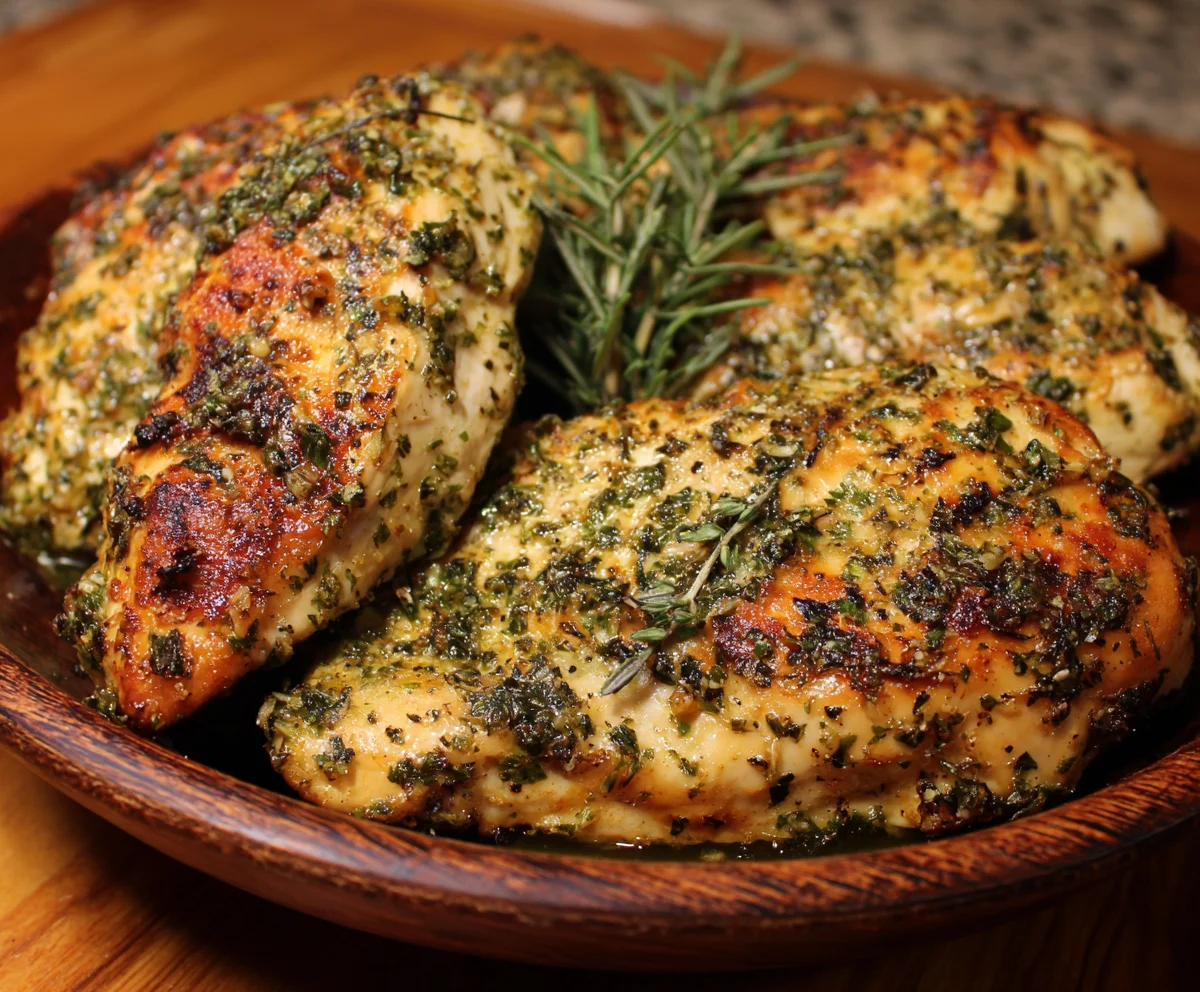
Perfect garlic herb chicken is not about overpowering seasoning—it’s about balance, control, and technique. When properly executed, garlic becomes sweet and aromatic, herbs remain vibrant, and the chicken stays impossibly juicy beneath a golden crust. This recipe reflects professional kitchen discipline: deliberate seasoning, precise heat management, and a finish that elevates simple ingredients into something refined and memorable.
Ingredients List
- 4 boneless, skinless chicken breasts (or thighs)
- 4 cloves garlic, finely minced
- 2 tbsp fresh rosemary, chopped
- 1 tbsp fresh thyme leaves
- 2 tbsp fresh parsley, chopped (plus extra for garnish)
- 3 tbsp extra virgin olive oil
- 2 tbsp unsalted butter
- 1 tsp sea salt (adjust to taste)
- ½ tsp freshly ground black pepper
- ½ tsp paprika
- 1 tbsp fresh lemon juice
- Zest of ½ lemon
Step-by-Step Instructions
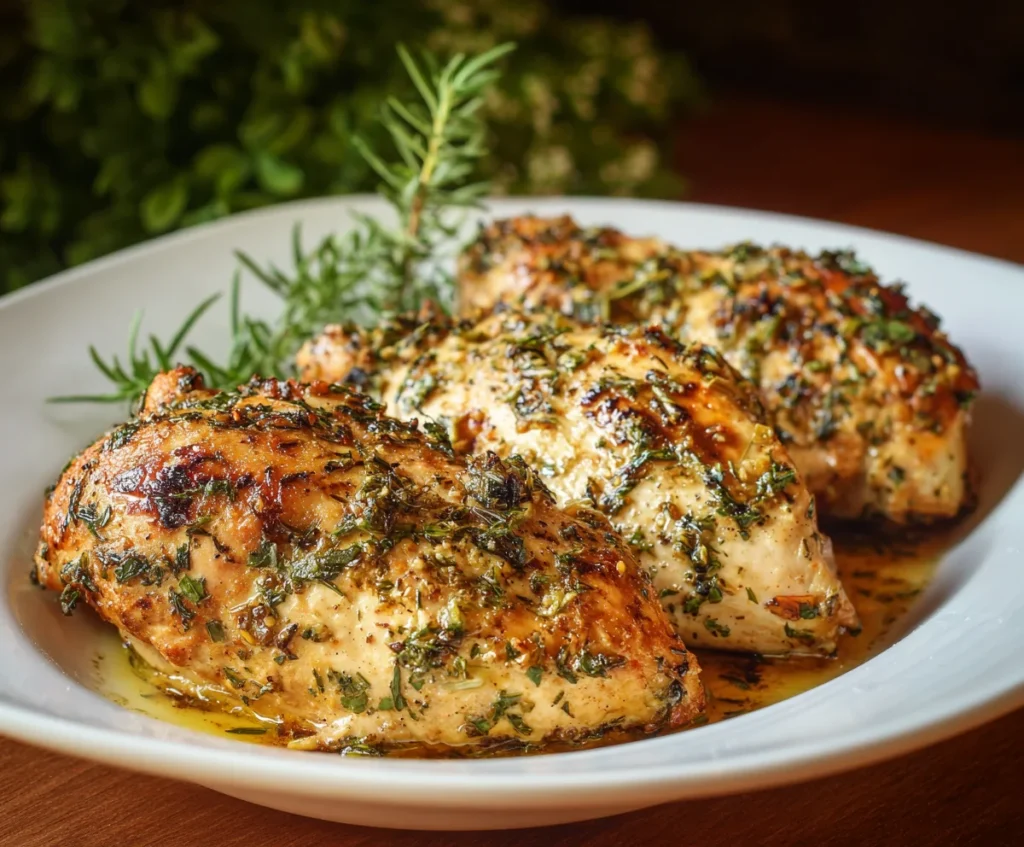
1. Prepare the Chicken Properly
Pat the chicken completely dry with paper towels. Moisture is the enemy of browning. Lightly pound thicker sections for even thickness—this ensures uniform cooking.
2. Season with Intention
In a small bowl, combine salt, pepper, paprika, rosemary, thyme, and lemon zest. Rub evenly over both sides of the chicken. Let rest at room temperature for 15 minutes to allow surface seasoning to penetrate.
3. Build the Sear
Heat olive oil in a heavy skillet over medium-high heat. When shimmering—but not smoking—place the chicken presentation-side down. Do not move it. Sear for 4–5 minutes until a golden crust forms.
4. Control the Heat
Flip the chicken and reduce heat to medium. Add butter and minced garlic to the pan. Tilt slightly and spoon the melted garlic butter over the chicken repeatedly. This basting technique enhances moisture and flavor depth.
5. Finish with Precision
Cook until internal temperature reaches 165°F (74°C). In the final minute, add lemon juice to brighten the pan sauce. Rest the chicken for 5 minutes before slicing to retain juices.
6. Garnish and Serve
Sprinkle fresh parsley over the top and spoon remaining herb butter from the pan before serving.
Cook Time
- Preparation Time: 15 minutes
- Cooking Time: 12–15 minutes
- Total Time: Approximately 30 minutes
Servings
Serves 4
Nutritional Information (approx. per serving)
- Calories: 380 kcal
- Protein: 38 g
- Fat: 24 g
- Carbohydrates: 2 g
- Fiber: 0 g
- Sugar: <1 g
Values vary depending on cut and portion size.
Storage Instructions
- Refrigerator: Store in an airtight container for up to 4 days.
- Freezer: Wrap tightly and freeze for up to 2 months.
- Reheating: Reheat gently in a covered skillet with a splash of broth or water to prevent drying. Avoid high microwave heat, which toughens protein fibers.
Suggestions
- Serve with roasted seasonal vegetables or a light arugula salad.
- Pair with garlic mashed potatoes or herbed rice for a more substantial meal.
- Slice thin and use in wraps, grain bowls, or protein-focused lunch plates.
- Add a splash of white wine to the pan before butter for a more layered sauce.
Seasonal Relevance
This dish transitions seamlessly through the seasons. In spring and summer, its bright lemon and fresh herb notes feel light and vibrant. In autumn and winter, the butter-basted richness provides warmth and comfort without heaviness. Its versatility makes it a year-round kitchen staple.
Conclusion
Garlic herb chicken, when executed with technique and restraint, becomes far more than a simple weeknight protein. It demonstrates how thoughtful seasoning, proper searing, and controlled finishing transform everyday ingredients into a dish worthy of professional kitchens. Master the fundamentals here, and you elevate not only this recipe—but your entire approach to cooking.
FAQs
1. Can I marinate the chicken overnight?
Yes. Combine olive oil, garlic, herbs, and lemon juice and marinate for up to 12 hours. Avoid exceeding that time, as lemon juice can begin to alter the texture.
2. How do I prevent garlic from burning in the pan?
Add garlic after flipping the chicken and reduce heat slightly. Garlic burns quickly at high temperatures, turning bitter.
3. Can I use dried herbs instead of fresh?
Absolutely. Use one-third the quantity of dried herbs compared to fresh, as dried herbs are more concentrated in flavor.