Garlic Shrimp Linguine Recipe
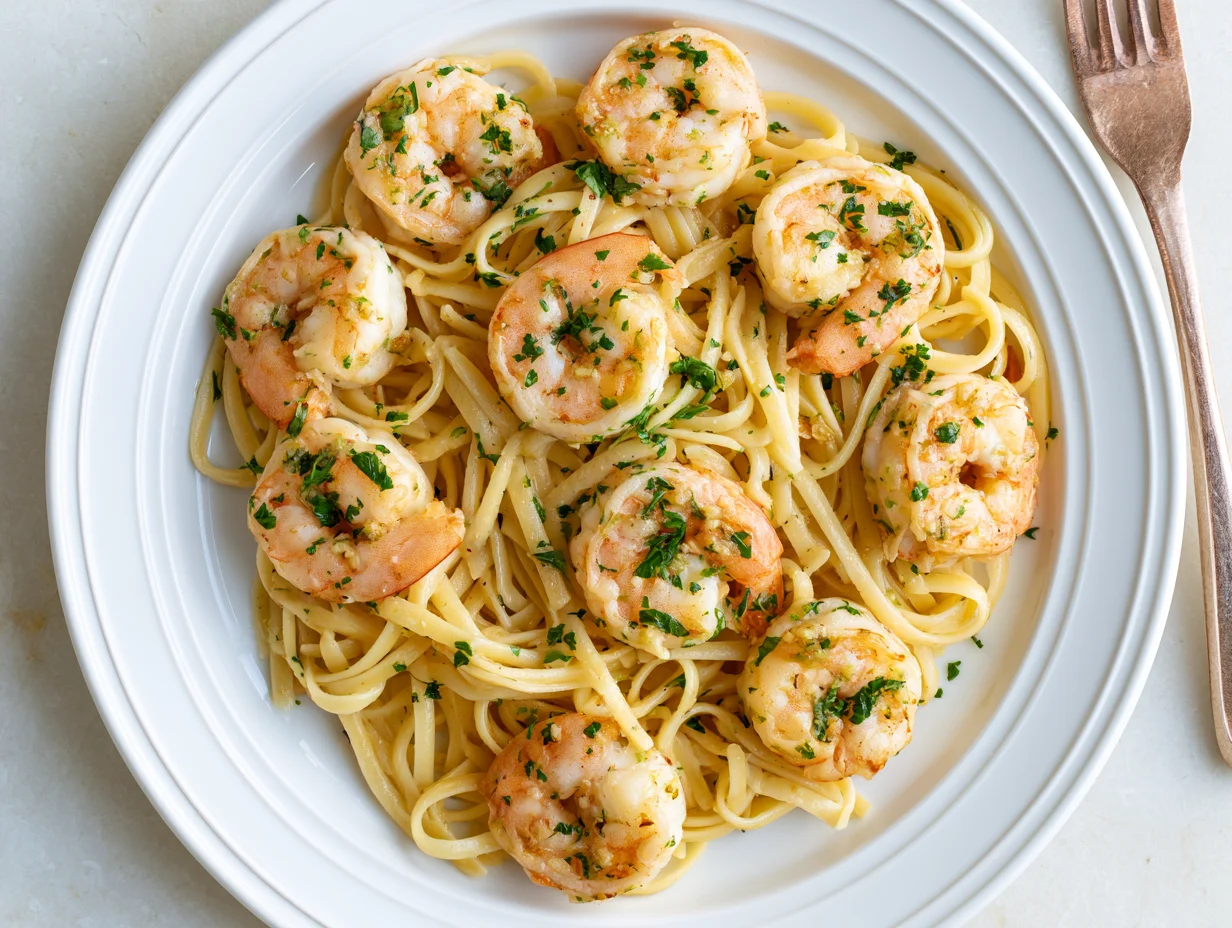
There is a reason garlic shrimp linguine shows up on nearly every Italian-American restaurant menu, and it has nothing to do with complexity. This dish earns its place through pure technique: plump shrimp seared until just pink, a glossy garlic-butter sauce, and strands of linguine that soak up every bit of flavor left in the pan.
What makes this version stand out is the balance. The garlic is toasted, not burned. The butter and olive oil work together instead of competing. A splash of white wine and a squeeze of lemon cut through the richness so the dish never feels heavy, even though it tastes indulgent.
This is the kind of recipe that looks like it took real effort but actually comes together in under thirty minutes. It is forgiving enough for a Tuesday night and polished enough to serve when company is coming over.
If you have ever wanted a restaurant-quality seafood pasta without ordering takeout, this is the recipe to bookmark. Below, you will find exact measurements, clear steps, and the small details that separate good garlic shrimp linguine from great garlic shrimp linguine.
Ingredients You’ll Need
A handful of fresh ingredients is all it takes to turn this dish from ordinary weeknight pasta into something you will want to make on repeat.
Base Ingredients
- 12 oz linguine pasta
- 1 lb large shrimp, peeled and deveined
- 4 tablespoons unsalted butter
- 3 tablespoons olive oil
- 6 cloves garlic, minced
- 1/2 cup dry white wine
- 1/4 cup fresh lemon juice
- 1/4 teaspoon red pepper flakes
- 1/2 teaspoon salt
- 1/4 teaspoon black pepper
- 1/4 cup fresh parsley, chopped
- 1/4 cup grated parmesan cheese
Optional Add-ins
- 1/2 cup cherry tomatoes, halved
- 2 cups baby spinach
- 1/4 cup heavy cream
- 1 teaspoon lemon zest
- 1/4 cup sun-dried tomatoes, chopped
- 2 tablespoons capers
- 1/2 teaspoon smoked paprika
Step-by-Step Instructions

Cook the Linguine
Bring a large pot of salted water to a rolling boil. Add the linguine and cook according to package directions until al dente, usually around 9 to 10 minutes. Reserve 1 cup of pasta water before draining, since this starchy liquid will help bind the sauce later. Drain the pasta and set it aside, tossing it lightly with a drizzle of olive oil so the strands do not stick together while you finish the sauce.
Sear the Shrimp
Pat the shrimp completely dry with a paper towel, then season with salt and pepper. Heat 2 tablespoons of olive oil in a large skillet over medium-high heat until shimmering. Add the shrimp in a single layer, working in batches if needed. Sear for 1 to 2 minutes per side until pink and just opaque. Remove the shrimp immediately and set aside, since overcooking even slightly will turn them rubbery instead of tender.
Build the Garlic Sauce
Lower the heat to medium and add the butter along with the remaining olive oil to the same skillet. Once melted, add the minced garlic and red pepper flakes, stirring constantly for about 45 seconds until fragrant but not browned. Pour in the white wine and let it simmer for 2 to 3 minutes, scraping up any browned bits from the pan. This step builds the deep, savory base that defines the entire dish.
Combine Everything
Stir the lemon juice into the simmering sauce, then return the shrimp to the skillet along with the drained linguine. Toss everything together using tongs, adding splashes of the reserved pasta water until the sauce clings evenly to every strand. Cook for another minute so the pasta absorbs the garlic butter fully. The texture should look glossy, not dry, and not swimming in excess liquid.
Finish and Serve
Remove the skillet from heat and fold in the chopped parsley and grated parmesan. Taste and adjust the seasoning with extra salt, pepper, or lemon juice if needed. Plate immediately while everything is hot, since shrimp pasta loses its best texture as it cools. Finish with an extra sprinkle of parmesan and a few cracks of black pepper right before serving for the best presentation.
Cook Time
Total
30 minutes
Prep
10 minutes
Bake
10 minutes
Servings
This recipe makes approximately 4 generous servings, making it ideal for a family dinner or a small gathering with friends. Each portion lands at a satisfying middle ground: substantial enough to be a complete meal, light enough that a side salad or piece of crusty bread feels like a natural addition rather than an overload.
If you are cooking for two, the recipe halves cleanly without any adjustment to technique. For larger groups, doubling the shrimp and pasta works well, though the garlic sauce should be made in two batches to keep the pan from overcrowding and steaming the shrimp instead of searing it properly.
Plan on roughly 1.5 cups of finished pasta per person if you want to scale the recipe precisely for a dinner party or meal-prep schedule.
Common Mistakes in This Recipe
The most common mistake is overcooking the shrimp. Because they cook so quickly, even an extra minute in the pan turns a tender bite into something tough and chewy. Many home cooks also skip patting the shrimp dry, which leads to steaming instead of searing and prevents that golden color from developing.
Another frequent issue is burning the garlic. Garlic turns bitter within seconds once it browns too far, and that bitterness spreads through the entire sauce. Rushing this step on high heat is the usual culprit.
Overcooking the pasta is another pitfall. Linguine cooked past al dente turns mushy once it sits in a hot sauce, losing the bite that makes the dish satisfying.
Finally, skipping the reserved pasta water often leaves the sauce thin, greasy, or unevenly distributed across the noodles.
Solutions to Common Mistakes
To avoid rubbery shrimp, cook them just until they turn pink and curl slightly, then remove them from heat immediately. They will continue cooking briefly from residual heat, so pulling them a touch early is safer than waiting too long.
For the garlic, keep the heat at medium and stir constantly. Thirty to forty-five seconds is usually enough to release the aroma without crossing into bitterness.
Cook the pasta one minute short of the package instructions, since it will finish cooking briefly once combined with the hot sauce, preserving the right texture.
Always reserve at least a cup of starchy pasta water before draining. Adding it gradually while tossing the pasta helps the sauce emulsify and coat every strand evenly instead of pooling at the bottom of the bowl.
Nutritional Information (approx. per serving)
- Calories: 480 kcal
- Protein: 28g
- Carbohydrates: 48g
- Fat: 18g
- Saturated Fat: 7g
- Cholesterol: 175mg
- Sodium: 520mg
- Fiber: 2g
Shrimp is naturally low in calories while delivering a substantial amount of complete protein, which supports muscle repair and keeps the meal satisfying without excessive heaviness. It also provides selenium and vitamin B12, two nutrients that play a role in metabolic and nervous system function.
Garlic contributes more than flavor here, since it contains allicin, a compound studied for its potential cardiovascular and immune-supporting properties. Cooking it gently helps preserve more of its beneficial compounds compared to high-heat charring.
Olive oil replaces a portion of the saturated fat that heavier cream-based pasta sauces typically rely on, offering monounsaturated fats associated with better heart health markers.
Pairing the dish with a side of greens or a citrus-forward salad rounds out the plate with fiber and antioxidants, balancing the richness of the butter and parmesan.
Storage Instructions
Garlic shrimp linguine is best enjoyed fresh, but leftovers can be stored properly if needed. Transfer cooled pasta to an airtight container and refrigerate for up to 2 days. Because shrimp is delicate, storing it any longer increases the risk of the texture turning rubbery and the flavor becoming dull.
When reheating, use a skillet over low heat with a small splash of water or broth to loosen the sauce. Microwaving works in a pinch, but short intervals with stirring in between help prevent the shrimp from overcooking further.
Freezing is not recommended for this dish. Cream and dairy-based sauces tend to separate once thawed, and shrimp loses much of its texture after time in the freezer, becoming noticeably softer once reheated.
If you anticipate leftovers, consider slightly undercooking the shrimp and pasta during the initial cook, since both will continue softening during storage and reheating.
Suggestions
Serve this dish alongside warm, crusty bread to soak up any extra garlic butter sauce left on the plate, since that sauce is arguably the best part of the entire meal.
A simple arugula salad with lemon vinaigrette adds a peppery contrast that balances the richness of the butter and parmesan without competing for attention.
For wine pairing, a crisp Sauvignon Blanc or unoaked Chardonnay complements the lemon and garlic notes well, mirroring the wine already used in the sauce itself.
If you want to stretch the recipe further, add the optional cherry tomatoes and spinach for extra color, nutrients, and a slightly different flavor profile that still respects the original dish.
Seasonal Relevance
Garlic shrimp linguine works well year-round, but it shines particularly in spring and summer when fresh herbs, lemons, and shrimp are at their best quality and most widely available at seafood counters.
During warmer months, the bright lemon and garlic notes feel especially refreshing, making this an easy choice for outdoor dinners, patio meals, or light summer entertaining without turning on the oven for long stretches.
In cooler seasons, the dish still holds up, especially with the optional heavy cream variation, which adds a slightly richer, more comforting texture suited to fall and winter appetites.
Because shrimp is sold frozen nearly everywhere, this recipe remains accessible regardless of season, making it a reliable option whenever a quick, satisfying seafood pasta is needed.
Final Words
Garlic shrimp linguine proves that a handful of quality ingredients, handled with care, can outperform far more complicated recipes. The technique here is approachable, but the result tastes like something pulled straight from a coastal Italian kitchen.
Once you understand the rhythm of searing shrimp, building a garlic-butter sauce, and tossing it with pasta water, this method becomes second nature and easy to adapt to whatever you have on hand.
This is a recipe worth keeping in regular rotation, not just for special occasions. It comes together fast enough for a weeknight yet feels intentional enough for guests.
Try it once, and the small details, like dry shrimp before searing or reserved pasta water, will make sense immediately in how much they improve the final dish.
Frequently Asked Questions
Can I use frozen shrimp instead of fresh for this recipe?
Yes, frozen shrimp works well as long as it is fully thawed and patted dry before cooking. Excess moisture prevents proper searing, so draining and drying thoroughly is essential for the right texture and color on the shrimp.
What can I substitute for white wine in the sauce?
Low-sodium chicken broth with an extra squeeze of lemon juice works as a non-alcoholic substitute. It will not replicate the exact depth wine provides, but it still creates a flavorful, balanced sauce that pairs well with the garlic and butter.
Why did my sauce turn out greasy instead of creamy?
This usually happens when pasta water is skipped. The starch in reserved pasta water helps emulsify the butter and oil, binding the sauce together. Adding it gradually while tossing the pasta typically resolves a greasy or separated sauce.
Garlic Shrimp Linguine Recipe
4
servings10
minutes20
minutes480
kcal30
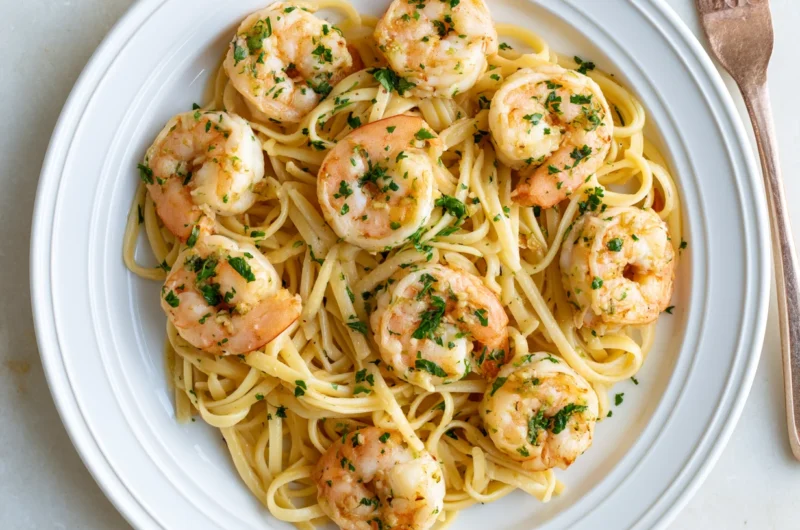
minutesA quick, restaurant-style pasta featuring tender seared shrimp tossed in a glossy garlic-butter white wine sauce with lemon and parmesan. Ready in under 30 minutes, perfect for weeknights or easy entertaining.
Ingredients
Base Ingredients
12 oz linguine pasta
1 lb large shrimp, peeled and deveined
4 tablespoons unsalted butter
3 tablespoons olive oil
6 cloves garlic, minced
1/2 cup dry white wine
1/4 cup fresh lemon juice
1/4 teaspoon red pepper flakes
1/2 teaspoon salt
1/4 teaspoon black pepper
1/4 cup fresh parsley, chopped
1/4 cup grated parmesan cheese
Optional Add-ins
1/2 cup cherry tomatoes, halved
2 cups baby spinach
1/4 cup heavy cream
1 teaspoon lemon zest
1/4 cup sun-dried tomatoes, chopped
2 tablespoons capers
1/2 teaspoon smoked paprika
Directions
- Boil salted water and cook linguine until al dente. Reserve 1 cup pasta water, then drain.
- Pat shrimp dry, season with salt and pepper, and sear 1–2 minutes per side until pink. Remove and set aside.
- Melt butter with olive oil in the same skillet; sauté garlic and red pepper flakes for 45 seconds until fragrant.
- Add white wine, simmer 2–3 minutes, then stir in lemon juice.
- Return shrimp and pasta to the skillet, tossing with reserved pasta water until glossy and well coated.
- Remove from heat, fold in parsley and parmesan, then serve immediately.
Recipe Video
Notes
- Pat shrimp completely dry before searing to avoid steaming instead of browning.
- Cook pasta one minute short of package directions; it finishes cooking in the hot sauce.
- Add reserved pasta water gradually to help the sauce emulsify rather than separate.
- Best eaten fresh; refrigerate leftovers up to 2 days and avoid freezing.
- Swap white wine for chicken broth with extra lemon juice for a non-alcoholic version.