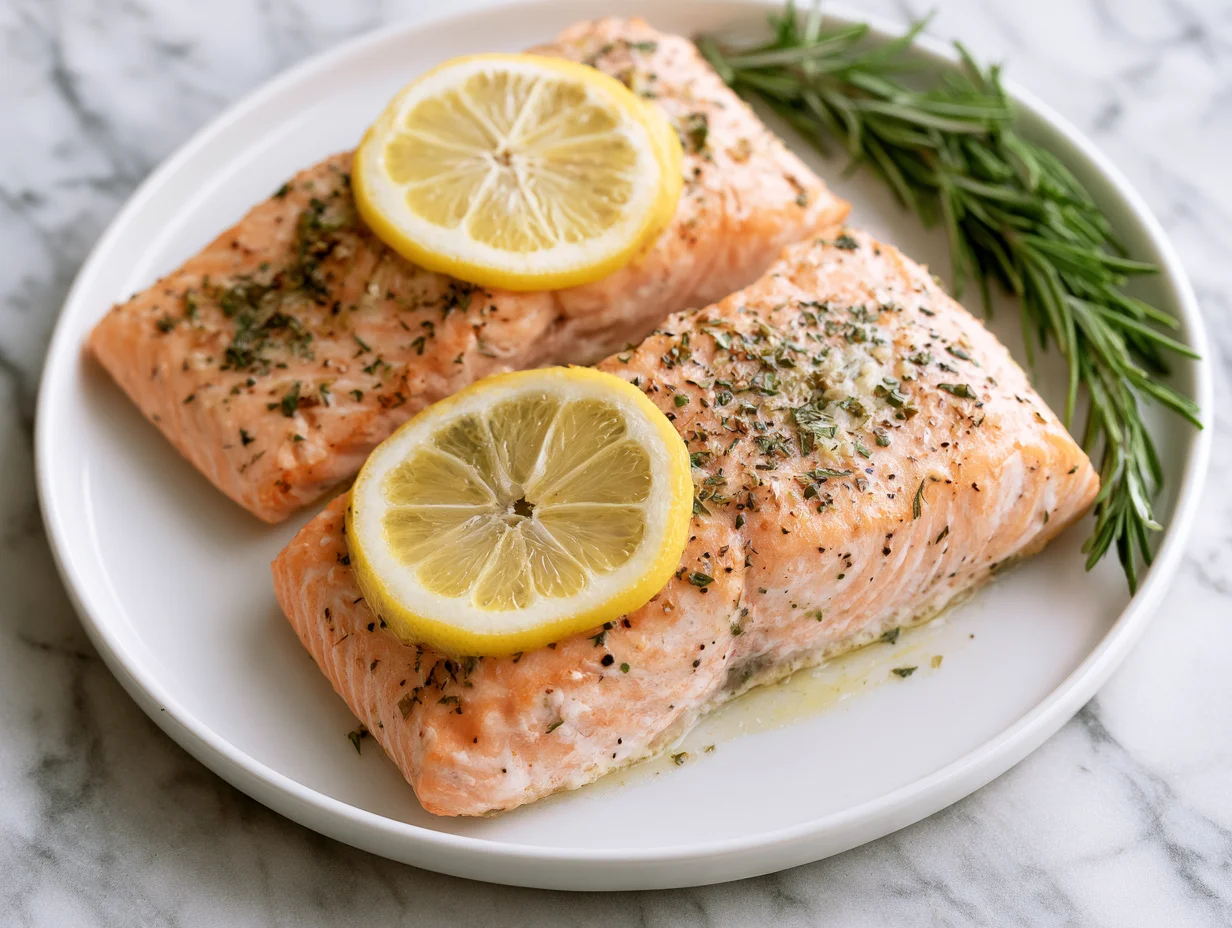
Perfectly baked salmon with lemon is one of the most reliable healthy dinner recipes for busy weeknights and elegant family meals. It combines rich, flaky salmon with bright citrus, garlic, and herbs to create a restaurant-quality seafood dinner that feels both comforting and refined. Whether you are searching for an easy baked salmon recipe, a healthy high-protein dinner, or a quick oven-baked seafood meal, this recipe delivers exceptional flavor with minimal effort.
One reason this lemon baked salmon recipe consistently ranks among the most popular seafood dinners is its balance of simplicity and nutrition. Salmon is naturally rich in omega-3 fatty acids, lean protein, and essential vitamins, making it a smart choice for heart-healthy meal planning and clean eating lifestyles.
The oven-baking method keeps the salmon moist and tender while allowing the lemon butter seasoning to infuse every bite. Unlike pan-frying, baking creates a more even texture and requires less active cooking time, making it ideal for beginner home cooks and experienced food enthusiasts alike.
If you want a premium homemade dinner that looks impressive but requires surprisingly little preparation, this baked salmon with lemon recipe deserves a permanent place in your weekly meal rotation.
Ingredients You’ll Need
One of the reasons professional chefs love this recipe is because it transforms everyday pantry staples into a flavorful gourmet seafood dinner. The ingredients are simple, fresh, and carefully balanced to create a juicy baked salmon recipe with bold yet clean flavors.
Base Ingredients:
- 4 salmon fillets (about 6 ounces each)
- 2 tablespoons olive oil
- 2 tablespoons fresh lemon juice
- 1 teaspoon lemon zest
- 3 garlic cloves, minced
- 1 teaspoon sea salt
- 1/2 teaspoon black pepper
- 1 teaspoon paprika
- 1 teaspoon dried parsley
- 1/2 teaspoon onion powder
- 1 lemon, thinly sliced
- 1 tablespoon unsalted butter
- Fresh parsley for garnish
Optional Add-ins:
- 1/4 teaspoon red pepper flakes
- 1 tablespoon honey
- 1 teaspoon Dijon mustard
- 1 tablespoon grated Parmesan cheese
- 1 teaspoon fresh thyme
- 1 teaspoon fresh dill
- 1/2 teaspoon smoked paprika
Step-by-Step Instructions
Prepare the Salmon for Baking
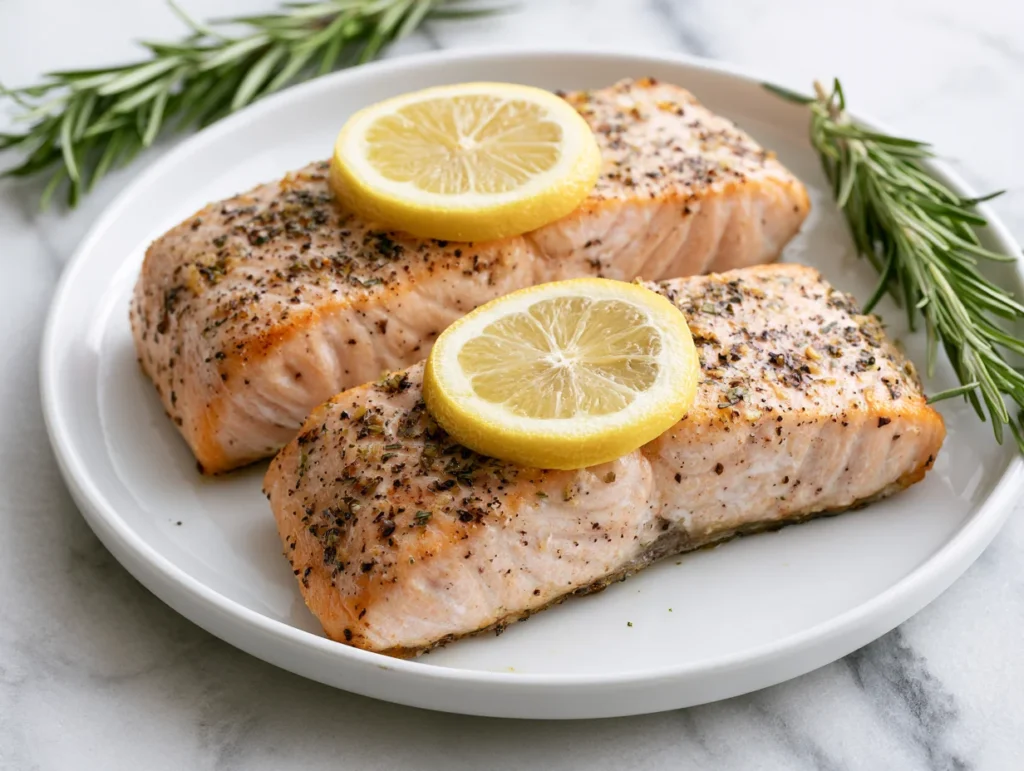
Preheat your oven to 400°F (200°C). Line a baking tray with parchment paper or lightly grease a baking dish to prevent sticking and simplify cleanup. Pat the salmon fillets completely dry using paper towels. Removing excess moisture is essential for achieving the best oven-baked salmon texture.
In a mixing bowl, combine olive oil, lemon juice, lemon zest, garlic, paprika, parsley, onion powder, salt, and black pepper. Brush the seasoning mixture evenly over each salmon fillet, ensuring the surface is fully coated for maximum flavor and moisture retention during baking.
Add Lemon Slices and Flavor Enhancers
Arrange thin lemon slices directly on top of the seasoned salmon fillets. This technique infuses the fish with fresh citrus flavor while helping maintain a juicy texture during cooking. Add small pieces of butter over each fillet to create a silky lemon butter finish.
If you prefer deeper flavor complexity, add honey for subtle sweetness or Dijon mustard for a slightly tangy balance. Red pepper flakes can also provide gentle heat without overwhelming the delicate flavor of the salmon.
Bake Until Tender and Flaky
Transfer the tray to the preheated oven and bake for 12 to 15 minutes depending on the thickness of the salmon. The fish should become opaque and flake easily with a fork when fully cooked.
Avoid overbaking, as salmon continues cooking slightly after removal from the oven. Professional chefs typically remove salmon when the center still appears slightly glossy. This technique preserves moisture and creates the best baked salmon texture.
Garnish and Serve Immediately
Allow the salmon to rest for two minutes after baking. Spoon the warm lemon garlic butter from the pan over the fillets before serving to intensify flavor and maintain moisture.
Garnish with freshly chopped parsley, dill, or extra lemon wedges for a bright presentation. This baked salmon dinner pairs beautifully with roasted vegetables, garlic mashed potatoes, steamed rice, quinoa, or fresh salad recipes.
Cook Time
Total:
Approximately 25 minutes
Prep:
10 minutes
Bake:
12 to 15 minutes
Servings
This recipe makes approximately 4 generous servings, making it ideal for family dinners, healthy meal prep, or elegant seafood entertaining. The portions are filling while remaining balanced and nutritious.
Each serving contains high-quality protein and healthy fats that help create a satisfying meal without feeling overly heavy. This makes the recipe especially popular among readers searching for healthy dinner recipes and clean eating meal ideas.
For larger gatherings, the recipe can easily be doubled using a larger baking tray. Leftover salmon also works exceptionally well in salads, wraps, grain bowls, and protein-packed lunch recipes.
Common Mistakes in This Recipe
Overcooking is the most common mistake when making baked salmon. Even a few extra minutes in the oven can cause the fish to lose moisture and become dry instead of flaky and tender.
Another issue is skipping the step of drying the salmon fillets before seasoning. Excess moisture prevents proper roasting and weakens the flavor concentration of the seasoning blend.
Using bottled lemon juice instead of fresh lemon juice can also reduce the overall quality of the recipe. Fresh citrus creates brighter flavor and enhances the richness of the salmon naturally.
Crowding the baking dish is another frequent mistake. When fillets are packed too closely together, steam develops around the fish instead of allowing proper roasting and caramelization.
Solutions to Common Mistakes
Check the salmon early during baking, especially if the fillets are thin. Removing the fish once it flakes gently with a fork helps maintain moisture and improves texture significantly.
Always pat the salmon dry before seasoning. This simple professional technique allows the olive oil and spices to adhere more evenly while improving oven roasting results.
Use freshly squeezed lemon juice and fresh lemon slices whenever possible. The flavor difference is noticeable and gives the recipe a cleaner, more premium taste.
Arrange the salmon fillets with small gaps between them on the tray. Better airflow promotes even baking and creates a more appealing final texture and appearance.
Nutritional Information (approx. per serving)
- Calories: 360
- Protein: 34g
- Fat: 23g
- Carbohydrates: 3g
- Fiber: 1g
- Sugar: 1g
- Sodium: 520mg
- Omega-3 Fatty Acids: High
- Vitamin D: Excellent source
Salmon is widely recognized as one of the best high-protein seafood choices for balanced nutrition. Its omega-3 fatty acids may support heart health, cognitive function, and overall wellness.
The garlic and lemon used in this recipe contribute natural antioxidants and fresh flavor without relying on processed ingredients or heavy sauces. This makes the dish suitable for clean eating meal plans.
Because this recipe is oven baked instead of fried, it contains less unnecessary oil while maintaining rich flavor and satisfying texture. It’s a practical option for health-conscious readers seeking healthy salmon dinner recipes.
The combination of protein and healthy fats also helps create longer-lasting fullness, making this recipe ideal for nutritious family dinners and meal prep planning.
Storage Instructions
Allow the baked salmon to cool fully before transferring it to storage containers. Storing salmon while still hot can create excess moisture and negatively affect texture.
Place leftovers in an airtight container and refrigerate for up to 3 days. For best results, keep extra lemon slices separate after cooking to maintain balanced flavor during storage.
Reheat gently in a low-temperature oven or covered skillet. Avoid microwaving at high heat because it can quickly dry out the salmon and reduce its tenderness.
This healthy baked salmon recipe also freezes well for future meals. Wrap portions individually and freeze for up to 2 months. Thaw overnight in the refrigerator before reheating.
Suggestions
Serve this baked lemon salmon with roasted asparagus, garlic green beans, or herb-seasoned potatoes for a complete restaurant-style dinner at home.
For a lighter meal, pair the salmon with quinoa salad, steamed vegetables, or cauliflower rice. These sides complement the citrus flavors while supporting healthy eating goals.
Leftover salmon can be transformed into salmon tacos, protein bowls, seafood pasta, or healthy lunch wraps. This versatility increases the overall value of the recipe for meal planning.
To create a premium presentation, garnish the serving platter with fresh herbs, lemon wedges, and cracked black pepper. Small finishing details elevate the visual appeal significantly.
Seasonal Relevance
This baked salmon recipe works exceptionally well throughout the year because its flavors remain both fresh and comforting in every season. The lemon keeps the dish vibrant and balanced.
During spring and summer, pair the salmon with crisp salads, grilled vegetables, or chilled grain bowls for a lighter seafood dinner experience perfect for warm weather.
In colder months, serve it alongside roasted root vegetables, creamy mashed potatoes, or buttery rice pilaf for a more comforting and satisfying family meal.
Because salmon is widely available year-round, this recipe remains practical, dependable, and highly relevant regardless of seasonal ingredient changes or meal trends.
Final Words
Baked salmon with lemon is one of the most dependable healthy seafood recipes for home cooks who want premium flavor without complicated preparation. It combines nutrition, simplicity, and elegant presentation in one dish.
The combination of fresh lemon, garlic, herbs, and butter enhances the natural richness of salmon while keeping the flavor clean, balanced, and restaurant-quality.
This recipe is especially valuable for busy families, professionals, and meal-prep enthusiasts because it requires minimal cooking time while delivering impressive results consistently.
Whether you are searching for the best baked salmon recipe for weeknight dinners or an elegant seafood dish for entertaining guests, this recipe delivers reliable flavor, excellent texture, and long-term versatility.
Frequently Asked Questions
Can I make baked salmon with lemon ahead of time?
Yes, you can season the salmon several hours in advance and refrigerate it covered until ready to bake. Preparing it early helps the flavors absorb more deeply into the fish while making dinner preparation faster and more convenient later.
Which type of salmon works best for baking?
Atlantic salmon, sockeye salmon, and coho salmon all work well for baking. Thicker fillets generally remain juicier during cooking, while wild-caught salmon often provides deeper flavor and firmer texture compared to farm-raised varieties commonly sold in supermarkets.
What temperature should salmon reach when fully cooked?
Salmon is considered fully cooked when the internal temperature reaches 145°F (63°C). However, many professional chefs prefer removing it slightly earlier because residual heat continues cooking the fish while preserving a softer, more tender texture.
