Juicy Chicken Meatball Recipe
Chicken meatballs have a reputation problem. Made carelessly, they turn dry, dense, and disappointing — a far cry from their beef counterparts. This Juicy Chicken Meatball Recipe exists to correct that reputation entirely, delivering tender, flavorful results every single time.
The trick to truly juicy chicken meatballs has very little to do with luck and everything to do with technique. A handful of moisture-retaining ingredients, the right binding ratio, and careful attention to cooking temperature are what separate a forgettable meatball from one you will crave on repeat.
This is also one of the most versatile proteins you can keep in your weekly rotation. These meatballs work in pasta, on subs, over rice, or simply on their own with a good dipping sauce, making them an easy answer to several different dinners throughout the week.
Whether you are meal prepping for busy weekdays, feeding picky eaters, or simply craving something comforting and protein-packed, this recipe delivers tender, juicy chicken meatballs with real flavor in every bite. No dryness, no blandness — just a reliably excellent result.
Ingredients You’ll Need
Good chicken meatballs are a study in balance — enough fat and moisture to stay tender, enough seasoning to stay interesting, and this version gets that balance exactly right.
One of the things I love about this recipe is that it uses simple pantry ingredients. You probably already have most of them in your kitchen.
Base Ingredients:
- 1.5 lbs (680g) ground chicken (preferably not extra lean)
- ½ cup panko breadcrumbs
- ¼ cup whole milk
- 1 large egg
- ¼ cup grated Parmesan cheese
- 3 garlic cloves, minced
- 2 tbsp finely chopped fresh parsley
- 1 tsp dried oregano
- ½ tsp onion powder
- ½ tsp salt
- ¼ tsp black pepper
- 2 tbsp olive oil, for cooking
Optional Add-ins:
- 1 tbsp grated yellow onion
- ½ tsp red pepper flakes
- 1 tbsp Dijon mustard
- 1 tsp lemon zest
- ¼ cup finely diced spinach (well-drained)
- 2 tbsp finely chopped fresh basil
- ¼ tsp smoked paprika
- 1 tbsp grated Pecorino Romano (in addition to or instead of Parmesan)
Step-by-Step Instructions
Step 1: Prepare the Panade
In a small bowl, combine the panko breadcrumbs and whole milk. Stir gently and let the mixture sit for 5 minutes, until the breadcrumbs absorb the liquid and form a thick, paste-like consistency. This mixture, known as a panade, is the single most important step in this recipe. It locks moisture directly into the meatball structure, preventing the dryness that chicken is naturally prone to during cooking.
Step 2: Combine the Mixture
In a large bowl, add the ground chicken, soaked panade, egg, Parmesan cheese, garlic, parsley, oregano, onion powder, salt, and black pepper. Using clean hands, mix gently just until everything is combined. Avoid overworking the mixture, as this compacts the proteins and produces a tough, dense texture rather than a tender one. The mixture should feel slightly sticky and loosely held together, not firm or compressed.
Step 3: Shape the Meatballs
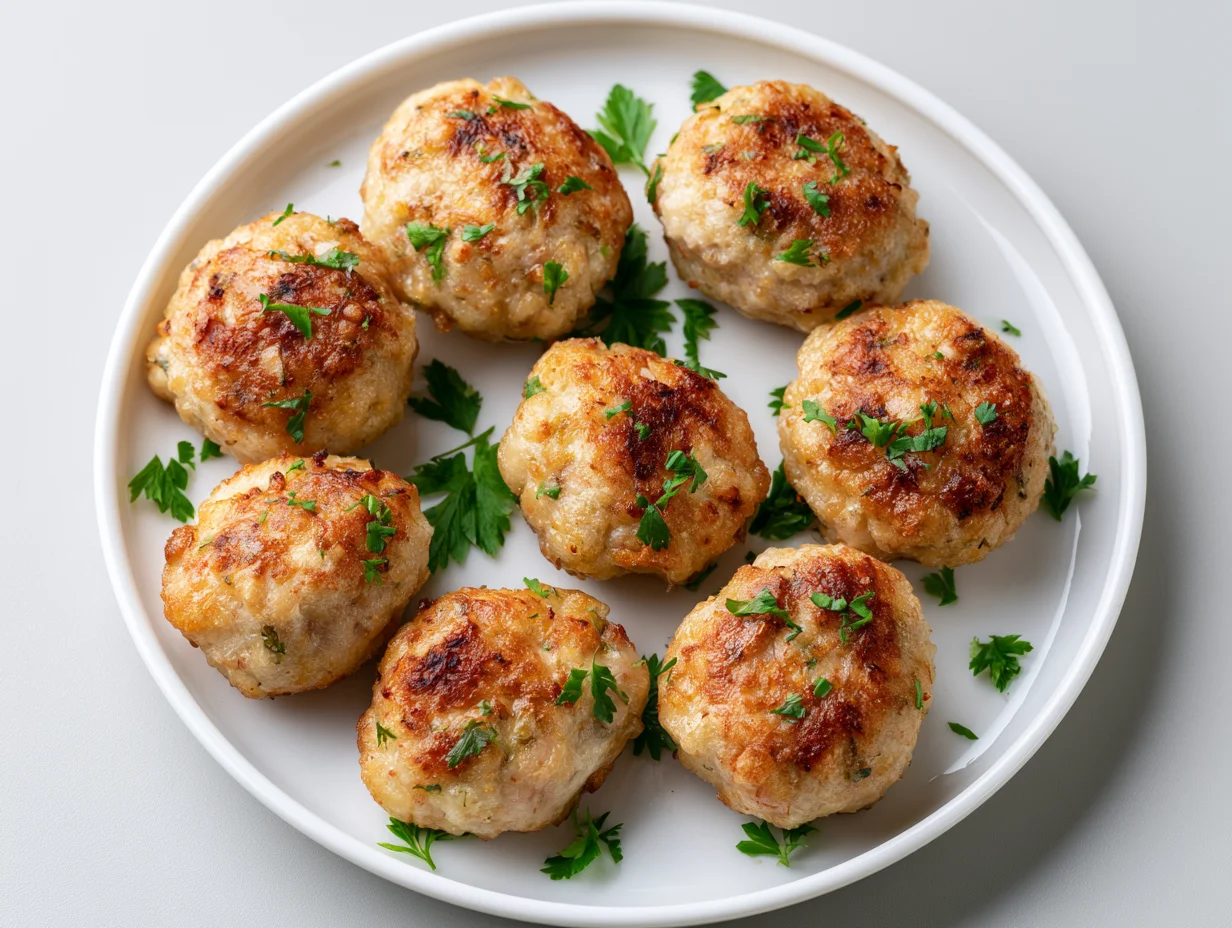
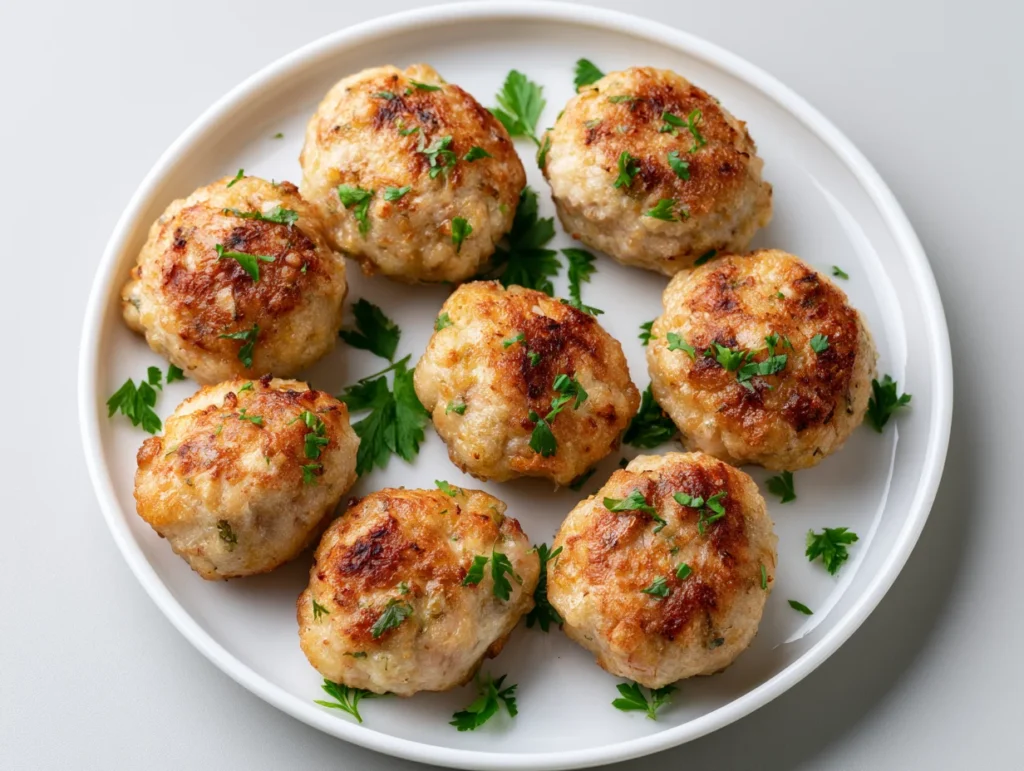
Using a 2-tablespoon scoop or your hands, portion the mixture into evenly sized balls, about 1.5 inches in diameter. Roll each one gently between your palms — just enough to hold its shape, without compacting it further. Place the shaped meatballs on a parchment-lined tray as you go. Keeping your hands lightly damp during this step prevents the mixture from sticking and makes portioning significantly faster and more consistent.
Step 4: Sear the Meatballs
Heat olive oil in a large skillet over medium heat. Add the meatballs in a single layer, leaving space between each one, and sear for 3 to 4 minutes per side until golden brown on all sides. Avoid moving them too soon — let a proper crust form before turning. This searing step builds flavor through browning and helps the meatballs hold their shape during the remaining cooking time.
Step 5: Finish Cooking and Rest
Reduce the heat to medium-low, cover the skillet, and continue cooking for 6 to 8 minutes, until the meatballs reach an internal temperature of 165°F (74°C). Use a meat thermometer inserted into the center of the largest meatball to confirm doneness accurately. Remove from heat and let the meatballs rest for 3 minutes before serving. This resting period allows the juices to redistribute, keeping every bite tender.
Cook Time
Total:
35 minutes
Prep:
15 minutes
Bake:
20 minutes (stovetop sear and simmer)
Servings
This recipe yields a generous batch perfect for both immediate dinner and future meal prep. Made with 1.5 pounds of ground chicken, it produces meatballs sized for pairing with pasta, sandwiches, or rice bowls without leaving you short.
Makes approximately 20 to 22 meatballs, or 4 to 5 servings.
Because these meatballs hold their texture exceptionally well after reheating, doubling the batch is a smart move for anyone who meal preps. They freeze beautifully both cooked and raw, making this one of the more practical proteins to keep stocked for fast weeknight dinners throughout a busy month.
Common Mistakes in This Recipe
The most common mistake with chicken meatballs is skipping the panade entirely or substituting plain breadcrumbs without the milk-soaking step. Without this moisture-retaining mixture, the breadcrumbs absorb juices from the meat as it cooks rather than contributing moisture themselves, resulting in dry, crumbly meatballs that lack the tender bite this recipe is known for.
Overmixing the meat mixture is another frequent issue. Mixing chicken too aggressively, especially with a stand mixer or food processor, develops the proteins excessively and produces a dense, rubbery texture closer to a sausage than a tender meatball. Gentle, minimal mixing by hand is essential.
Many home cooks also choose extra-lean ground chicken, assuming it produces a healthier result. In reality, fat carries flavor and moisture, and meatballs made with extra-lean chicken (99% fat-free) often turn out noticeably drier and less flavorful than those made with standard ground chicken.
Finally, overcooking is a significant risk with chicken specifically, since it must reach a higher safe internal temperature than beef or pork. Cooking without a thermometer, relying only on color or time, frequently results in meatballs pushed well past done and into dry, tough territory.
Solutions to Common Mistakes
Always prepare the panade as instructed — soaking breadcrumbs in milk for at least 5 minutes before incorporating them into the meat mixture. This single step does more for the final texture than any other ingredient adjustment and should never be skipped, even when short on time.
To avoid overmixing, combine the ingredients using your hands rather than a mixer, and stop as soon as everything looks evenly distributed. The mixture should feel loose and slightly sticky. If it feels firm or tightly packed, it has already been overworked beyond the point of no return.
Choose standard ground chicken (around 90 to 93% lean) rather than extra-lean varieties whenever possible. The small amount of additional fat makes a significant difference in juiciness and flavor without meaningfully impacting the overall nutritional profile of the finished dish.
Invest in an inexpensive instant-read meat thermometer and use it consistently. Insert it into the center of the largest meatball and pull the pan from heat the moment it reads 165°F. This single tool removes all guesswork and consistently produces perfectly cooked, juicy results.
Nutritional Information (approx. per serving)
- Calories: 290 kcal
- Protein: 27 g
- Carbohydrates: 8 g
- Total Fat: 17 g
- Saturated Fat: 4.5 g
- Dietary Fiber: 0.5 g
- Sugar: 1.5 g
- Sodium: 480 mg
- Calcium: 10% DV
- Iron: 8% DV
- Vitamin B6: 25% DV
- Selenium: 30% DV
Ground chicken is a lean source of complete protein, supplying all nine essential amino acids needed for muscle repair and overall tissue maintenance. Compared to many red meat options, it offers a comparable protein punch with a generally lower saturated fat content, making it a practical choice for those mindful of their fat intake without sacrificing flavor.
The Parmesan cheese in this recipe contributes calcium and additional protein while reinforcing the savory, umami depth of the dish. Even in modest quantities, it plays an outsized role in flavor development, allowing the recipe to rely less on added salt to achieve a satisfying taste.
Garlic and parsley, beyond their flavor contributions, bring modest amounts of antioxidants and vitamin C to the dish. Fresh parsley in particular is often overlooked nutritionally, despite containing notable levels of vitamin K, which supports bone health and proper blood clotting function.
Because this recipe is pan-seared rather than deep-fried, it avoids the excess oil absorption associated with frying. This cooking method keeps the fat content reasonable while still achieving a flavorful, browned exterior, striking a practical balance between indulgence and nutritional sensibility.
Storage Instructions
Once the meatballs have cooled to room temperature, transfer them to an airtight container. Stored in the refrigerator, they remain fresh for up to 4 days. For best texture upon reheating, store any sauce separately if you plan to serve them with one, as prolonged contact with liquid can soften their exterior over time.
To reheat, place the meatballs in a covered skillet over medium-low heat with a small splash of broth or sauce, warming for 5 to 7 minutes until heated through. The microwave works in a pinch, though it tends to dry out the exterior slightly compared to gentle stovetop reheating.
These meatballs freeze exceptionally well, both cooked and raw. For cooked meatballs, cool completely, then freeze in a single layer on a tray before transferring to a freezer bag — this prevents them from clumping together. Frozen cooked meatballs keep for up to 3 months and reheat directly from frozen in a covered skillet.
For raw, uncooked meatballs, shape them as directed, freeze on a tray until solid, then transfer to a freezer bag. Cook directly from frozen, adding a few extra minutes to the covered simmering step in Step 5 to ensure they reach a safe internal temperature throughout.
Suggestions
These meatballs are remarkably versatile and adapt easily to whatever you are in the mood for. Tossed in marinara and served over spaghetti or zucchini noodles, they make a comforting, classic dinner that comes together faster than a traditional meatball recipe, since chicken cooks more quickly than beef or pork.
For a lighter option, serve them over a bed of garlic herb rice or alongside roasted vegetables with a drizzle of lemon-tahini sauce. This combination keeps the meal fresh and balanced while still feeling satisfying enough for a full dinner, particularly when paired with a simple side salad.
These meatballs also make an excellent appetizer. Skewer them with toothpicks and serve alongside a tangy dipping sauce — a honey mustard, a spicy aioli, or a simple marinara all work beautifully for parties, game days, or casual gatherings where finger food is the priority.
For a sandwich option, tuck a few meatballs into a toasted hoagie roll with melted provolone and a spoonful of marinara for a chicken meatball sub that rivals any deli version. This is one of the easiest ways to repurpose leftovers into an entirely different meal.
Seasonal Relevance
These meatballs work particularly well in the cooler months, when warm, comforting dinners take priority over lighter fare. Served over pasta with a rich tomato sauce, they become the kind of cold-weather meal that feels substantial without requiring hours in the kitchen, making them ideal for busy fall and winter weeknights.
In spring and summer, this recipe adapts effortlessly to lighter preparations. Skewered and grilled rather than pan-seared, or served cold over a fresh salad with a lemony vinaigrette, these meatballs shift seamlessly from cozy comfort food into a bright, warm-weather option without requiring any changes to the core recipe.
This dish also has a strong presence during the holiday season, frequently appearing on appetizer spreads at gatherings and parties. Their bite-sized format and make-ahead-friendly nature make them a practical, crowd-pleasing option when hosting during the busiest months of the year.
Because ground chicken is consistently available and affordably priced year-round, this recipe does not rely on seasonal ingredients to taste its best. That dependability, paired with its adaptability across different serving styles, is exactly what makes it a recipe worth keeping in steady rotation throughout every season.
Final Words
If chicken meatballs have let you down in the past, this recipe is the fix you have been looking for. The difference is not about luck or a special ingredient — it comes down to a few deliberate techniques that, once understood, are simple to repeat with consistent success every time.
What makes this recipe stand out is its attention to the details that matter most: the panade for moisture, gentle mixing for tenderness, and a reliable thermometer check to avoid the overcooking that chicken is so prone to. None of these steps are difficult, but all of them are essential.
I encourage you to treat this as a base recipe you can build on. Swap in different herbs, experiment with cheese varieties, or adjust the spice level to suit your taste. The underlying technique remains solid regardless of the specific flavor direction you choose to take it in.
Above all, trust the process and resist the urge to skip steps that seem minor. The panade, the gentle mixing, and the thermometer check are small efforts that produce a genuinely significant difference in the final result — juicy, flavorful meatballs every single time.
Frequently Asked Questions
Can I bake these meatballs instead of pan-searing them?
Yes. Arrange shaped meatballs on a parchment-lined baking sheet and bake at 400°F for 18 to 20 minutes, flipping halfway through, until they reach 165°F internally. Baking produces a slightly less browned exterior than searing but is a convenient, hands-off method, especially when preparing a larger batch at once.
Can I substitute ground turkey for ground chicken in this recipe?
Yes, ground turkey works as a direct substitute with no changes needed to the recipe. Choose a standard blend rather than extra-lean turkey for the best texture and juiciness. The cooking time and panade technique remain exactly the same, and the flavor profile stays very similar to the original.
Why do my chicken meatballs fall apart while cooking?
This usually happens when there is not enough binder, or the egg and panade were skipped or reduced. Make sure to follow the binder ratio closely, handle the mixture gently when shaping, and allow the meatballs to sear undisturbed for several minutes before attempting to turn them.
Juicy Chicken Meatball Recipe
4
servings15
minutes20
minutes290
kcal35
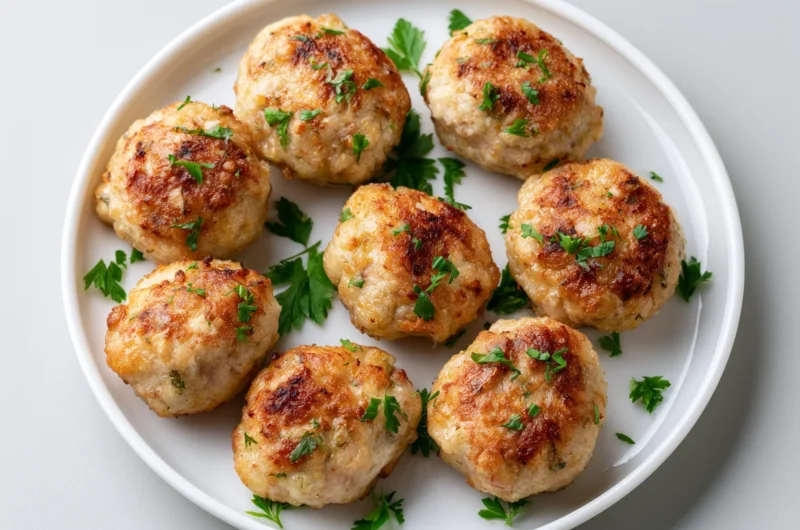
minutesTender, juicy chicken meatballs made with a simple milk-soaked panade, garlic, and Parmesan. Pan-seared to golden perfection — never dry, always flavorful, and ready in just 35 minutes.
Ingredients
Base ingredients
1.5 lbs ground chicken
½ cup panko breadcrumbs
¼ cup whole milk
1 large egg
¼ cup grated Parmesan cheese
3 garlic cloves, minced
2 tbsp chopped fresh parsley
1 tsp dried oregano
½ tsp onion powder
½ tsp salt
¼ tsp black pepper
2 tbsp olive oil, for cooking
Optional add-ins
1 tbsp grated yellow onion
½ tsp red pepper flakes
1 tbsp Dijon mustard
1 tsp lemon zest
¼ cup finely diced spinach, drained
2 tbsp chopped fresh basil
¼ tsp smoked paprika
1 tbsp grated Pecorino Romano
Directions
- Combine panko breadcrumbs and milk in a small bowl. Let sit 5 minutes until thick and paste-like to form the panade.
- In a large bowl, combine ground chicken, panade, egg, Parmesan, garlic, parsley, oregano, onion powder, salt, and pepper. Mix gently by hand until just combined — do not overmix.
- Portion the mixture into 1.5-inch balls using a scoop or damp hands. Roll gently to hold shape without compacting. Place on a parchment-lined tray.
- Heat olive oil in a large skillet over medium heat. Sear meatballs in a single layer for 3 to 4 minutes per side until golden brown on all sides.
- Reduce heat to medium-low, cover, and cook 6 to 8 minutes until internal temperature reaches 165°F. Confirm with a meat thermometer in the largest meatball.
- Remove from heat and rest for 3 minutes before serving to let the juices redistribute.
Recipe Video
Notes
- Never skip the panade — soaking breadcrumbs in milk locks in moisture and is the single biggest factor in preventing dry chicken meatballs.
- Mix the meat mixture gently and minimally by hand. Overmixing develops the proteins and results in a dense, rubbery texture.
- Use standard ground chicken (90–93% lean) rather than extra-lean. The added fat keeps the meatballs noticeably juicier and more flavorful.
- To bake instead of pan-sear: arrange on a parchment-lined sheet and bake at 400°F for 18 to 20 minutes, flipping halfway through.
- Ground turkey can be substituted directly for ground chicken with no changes to the recipe or cooking time.
- Store cooked meatballs in an airtight container in the refrigerator for up to 4 days, or freeze for up to 3 months.
- Raw, shaped meatballs can also be frozen on a tray, then bagged. Cook directly from frozen, adding a few extra minutes to Step 5.