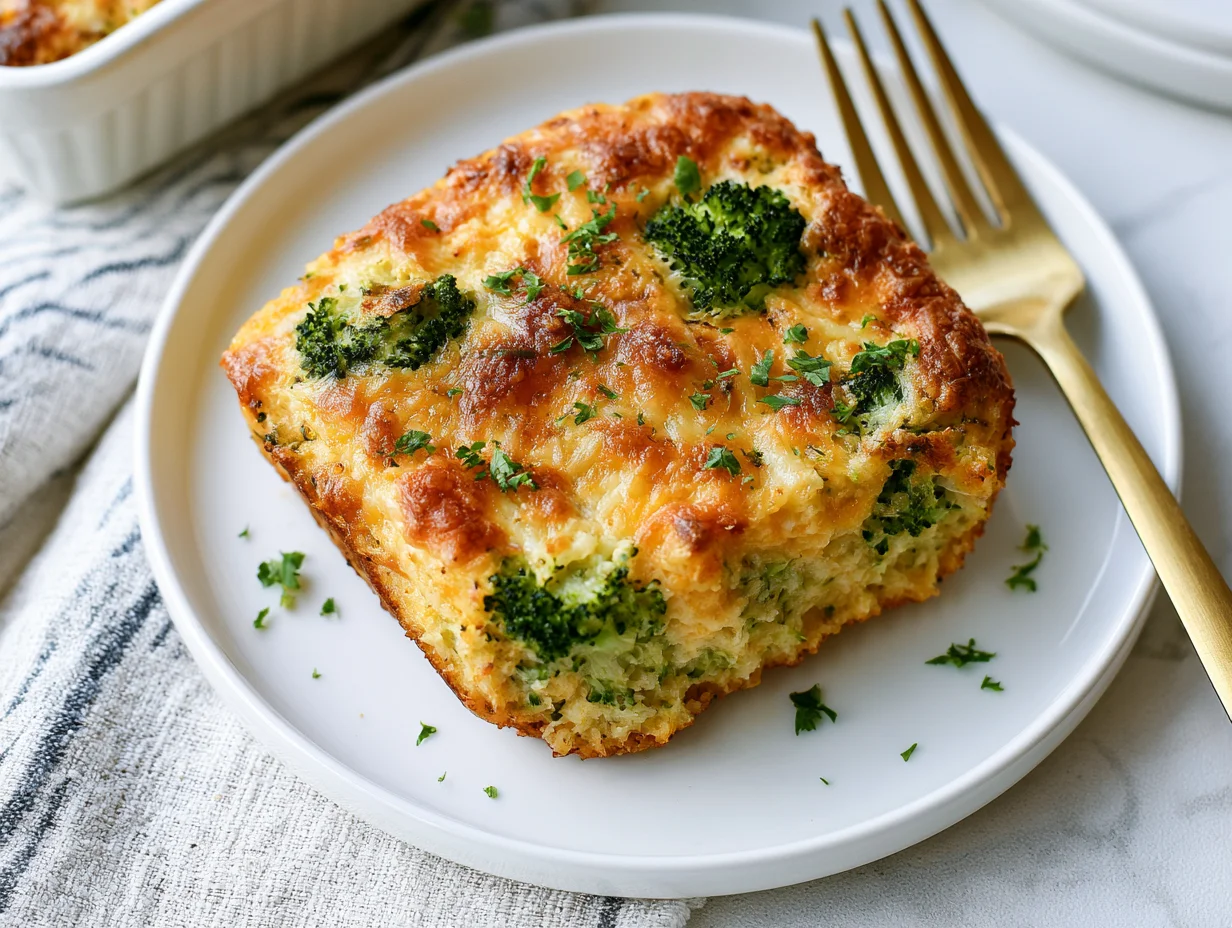
Low-Carb Broccoli and Cheddar Casserole Recipe
There is a particular kind of comfort that only a bubbling, golden-topped casserole can deliver. This Low-Carb Broccoli and Cheddar Casserole captures that feeling completely — without the starchy fillers, heavy cream soups, or refined carbohydrates that typically come with it. What you get instead is a dish that is rich, satisfying, and built on real, wholesome ingredients.
The combination of tender broccoli florets and sharp cheddar is one of the great culinary pairings. Sharp cheddar brings a bold, tangy depth that cuts through the natural sweetness of the broccoli, and when baked together in a creamy, egg-based custard, the two become something far greater than either is alone. The top crust turns golden and slightly crisp while the interior stays velvety and rich.
This recipe was designed with both flavor and nutrition in mind. It is naturally low in carbohydrates, high in protein, and packed with vitamins and minerals from the broccoli alone. It fits seamlessly into ketogenic, low-carb, and gluten-free lifestyles without asking you to compromise on taste or texture.
Whether you are cooking it as a weeknight main, a hearty side dish for a holiday table, or a reliable meal-prep option for the week ahead, this casserole delivers every single time with the kind of consistency that keeps it permanently in your recipe repertoire.
Ingredients You’ll Need
Look at this list and you will quickly realize that great low-carb comfort food does not ask much of you — just the right ingredients treated with the right amount of care.
One of the things I love about this recipe is that it uses simple pantry ingredients. You probably already have most of them in your kitchen.
Base Ingredients:
- 5 cups broccoli florets, fresh and cut into bite-sized pieces
- 2 cups sharp cheddar cheese, freshly shredded and divided
- 4 large eggs
- 1 cup heavy cream
- ½ cup cream cheese, softened
- ½ cup sour cream
- ½ medium yellow onion, finely diced
- 3 cloves garlic, minced
- 1 tbsp butter, for greasing and sautéing
- 1 tsp Dijon mustard
- ½ tsp smoked paprika
- ½ tsp onion powder
- ½ tsp salt
- ¼ tsp black pepper
- ¼ tsp cayenne pepper
Optional Add-ins:
- ½ cup crispy cooked bacon, crumbled on top
- ¼ cup grated Parmesan cheese mixed into the custard
- ½ cup diced ham for a heartier, protein-rich version
- ¼ tsp nutmeg for a subtle warmth in the custard base
- ½ cup sliced mushrooms, sautéed before adding
- 2 tbsp fresh chives, chopped for garnish
- ¼ tsp white pepper for a slightly sharper finish
Step-by-Step Instructions
Step 1: Preheat the Oven and Prepare the Dish
Set your oven to 375°F (190°C) and allow it to fully preheat before anything goes in. Grease a 9×13 inch baking dish thoroughly with butter, making sure to coat the sides and corners to prevent sticking. A properly greased dish ensures the casserole releases cleanly when served and develops a slightly caramelized edge along the sides that adds an extra dimension of flavor and texture. Set the prepared dish aside while you work on the filling.
Step 2: Blanch the Broccoli
Bring a large pot of salted water to a boil. Add the broccoli florets and blanch for exactly two minutes — no longer. You want the broccoli partially cooked and still firmly green, not soft. Immediately drain and transfer to a bowl of ice-cold water to stop the cooking process. Drain again thoroughly and pat the florets dry with paper towels. Excess moisture from the broccoli is the leading cause of a watery casserole, so this drying step is essential.
Step 3: Sauté the Aromatics
In a skillet over medium heat, melt the butter and add the finely diced onion. Cook for four to five minutes until softened and lightly golden. Add the minced garlic and cook for one additional minute until fragrant. Remove from heat and allow to cool slightly before adding to the custard base. Cooking the aromatics separately before incorporating them into the casserole adds a layer of sweetness and depth that raw onion and garlic simply cannot provide when baked directly into the filling.
Step 4: Make the Custard Base
In a large mixing bowl, whisk together the eggs, heavy cream, softened cream cheese, sour cream, and Dijon mustard until completely smooth and well combined. Add the smoked paprika, onion powder, salt, black pepper, and cayenne pepper and whisk again to distribute the spices evenly throughout the custard. Fold in the sautéed onion and garlic, followed by one and a half cups of the shredded cheddar, reserving the remaining half cup for the topping. The custard should be smooth, pale yellow, and richly aromatic at this stage.
Step 5: Assemble and Bake
Arrange the blanched, dried broccoli florets evenly across the bottom of the prepared baking dish. Pour the custard mixture over the broccoli, using a spatula to ensure it settles into all the gaps between the florets. Scatter the reserved half cup of shredded cheddar evenly over the top. Place the dish in the preheated oven and bake uncovered for 35 to 40 minutes, until the top is deeply golden, the edges are set, and the center jiggles only very slightly when the dish is gently shaken. Allow to rest for ten minutes before slicing and serving.
Cook Time
Total:
55 to 60 minutes
Prep:
15 to 20 minutes
Bake:
35 to 40 minutes
Servings
This casserole is written to serve six as a generous main-course portion or eight as a substantial side dish. The egg and cream custard base makes each serving remarkably filling, so portions that might look modest in the dish are more satisfying than they appear once plated.
For a larger gathering or a holiday spread, this recipe doubles cleanly. Use two separate baking dishes rather than one oversized pan to ensure even heat distribution and consistent baking results. Both dishes can bake simultaneously on separate oven racks, rotating halfway through.
Makes approximately 6 main-course servings or 8 side portions. Leftovers reheat beautifully, making this one of the most practical casseroles for meal prepping and planning ahead across a busy week of lunches and dinners.
Common Mistakes in This Recipe
The single most damaging mistake in this recipe is using wet broccoli. Whether from inadequate draining after blanching or from skipping the pat-dry step entirely, excess moisture from the florets dilutes the custard as it bakes, resulting in a watery, loose casserole that never sets properly and lacks the rich, creamy texture the recipe is designed to deliver.
Using pre-shredded bagged cheddar instead of freshly grating a block is another common error that noticeably affects the finished dish. Pre-shredded cheese is coated in anti-caking agents that prevent it from melting smoothly, producing a grainy, oily texture in the custard rather than the silky, cohesive melt that freshly grated cheddar creates.
Many home cooks also pull the casserole from the oven too early. A casserole that is underbaked has a runny, unset center that collapses when served. The custard needs the full baking time to coagulate and firm up. The correct visual cue is a deeply golden top and edges that are fully set, with only the very center showing a slight jiggle.
Finally, skipping the resting period after baking is a mistake that affects both texture and presentation. Cutting into a casserole straight from the oven causes the custard to run before it has had time to finish setting. A ten-minute rest allows the interior to firm up completely, making it far easier to cut clean, structured portions.
Solutions to Common Mistakes
To eliminate the moisture problem completely, blanch the broccoli for no more than two minutes, then shock it in ice water and drain it thoroughly. After draining, spread the florets on a clean kitchen towel and press gently to remove as much remaining moisture as possible before arranging them in the baking dish. This two-stage drying process is the most reliable method available.
Always buy a block of good-quality sharp cheddar and grate it yourself immediately before using. The difference in melt quality between freshly grated and bagged shredded cheese is significant and directly visible in the finished casserole. A sharp or extra-sharp cheddar also contributes a deeper, more pronounced flavor that elevates the entire dish.
To avoid underbaking, rely on visual cues rather than the clock alone. The top should be a deep, even golden brown across the entire surface. Run a thin knife into the center — it should come out clean, with no liquid custard clinging to the blade. If the top is browning too quickly before the center sets, tent the dish loosely with foil and continue baking.
Honor the resting time without exception. Remove the casserole from the oven, place it on a heatproof surface, and leave it completely undisturbed for a minimum of ten minutes. Use this time to plate your sides, set the table, or prepare any garnishes. The casserole will be noticeably firmer, cleaner to cut, and more visually appealing when served after a proper rest.
Nutritional Information (approx. per serving)
- Calories: 380 kcal
- Protein: 18g
- Total Fat: 31g
- Saturated Fat: 18g
- Carbohydrates: 7g
- Net Carbohydrates: 5g
- Dietary Fiber: 2g
- Sugars: 3g
- Sodium: 480mg
- Calcium: 35% DV
- Vitamin C: 70% DV
- Vitamin K: 80% DV
- Vitamin A: 25% DV
- Iron: 8% DV
Broccoli is one of the most micronutrient-dense vegetables available, and at five cups per recipe, this casserole delivers a substantial quantity of vitamin C, vitamin K, and folate in every serving. Vitamin K plays a critical role in blood clotting and bone mineralization, while the vitamin C content supports immune function and collagen synthesis simultaneously.
The eggs and heavy cream in the custard base provide a complete source of fat-soluble vitamins — specifically vitamins A, D, E, and K2 — alongside high-quality protein and essential fatty acids. For those following a ketogenic or low-carb dietary approach, the fat-to-protein ratio in this casserole is particularly well balanced for sustained energy and satiety.
Sharp cheddar contributes meaningful amounts of calcium and phosphorus, both of which are critical for bone density and cellular energy production. Dairy-sourced calcium is among the most bioavailable forms the body can absorb, making cheese a genuinely valuable nutritional component rather than simply an indulgence.
With only five grams of net carbohydrates per serving, this casserole fits comfortably within strict ketogenic macros while delivering a level of satisfaction that most low-carb dishes struggle to match. The combination of high fat, moderate protein, and minimal sugar creates a meal that sustains energy levels and suppresses hunger for hours after eating.
Storage Instructions
This casserole stores exceptionally well and is one of the most practical recipes for weekly meal preparation. The custard base firms further as it cools, making refrigerated portions even easier to slice, reheat, and plate cleanly compared to the freshly baked version.
Allow the casserole to cool completely at room temperature before covering or transferring to storage containers. Once cooled, cover the baking dish tightly with plastic wrap or transfer individual portions to airtight containers. Refrigerated casserole keeps well for up to four days without any meaningful loss of flavor or texture quality.
To reheat, place individual portions in an oven-safe dish and warm at 325°F (163°C) for twelve to fifteen minutes until heated through. Alternatively, a microwave on medium power for ninety seconds to two minutes works well for single portions. Avoid high microwave heat, which can cause the egg custard to become rubbery and the cheese to separate.
This casserole also freezes well for up to two months. Portion it into individual servings before freezing for the most convenient results. Wrap each piece tightly in plastic wrap, then place in a freezer-safe bag. Thaw overnight in the refrigerator before reheating in the oven for best texture. The broccoli softens slightly after freezing but the overall quality remains very good.
Suggestions
This casserole stands confidently on its own as a complete low-carb meal, but it also pairs beautifully with simple accompaniments that complement rather than compete with its richness. A crisp arugula salad dressed with lemon juice and olive oil is one of the most effective pairings — the peppery bitterness of the arugula cuts through the creaminess of the casserole and resets the palate between bites.
For a more substantial dinner, serve alongside a simply seasoned grilled chicken breast or a piece of baked salmon. The casserole acts as a hearty, vegetable-forward side that adds both color and nutrition to the plate without requiring any additional preparation beyond what is already in the oven.
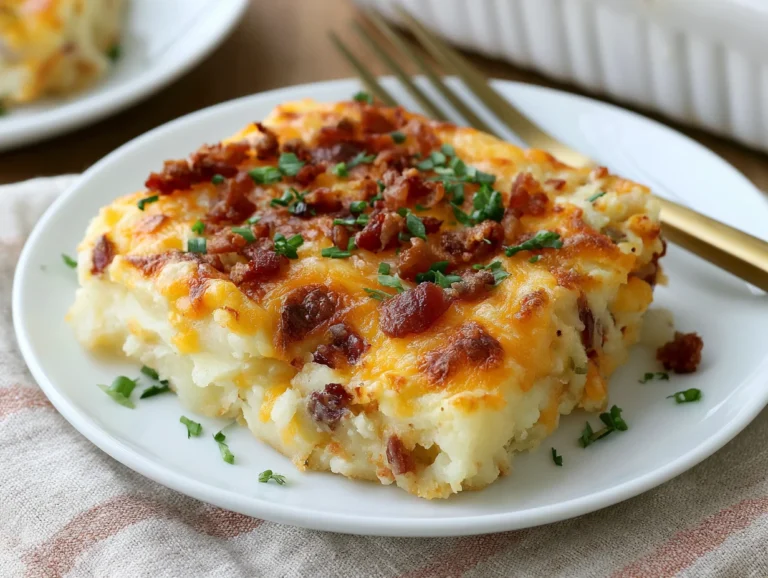
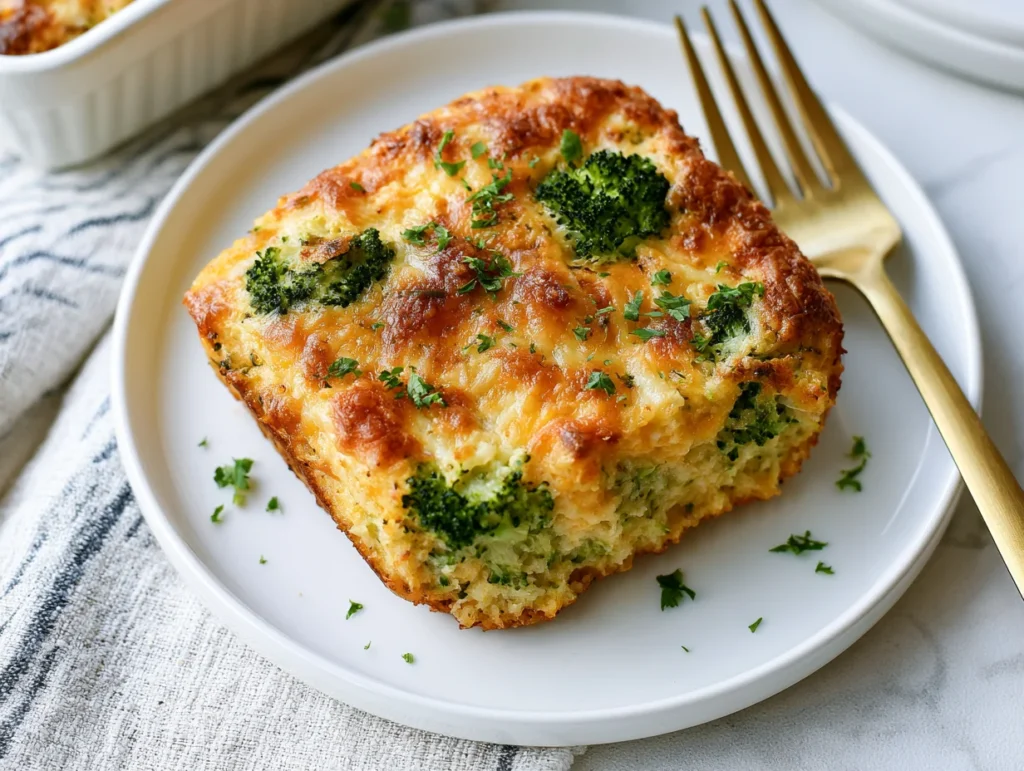
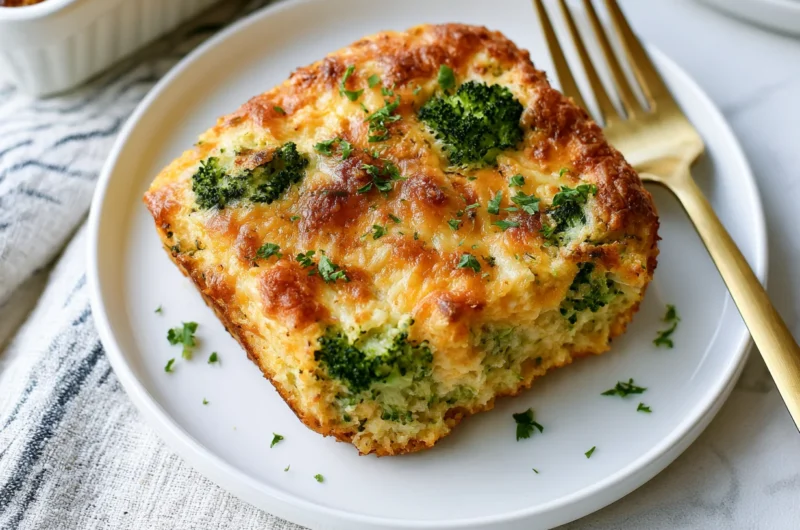
If you are serving this at a gathering or holiday table, consider presenting it directly in the baking dish for a rustic, welcoming aesthetic. Garnish generously with freshly chopped chives, a light dusting of smoked paprika, and a scattering of crispy crumbled bacon across the golden top. The visual contrast between the deep gold crust and the bright green broccoli peeking through is genuinely striking.
For a variation that works beautifully as a breakfast or brunch centerpiece, stir in diced ham and top with crumbled cooked bacon before baking. Serve with a simple green salad and sliced avocado on the side. The egg and cream custard base gives this casserole a natural affinity for morning meals that makes it a genuinely versatile recipe across different mealtimes.
Seasonal Relevance
This Low-Carb Broccoli and Cheddar Casserole is built for the colder months. There is something about the combination of golden melted cheddar, warm custard, and tender broccoli that feels deeply suited to autumn and winter cooking — the kind of dish that belongs on a table surrounded by people, on an evening when the temperature outside makes you grateful for something hot and rich from the oven.
During fall, this casserole fits naturally into the season’s rhythm of comfort cooking. Broccoli reaches its peak flavor in cool weather — the florets become slightly sweeter and more tender, and the flavor is noticeably more pronounced than in summer-grown broccoli. Using peak-season fall broccoli in this recipe makes a meaningful difference to the finished dish.
In winter, this casserole earns a place at the holiday table as a reliable, crowd-pleasing side that happens to be naturally low in carbohydrates — a quality that is particularly appreciated at festive meals where dietary preferences vary widely across the table. It holds beautifully in a warm oven and reheats without any loss of quality, making it an ideal make-ahead dish for holiday entertaining.
Spring brings lighter appetites and brighter produce, but this casserole still earns its place during the early weeks of the season when evenings remain cool and the transition from winter comfort food has not yet fully arrived. As spring deepens into summer, the recipe adapts well with the addition of fresh herbs, lighter toppings, and a side of crisp seasonal vegetables to freshen up the overall presentation.
Final Words
This Low-Carb Broccoli and Cheddar Casserole is the kind of recipe that earns genuine loyalty. It is not built on novelty or trend — it is built on the simple, enduring appeal of good cheese, good vegetables, and a technique that brings out the best in both. Every time you make it, it delivers exactly what it promises.
What sets this recipe apart from similar casseroles is the attention it pays to the small details — blanching and thoroughly drying the broccoli, toasting the aromatics before folding them into the custard, grating the cheese fresh, and honoring the resting time after baking. None of these steps is complicated, but together they elevate the finished dish significantly above a version made without that care.
This is also a recipe that grows with you as a cook. Once you have made it a few times and understand how the custard behaves, you will find yourself reaching for it as a template — adjusting the vegetables, swapping in different cheeses, adding protein, and making it entirely your own while the fundamental technique remains the same.
I hope this casserole becomes as much of a staple in your kitchen as it is in mine. It is the kind of dish that makes people ask for the recipe at the table, and that is always the highest compliment a cook can receive.
Frequently Asked Questions
Can I use frozen broccoli instead of fresh, and does it affect the texture of the finished casserole?
Frozen broccoli works but requires extra preparation. Thaw it completely, then squeeze out as much moisture as possible using a clean kitchen towel before using. Frozen broccoli releases significantly more water than fresh during baking, so thorough drying is non-negotiable. The texture will be slightly softer but the flavor remains very good.
Can this casserole be assembled the night before and baked the following day?
Yes, this is one of the best make-ahead casseroles available. Assemble it completely, cover tightly with plastic wrap, and refrigerate overnight. Remove it from the refrigerator thirty minutes before baking to take the chill off, then bake as directed. The resting time actually allows the custard to absorb the broccoli flavor more deeply overnight.
What is the best type of cheddar to use for the strongest, most developed flavor in this recipe?
Extra-sharp or aged cheddar produces the most pronounced flavor in the finished casserole. A two-year aged cheddar delivers a complex, slightly crystalline bite that melts beautifully into the custard. Avoid mild cheddar — it lacks the depth needed to stand up to the richness of the cream and eggs in the base.
Low-Carb Broccoli and Cheddar Casserole Recipe
6
servings20
minutes40
minutes380
kcal1
hourA rich, golden, and deeply satisfying low-carb casserole packed with tender broccoli and sharp cheddar in a creamy egg custard. Naturally gluten-free, keto-friendly, and ready in under an hour — comfort food done right.
Ingredients
Base Ingredients:
5 cups broccoli florets, fresh and cut into bite-sized pieces
2 cups sharp cheddar cheese, freshly shredded and divided
4 large eggs
1 cup heavy cream
½ cup cream cheese, softened
½ cup sour cream
½ medium yellow onion, finely diced
3 cloves garlic, minced
1 tbsp butter, for greasing and sautéing
1 tsp Dijon mustard
½ tsp smoked paprika
½ tsp onion powder
½ tsp salt
¼ tsp black pepper
¼ tsp cayenne pepper
Optional Add-ins:
½ cup crispy cooked bacon, crumbled on top
¼ cup grated Parmesan cheese mixed into the custard
½ cup diced ham
¼ tsp nutmeg
½ cup sliced mushrooms, sautéed before adding
2 tbsp fresh chives, chopped for garnish
¼ tsp white pepper
Directions
- Preheat the oven to 375°F (190°C). Grease a 9×13 inch baking dish thoroughly with butter, coating the sides and corners completely. Set aside while preparing the filling.
- Bring a large pot of salted water to a boil. Add the broccoli florets and blanch for exactly 2 minutes. Drain immediately and transfer to a bowl of ice-cold water to stop the cooking. Drain again thoroughly and pat the florets completely dry with paper towels to remove all excess moisture.
- In a skillet over medium heat, melt the butter and add the finely diced onion. Cook for 4 to 5 minutes until softened and lightly golden. Add the minced garlic and cook for 1 additional minute until fragrant. Remove from heat and allow to cool slightly.
- In a large mixing bowl, whisk together the eggs, heavy cream, softened cream cheese, sour cream, and Dijon mustard until completely smooth. Add the smoked paprika, onion powder, salt, black pepper, and cayenne pepper and whisk again to combine. Fold in the sautéed onion and garlic, then stir in 1½ cups of the shredded cheddar, reserving the remaining ½ cup for the topping.
- Arrange the blanched, dried broccoli florets evenly across the bottom of the prepared baking dish. Pour the custard mixture over the broccoli, using a spatula to ensure it settles into all the gaps between the florets.
- Scatter the reserved ½ cup of shredded cheddar evenly over the top. Bake uncovered in the preheated oven for 35 to 40 minutes, until the top is deeply golden and the edges are fully set. The center should jiggle only very slightly when the dish is gently shaken.
- Remove from the oven and allow the casserole to rest for a full 10 minutes before slicing and serving. This resting time allows the custard to firm up completely for clean, structured portions.
Recipe Video
Notes
- Always blanch the broccoli for no more than 2 minutes and pat it completely dry before use — excess moisture is the leading cause of a watery, unset casserole.
- Grate the cheddar fresh from a block immediately before using. Pre-shredded bagged cheese contains anti-caking agents that prevent smooth melting and produce a grainy texture in the custard.
- Do not cut into the casserole straight from the oven — always allow a full 10-minute rest so the custard firms up and portions cut cleanly without collapsing.
- Use extra-sharp or aged cheddar for the strongest, most developed flavor. Mild cheddar lacks the depth needed to stand up to the richness of the cream and egg base.
- If the top is browning too quickly before the center sets, tent the dish loosely with foil and continue baking until fully cooked through.
- The casserole can be assembled completely the night before, covered tightly, and refrigerated overnight. Remove it 30 minutes before baking to take the chill off, then bake as directed.
- Leftovers keep well in the refrigerator for up to 4 days in an airtight container and freeze well for up to 2 months when portioned individually.
- Reheat in the oven at 325°F (163°C) for 12 to 15 minutes for best texture. Avoid high microwave heat, which can make the egg custard rubbery and cause the cheese to separate.