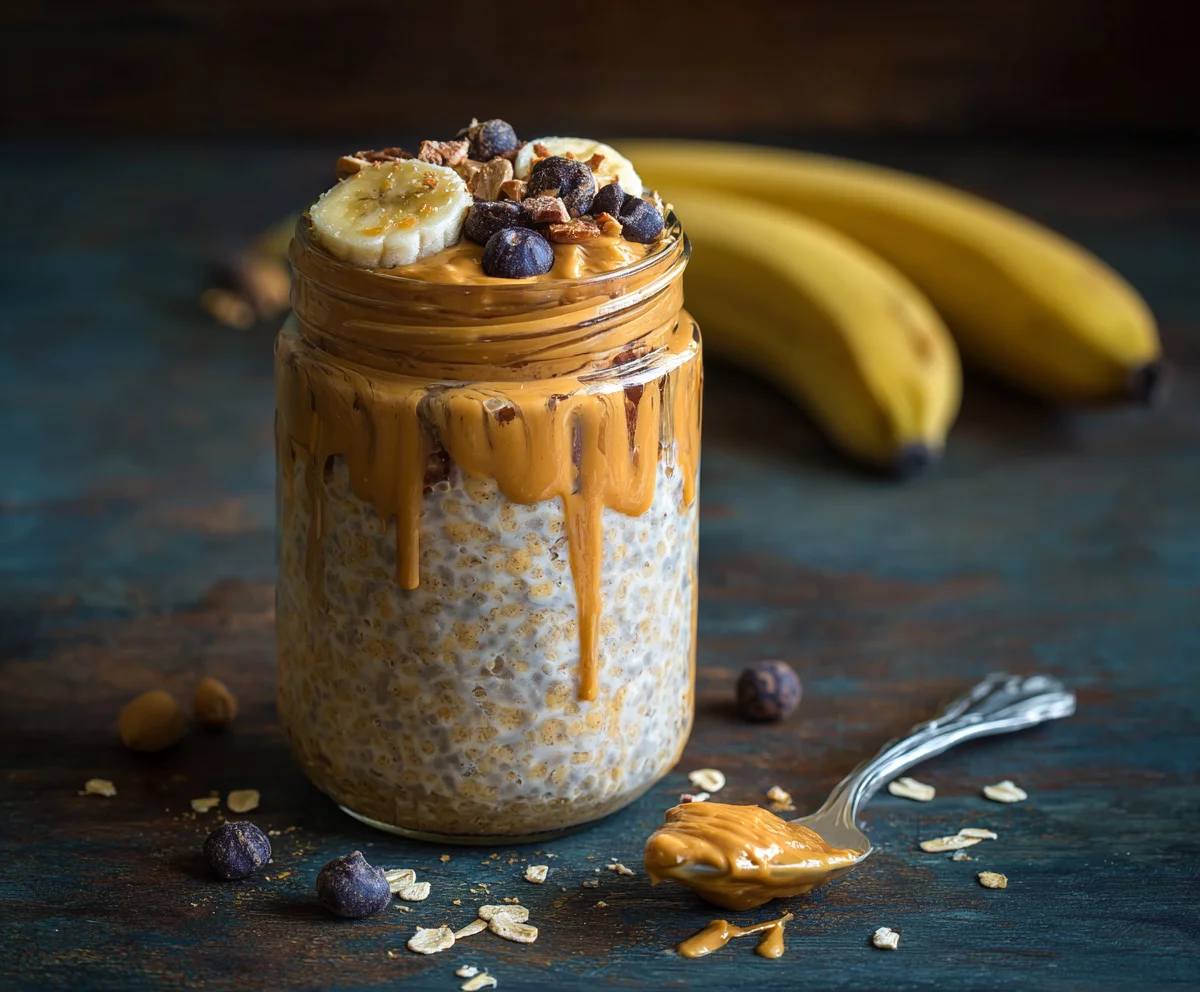
Exceptional breakfasts are built on balance,texture, nutrition, and flavor working in quiet harmony. Peanut butter overnight oats may sound simple, but when crafted with intention, they deliver remarkable creaminess, depth, and sustained energy. The key lies in proportion, proper hydration, and layering flavors thoughtfully. This is a refined, chef-driven approach to a modern classic.
Ingredients List
- ½ cup rolled oats (old-fashioned oats preferred)
- ½ cup whole milk or unsweetened almond milk
- ¼ cup plain Greek yogurt
- 1½ tbsp natural peanut butter (smooth, unsweetened)
- 1 tsp chia seeds
- 1 tsp honey or maple syrup (adjust to taste)
- ¼ tsp pure vanilla extract
- Small pinch of sea salt
- Optional toppings: sliced banana, cacao nibs, roasted peanuts, fresh berries
Step-by-Step Instructions
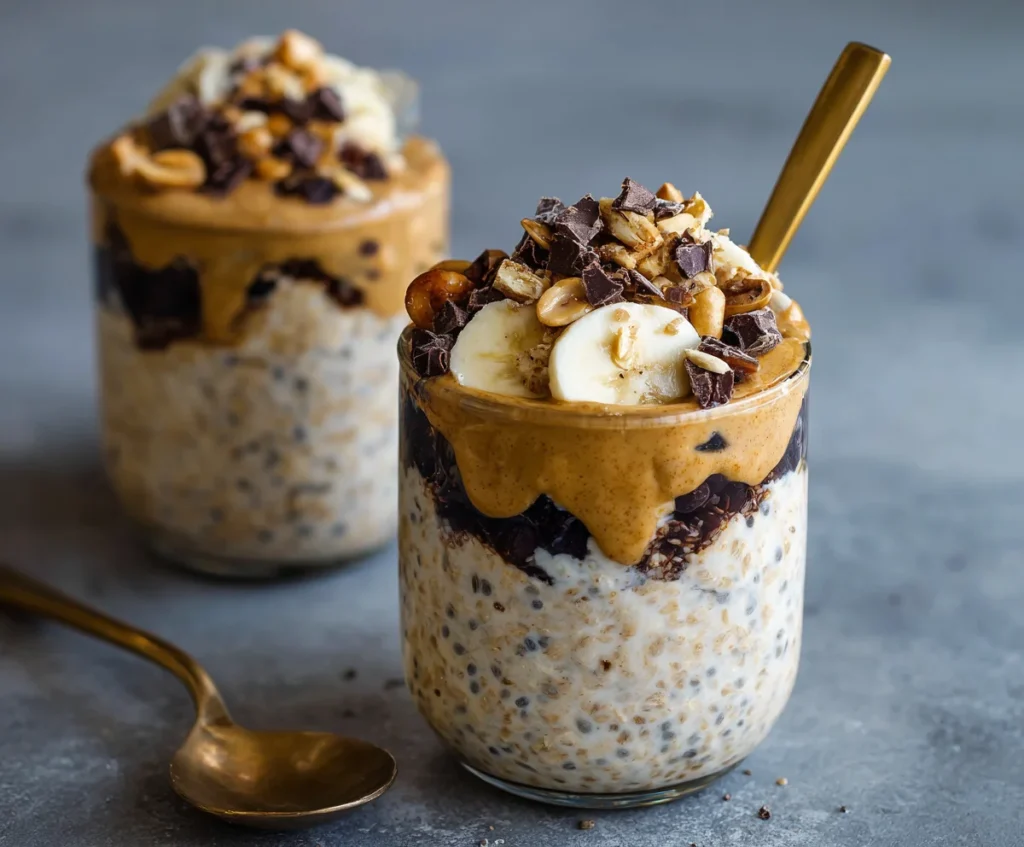
1. Choose the Right Oats
Use rolled oats for optimal texture. Avoid instant oats, which become overly soft, and steel-cut oats, which require longer soaking.
2. Build the Base
In a mixing bowl or jar, combine oats, milk, Greek yogurt, peanut butter, chia seeds, honey, vanilla extract, and sea salt.
3. Mix Thoroughly
Stir until the peanut butter is fully incorporated. Proper mixing ensures even hydration and consistent creaminess.
4. Hydrate Slowly
Cover and refrigerate for at least 6 hours, preferably overnight. During this time, the oats soften while chia seeds thicken the mixture naturally.
5. Finish with Texture
Before serving, stir gently. Adjust consistency with a splash of milk if needed. Add toppings just before serving to preserve freshness and crunch.
Cook Time
- Prep Time: 5 minutes
- Chill Time: 6–8 hours
- Total Time: Approximately 6 hours 5 minutes
Servings
Serves 1 generous portion (easily doubled or tripled for meal prep)
Nutritional Information (approx. per serving)
- Calories: 420 kcal
- Protein: 20 g
- Carbohydrates: 45 g
- Fiber: 8 g
- Fat: 18 g
- Sugar: 10–14 g (depending on sweetener used)
Storage Instructions
- Store in an airtight container in the refrigerator for up to 3 days.
- Stir before serving, adding milk if thickened excessively.
- Add fresh fruit only when ready to eat to maintain optimal texture.
- Not suitable for freezing due to texture changes.
Suggestions
- Add a tablespoon of cocoa powder for a chocolate-peanut variation.
- Incorporate protein powder for a higher-protein breakfast.
- Swap peanut butter with almond or cashew butter for variation.
- Layer with berry compote for a more refined presentation.
Seasonal Relevance
Peanut butter overnight oats work year-round. In summer, top with fresh berries or stone fruit. In autumn, add cinnamon and diced apples. Winter welcomes dark chocolate and toasted nuts, while spring pairs beautifully with strawberries and light honey drizzle.
Conclusion
Peanut butter overnight oats exemplify modern, efficient cooking done well. With careful ratios and mindful ingredient selection, this simple dish transforms into a nutrient-dense, deeply satisfying breakfast. It is practical without sacrificing quality,precisely the kind of recipe that earns a permanent place in a chef’s routine.
FAQs
1. Can I warm overnight oats instead of eating them cold?
Yes. Gently heat in the microwave for 30–60 seconds, stirring halfway through. Add a splash of milk to loosen the texture.
2. How can I reduce the calorie content?
Use low-fat yogurt, reduce peanut butter slightly, and omit added sweetener if the toppings provide natural sweetness.
3. Are overnight oats suitable for children?
Absolutely. Adjust sweetness to preference and ensure nut allergies are considered before serving.