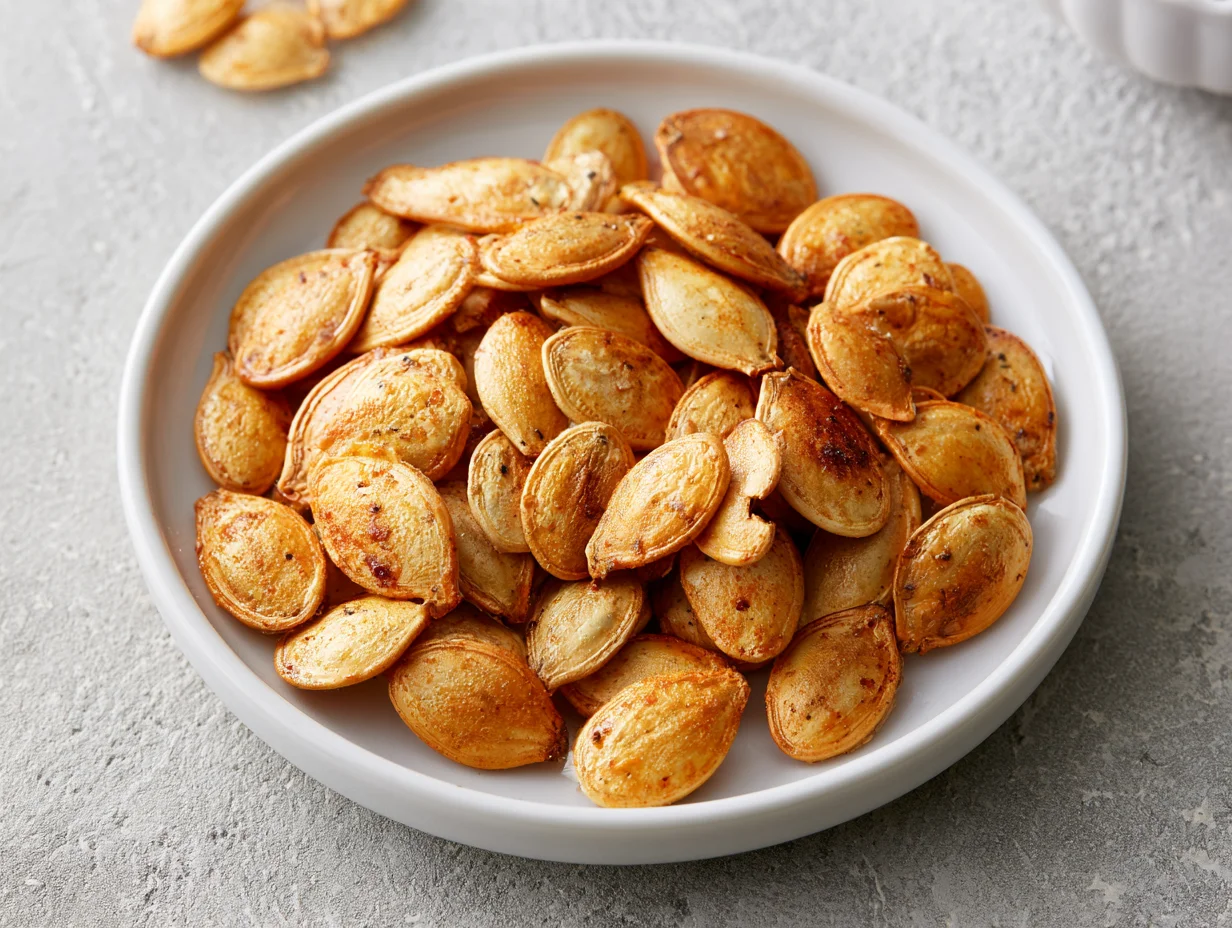
Roasted Pumpkin Seeds Recipe
There is something deeply satisfying about turning something most people throw away into one of the best snacks in the kitchen. Pumpkin seeds — scraped from the inside of a fresh pumpkin, cleaned, dried, and roasted with the right seasoning — are exactly that kind of quiet kitchen triumph. They cost nothing extra, take almost no effort, and produce a snack with genuine crunch and character.
The difference between roasted pumpkin seeds that are truly worth eating and the ones that sit forgotten in a bowl comes down almost entirely to technique. Drying the seeds properly, using the right oven temperature, and seasoning at the correct moment — these three decisions determine whether the result is something remarkable or something mediocre.
What makes this recipe stand apart is its precision. Every detail is here for a reason, from the drying time before the oven to the specific temperature that delivers a deep golden shell without burning the delicate seed inside. Nothing in this recipe is guesswork.
Whether you are carving pumpkins and want to use every part of what you paid for, or sourcing raw seeds specifically to roast, this recipe produces a result that is crunchy, deeply savory, and completely addictive from the first handful to the last.
Ingredients You’ll Need
Everything about this recipe earns its place on the list — there are no unnecessary additions, no specialty items to hunt for, and no ingredient that is doing anything other than exactly what it needs to do to make these seeds genuinely exceptional.
One of the things I love about this recipe is that it uses simple pantry ingredients. You probably already have most of them in your kitchen.
Base Ingredients:
- 2 cups raw pumpkin seeds, cleaned and dried
- 1 tablespoon olive oil or avocado oil
- 3/4 teaspoon sea salt
- 1/2 teaspoon garlic powder
- 1/2 teaspoon smoked paprika
- 1/4 teaspoon black pepper
- 1/4 teaspoon cayenne pepper
Optional Add-ins:
- 1 teaspoon Worcestershire sauce (for deep umami richness)
- 1/2 teaspoon ground cumin (for earthy warmth)
- 1 tablespoon melted butter (in place of oil, for richer flavor)
- 1 teaspoon soy sauce or tamari (for savory, salty depth)
- 1 tablespoon maple syrup (for a sweet and salty finish)
- 1/2 teaspoon cinnamon and 1 tablespoon brown sugar (for a sweet spiced version)
Step-by-Step Instructions
Step 1: Extract and Rinse the Seeds
Cut the top off your pumpkin and scoop the seeds out using a large spoon, pulling them away from the stringy pulp as you go. Place the seeds in a colander and rinse thoroughly under cold running water, using your fingers to separate the seeds from any remaining fibrous strands. The goal is clean seeds with no pulp attached — pulp left on the seeds burns during roasting and creates an unpleasant bitter flavor that no amount of seasoning can fully mask.
Step 2: Dry the Seeds Thoroughly
Spread the rinsed seeds in a single layer across a clean kitchen towel or several layers of paper towels. Pat them firmly dry, then leave them uncovered at room temperature for at least 30 minutes — and up to several hours if time allows. Surface moisture is the primary obstacle to achieving genuine crunch in the oven. Seeds that go into the oven damp will steam rather than roast, producing a soft, chewy result instead of the deeply crisp shell this recipe is built around.
Step 3: Preheat the Oven and Season the Seeds
Preheat your oven to 325°F (165°C). This lower temperature is deliberate — pumpkin seeds have a thin outer shell that burns before the inside has a chance to dry and crisp at higher temperatures. Line a large rimmed baking sheet with parchment paper. Transfer the dried seeds to a mixing bowl, drizzle with oil, and toss until every seed is lightly and evenly coated. Add all seasonings and toss again firmly until the spice mixture is distributed across every seed with no bare spots remaining.
Step 4: Spread and Roast — First Phase
Pour the seasoned seeds onto the prepared baking sheet and spread them into the most even single layer you can achieve. Seeds that overlap or pile on top of each other will roast unevenly — some will burn while others remain soft. Place the tray on the center rack of your preheated oven and roast for 20 minutes without disturbing them. During this first phase, the seeds are losing moisture and beginning to dry from the inside out, which is the foundation of a properly crispy seed.
Step 5: Stir, Check, and Finish Roasting
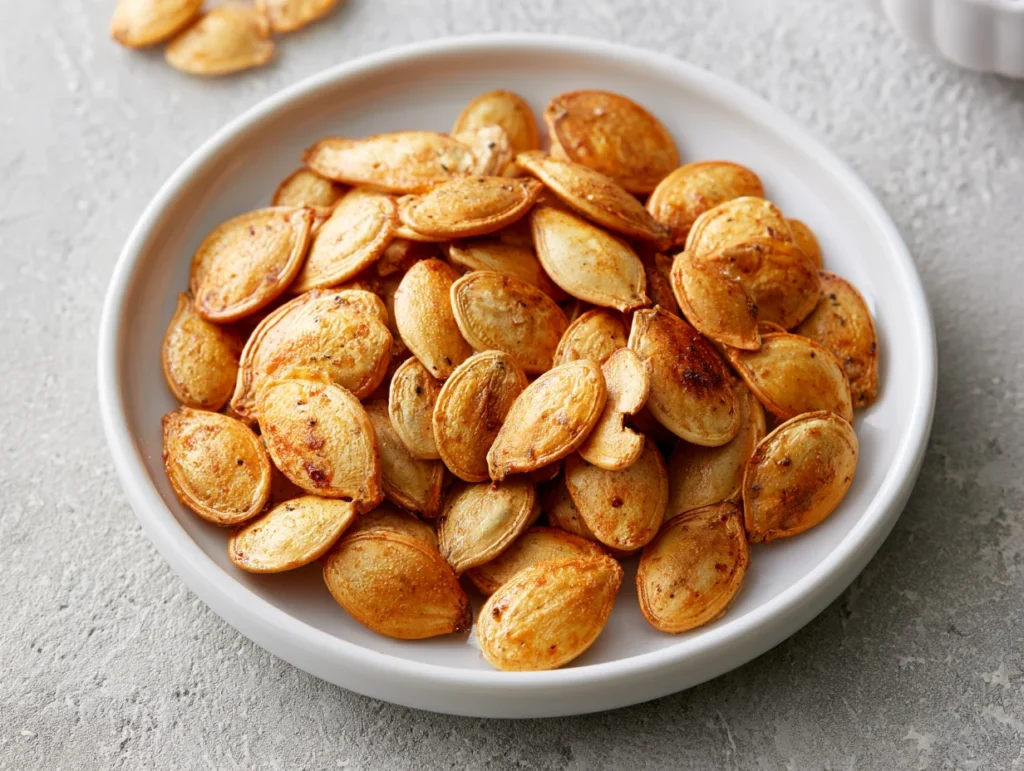
At the 20-minute mark, remove the tray and stir the seeds thoroughly with a spatula, flipping them and redistributing any that have migrated to the edges where heat is more intense. Return the tray to the oven for an additional 15 to 20 minutes, stirring every 8 minutes during this final phase. The seeds are done when they are uniformly golden, noticeably lighter in weight than they started, and produce a dry, hollow sound when you stir them. Watch carefully during the final 5 minutes — the line between perfectly roasted and overdone is narrow.
Step 6: Cool Completely Before Serving
Remove the tray from the oven and spread the seeds out as much as possible on the tray. Allow them to cool completely at room temperature for at least 15 to 20 minutes before transferring to a serving bowl or storage container. The seeds continue to crisp as they cool — this is not optional resting time, it is an active part of the roasting process. Seeds eaten immediately from the oven will seem slightly soft and will be significantly hotter than they appear. Patience here is directly rewarded with a better final texture.
Cook Time
Total:
55 minutes to 1 hour (including 30-minute drying time)
Prep:
15 minutes
Bake:
35 to 40 minutes
Servings
This recipe uses 2 cups of raw cleaned pumpkin seeds, which is the approximate yield from one medium to large carving pumpkin. The finished roasted volume is slightly less than the raw volume as moisture is lost during roasting, but the batch is generous enough for sharing or storing through several days of snacking.
As a standalone snack served in a bowl, this batch comfortably serves four to six people. As a salad topping or soup garnish portioned individually, the same batch stretches to eight or more servings without any adjustment to the recipe.
Makes approximately 1 and 3/4 cups of roasted pumpkin seeds.
Common Mistakes in This Recipe
Insufficient drying before roasting is the mistake that undermines this recipe more consistently than any other. Seeds that carry surface moisture into the oven spend the first critical minutes of roasting time releasing steam rather than making direct contact with dry oven heat. The result is a seed that is soft, sometimes rubbery, and unable to develop the hollow, crispy shell that defines a properly roasted pumpkin seed. No amount of additional roasting time fully recovers a seed that steamed through its first phase.
Roasting at too high a temperature is the second most common error. The instinct to use 400°F or higher to speed up the process reliably produces seeds with burnt outer shells and underdone interiors. The lower temperature of 325°F allows the heat to penetrate the shell gradually, drying the seed from the inside out and delivering a consistent crunch without any bitterness from scorched seasoning.
Leaving pulp on the seeds before roasting is a detail that seems minor but creates a significant problem in the oven. Fibrous pumpkin pulp burns at a lower temperature than the seed itself, producing dark, bitter spots throughout the batch that affect both flavor and appearance. Rinsing thoroughly and removing all visible pulp before drying is not an optional preparation step.
Seasoning the seeds before they have been properly oiled causes spices to clump, fall off during roasting, and distribute unevenly across the finished batch. The correct sequence — oil first, toss until every seed glistens, then season — ensures the oil acts as a uniform adhesive that holds the spice coating evenly in place from the moment the tray enters the oven to the moment it comes out.
Solutions to Common Mistakes
Give the seeds significantly more drying time than feels necessary. After rinsing, spread them across a clean kitchen towel, press firmly to absorb surface water, and then leave them completely undisturbed at room temperature for 30 minutes minimum. If you extracted the seeds the night before, leaving them uncovered overnight on the counter produces seeds so thoroughly dry that the oven can focus entirely on crisping rather than first removing moisture.
Trust the lower oven temperature. Roasting at 325°F feels counterintuitively slow when you are accustomed to roasting vegetables at 400°F or higher, but pumpkin seeds are structurally different from vegetables — their thin shell requires gentler, more sustained heat to crisp evenly without burning. Set the temperature correctly from the beginning and resist the urge to increase it partway through to speed the process.
Rinse the seeds under cold running water and use your fingers to work through them systematically, removing every visible strand of pulp before the seeds go near the towel for drying. If you notice pulp remaining after the first rinse, rinse again. Clean seeds roast more evenly, season more cleanly, and taste significantly better than seeds with any pulp residue remaining on the surface.
Always oil before you season. Pour the oil over the dried seeds, toss thoroughly until every seed has a visible light coating, and then add all seasonings at once. Toss a second time after seasoning and check the bowl for any seeds that have settled to the bottom without coating. This sequence takes thirty extra seconds and makes a measurable difference in how evenly the finished seeds are flavored.
Nutritional Information (approx. per serving)
- Calories: 170 kcal
- Total Fat: 14g
- Saturated Fat: 2.5g
- Protein: 9g
- Total Carbohydrates: 4g
- Dietary Fiber: 1g
- Net Carbs: 3g
- Sodium: 290mg
- Magnesium: 37% of Daily Value
- Zinc: 23% of Daily Value
- Iron: 14% of Daily Value
- Phosphorus: 28% of Daily Value
- Potassium: 260mg
Pumpkin seeds are one of the most magnesium-dense whole foods available, providing 37% of the daily recommended value in a single serving. Magnesium is involved in over 300 enzymatic processes in the body, including energy production, protein synthesis, muscle contraction, and the regulation of blood pressure — making it one of the most consequential minerals for overall physiological function.
The zinc content in pumpkin seeds is equally significant. Zinc plays a direct role in immune function, wound healing, and testosterone production, and is a mineral that many people — particularly those eating plant-forward diets — consume in quantities below recommended levels. A small handful of roasted pumpkin seeds provides nearly a quarter of the daily requirement.
The fat profile of pumpkin seeds is predominantly unsaturated, with meaningful concentrations of oleic acid and linoleic acid — the same types of fatty acids associated with cardiovascular health in olive oil and other well-regarded sources. These fats also support the absorption of fat-soluble vitamins consumed alongside the seeds in a meal or snack context.
At 9 grams of protein per serving, roasted pumpkin seeds are one of the most protein-complete plant-based snacks available. They contain all essential amino acids and are a particularly useful protein source for vegetarian and vegan eaters looking for satisfying, portable options that do not require refrigeration or preparation at the point of consumption.
Storage Instructions
Allow the roasted seeds to cool completely on the baking tray before transferring them to any container — the 15 to 20 minutes of cooling time on the tray is when the final stage of crisping occurs, and sealing them while still warm traps residual steam that immediately begins softening the texture. Once fully cooled, they should sound hollow and dry when stirred before you move them to storage.
Store at room temperature in an airtight container or sealed glass jar for up to two weeks. Unlike many snacks, properly roasted and fully cooled pumpkin seeds hold their texture exceptionally well over time when stored in a genuinely airtight container kept away from humidity, heat, and direct sunlight. A pantry shelf or kitchen cupboard is the ideal location.
If the seeds soften during storage — which can happen in humid climates or if the container was not fully airtight — spread them on a baking sheet and return them to a 300°F oven for 8 to 10 minutes. Allow them to cool completely again before returning to the container. This re-roasting technique restores a significant amount of the original crunch and is worth doing rather than discarding a batch.
Roasted pumpkin seeds can also be frozen in a sealed freezer bag for up to three months without significant texture loss. Because they contain very little water, they freeze and thaw well — simply spread the thawed seeds on a tray and crisp them in a 300°F oven for 5 minutes before serving to restore the texture fully before eating.
Suggestions
Use roasted pumpkin seeds as a salad topping in place of croutons or store-bought nut toppings. They add a genuinely satisfying crunch to simple green salads, roasted beet salads, and autumn grain bowls without the refined carbohydrates of a crouton. A small handful scattered over dressed arugula, shaved Parmesan, and sliced pear creates a salad with excellent textural contrast and sophisticated flavor.
Add them to homemade granola for a protein and mineral boost that standard oat-and-nut granola does not provide. Fold a cup of roasted pumpkin seeds into your granola mixture before baking, or simply stir them into a finished batch after cooling. They hold their crunch through the granola baking process and pair naturally with oats, honey, cinnamon, and dried fruit.
Blend roasted pumpkin seeds into a smooth seed butter using a high-powered food processor — process for 8 to 10 minutes, scraping down the sides regularly, until the oils release and the mixture becomes completely smooth. The resulting pepita butter is rich, slightly nutty, and works as a direct substitute for peanut or almond butter on toast, in smoothies, and as a dip for apple slices.
For a sophisticated cocktail party snack, toss a warm batch with a small amount of melted butter, fresh rosemary, a pinch of cayenne, and flaky sea salt immediately after they come out of the oven. Serve warm in small ramekins alongside drinks. The combination of herbal, salty, and spicy notes makes them considerably more interesting than any packaged snack you could offer instead.
Seasonal Relevance
Roasted pumpkin seeds are one of the most distinctly seasonal recipes in the home cook’s repertoire — they are almost exclusively associated with autumn, and for good reason. October and November are when fresh pumpkins are universally available, when carving and cooking with pumpkin is at its cultural peak, and when the appetite for warm, roasted, spiced snacks aligns most naturally with what this recipe delivers.
During Halloween and the weeks surrounding it, this recipe becomes particularly valuable as a way to use every part of the pumpkins being carved for decoration. Rather than scooping the seeds into the bin along with the pulp, setting them aside to rinse, dry, and roast transforms a byproduct into something genuinely worth making — a snack that costs nothing beyond the time and seasoning already in your pantry.
Thanksgiving and the broader holiday cooking season through November and December create a second window of strong relevance for this recipe. Roasted pumpkin seeds work beautifully as a pre-dinner snack for guests, as a garnish for seasonal soups and squash dishes, and as a topping for holiday salads and grain bowls that appear on the table during this period.
Outside of autumn, raw pumpkin seeds — commercially sold as pepitas — are available year-round in most grocery stores and health food retailers. This means the recipe is not strictly limited to carving season. A batch of roasted pepitas made in February or July with dried seeds from the store delivers the same result and the same nutrition with no seasonal restriction whatsoever.
Final Words
Roasted pumpkin seeds occupy a rare position in the kitchen — they are simultaneously one of the simplest and most nutritionally impressive snacks you can make at home, and yet most people have never made them properly even once. If this recipe changes that, it has done exactly what a good recipe is supposed to do.
The technique here is straightforward but not careless. Every step — the rinsing, the extended drying, the lower oven temperature, the patient stirring — exists because it produces a measurably better result than skipping it. Cook through this recipe once with full attention to those details and the difference between these seeds and any previous attempt will be immediately apparent.
What I find most satisfying about this recipe is what it represents beyond the snack itself — the idea that good cooking is as much about attention as it is about ingredients or equipment. Nothing in this recipe is expensive, unusual, or technically demanding. What it requires is care, and that is the one ingredient that produces results no shortcut can replicate.
Make this recipe every time a pumpkin comes into your kitchen this autumn. Make it once from a bag of raw pepitas in the middle of winter. Share it, garnish with it, snack on it straight from the bowl. It earns its place in every context you put it in.
Frequently Asked Questions
Do I need to remove the white outer shell from pumpkin seeds before roasting?
No. The white shell is completely edible and becomes pleasantly crispy when roasted properly. Removing it is unnecessary and extremely time-consuming. The shell softens slightly as you chew and contributes to the overall crunch of the finished seed. Only commercially hulled green pepitas have the shell pre-removed.
Can I use pumpkin seeds from any variety of pumpkin, or only carving pumpkins?
Seeds from any pumpkin variety can be roasted using this method. Sugar pumpkins and pie pumpkins yield smaller, more tender seeds with slightly thinner shells. Carving pumpkins produce larger seeds with thicker shells that crisp particularly well. All varieties respond to the same technique, temperature, and timing with excellent results.
How do I know when the seeds are fully roasted and not just dried on the outside?
A properly roasted seed looks uniformly golden, feels noticeably lighter than it started, and makes a dry hollow sound when stirred on the tray. If you bite one and it feels chewy or dense in the center rather than crisp throughout, return the tray for another 5 minutes and check again before pulling them.
Roasted Pumpkin Seeds Recipe
4
servings15
minutes40
minutes170
kcal55
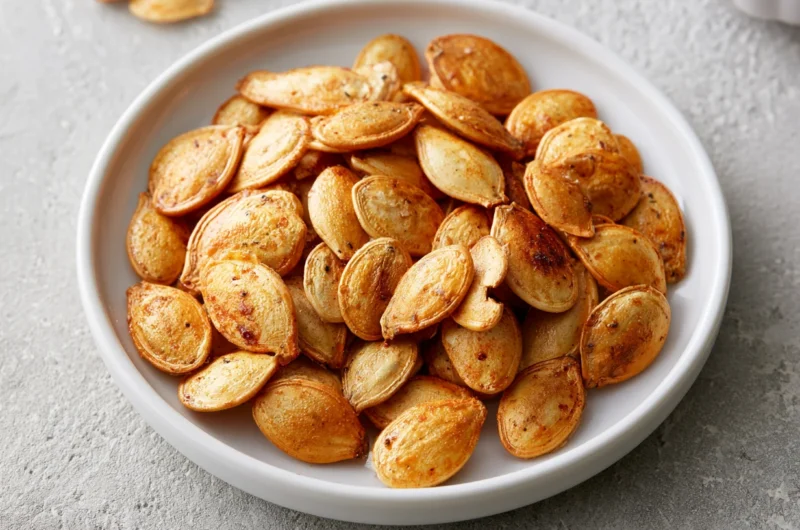
minutesCrispy, golden roasted pumpkin seeds seasoned with smoked paprika, garlic, and cayenne. A nutrient-dense, high-protein snack made from scratch with simple pantry spices — ready in under an hour and completely worth every minute.
Ingredients
Base Ingredients:
2 cups raw pumpkin seeds, cleaned and dried
1 tablespoon olive oil or avocado oil
3/4 teaspoon sea salt
1/2 teaspoon garlic powder
1/2 teaspoon smoked paprika
1/4 teaspoon black pepper
1/4 teaspoon cayenne pepper
Optional Add-ins:
1 teaspoon Worcestershire sauce
1/2 teaspoon ground cumin
1 tablespoon melted butter
1 teaspoon soy sauce or tamari
1 tablespoon maple syrup
1/2 teaspoon cinnamon and 1 tablespoon brown sugar
Directions
- Cut open the pumpkin and scoop out the seeds using a large spoon. Place seeds in a colander and rinse thoroughly under cold running water, removing all fibrous pulp strands with your fingers.
- Spread rinsed seeds in a single layer across a clean kitchen towel or paper towels. Pat firmly dry and leave uncovered at room temperature for at least 30 minutes to remove all surface moisture.
- Preheat oven to 325°F (165°C). Line a large rimmed baking sheet with parchment paper.
- Transfer the thoroughly dried seeds to a large mixing bowl. Drizzle with oil and toss until every seed is lightly and evenly coated.
- Add sea salt, garlic powder, smoked paprika, black pepper, and cayenne pepper. Toss firmly until the seasoning is distributed evenly across every seed with no bare spots or clumps remaining.
- Pour seasoned seeds onto the prepared baking sheet and spread into an even single layer with visible space around each seed.
- Roast on the center rack for 20 minutes without opening the oven or disturbing the seeds.
- At the 20-minute mark, remove the tray and stir seeds thoroughly with a spatula, flipping them and redistributing any seeds that have migrated to the edges.
- Return to the oven for an additional 15 to 20 minutes, stirring every 8 minutes. Seeds are done when uniformly golden, noticeably lighter in weight, and produce a dry hollow sound when stirred.
- Remove from oven and spread seeds out on the tray. Cool completely for 15 to 20 minutes before transferring to a serving bowl or storage container. Seeds continue crisping as they cool.
Recipe Video
Notes
- Drying the seeds thoroughly before roasting is the single most important step. Surface moisture causes the seeds to steam rather than roast, resulting in a soft and chewy texture that cannot be recovered with extra oven time.
- Always rinse seeds until completely clean with no pulp remaining. Fibrous pumpkin pulp burns during roasting and creates bitter spots throughout the batch that affect both flavor and appearance.
- Roast at 325°F, not higher. A lower temperature allows heat to penetrate the shell gradually and crisp the seed from the inside out. Higher temperatures burn the shell before the interior has time to dry properly.
- Always oil the seeds first and toss thoroughly before adding any seasonings. Oil acts as the adhesive that holds the spice coating evenly in place during the full roasting time.
- Never crowd the baking sheet. Every seed needs direct exposure to oven heat. If the tray looks full, use a second tray rather than overlapping the seeds.
- Seeds are ready when they look uniformly golden, feel lighter than they started, and make a dry hollow sound when stirred. Do not pull them early — underdone seeds turn chewy as they cool.
- Cool completely on the tray before storing. Sealing seeds while still warm traps steam and immediately begins softening the texture you worked to achieve.
- Store in an airtight container at room temperature for up to 2 weeks. If seeds soften, re-crisp in a 300°F oven for 8 to 10 minutes and cool completely before returning to the container.
- Do not freeze unless necessary. If freezing, thaw and re-crisp in a 300°F oven for 5 minutes before serving to restore texture fully.