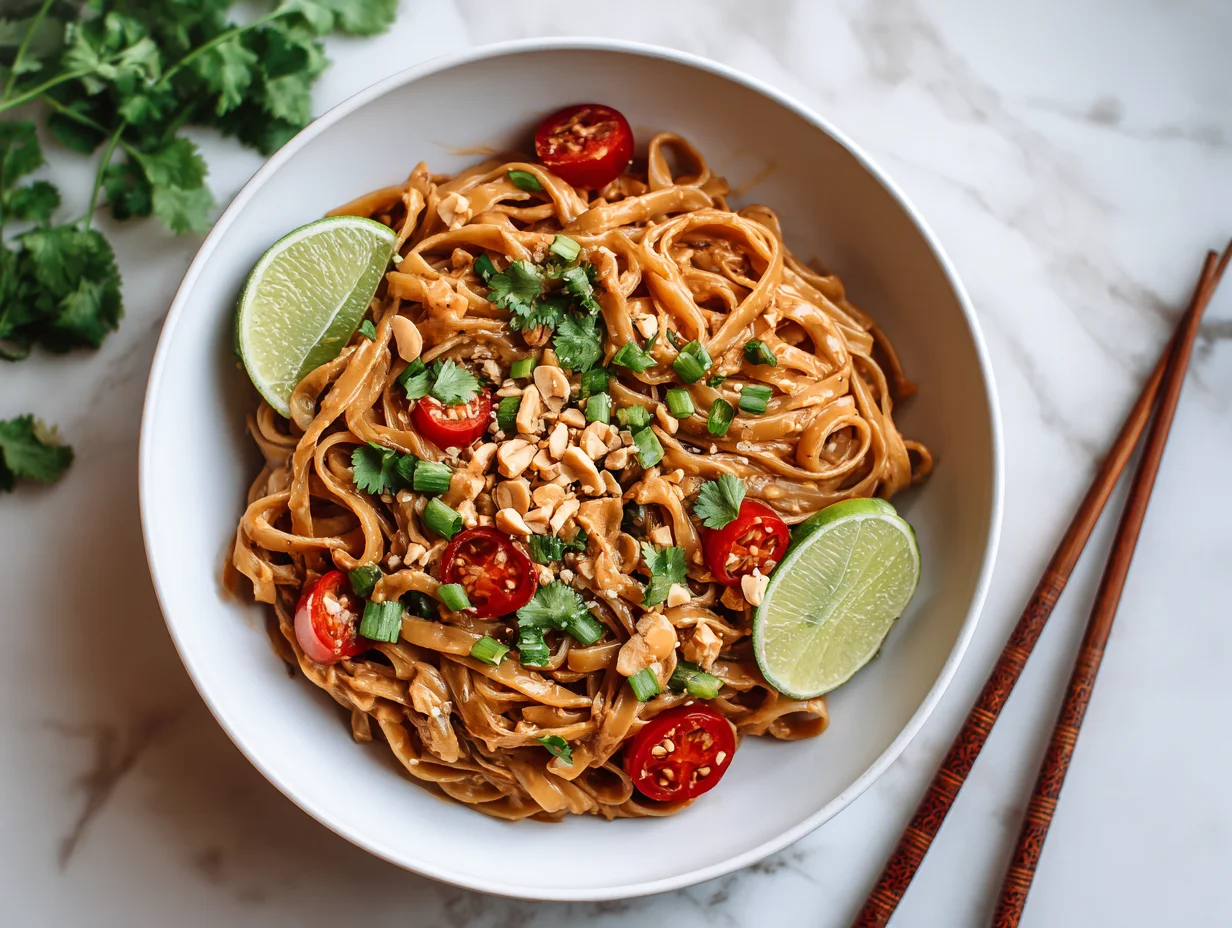
Quick Satay Noodles with Rich Peanut Sauce is one of those dishes I keep coming back to whenever I need something fast, comforting, and genuinely satisfying. As a chef, I value recipes that don’t rely on complexity but still deliver depth, and this one does exactly that.
The silky noodles coated in a creamy peanut sauce create a balance of sweetness, saltiness, and gentle spice that feels both familiar and exciting. What I love most is how accessible it is,every ingredient has a purpose, yet nothing feels complicated.
It’s the kind of recipe that works for a quick lunch after a long day or a casual dinner when you still want something thoughtful on the plate. Once you understand the sauce technique and noodle timing, this dish becomes a reliable staple in your kitchen repertoire.
? If you enjoy creamy noodle dishes with bold flavor, you’ll also love our Creamy Garlic Lemon Chicken Rich Delicious Sauce.
Overcooking the Noodles Until They Turn Mushy and Sticky in Satay Noodles
One of the most common mistakes I notice, even among experienced home cooks, is overcooking the noodles. In satay noodles, texture is everything. The dish depends on noodles that are springy and slightly firm so they can carry the rich peanut sauce properly.
When noodles are left boiling too long or forgotten in hot water, they lose structure and become soft and sticky. From my experience, this is where most dishes go wrong,they stop feeling like satay noodles and start resembling a heavy, clumped mass.
Another issue is skipping the immediate cooling step, which allows residual heat to continue cooking them. Proper texture is not just a detail here; it defines the entire eating experience.
Perfect Noodle Handling Technique for Silky and Well-Coated Satay Noodles
The solution is simple but requires attention. I always cook noodles just until they are al dente, sometimes even removing them a few seconds earlier than the packet suggests. Once drained, I rinse them briefly under cool water to stop the cooking process completely.
This step preserves their structure. Then I lightly toss them with a small amount of oil to prevent sticking without interfering with flavor absorption.
The real key, however, is timing,your satay sauce should already be ready so the noodles go straight into it while still fresh and warm. This ensures they absorb the sauce evenly instead of sitting and clumping together. Gentle tossing rather than aggressive mixing keeps them intact and glossy.
Ingredients List
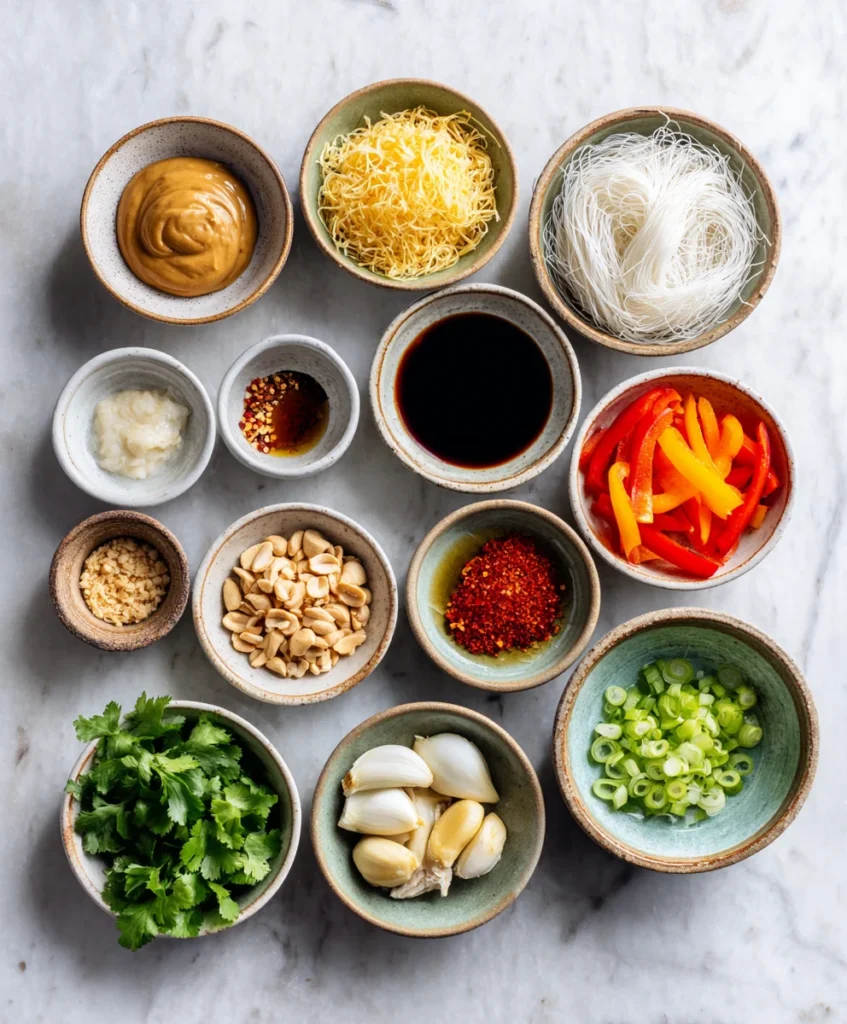
Base Ingredients:
- Egg noodles or rice noodles
- Creamy peanut butter
- Soy sauce
- Garlic (finely minced)
- Fresh ginger (grated)
- Coconut milk
- Brown sugar
- Lime juice
- Chili flakes or fresh red chili
- Neutral cooking oil
Optional Add-ins:
- Chicken slices or tofu cubes
- Bell peppers (sliced)
- Carrots (julienned)
- Spring onions (chopped)
- Crushed roasted peanuts
- Sesame seeds
- Fresh coriander leaves
Step-by-Step Instructions
Preparing the Noodles
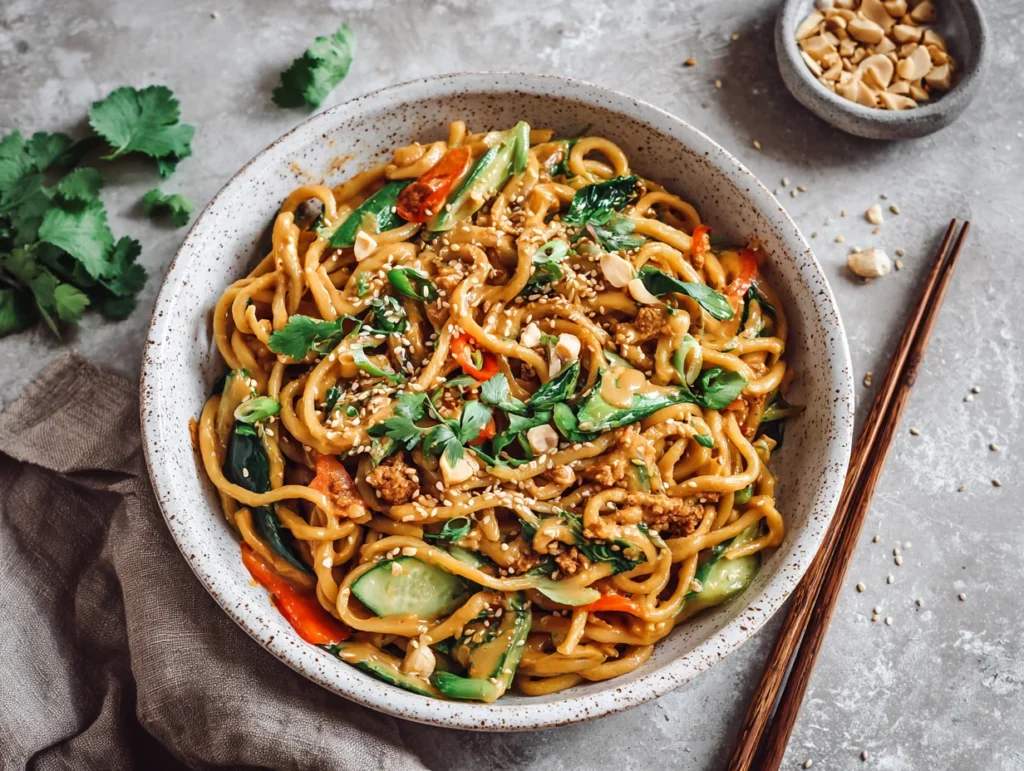
When I prepare satay noodles, I always start with the noodles because their texture decides everything. Bring a large pot of water to a boil and season it lightly with salt. Add the noodles and cook them just until al dente,firm enough to hold shape but soft enough to bite through easily.
Stir occasionally to prevent sticking. Once done, drain immediately and rinse under cool water to halt the cooking process. This step is essential in my kitchen because it locks in texture. Finally, I toss them gently with a few drops of oil to keep them separated until they meet the sauce. This simple control ensures the noodles remain structured and ready to absorb flavor later.
? For another quick and satisfying Asian-inspired meal, try our Easy Teriyaki Chicken.
Making the Satay Peanut Sauce
The soul of this dish lies in the sauce, and I treat it with care. In a pan over medium heat, I add a little oil and gently sauté garlic and ginger until fragrant but not browned. Then I lower the heat and introduce peanut butter, soy sauce, coconut milk, brown sugar, and lime juice. As it warms, I stir continuously until it becomes a smooth, creamy sauce.
If it feels too thick, I loosen it with a splash of warm water. This is where balance matters most,sweet, salty, tangy, and slightly spicy should all be in harmony. A well-made sauce should coat the back of a spoon and glide effortlessly over noodles.
Combining Noodles and Sauce
Once the sauce is ready, I immediately add the noodles while everything is still warm. Timing is crucial here. I gently toss them using tongs, making sure every strand gets coated without breaking. This is not a step to rush or force.
If you overmix, the noodles lose their structure. If you under-mix, the flavor remains uneven. I often add cooked chicken or vegetables at this stage so they absorb the sauce as well. The goal is a glossy, even coating where every bite carries the same richness. A minute on low heat is usually enough for everything to come together beautifully.
Final Garnishing and Flavor Adjustment
Before serving, I always taste and make final adjustments. A small squeeze of lime can brighten the entire dish, while a pinch of chili adds depth. Then I finish with crushed peanuts, spring onions, and fresh coriander. These garnishes are not just decoration,they add texture and freshness that balance the creamy sauce. I prefer serving satay noodles immediately while they are still warm and glossy. At this stage, everything should feel cohesive, with aroma, flavor, and texture working together in harmony.
Cook Time
Total: 25 minutes
Prep: 10 minutes
Bake: Not required
Servings
In my experience, this recipe comfortably serves two to three people depending on appetite and added ingredients. It works beautifully as a quick solo meal or a shared dish for a light dinner. The richness of the peanut sauce makes it quite filling even in moderate portions. I often prepare it for busy days when I want something satisfying without spending too much time in the kitchen. It also scales well, which makes it ideal for small gatherings or meal prep.
Makes approximately 2–3 servings
Nutritional Information (approx. per serving)
- Calories: 420–480 kcal
- Protein: 12–18 g
- Carbohydrates: 55–65 g
- Fat: 18–22 g
- Fiber: 4–6 g
From a chef’s perspective, this dish offers a balanced nutritional profile. The peanuts provide healthy fats and plant-based protein, while noodles offer quick energy. Coconut milk adds richness without overwhelming heaviness. When I prepare it with vegetables or lean protein, it becomes a complete and satisfying meal. Despite its indulgent taste, it can easily fit into a balanced eating plan when portioned mindfully.
? If you like rich peanut and savory sauces, you’ll definitely enjoy our Sticky Honey Garlic Chicken Recipe.
Storage Instructions
If there are leftovers, I always recommend cooling them completely before storing. Place the noodles in an airtight container and refrigerate for up to two to three days. When reheating, add a small splash of water or coconut milk to restore the creamy consistency. Heat gently to avoid separating the sauce. In my kitchen practice, I often prefer storing sauce and noodles separately when preparing ahead, as this keeps the texture fresher. When combined later, the dish regains its original richness with minimal effort.
Suggestions
What I love about satay noodles is how flexible they are. You can easily adapt them depending on what you have in your kitchen. I often add grilled chicken for protein or tofu for a vegetarian version. Extra vegetables like bell peppers or snap peas bring freshness and crunch. If you prefer stronger heat, increase the chili content gradually until it suits your taste. A drizzle of extra coconut milk can make the dish richer, while lime keeps it bright. I also enjoy serving it alongside a light salad or soup to balance the creaminess.
Seasonal Relevance
In my experience, satay noodles work in every season, but they truly shine in cooler months when warm, rich meals are most comforting. The creamy peanut sauce feels grounding and satisfying during winter evenings. In warmer months, I adjust the recipe by adding fresh herbs, extra lime, and crisp vegetables to lighten it up. This adaptability is what makes it a permanent fixture in my cooking rotation throughout the year. It evolves naturally with the seasons without losing its identity.
Quick Satay Noodles with Rich Peanut Sauce is a dish I genuinely respect for its simplicity and depth. It proves that great food does not always require complexity,just technique, balance, and timing. When done correctly, it delivers a creamy, nutty, and perfectly balanced flavor that feels both comforting and refined. For me, this is not just a quick meal; it’s a dependable recipe that consistently performs well in both home kitchens and professional settings. Once mastered, it becomes one of those dishes you return to again and again without hesitation.
? For a comforting noodle-based dinner option, check out Simple Noodle Soup Recipe.
Frequently Asked Questions
Q1: Can I use spaghetti instead of noodles?
Yes, spaghetti works as a substitute when Asian noodles are not available. I recommend cooking it slightly al dente and rinsing it lightly to remove excess starch. While the texture differs slightly, it still carries the satay sauce quite well.
Q2: How do I make the sauce less heavy?
To lighten the sauce, I usually reduce peanut butter slightly and increase coconut milk or water. Adding more lime juice also helps balance richness. The goal is to maintain creaminess without making it overly dense or heavy.
Q3: Can I prepare satay sauce in advance?
Absolutely. In fact, I often prepare the sauce a day ahead. It stores well in the refrigerator and even develops deeper flavor overnight. Just reheat gently and adjust consistency before mixing with noodles.
Q4: What protein works best with this dish?
Chicken, shrimp, and tofu all work beautifully. Personally, I prefer lightly grilled chicken or crispy tofu because they absorb the sauce without losing texture. The key is not overcooking the protein so it remains tender.
Q5: How do I keep noodles from sticking after cooking?
After draining, I always rinse them under cool water and toss them with a very small amount of oil. This prevents clumping and keeps them separate until they are mixed with the sauce, ensuring even coating later.