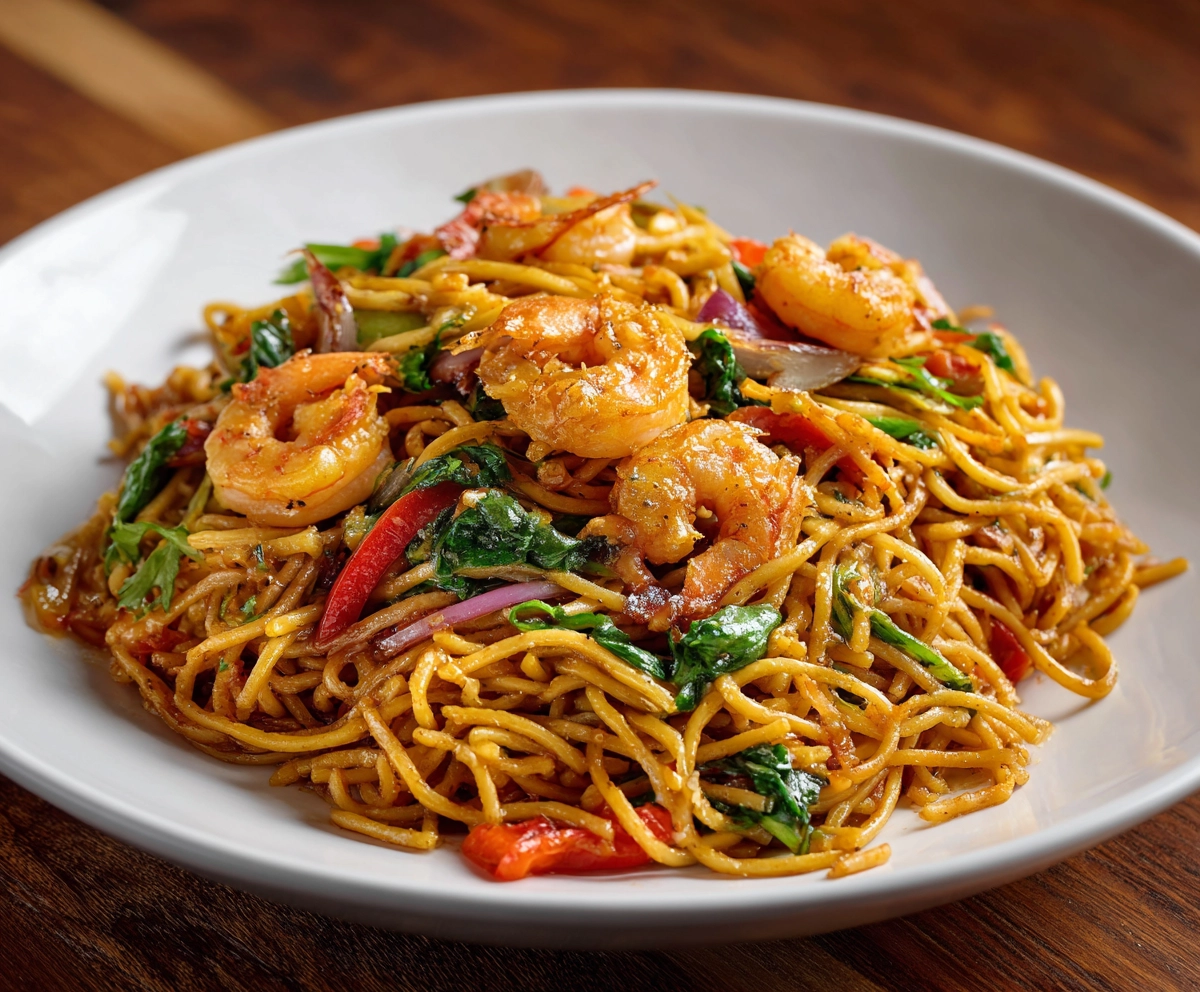
Shrimp Lo Mein Better Than Takeout at Home
Shrimp Lo Mein has always carried a certain comfort that bridges street food simplicity with restaurant sophistication, yet what I present here is a refined home interpretation that surpasses typical takeout standards. In this version, I focus on precision, balance, and restraint rather than excess. Each element shrimp, noodles, and vegetables is treated with intention so the final dish feels cohesive rather than rushed. The sauce is layered rather than heavy, allowing umami depth without overpowering freshness. What makes this preparation stand apart is its discipline in timing and heat control, ensuring every bite reflects clarity of flavor. This is not just a quick noodle dish; it is a thoughtfully composed wok recipe designed to bring restaurant level execution into a home kitchen with consistency and elegance.
Overcrowding the Wok and Rushing the Sauce Balance
One of the most frequent missteps I observe in home kitchens is the tendency to overcrowd the wok while simultaneously rushing the sauce integration. When too many ingredients are introduced at once, the wok loses its high heat integrity and begins to steam rather than sear. The shrimp loses its delicate snap, vegetables soften beyond their natural crispness, and noodles become heavy instead of glossy. Equally important is the timing of the sauce. When added prematurely, it overwhelms the dish; when delayed, it fails to bind. The result is a disjointed plate lacking harmony. This mistake often stems from enthusiasm rather than technique, but it ultimately diminishes the dish’s structure, reducing what should be a vibrant stir fry into something uneven and overly dense in texture and flavor.
Mastering Heat Control and Sauce Emulsification for Perfect Lo Mein
The correction lies in understanding rhythm rather than speed. A well executed Shrimp Lo Mein depends on controlled heat and a thoughtfully emulsified sauce that behaves as a unified element rather than separate liquids. In practice, this means working in deliberate batches that preserve wok temperature and allow each ingredient its moment of proper searing. Shrimp should remain succulent, vegetables should retain bite, and noodles must absorb flavor without collapse. The sauce, when pre blended correctly, should glide over the ingredients and immediately coat them under high heat. This creates a natural gloss that defines professional stir frying. When these principles align, the dish transforms from simple home cooking into something that carries clarity, balance, and a refined restaurant style finish that feels intentional in every mouthful.
Ingredients List
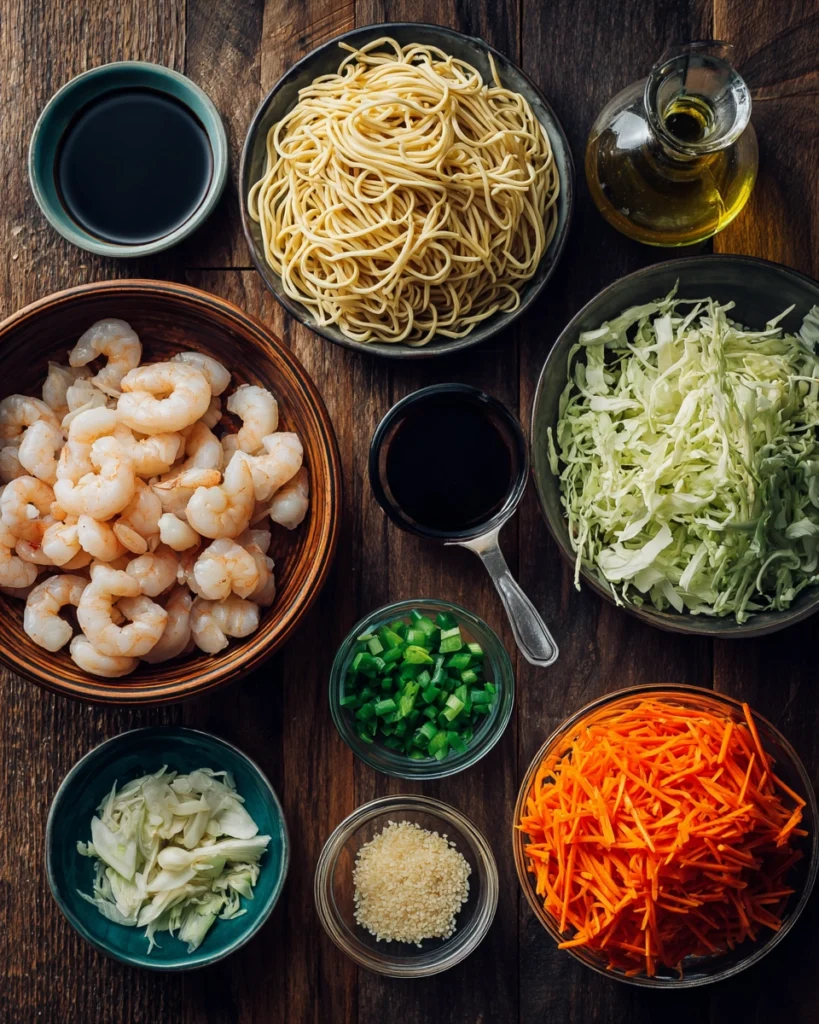
Base Ingredients:
- Egg noodles or lo mein noodles
- Raw shrimp, peeled and deveined
- Soy sauce
- Oyster sauce
- Garlic, finely minced
- Fresh ginger, finely chopped
- Green onions
- Cabbage, thinly shredded
- Carrots, julienned
- Vegetable oil
Optional Add-ins:
- Bell peppers
- Mushrooms
- Bean sprouts
- Chili flakes
- Sesame seeds
- Hoisin sauce
Step-by-Step Instructions
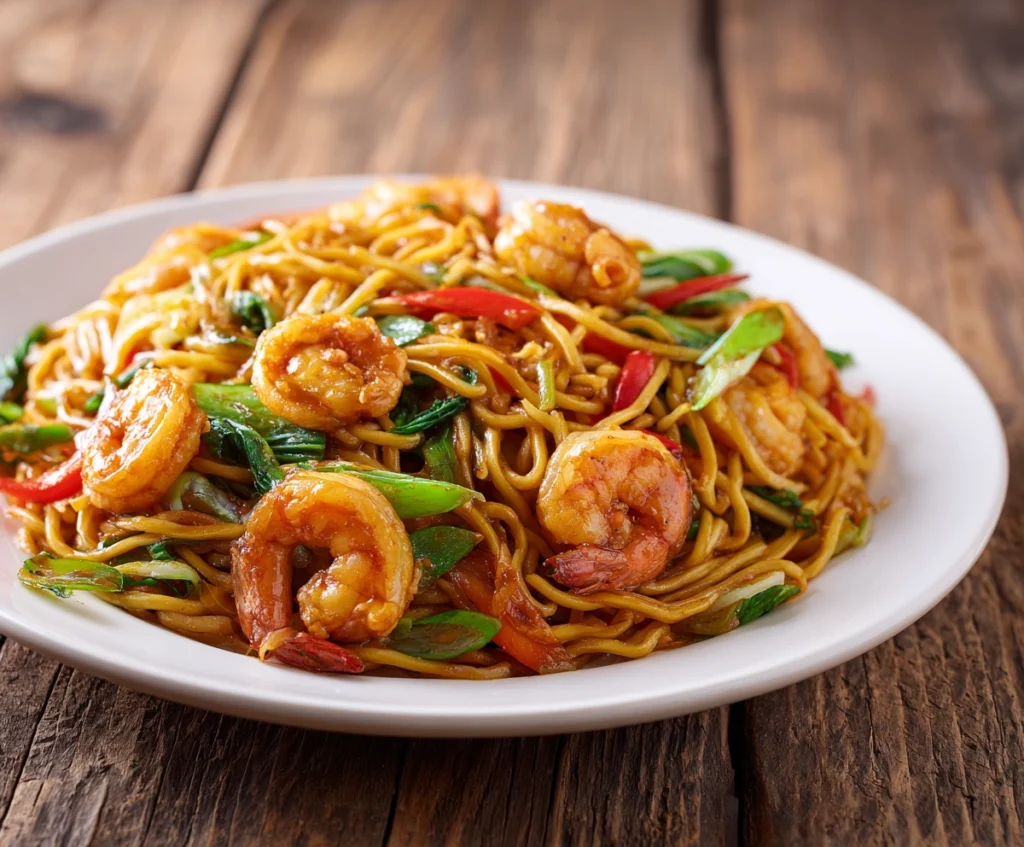
Step 1: Preparing noodles and shrimp with precision
The foundation of a well balanced Shrimp Lo Mein begins with preparation done calmly and with foresight. The noodles are boiled just until they reach a tender yet firm bite, then lightly coated to preserve separation. Shrimp, meanwhile, is handled with care, ensuring it remains dry before it ever touches heat, which is essential for achieving proper sear rather than steam. Vegetables are sliced uniformly, not only for aesthetics but for even cooking. At this stage, nothing is rushed. The goal is to establish readiness so that the cooking process itself becomes fluid and uninterrupted, allowing heat and timing to guide the dish rather than urgency or improvisation.
Step 2: Crafting a balanced lo mein sauce
The sauce in Shrimp Lo Mein is not merely a seasoning agent but the structural backbone of the dish. It is composed with balance in mind soy for salt depth, oyster sauce for umami richness, ginger and garlic for aromatic lift, and a subtle hint of sweetness to round the edges. When whisked together, the mixture should feel cohesive, almost lacquer like in appearance. This preparation ensures that once it meets heat, it distributes evenly rather than separating. A well built sauce does not dominate; it integrates. It should feel like an invisible thread binding shrimp, vegetables, and noodles into a unified culinary expression.
Step 3: Stir frying shrimp and vegetables with controlled intensity
At this stage, heat becomes the defining factor. The wok is brought to a high temperature until it responds instantly to oil. Shrimp is introduced briefly, searing just enough to preserve its tenderness and natural sweetness before being removed. Vegetables follow, exposed to the same intensity but only long enough to awaken their texture and color without surrendering structure. This sequence is deliberate, not reactive. Each component is treated individually so that, when combined later, they retain identity while contributing to harmony. The discipline here ensures that the final dish does not blur into uniformity but instead maintains layered texture and freshness.
Step 4: Bringing everything together with intentional tossing
The final assembly is where technique becomes visible. Noodles return to the wok, followed by shrimp and vegetables, and the sauce is introduced in a controlled, even manner. The tossing process is continuous but measured, allowing each strand of noodle to absorb flavor without becoming saturated. The heat encourages the sauce to cling, creating a natural sheen that signals proper execution. Green onions are added at the end not as decoration but as a final lift of freshness. When completed correctly, the dish achieves balance between moisture, texture, and aroma, reflecting the precision of timing rather than complexity of ingredients.
Cook Time
Total: 25 minutes
Prep: 15 minutes
Bake: 0 minutes
Servings
This Shrimp Lo Mein is composed to serve approximately three to four individuals, depending on appetite and accompanying dishes. It functions well as a standalone meal due to its balance of protein, carbohydrates, and vegetables. In a home dining context, it often becomes the centerpiece rather than a side, offering both satisfaction and completeness. The portioning is intentionally flexible, allowing adaptation for family meals or intimate gatherings without compromising flavor integrity or texture quality.
Makes approximately 4 servings
Nutritional Information (approx. per serving)
- Calories: 420 kcal
- Protein: 28 g
- Carbohydrates: 48 g
- Fat: 14 g
- Fiber: 4 g
- Sodium: 780 mg
From a nutritional perspective, Shrimp Lo Mein offers a considered balance of macronutrients. Shrimp provides lean protein that supports muscle function and satiety, while vegetables contribute fiber and micronutrients essential for digestion and immune support. The carbohydrate base supplies energy, making it suitable as a complete meal. When prepared thoughtfully at home, sodium and oil levels can be moderated, transforming what is often perceived as indulgent takeout into a more controlled, nourishing dish without sacrificing flavor depth.
Storage Instructions
Proper storage of Shrimp Lo Mein requires attention to timing and containment. Once cooled slightly, it should be transferred into airtight containers and refrigerated promptly to maintain both safety and texture integrity. It remains suitable for consumption for up to three days when stored correctly. Reheating is best done in a pan rather than a microwave, allowing heat to revive texture gradually. A small addition of water or oil helps restore moisture balance. This method ensures that shrimp retains tenderness and noodles regain elasticity rather than drying out or becoming overly dense.
Suggestions
This dish allows subtle refinement depending on personal preference. A light addition of chili oil can introduce warmth without overwhelming structure, while citrus accents can elevate brightness. Pairing with simple starters enhances the dining experience without distraction. Substitutions such as chicken or tofu maintain the dish’s integrity while offering variation. Fresh garnishes should be treated as finishing elements rather than decorative afterthoughts, as they contribute directly to aroma and perception. Small adjustments, when made thoughtfully, can shift the dish from familiar comfort to a more expressive culinary experience.
Seasonal Relevance
Shrimp Lo Mein adapts naturally across seasons due to its structural flexibility. In colder months, its warmth and depth provide comfort and grounding. In warmer seasons, its light vegetable composition and quick preparation make it suitable for less heavy dining. Seasonal produce can be integrated seamlessly without altering the dish’s identity, allowing it to remain relevant year round. This adaptability is part of its enduring appeal, offering consistency while still accommodating variation in ingredients and personal taste preferences.
Conclusion
Shrimp Lo Mein, when approached with attention rather than haste, becomes more than a simple stir fried noodle dish. It transforms into a study of balance heat, timing, texture, and restraint working in quiet coordination. What distinguishes this preparation is not complexity but clarity of execution. Each component is allowed to express itself while contributing to a unified whole. In this sense, the dish reflects a broader philosophy of cooking where precision replaces excess and intention replaces guesswork. The result is a meal that feels both familiar and elevated, grounded yet refined.
Frequently asked questions
Can Shrimp Lo Mein be made without a wok?
Yes, a large skillet can be used effectively if it retains high heat. The key is working in small batches to prevent steaming. Proper heat control compensates for the absence of a traditional wok and still allows good searing and flavor development.
What is the best way to keep shrimp tender?
Shrimp should be cooked briefly at high heat and removed as soon as it turns pink. Overcooking is the main cause of toughness. Resting it outside the pan before final mixing helps preserve its natural juiciness and texture.
Can I prepare the sauce in advance?
Yes, preparing the sauce ahead of time is recommended. It allows flavors to meld and ensures faster cooking during stir frying. Keeping it pre mixed also improves consistency when it meets heat in the wok.
How do I avoid oily noodles?
Using moderate oil and ensuring high heat prevents absorption excess. Tossing continuously helps distribute oil evenly rather than allowing it to pool. Proper timing also ensures noodles coat rather than soak in oil.
Is fresh ginger necessary for this recipe?
Fresh ginger is strongly preferred because it provides aromatic brightness that powdered forms cannot replicate. It enhances the depth of the sauce and supports balance within the overall flavor structure of the dish.
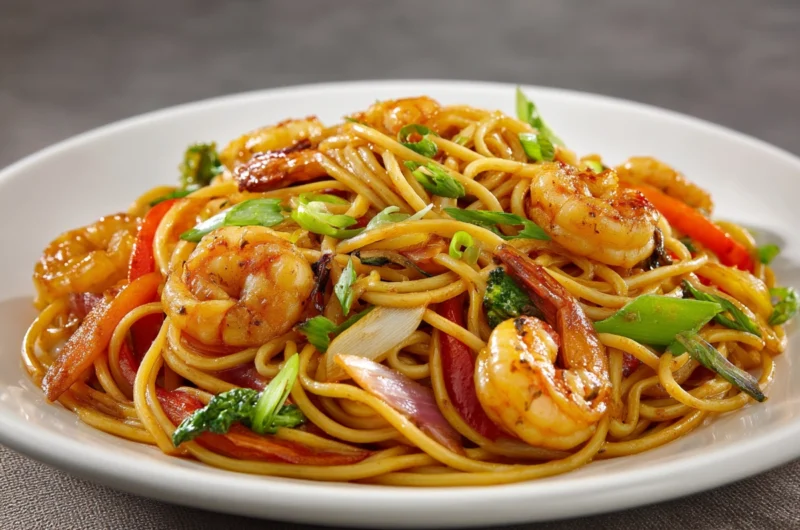
Shrimp Lo Mein Better Than Takeout at Home
4
servings15
minutes10
minutes1700
kcal25
minutesShrimp Lo Mein is a classic stir-fried noodle dish elevated here with precise technique and balanced seasoning to deliver a restaurant-quality result at home. Tender shrimp, perfectly cooked noodles, and crisp vegetables are coated in a deeply savory umami sauce that brings harmony to every bite. Unlike greasy takeout versions, this homemade interpretation focuses on freshness, controlled heat, and proper wok timing. The result is a glossy, flavorful noodle dish that feels light yet satisfying, making it ideal for both quick dinners and special occasions.
Ingredients
- Noodles & Protein
300g egg noodles or lo mein noodles
250g shrimp, peeled and deveined
2 tbsp vegetable oil
- Vegetables
1 cup cabbage, shredded
1 medium carrot, julienned
3–4 green onions, chopped
½ cup bell peppers (optional)
½ cup mushrooms (optional)
- Sauce
3 tbsp soy sauce
2 tbsp oyster sauce
1 tbsp sesame oil
2 cloves garlic, minced
1 tsp ginger, finely chopped
1 tsp sugar
2 tbsp water
Directions
- Boil noodles until just tender, then drain and toss lightly with oil to prevent sticking.
- Mix all sauce ingredients in a small bowl and set aside.
- Heat wok over high flame, add oil, and quickly sear shrimp until pink. Remove and set aside.
- In the same wok, stir fry vegetables for 2–3 minutes until slightly crisp.
- Add noodles and shrimp back into the wok.
- Pour prepared sauce evenly and toss continuously over high heat until fully coated.
- Finish with green onions, toss once more, and serve immediately while hot and glossy.
Recipe Video
Notes
- Do not overcook shrimp, as it becomes rubbery very quickly under high heat.
- Always prepare all ingredients before starting cooking because stir frying moves fast.
- If noodles begin sticking, a small splash of water can help loosen them without affecting taste.