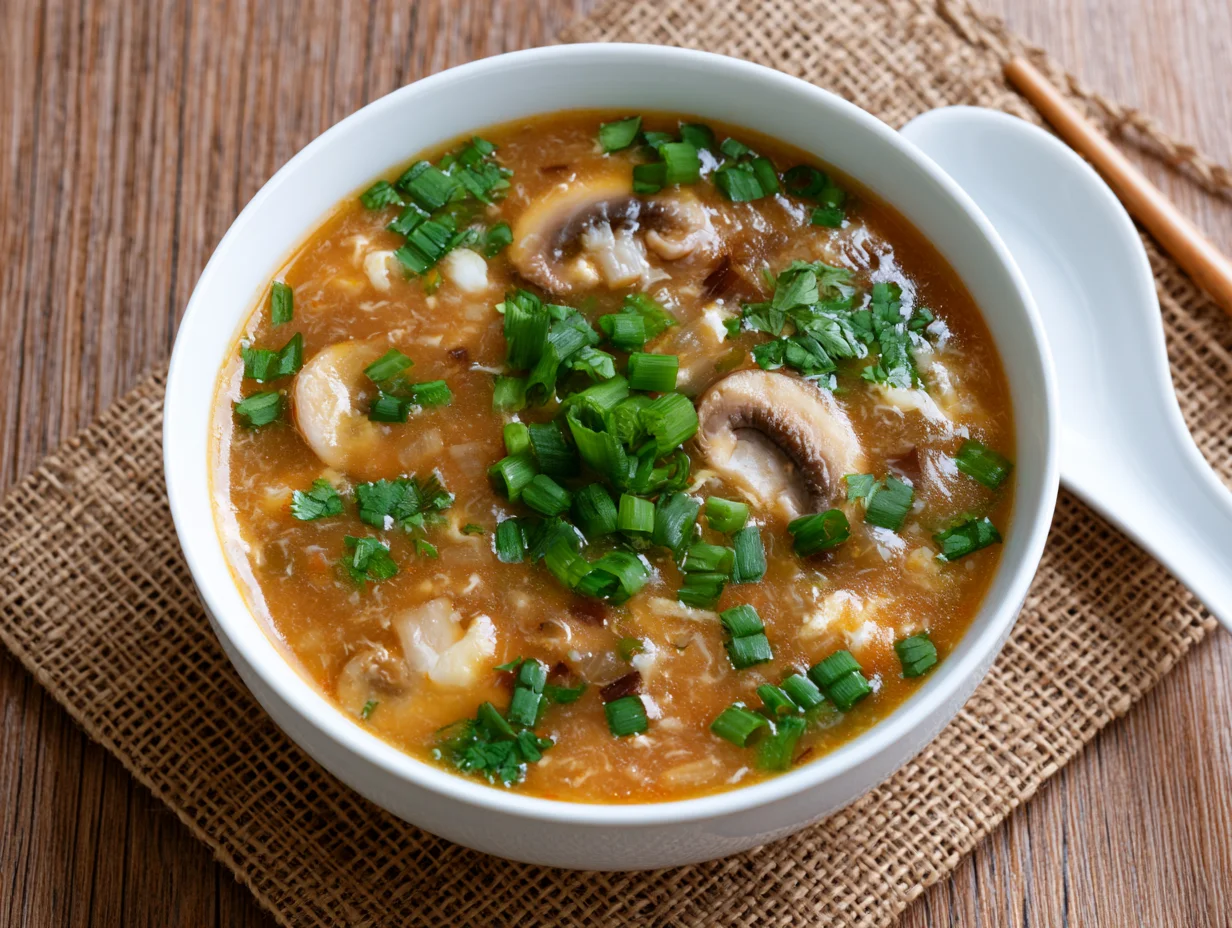
Spicy Hot and Sour Soup Recipe
There is a reason hot and sour soup has earned a permanent spot on takeout menus and home kitchen rotations alike. It hits every note a great soup should: heat that lingers just enough, tang that wakes up your palate, and a silky body that makes each spoonful feel indulgent without being heavy. This is comfort food with personality.
What makes this version special is balance. Too many home cooks either drown the soup in vinegar or skip the white pepper entirely, losing that signature warmth. I have spent years adjusting ratios, testing broths, and tasting batch after batch to land on a formula that delivers restaurant-quality depth in under thirty minutes, using ingredients you can find at any grocery store.
This recipe is built for real kitchens. No obscure pastes, no hard-to-source vegetables, no complicated techniques. Just a well-seasoned broth, a handful of pantry staples, and a method that respects your time while still producing something genuinely impressive.
Whether you are nursing a cold, craving something bold on a rainy evening, or simply tired of bland soup recipes, this one earns its place at your table. Let’s get into it.
Ingredients You’ll Need
Great soup starts with a short list of honest ingredients, not a shopping list a mile long. Here is everything this recipe asks of you, organized so you can scan it in seconds and get cooking.
One of the things I love about this recipe is that it uses simple pantry ingredients. You probably already have most of them in your kitchen.
Base Ingredients:
- 6 cups chicken or vegetable broth
- 1 cup shiitake mushrooms, thinly sliced
- 1/2 cup bamboo shoots, julienned
- 1/2 cup firm tofu, cubed
- 3 tablespoons soy sauce
- 4 tablespoons rice vinegar
- 1 tablespoon chili garlic sauce
- 1 teaspoon white pepper, ground
- 2 large eggs, lightly beaten
- 3 tablespoons cornstarch
- 4 tablespoons water (for slurry)
- 2 green onions, sliced
- 1 teaspoon sesame oil
- 1 tablespoon vegetable oil
- 2 cloves garlic, minced
- 1 teaspoon ginger, minced
Optional Add-ins:
- 4 ounces lean pork or chicken, thinly shredded
- 1/2 cup carrots, julienned
- 4 dried wood ear mushrooms, rehydrated and sliced
- 1 teaspoon chili oil, for extra heat
- 1/4 cup cilantro, chopped
- 1 tablespoon Shaoxing wine
Step-by-Step Instructions
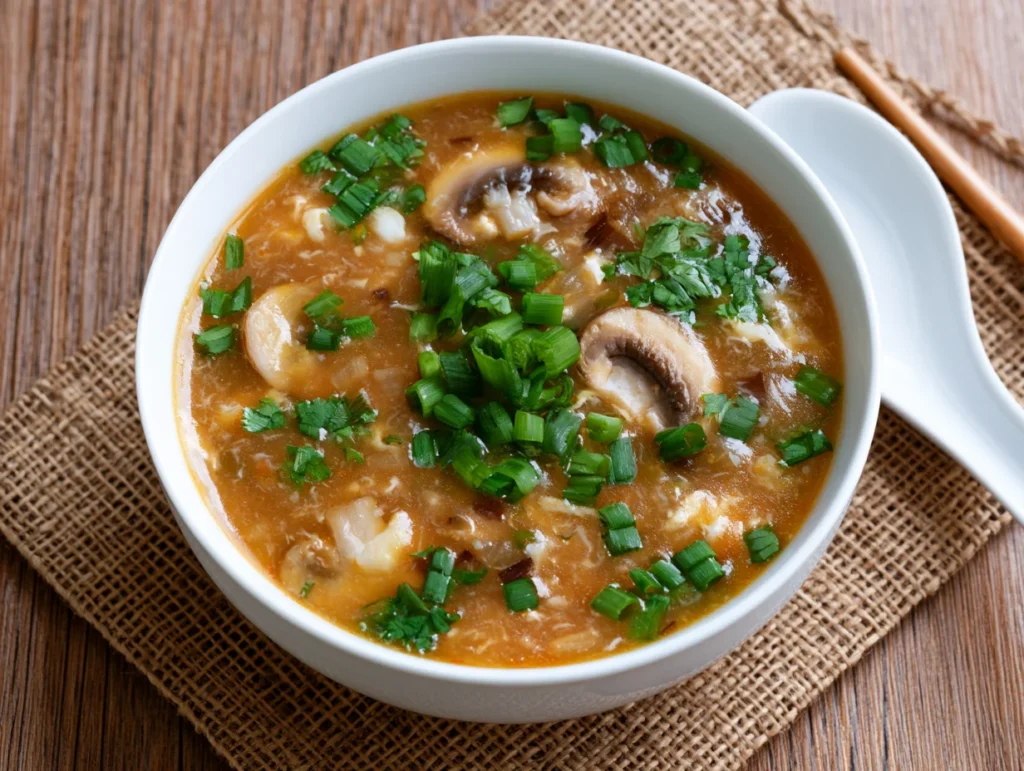
Step 1: Build the Aromatic Base
Heat vegetable oil in a large pot over medium heat. Add minced garlic and ginger, stirring constantly for about 30 seconds until fragrant but not browned. This short bloom releases essential oils that form the backbone of your broth’s flavor. Pour in the broth immediately afterward to prevent the aromatics from burning, which would introduce bitterness into an otherwise clean-tasting soup. Bring the mixture to a gentle simmer before moving forward.
Step 2: Add the Vegetables and Protein
Stir in shiitake mushrooms, bamboo shoots, and any optional add-ins like shredded pork or wood ear mushrooms. Let everything simmer uncovered for 6 to 8 minutes, allowing the mushrooms to soften and release their earthy depth into the broth. If using raw meat, ensure it is fully cooked through before proceeding. This stage is where the soup’s textural contrast begins to take shape, so resist the urge to rush it.
Step 3: Season for Hot and Sour Balance
Whisk in soy sauce, rice vinegar, chili garlic sauce, and white pepper. Taste immediately, this is the most important checkpoint in the entire recipe. The broth should hit you with sourness first, followed by a building heat. Adjust gradually, adding small increments of vinegar or chili sauce rather than dumping it all in at once. White pepper is non-negotiable here; it delivers a warmth black pepper simply cannot replicate.
Step 4: Thicken the Broth
In a small bowl, mix cornstarch with water until fully dissolved, no lumps. Slowly drizzle this slurry into the simmering soup while stirring continuously in one direction. Within a minute or two, you will notice the broth transform from thin to glossy and slightly viscous, the texture hot and sour soup is known for. Add tofu cubes at this stage so they heat through gently without breaking apart.
Step 5: Create the Egg Ribbons
Reduce heat to low. Holding the beaten eggs in a steady stream, drizzle them slowly into the soup while gently stirring in a circular motion with a fork or chopstick. Do not stir vigorously or the eggs will scramble into small bits instead of forming delicate, silky ribbons. This technique takes about 20 seconds and is what separates homemade hot and sour soup from anything out of a can.
Step 6: Finish and Serve
Remove the pot from heat and stir in sesame oil for a final layer of nutty aroma. Taste one last time and adjust salt, vinegar, or chili sauce as needed, your palate is the final judge. Ladle into bowls and garnish with sliced green onions and optional cilantro. Serve immediately while the broth is hot and the egg ribbons are still tender and glossy.
Cook Time
Total:
35 minutes
Prep:
15 minutes
Bake:
Not applicable, this recipe is stovetop only
Servings
This recipe is portioned for everyday practicality without sacrificing the generous, restaurant-style serving size you expect from a proper bowl of hot and sour soup. It is designed to satisfy as a starter for a larger meal or stand confidently on its own as a light dinner.
Makes approximately 4 to 6 servings, depending on whether you are serving it as a starter course or a main dish. As a starter alongside other Asian-inspired dishes, expect this recipe to comfortably stretch across six smaller bowls. As a standalone meal, plan for four heartier portions.
The recipe also scales easily. Doubling the broth, soy sauce, and vinegar proportionally allows you to feed a larger gathering without compromising the balance that makes this soup work so well.
Common Mistakes in This Recipe
The most frequent error home cooks make is adding vinegar too early in the cooking process. Vinegar loses its bright, sharp edge the longer it simmers, so adding it at the start often results in a flat, muted soup that needs constant re-seasoning. Another common misstep is using black pepper as a substitute for white pepper, assuming they are interchangeable. They are not; white pepper carries a distinct earthy heat that black pepper cannot replicate, and the soup’s signature warmth depends on it.
Overcooking the eggs is another frequent issue. Pouring beaten egg in too quickly or stirring too aggressively produces clumpy, rubbery bits instead of silky ribbons. Lastly, many cooks skip tasting as they go, relying entirely on the written measurements. Because vinegar brands and chili sauces vary significantly in intensity, this often leads to soup that is either too mild or overwhelmingly sour.
Solutions to Common Mistakes
Always add vinegar during the seasoning stage, not while building the broth, and taste immediately afterward. This preserves its sharpness and lets you adjust before the flavor has a chance to mellow. For the pepper issue, keep white pepper stocked specifically for this recipe; it is inexpensive and available in most grocery stores’ spice aisles.
To fix egg texture, pour the beaten eggs in a slow, thin stream while stirring gently in one direction only. Patience here makes a visible difference in the final presentation. Finally, treat the recipe’s measurements as a starting point rather than a fixed rule. Taste after each seasoning addition and adjust in small increments, this single habit will consistently produce a more balanced, professional-tasting bowl.
Nutritional Information (approx. per serving)
- Calories: 145 kcal
- Protein: 9g
- Carbohydrates: 12g
- Fat: 6g
- Fiber: 1.5g
- Sodium: 680mg
- Sugar: 2g
This soup delivers a meaningful protein boost from tofu and eggs, making it more satisfying than a typical clear broth soup while still staying relatively light. The mushrooms contribute fiber and a range of trace minerals, including selenium and B vitamins, which support immune function, something especially welcome during cold and flu season.
Ginger and garlic, both featured prominently in the base, are well documented for their anti-inflammatory and digestive benefits, making this soup a genuinely comforting choice when you are feeling under the weather. The broth itself is low in calories relative to its portion size, allowing it to fit comfortably into most dietary patterns without guilt.
Because sodium can run high due to soy sauce, this recipe also offers flexibility, low-sodium soy sauce can be substituted with minimal impact on flavor. Overall, this is a dish that manages to feel indulgent while still offering legitimate nutritional value.
Storage Instructions
Hot and sour soup stores remarkably well, making it an excellent candidate for meal prep or planned leftovers. Allow the soup to cool to room temperature before transferring it to an airtight container, this prevents condensation buildup that can dilute the broth’s flavor over time. Refrigerated, it keeps well for up to 4 days.
Freezing is possible but requires a small adjustment. Because the cornstarch-thickened broth can separate slightly upon thawing, and tofu’s texture changes when frozen, it is best to freeze the soup before adding tofu and eggs, then prepare those components fresh when reheating. Frozen broth keeps for up to 2 months in a sealed, freezer-safe container.
When reheating, warm the soup gently over medium-low heat on the stovetop rather than using a microwave, which can cause uneven heating and disrupt the egg ribbons. Stir occasionally as it warms through.
If the broth has thickened too much after refrigeration, a small splash of water or broth while reheating will restore its original consistency without diluting the flavor.
Suggestions
This soup pairs beautifully with simple steamed jasmine rice on the side, allowing diners to spoon rice directly into the bowl for a heartier, more filling meal. Crispy spring rolls or pot stickers also make excellent accompaniments, offering textural contrast to the soup’s smooth, silky body.
For those who enjoy customizing heat levels at the table, consider serving extra chili oil or a small dish of crushed red pepper flakes alongside the soup. This allows each person to adjust spiciness to their own preference without altering the base recipe for everyone else.
If you are entertaining guests, this soup works wonderfully as a starter course before a stir-fry or noodle-based main dish, setting the tone for an Asian-inspired meal without overwhelming the palate before the main event arrives.
Lastly, a wedge of lime on the side, though nontraditional, adds a bright, fresh acidity that many home cooks find surprisingly welcome, particularly during warmer months when a lighter touch is appreciated.
Seasonal Relevance
While hot and sour soup is traditionally associated with cold weather comfort food, its appeal genuinely spans all four seasons. During fall and winter, the warming spice and rich broth make it an ideal antidote to dropping temperatures and the start of cold and flu season, when ginger and garlic’s natural properties feel especially welcome.
In spring, lighter versions of this soup, using vegetable broth and reducing the oil slightly, feel fresh rather than heavy, making it a smart addition to seasonal menus built around renewal and lighter eating. Summer entertaining benefits from its make-ahead friendliness, prepare the broth in advance and finish it just before guests arrive.
Even in the height of summer, a smaller portion served as a starter before a grilled or barbecued main course offers a flavorful contrast without overwhelming a warm-weather appetite. This is, genuinely, a year-round recipe.
Holiday gatherings also benefit from its crowd-pleasing nature, easily doubled, made ahead, and reheated without losing quality.
Final Words
There is something deeply satisfying about mastering a recipe that so many people assume requires a restaurant kitchen to get right. This hot and sour soup proves otherwise. With a thoughtful approach to timing, seasoning, and technique, you can produce something that rivals your favorite takeout spot, using ingredients already within reach.
What I appreciate most about this recipe is its forgiving nature once you understand the fundamentals. The balance of hot and sour is genuinely yours to control, and that flexibility is part of what makes this dish so rewarding to cook again and again.
I encourage you to make this recipe your own over time. Taste as you go, adjust the heat to match your mood, and do not be afraid to experiment with the optional add-ins until you land on your personal favorite version.
Cooking, at its best, is a conversation between recipe and cook. This one is built to have that conversation with you.
Frequently Asked Questions
Can I make this soup vegetarian without losing flavor?
Yes, absolutely. Use vegetable broth instead of chicken broth and skip the optional pork or chicken. The mushrooms, tofu, and seasoning blend already provide significant depth, so the soup remains flavorful and satisfying even without meat-based protein.
Why did my soup turn out too thin despite adding cornstarch?
This usually happens when the slurry is added too quickly or the broth isn’t simmering. Always whisk cornstarch with cold water first, then drizzle it into actively simmering broth slowly, stirring continuously for the thickening reaction to fully activate.
Is it safe to reduce the spice level for children?
Yes, simply reduce or omit the chili garlic sauce and chili oil entirely. The soup’s sourness and savory broth still provide plenty of flavor, making a milder version perfectly enjoyable for children or spice-sensitive eaters.

Spicy Hot and Sour Soup Recipe
4
servings15
minutes35
minutes145
kcal50
minutesA bold, silky soup balancing tangy rice vinegar, warming white pepper, and savory broth. Loaded with mushrooms, tofu, and delicate egg ribbons, it’s restaurant-quality comfort food ready in under 30 minutes using simple pantry staples.
Ingredients
6 cups chicken or vegetable broth
1 cup shiitake mushrooms, thinly sliced
1/2 cup bamboo shoots, julienned
1/2 cup firm tofu, cubed
3 tablespoons soy sauce
4 tablespoons rice vinegar
1 tablespoon chili garlic sauce
1 teaspoon white pepper, ground
2 large eggs, lightly beaten
3 tablespoons cornstarch
4 tablespoons water (for slurry)
2 green onions, sliced
1 teaspoon sesame oil
1 tablespoon vegetable oil
2 cloves garlic, minced
1 teaspoon ginger, minced
Optional Add-ins:
4 ounces lean pork or chicken, thinly shredded
1/2 cup carrots, julienned
4 dried wood ear mushrooms, rehydrated and sliced
1 teaspoon chili oil, for extra heat
1/4 cup cilantro, chopped
1 tablespoon Shaoxing wine
Directions
- Heat vegetable oil in a large pot over medium heat. Add minced garlic and ginger, stirring for 30 seconds until fragrant.
- Pour in the broth and bring to a gentle simmer.
- Stir in shiitake mushrooms, bamboo shoots, and any optional add-ins. Simmer uncovered for 6 to 8 minutes.
- Whisk in soy sauce, rice vinegar, chili garlic sauce, and white pepper. Taste and adjust seasoning gradually.
- Mix cornstarch with water to form a slurry. Drizzle slowly into the simmering soup while stirring continuously.
- Add tofu cubes and let heat through gently until the broth turns glossy and slightly thickened.
- Reduce heat to low. Drizzle in beaten eggs in a slow stream while gently stirring to form silky ribbons.
- Remove from heat and stir in sesame oil.
- Taste one final time and adjust salt, vinegar, or chili sauce as needed.
- Ladle into bowls, garnish with sliced green onions and cilantro, and serve immediately.
Recipe Video
Notes
- Add vinegar during the seasoning stage, not earlier, to preserve its sharp tang.
- Use white pepper, not black pepper, for the soup’s signature warmth.
- Pour eggs in slowly and stir gently to form ribbons instead of clumps.
- Taste as you go since vinegar and chili sauce brands vary in intensity.
- Freeze broth without tofu and eggs for best texture after thawing.
- Reheat gently on the stovetop rather than in the microwave.