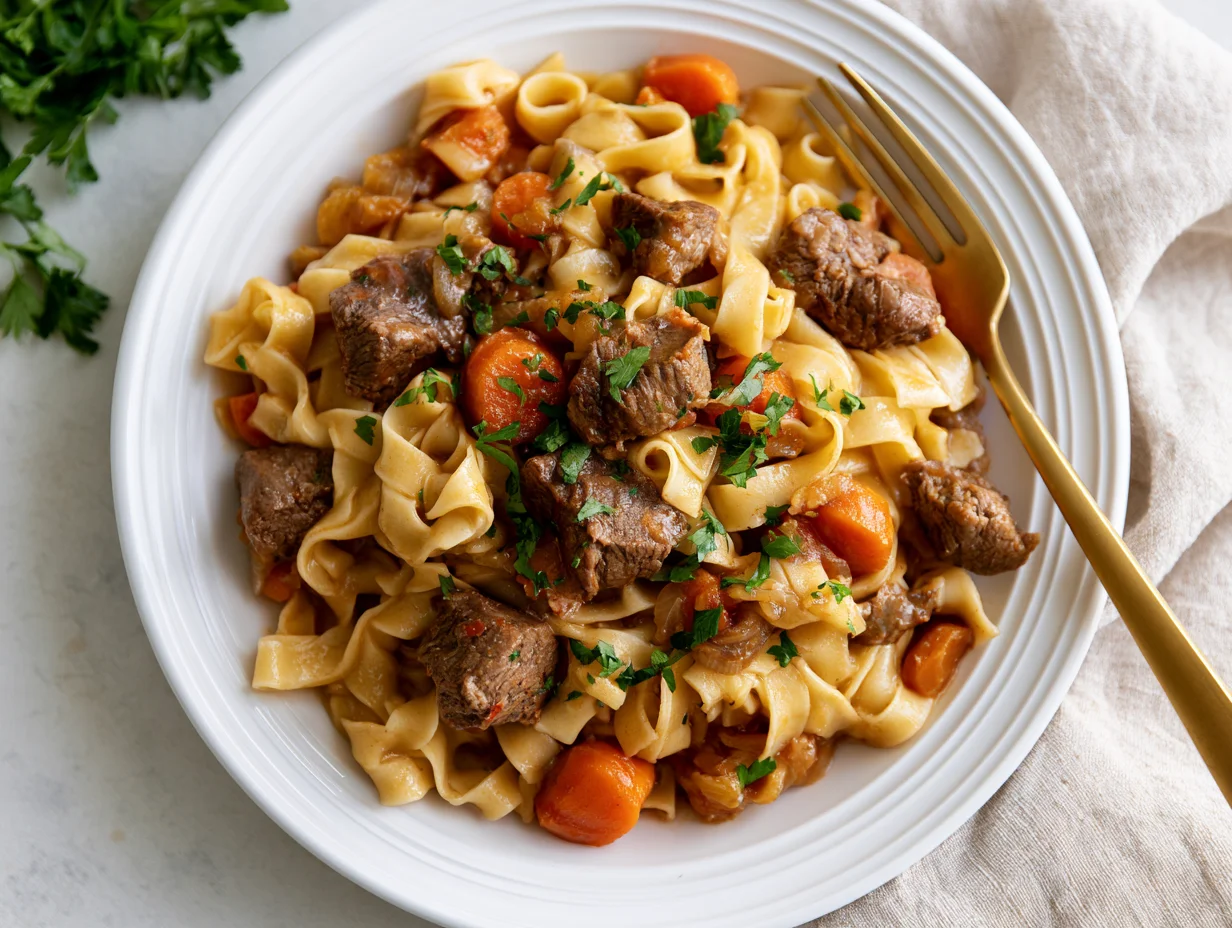
Hearty Beef and Noodles Recipe
There are meals that simply fill a plate, and then there are meals that fill a home. Hearty Beef and Noodles is firmly in the second category. The moment this dish begins to simmer, the entire kitchen transforms into something warm and inviting, the kind of space where people naturally gather before they are even called to the table.
This is a recipe rooted in comfort without apology. Tender, slow-cooked beef folded into rich, velvety broth, tangled with soft egg noodles that soak up every bit of that deep, savory flavor. It is the kind of dish your grandmother would have made on a cold Sunday afternoon, except now you are the one making it, and you are going to make it very well.
What sets this recipe apart is its balance. It never leans too heavy, never feels one-dimensional. The beef is seasoned and seared before it braises, building layers of flavor that develop slowly and pay off beautifully at the end. Every spoonful delivers something worth savoring.
Whether you are cooking for a weeknight family dinner, feeding guests, or simply craving a bowl of something that tastes like home, this recipe delivers every single time. Make it once and it will earn a permanent place in your rotation.
Ingredients You’ll Need
Not every great recipe demands a trip to a specialty grocery store — this one proves that truly soul-satisfying food starts right where you are, with what you already have.
One of the things I love about this recipe is that it uses simple pantry ingredients. You probably already have most of them in your kitchen.
Base Ingredients
- 2 lbs beef chuck roast, cut into 1½-inch cubes
- 12 oz wide egg noodles
- 3 cups beef broth (low sodium preferred)
- 1 cup water
- 1 medium yellow onion, diced
- 3 cloves garlic, minced
- 2 medium carrots, sliced into rounds
- 2 stalks celery, chopped
- 2 tbsp tomato paste
- 2 tbsp all-purpose flour
- 2 tbsp olive oil
- 1 tsp Worcestershire sauce
- 1 tsp dried thyme
- 1 tsp onion powder
- 1 tsp garlic powder
- ½ tsp black pepper
- 1 tsp salt (adjust to taste)
- 1 tbsp unsalted butter
- Fresh parsley for garnish
Optional Add-ins
- ½ cup frozen peas (added in the last 5 minutes of cooking)
- 1 cup sliced cremini mushrooms
- 1 tsp smoked paprika (for deeper flavor)
- ¼ tsp red pepper flakes (for mild heat)
- 1 bay leaf (remove before serving)
- 1 tbsp soy sauce (adds umami depth)
- ½ cup sour cream (stirred in at the end for a creamy finish)
Step-by-Step Instructions
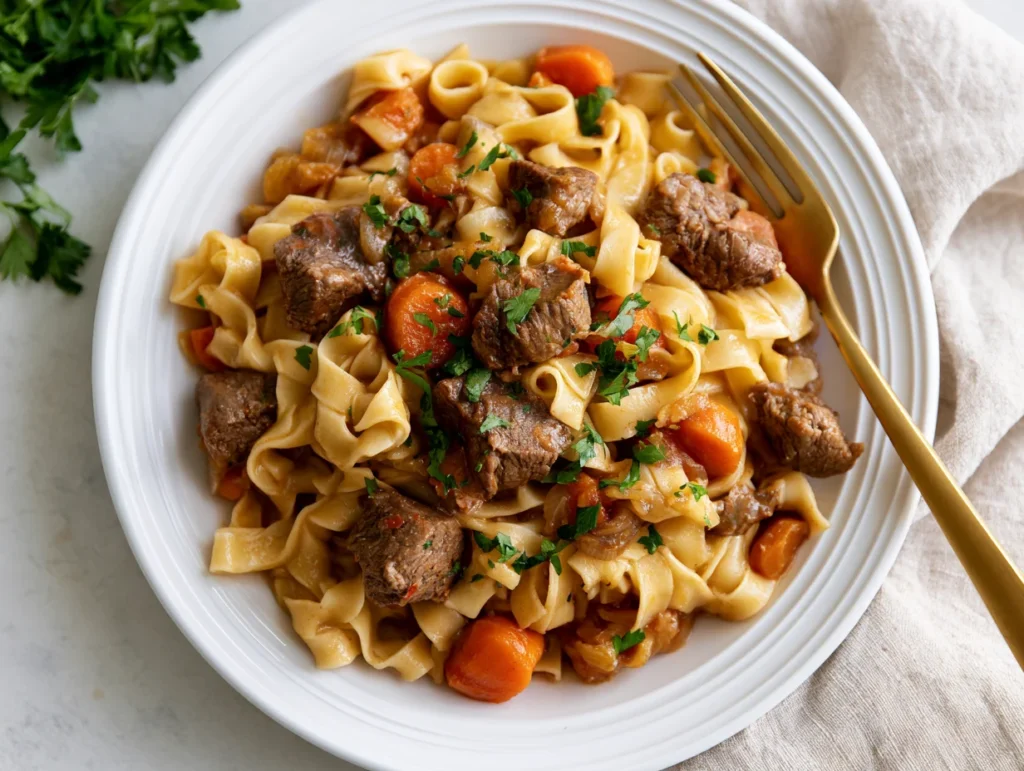
Step 1: Season and Sear the Beef
Pat the beef cubes dry with paper towels. This step is non-negotiable — moisture is the enemy of a good sear. Season generously on all sides with salt, pepper, garlic powder, and onion powder. Heat olive oil in a heavy-bottomed pot or Dutch oven over medium-high heat until shimmering. Working in batches to avoid crowding, sear the beef for 2 to 3 minutes per side until a deep brown crust forms. Remove and set aside. Do not skip the browning — it builds the foundation of your flavor.
Step 2: Build the Aromatics
Reduce heat to medium. In the same pot, add the diced onion, carrots, and celery. Sauté for 4 to 5 minutes, scraping up the browned bits from the bottom of the pot as you stir — those bits are pure flavor. Add the minced garlic and cook for one more minute until fragrant. Stir in the tomato paste and cook for 2 minutes, letting it caramelize slightly against the bottom of the pot. Sprinkle in the flour and stir well to coat the vegetables evenly. This will help thicken your broth into a silky, coating sauce.
Step 3: Braise the Beef Low and Slow
Return the seared beef to the pot. Pour in the beef broth and water, then add Worcestershire sauce, dried thyme, and the bay leaf if using. Stir everything to combine and bring the liquid to a gentle boil. Once boiling, reduce the heat to low, cover with a tight-fitting lid, and let it braise for 1 hour and 30 minutes. The low-and-slow method breaks down the connective tissue in the chuck roast, resulting in beef that practically melts when you press it with a fork. Check occasionally and add a splash of water if the liquid reduces too much.
Step 4: Cook the Noodles and Finish the Dish
Once the beef is tender and the broth has deepened in color and flavor, remove the bay leaf. Increase the heat to medium and bring the pot back to a gentle simmer. Add the egg noodles directly into the pot and stir to submerge them in the broth. Cook uncovered for 8 to 10 minutes, stirring occasionally, until the noodles are tender but not mushy. Stir in the butter at the end for a glossy, rounded finish. If you are adding peas or sour cream, do so in the last few minutes. Taste and adjust seasoning before serving. Garnish with freshly chopped parsley.
Cook Time
Total
Approximately 2 hours
Prep
20 minutes
Bake
1 hour 40 minutes (active braising and noodle cook time)
Servings
This recipe makes a generous pot of beef and noodles that is as satisfying on the second day as it is the first. The thick broth continues to develop as it sits, making leftovers arguably even better than the original serving.
For a standard dinner, plan on each person having a deep, hearty bowl filled with both beef and noodles. This is not a light starter — it is a full, filling main course. Pair it with crusty bread or a simple green salad and you have a complete meal that needs nothing else.
Makes approximately 4 to 6 servings, depending on portion size and appetite. If you are serving a larger group or want guaranteed leftovers, simply scale up the beef and broth proportionally while keeping the seasoning balanced as you go.
Common Mistakes in This Recipe
One of the most common mistakes home cooks make is skipping the searing step. Tossing raw beef directly into the pot might seem like a time-saving shortcut, but it costs you the most important layer of flavor this dish has to offer. The Maillard reaction that occurs during browning creates hundreds of compounds that broth alone can never replicate.
Crowding the pan during searing is equally problematic. When too many pieces of beef are added at once, the temperature of the pan drops sharply and the meat begins to steam rather than sear. You end up with grey, flavorless cubes floating in liquid instead of beautifully browned pieces with depth and character.
Another frequent error is cooking the noodles in a separate pot and adding them later. While this keeps them from absorbing broth, it also means they never pick up any of the seasoning or flavor from the dish. Noodles cooked directly in the broth are infinitely more flavorful and become part of the dish rather than just an afterthought on the side.
Over-seasoning at the start and under-tasting at the end is a pitfall that leads to imbalanced results. Beef broth already carries salt, and as it reduces during braising it becomes more concentrated. Season moderately at first, then taste and adjust just before serving when all the elements are fully combined.
Solutions to Common Mistakes
The fix for the searing problem is simple commitment — give yourself the extra ten minutes and do it properly. Use a heavy pan, get it genuinely hot before adding the oil, and resist the urge to move the beef around. Let it sit undisturbed until it releases naturally from the pan. That crust is your flavor foundation.
To sear properly without crowding, work in two or three batches depending on the size of your pot. Between batches, let the pan return to full temperature before adding the next round. This takes slightly longer but the result is dramatically better. Patience here pays off in every bite later.
If you prefer firmer noodles that hold their shape even as leftovers, cook them in the pot for only 6 to 7 minutes until just barely al dente. They will continue softening as they cool and absorb broth while resting, reaching the perfect texture by the time you serve.
For seasoning balance, add salt in layers throughout cooking — a pinch when the vegetables go in, a small adjustment before the braise, and a final taste at the very end. This builds seasoning into the dish rather than dumping it all in at once. A splash of Worcestershire or a small squeeze of tomato paste near the end can also brighten and balance the flavor without adding more salt.
Nutritional Information (approx. per serving)
- Calories: 480 kcal
- Protein: 38g
- Carbohydrates: 42g
- Dietary Fiber: 3g
- Total Fat: 16g
- Saturated Fat: 5g
- Cholesterol: 105mg
- Sodium: 620mg
- Iron: 4.2mg (23% DV)
- Potassium: 720mg
The beef in this dish is a standout source of complete protein and heme iron — the most bioavailable form of iron found in food. Heme iron is absorbed by the body far more efficiently than plant-based iron, making this recipe particularly valuable for individuals with higher iron requirements or those prone to deficiency.
Carrots and celery contribute meaningful amounts of beta-carotene, vitamin K, and natural antioxidants that support immune function and reduce inflammation. These vegetables do not just add flavor — they bring genuine nutritional weight to every bowl.
Egg noodles provide a steady release of complex carbohydrates that fuel sustained energy rather than quick spikes. Combined with the high protein content of the beef, this dish creates a naturally balanced macronutrient profile that keeps you satisfied for hours after eating.
The slow-braised cooking method preserves many of the nutrients in both the beef and vegetables rather than destroying them through high-heat cooking. Collagen from the chuck roast also breaks down into gelatin during braising, supporting joint health and contributing to the silky, coating quality of the broth.
Storage Instructions
Leftover Beef and Noodles store beautifully and are arguably at their best the next day after the flavors have had more time to meld. Allow the dish to cool to room temperature before transferring it to an airtight container. Never store it while still hot, as trapped steam can compromise both texture and food safety.
Refrigerate in a sealed container for up to 4 days. The noodles will continue to absorb broth as they sit, so you may find the dish thicker upon reheating than when you first made it. This is normal and easy to fix — simply add a splash of beef broth or warm water when reheating and stir to loosen the consistency back to your preference.
For longer storage, this dish freezes well with a small note of caution: noodles become softer after freezing and thawing. If you anticipate freezing a large batch, consider reserving a portion of the dish before adding the noodles, then cooking fresh noodles when you reheat. Freeze in portioned containers for up to 3 months and thaw overnight in the refrigerator before reheating.
To reheat, warm gently on the stovetop over medium-low heat, stirring occasionally and adding liquid as needed. Microwave reheating works in a pinch — use a microwave-safe bowl, add a tablespoon of broth or water, cover loosely, and heat in 90-second intervals, stirring between each, until evenly warmed through.
Suggestions
This dish pairs exceptionally well with something crusty on the side. A thick slice of sourdough bread or a warm dinner roll is ideal for mopping up the remaining broth at the bottom of the bowl — do not waste a drop of it. If you want to round out the meal with something green, a simple butter lettuce salad dressed with a light vinaigrette cuts beautifully through the richness of the dish.
For serving style, consider ladling this over or alongside a scoop of creamy mashed potatoes instead of including egg noodles in the pot. The broth-soaked beef poured over buttery mashed potatoes is a regional variation that has its own dedicated following and for good reason — it is extraordinary.
If you want to push the flavor even deeper, deglaze the pot with a half cup of dry red wine after searing the beef and before adding the broth. Cabernet Sauvignon or Merlot works particularly well. The wine lifts the fond from the bottom of the pot and adds a quiet, rounded richness to the finished broth that most people cannot quite name but will absolutely notice.
Elevate the presentation by finishing each bowl with a pat of butter stirred in right before serving, a scatter of freshly chopped flat-leaf parsley, and a light crack of black pepper. These small touches take a humble bowl of beef and noodles from comforting to genuinely impressive without any extra effort.
Seasonal Relevance
Beef and Noodles is a dish that finds its fullest expression in the cooler months. From the first real chill of autumn through the deep freeze of winter, this recipe offers the kind of warmth that central heating simply cannot replicate. It is food that responds to the season, and the season responds to it in kind.
In autumn, the dish feels celebratory and grounding all at once. The same hearty flavors that feel indulgent on a hot July afternoon become exactly right against the backdrop of falling leaves and shorter days. This is the time of year when braised dishes come back into rotation, and Beef and Noodles leads the way.
Winter is where this recipe earns its reputation. On the coldest evenings, when the last thing anyone wants is a complicated meal that keeps them standing at the stove, this dish delivers maximum comfort with minimal active effort. Most of the cooking time is hands-off, giving you the freedom to step away while your kitchen fills with something extraordinary.
That said, this dish adapts to spring and summer with lighter adjustments. Swap the heavy chuck roast for a leaner cut, reduce the butter, and add bright finishing elements like fresh herbs or a squeeze of lemon. The core of the recipe is flexible enough to carry through all four seasons with small seasonal tweaks that keep it feeling relevant and fresh year-round.
Final Words
Hearty Beef and Noodles is the kind of recipe that earns a handwritten card in the family recipe box. It is not flashy. It does not need to be. What it offers instead is something rarer in modern cooking — genuine satisfaction from start to finish, from the first sizzle in the pan to the last spoonful in the bowl.
The techniques here are straightforward, but they are intentional. Searing the beef, building the aromatics, braising low and slow, cooking the noodles directly in the broth — every step exists for a reason, and skipping any one of them creates a noticeably lesser dish. Follow the process and trust it, because it works.
This is also a recipe that improves with practice. The first time you make it, you will feel your way through the timing and seasoning adjustments. The second time, you will move through it with more confidence. By the third time, you will be making it from memory and adding your own signature touches without a second thought.
Whatever brings you to this recipe — nostalgia, curiosity, a craving for something real — I hope it delivers exactly what you were looking for. Cook it with care, share it generously, and let it do what good food has always done: bring people together around something worth sitting down for.
Frequently Asked Questions
Can I make this recipe in a slow cooker instead of on the stovetop?
Yes. Sear the beef first on the stovetop for best results, then transfer everything except the noodles into the slow cooker. Cook on low for 7 to 8 hours or high for 4 to 5 hours. Add the egg noodles in the final 30 minutes and cook on high until tender.
What cut of beef works best if chuck roast is not available?
Beef stew meat, short ribs, or brisket all work well in this recipe. Avoid lean cuts like sirloin or round, as they become tough and dry during the long braise rather than tender and shreddable like chuck roast does.
How do I thicken the broth if it seems too thin after braising?
Mix one tablespoon of cornstarch with two tablespoons of cold water to form a slurry. Stir it into the simmering broth about ten minutes before adding the noodles. Alternatively, let the broth reduce uncovered for 10 to 15 minutes before proceeding with the recipe.
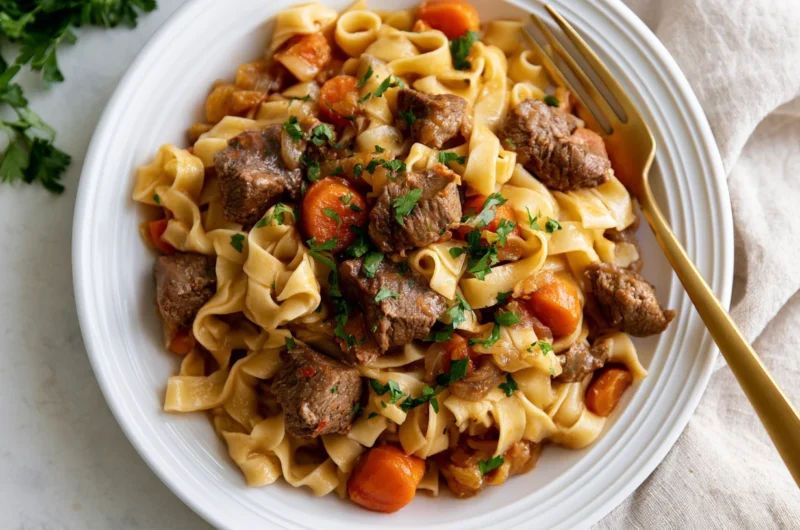
Hearty Beef and Noodles Recipe
4
servings20
minutes1
hour40
minutes480
kcal2
hoursSlow-braised chuck roast meets silky egg noodles in a deeply savory broth built from simple pantry staples. Rich, filling, and effortlessly comforting — this is the kind of meal that turns an ordinary evening into something worth remembering.
Ingredients
Base ingredients
2 lbs beef chuck roast, cubed
12 oz wide egg noodles
3 cups beef broth (low sodium)
1 cup water
1 medium yellow onion, diced
3 cloves garlic, minced
2 medium carrots, sliced
2 stalks celery, chopped
2 tbsp tomato paste
2 tbsp all-purpose flour
2 tbsp olive oil
1 tsp Worcestershire sauce
1 tsp dried thyme
1 tsp onion powder
1 tsp garlic powder
½ tsp black pepper
1 tsp salt
1 tbsp unsalted butter
Fresh parsley, for garnish
Optional add-ins
½ cup frozen peas
1 cup cremini mushrooms, sliced
1 tsp smoked paprika
¼ tsp red pepper flakes
1 bay leaf
1 tbsp soy sauce
½ cup sour cream
Directions
- Pat beef cubes dry and season with salt, pepper, garlic powder, and onion powder. Heat olive oil in a Dutch oven over medium-high heat. Sear beef in batches for 2–3 minutes per side until deeply browned. Remove and set aside.
- In the same pot over medium heat, sauté onion, carrots, and celery for 4–5 minutes, scraping up browned bits. Add garlic, cook 1 minute. Stir in tomato paste and cook 2 minutes. Add flour and stir to coat the vegetables evenly.
- Return beef to the pot. Pour in beef broth and water. Add Worcestershire sauce, thyme, and bay leaf if using. Bring to a boil, then reduce to low. Cover and braise for 1 hour 30 minutes until beef is fork-tender.
- Remove bay leaf. Increase heat to medium and bring to a gentle simmer. Add egg noodles directly into the pot. Cook uncovered for 8–10 minutes, stirring occasionally, until noodles are tender. Stir in butter, adjust seasoning, and garnish with fresh parsley before serving.
Recipe Video
Notes
- Never skip searing the beef. The browning step builds the deep, layered flavor that makes this dish exceptional — it cannot be replaced by any other technique.
- Sear in batches without crowding the pan. Overcrowding drops the pan temperature and causes the meat to steam instead of brown.
- For firmer noodles that hold up well as leftovers, cook them for only 6–7 minutes until just al dente. They will continue softening as the dish rests.
- Leftovers thicken considerably as the noodles absorb broth overnight. Add a splash of beef broth when reheating and stir to restore the original consistency.
- For a creamy variation, stir in ½ cup sour cream off the heat just before serving for a richer, slightly tangy finish.
- This dish freezes well for up to 3 months. For best results, freeze the braised beef and broth separately before adding noodles, then cook fresh noodles upon reheating.