Traditional King Cake Recipe
There are certain recipes that carry the weight of celebration in every layer, and King Cake is one of them. This iconic pastry has been the centerpiece of Mardi Gras tables for centuries, and for good reason. It is rich, festive, colorful, and deeply rooted in Southern tradition.
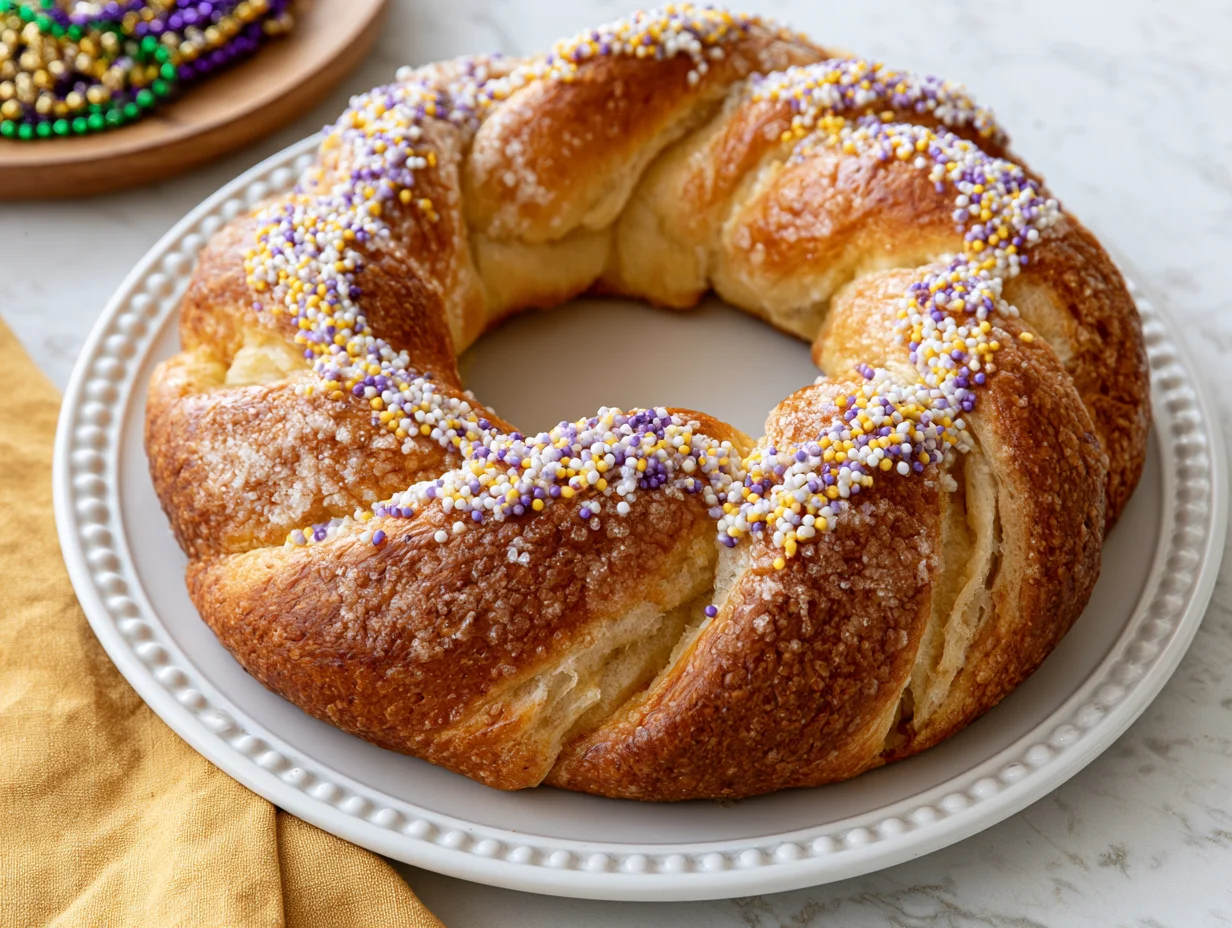
The first time I made a traditional King Cake from scratch, I understood immediately why people travel across states just to get the real thing. It is not just a cake. It is an experience. The soft, brioche-like dough wrapped around a creamy filling, topped with purple, gold, and green sugar, is something that store-bought versions simply cannot replicate.
What makes this recipe stand out is its respect for the original. No shortcuts, no boxed mixes. Just properly proofed dough, a silky cream cheese filling, and a glaze that sets beautifully without becoming too sweet. Every detail has been calibrated for results that would make a New Orleans baker proud.
Whether you are celebrating Mardi Gras, hosting a themed gathering, or simply want to bring something extraordinary to the table, this recipe will deliver. Follow the steps carefully, and you will pull a King Cake from your oven that looks stunning and tastes even better.
Ingredients You’ll Need
Gather your tools, clear your counter, and get ready — this is the kind of dough that rewards your attention and fills your kitchen with the most incredible aroma you have smelled all season.
One of the things I love about this recipe is that it uses simple pantry ingredients. You probably already have most of them in your kitchen.
Base Ingredients:
- 4 cups all-purpose flour
- 2¼ tsp active dry yeast (1 standard packet)
- ¾ cup whole milk, warmed
- ½ cup granulated sugar
- ⅓ cup unsalted butter, softened
- 2 large eggs
- 1 tsp vanilla extract
- 1 tsp ground cinnamon
- ½ tsp ground nutmeg
- ½ tsp salt
- 8 oz cream cheese, softened (for filling)
- ½ cup powdered sugar (for filling)
- 1 tsp lemon zest (for filling)
- 1½ cups powdered sugar (for glaze)
- 3 tbsp whole milk (for glaze)
- 1 tsp vanilla extract (for glaze)
- Purple, gold, and green decorating sugar
Optional Add-ins:
- ½ cup chopped pecans (fold into filling for texture)
- ¼ cup golden raisins (soak in warm water first)
- 1 tsp orange zest (adds a beautiful citrus note)
- 1 tbsp bourbon (stirred into the glaze for depth)
- 1 small plastic baby figurine (hidden inside after baking, per tradition)
- ¼ tsp almond extract (substitute for or alongside vanilla)
Step-by-Step Instructions

Step 1: Activate the Yeast
Pour the warmed milk into a small bowl and sprinkle the yeast over the surface. Add one teaspoon of sugar and gently stir. Allow the mixture to rest for about 8 to 10 minutes until it turns foamy and fragrant. This tells you the yeast is alive and active. If nothing happens after 10 minutes, your milk may have been too hot or the yeast may be old. Start over with fresh yeast before continuing.
Step 2: Make the Dough
In a large mixing bowl or the bowl of a stand mixer fitted with a dough hook, combine the flour, remaining sugar, salt, cinnamon, and nutmeg. Add the eggs, softened butter, vanilla extract, and the yeast mixture. Mix on medium speed for 6 to 8 minutes until the dough is smooth, slightly tacky, and pulls away from the sides of the bowl. The dough should feel soft and elastic, not sticky. Avoid adding excess flour, as this will make the cake dense.
Step 3: First Rise
Transfer the dough to a lightly greased bowl and turn it once to coat all sides. Cover tightly with plastic wrap or a clean kitchen towel and place in a warm, draft-free spot. Let the dough rise until it has doubled in size, which typically takes 1 to 1.5 hours. A good trick is to place it in an oven with just the light turned on. The gentle warmth creates the ideal proofing environment without any risk of overheating the dough.
Step 4: Prepare the Cream Cheese Filling
While the dough is rising, beat the softened cream cheese, powdered sugar, lemon zest, and vanilla extract together until completely smooth and fluffy. Taste the filling and adjust sweetness as needed. If you are adding pecans or raisins, fold them in now. Set the filling aside at room temperature so it remains spreadable when you are ready to assemble. Cold filling tears the dough, so do not refrigerate it at this stage.
Step 5: Shape and Fill the Cake
Punch down the risen dough and turn it onto a lightly floured surface. Roll it into a large rectangle, roughly 10 by 20 inches. Spread the cream cheese filling evenly across the surface, leaving a one-inch border along all edges. Starting from one long side, roll the dough tightly into a log. Pinch the seam firmly to seal. Transfer the log to a parchment-lined baking sheet and connect both ends together to form an oval ring. Press the ends together firmly so they do not open during baking.
Step 6: Second Rise and Bake
Cover the shaped King Cake loosely with greased plastic wrap and allow it to rise again for 30 to 45 minutes until noticeably puffy. Meanwhile, preheat your oven to 350°F (175°C). Once risen, bake the cake for 25 to 30 minutes until the top is deep golden brown and the internal temperature reads around 190°F. Remove from the oven and allow it to cool on the pan for at least 20 minutes before glazing. Glazing a warm cake allows the icing to set properly without sliding off.
Step 7: Glaze and Decorate
Whisk together the powdered sugar, milk, and vanilla extract until smooth and pourable. The glaze should coat the back of a spoon but still flow easily. Drizzle it generously over the cooled King Cake, letting it run down the sides naturally. While the glaze is still wet, immediately apply the colored sugars in alternating sections of purple, gold, and green. Work quickly, as the glaze sets fast. If using a plastic baby figurine, press it into the underside of the cake now.
Cook Time
Total:
Approximately 3 hours (including rising times)
Prep:
30 minutes active prep, plus 1.5 to 2 hours for both rises
Bake:
25 to 30 minutes at 350°F (175°C)
Servings
This Traditional King Cake is made to be shared, and it shows in every generous slice. The ring shape and soft, enriched dough mean you can cut clean, even portions without the cake falling apart. A serrated bread knife works best for slicing.
At standard cutting, this recipe yields 12 to 16 servings depending on slice thickness. For a party setting where guests may also be enjoying other dishes, 16 thinner slices is a practical approach. For a more dessert-forward occasion, 12 hearty slices is ideal.
Makes approximately 12 to 16 slices. If you are baking for a larger crowd, the dough can be doubled with great results. Simply divide it into two rings and bake them on separate parchment-lined sheets for even browning.
Common Mistakes in This Recipe
One of the most frequent errors in King Cake baking is using milk that is too hot when activating the yeast. Even a few degrees above 115°F can kill the yeast entirely, leaving you with dough that never rises. Many bakers test this casually, but a thermometer is the only reliable tool here.
Another common mistake is under-kneading the dough. The gluten structure needs time to develop for that characteristic soft, chewy crumb. Many home bakers stop kneading at 3 or 4 minutes because the dough looks smooth, when in reality it needs 6 to 8 full minutes to build the right texture.
Spreading the filling too close to the edges is a recurring issue that causes blowouts during baking. When the filling oozes out, it can burn on the pan and leave unsightly gaps in the final ring. That one-inch border rule exists for an important reason.
A final mistake is glazing the cake while it is still too warm. The glaze becomes runny and thin, and the decorating sugar dissolves into it rather than sitting on top with color and texture. Patience here makes a visible difference in the final presentation.
Solutions to Common Mistakes
Always use a kitchen thermometer to check your milk before adding the yeast. The sweet spot is between 105°F and 115°F. If you do not have a thermometer, test it on your inner wrist. It should feel comfortably warm, not hot. When in doubt, err on the cooler side.
Set a timer when kneading. If you are doing it by hand, 8 minutes feels long but is necessary. With a stand mixer, let it run on medium speed without interruption. The dough is ready when it passes the windowpane test — stretch a small piece and it should be thin enough to see light through without tearing.
Keep that one-inch border clean when applying the filling. Use a small offset spatula for even spreading and resist the urge to pile on extra filling. A thin, even layer distributes better during baking and stays contained within the roll.
For the glaze, allow the cake to cool until it is just barely warm to the touch before drizzling. This gives you the perfect setting point — the glaze adheres smoothly, the sugar sticks with full color vibrancy, and the overall finish looks polished and professional.
Nutritional Information (approx. per serving)
- Calories: 420 kcal
- Total Fat: 16g
- Saturated Fat: 9g
- Cholesterol: 75mg
- Sodium: 210mg
- Total Carbohydrates: 62g
- Dietary Fiber: 1g
- Sugars: 32g
- Protein: 7g
- Calcium: 60mg
- Iron: 2mg
The cream cheese filling in this King Cake provides a notable source of calcium and protein, making each slice more satisfying than a typical dessert. Cream cheese also contains conjugated linoleic acid, a naturally occurring fatty acid that supports a healthy metabolism.
The eggs used in the enriched dough contribute essential B vitamins including B12, which supports brain health and energy metabolism. Whole milk adds further calcium and vitamin D, both critical for bone density and immune function.
Cinnamon and nutmeg, while used in modest amounts here, are both well-regarded for their antioxidant properties. Cinnamon in particular has been studied for its role in blood sugar regulation, which gives this festive treat a small but meaningful nutritional edge.
When made from scratch using quality ingredients rather than processed mixes, King Cake delivers a far cleaner ingredient list than most commercially produced versions. You control exactly what goes into it, which makes sharing it all the more satisfying.
Storage Instructions
Once fully cooled and decorated, your King Cake can be stored at room temperature for up to two days. Place it on a cake board or serving platter and cover loosely with plastic wrap or a large dome cover. Avoid sealing it in an airtight container at this stage, as trapped humidity can make the glaze tacky and the crust soft.
For longer storage, refrigerate the cake for up to five days. Wrap it tightly in plastic wrap or place it in a large airtight container. Remove it from the refrigerator about 30 minutes before serving to allow it to return to room temperature. Cold dough loses its soft texture, and room temperature serving makes a significant difference in how the crumb feels.
This King Cake freezes exceptionally well, but freeze it before glazing and decorating for best results. Wrap the cooled, undecorated ring in two layers of plastic wrap and one layer of aluminum foil. It will keep beautifully in the freezer for up to two months.
To serve from frozen, thaw the wrapped cake overnight in the refrigerator, then bring it to room temperature. Apply the glaze and colored sugars fresh before serving. This method actually produces a result that tastes nearly identical to a freshly baked cake.
Suggestions
This King Cake is extraordinary on its own, but a few thoughtful pairings make it truly memorable. Serve it alongside a strong cup of chicory coffee for a deeply authentic New Orleans experience. The slight bitterness of chicory coffee cuts through the sweetness of the glaze and complements the cream cheese filling beautifully.
For a brunch spread, pair individual slices with fresh berries and a small drizzle of warm honey. The tartness of the berries provides contrast against the rich dough, and the honey adds a floral note that elevates the whole plate without overwhelming the cake itself.
If you are serving this to guests who enjoy a little heat, a light dusting of cayenne pepper mixed into the colored sugar is a bold and surprisingly delicious Southern touch. It is unexpected, conversation-starting, and absolutely works.
For a dessert table presentation, place the King Cake on a rustic wooden board and scatter a few sugared flowers or candied pecans around the base. A small bowl of extra glaze on the side for dipping makes every slice even more indulgent. These small touches transform a beautiful homemade cake into a true centerpiece.
Seasonal Relevance
King Cake is the undisputed centerpiece of Carnival season, which runs from the Feast of the Epiphany on January 6th through Fat Tuesday, the day before Ash Wednesday. During these weeks, King Cake appears at every gathering across Louisiana, Mississippi, and beyond. Making it at home during this period connects you to a tradition that dates back to the 1870s in New Orleans.
That said, this recipe is not bound by the calendar. The enriched, cinnamon-spiced dough is a natural fit for the cold months of winter when you crave something warm and comforting. The cream cheese filling pairs beautifully with the warmth of a fireplace and the company of people you love.
Spring celebrations also offer a natural occasion for this recipe. The bright purple, gold, and green color scheme adapts easily to other color combinations for Easter, birthday gatherings, or festive brunches. Simply swap the decorating sugar colors to match your occasion without changing anything else about the recipe.
Summer bakers who want something showstopping for a reunion or cookout dessert table will find that this cake holds up well in warm conditions as long as it is stored properly before serving. The recipe travels well and stays fresh for the duration of a long afternoon gathering.
Final Words
If this is your first time making a King Cake from scratch, take a moment to appreciate what you have just accomplished. Enriched doughs require patience, attention, and a willingness to trust the process. The results, as you have now seen, are worth every minute of it.
What I love most about this recipe is not the finished product, as beautiful and delicious as it is. It is the act of making it. Rolling out the dough, spreading the filling, shaping the ring, and watching it bake into something golden and glossy feels like a ritual. Food that requires this kind of care always tastes different. It tastes intentional.
Share this cake generously. King Cake has always been about community. The tradition of hiding a baby inside and declaring the finder the next host keeps the celebration alive from one table to the next. That spirit of giving, of creating something to be shared rather than hoarded, is what makes this recipe feel bigger than the sum of its ingredients.
Come back to this recipe year after year. Mark it up, adjust it to suit your family’s taste, pass it on. The best recipes are the ones that become part of your story. I hope this Traditional King Cake becomes one of yours.
Frequently Asked Questions
Can I make the dough the night before and bake it the next day?
Yes, you can. After shaping the ring, cover it tightly and refrigerate it overnight instead of doing the second rise at room temperature. The next morning, remove it from the refrigerator and let it come to room temperature for about an hour before baking. The slow cold rise actually develops a richer flavor in the finished cake.
What does the plastic baby inside the King Cake symbolize?
The tiny baby figurine represents the Baby Jesus and is rooted in the Epiphany tradition. Whoever finds the baby in their slice is considered blessed with good luck for the year and, by tradition, is expected to host the next King Cake gathering or provide the next cake. It is a beloved ritual that keeps the celebration going throughout Carnival season.
Can I use instant yeast instead of active dry yeast?
Yes, instant yeast works in this recipe without any adjustments to the recipe quantity. The key difference is that you do not need to proof instant yeast separately in warm milk first. Simply mix it directly into the dry ingredients and add your warmed milk with the other wet ingredients. Rise times may also be slightly shorter, so watch the dough rather than relying solely on the clock.
Traditional King Cake Recipe
12
servings30
minutes30
minutes420
kcal1
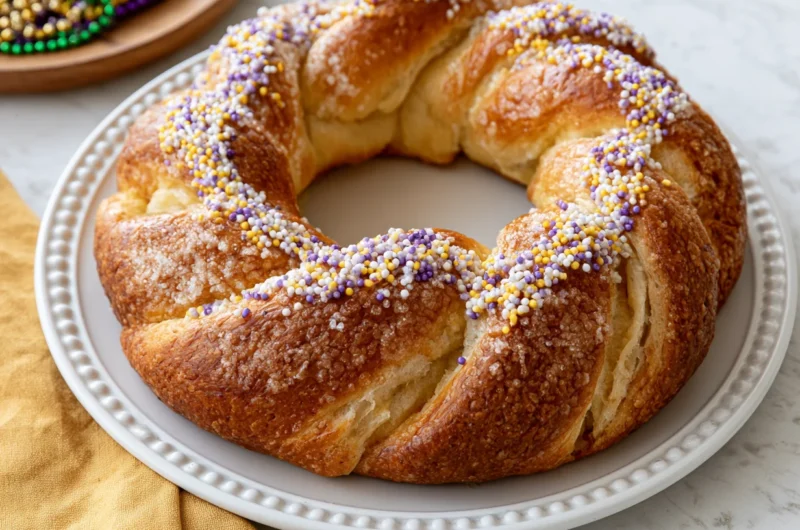
hourA soft, brioche-style ring cake filled with silky cream cheese, glazed to a shine, and crowned in traditional purple, gold, and green sugars. The definitive homemade King Cake — deeply rooted in New Orleans Mardi Gras tradition.
Ingredients
Base ingredients
4 cups all-purpose flour
2¼ tsp active dry yeast
¾ cup whole milk, warmed
½ cup granulated sugar
⅓ cup unsalted butter, softened
2 large eggs
1 tsp vanilla extract
1 tsp ground cinnamon
½ tsp ground nutmeg
½ tsp salt
8 oz cream cheese, softened
½ cup powdered sugar (filling)
1 tsp lemon zest
1½ cups powdered sugar (glaze)
3 tbsp whole milk (glaze)
1 tsp vanilla extract (glaze)
Purple, gold & green sanding sugar
Optional add-ins
½ cup chopped pecans
¼ cup golden raisins, soaked
1 tsp orange zest
1 tbsp bourbon (in glaze)
¼ tsp almond extract
1 small plastic baby figurine
Directions
- Warm the milk to 105–115°F. Add yeast and 1 tsp sugar; let rest 8–10 minutes until foamy.
- Combine dry ingredients in a stand mixer. Add eggs, butter, vanilla, and yeast mixture. Knead on medium 6–8 minutes until smooth and elastic.
- Place dough in a greased bowl, cover, and let rise in a warm spot for 1 to 1.5 hours until doubled in size.
- Beat cream cheese, powdered sugar, lemon zest, and vanilla until smooth. Fold in any optional add-ins. Set aside at room temperature.
- Roll dough into a 10×20-inch rectangle. Spread filling evenly, leaving a 1-inch border. Roll tightly into a log, seal the seam, and form into an oval ring on a parchment-lined baking sheet.
- Cover loosely and let rise 30–45 minutes. Preheat oven to 350°F. Bake 25–30 minutes until deep golden brown. Cool 20 minutes before glazing.
- Whisk glaze ingredients until pourable. Drizzle over the cooled cake and immediately apply alternating sections of purple, gold, and green sugar while glaze is still wet.
Recipe Video
Notes
- Check milk temperature with a thermometer before adding yeast. Anything above 115°F kills the yeast. Between 105–115°F is the safe window.
- Do not skip the full 6–8 minutes of kneading. The gluten development is what gives this cake its signature soft, pull-apart crumb.
- Keep that 1-inch border clean when spreading the filling. Overfilling causes blowouts during baking.
- Always glaze on a cake that has cooled for at least 20 minutes. A too-warm cake causes the glaze to run thin and the colored sugars to dissolve.
- To make ahead, freeze the undecorated ring (double-wrapped) for up to 2 months.
- Thaw overnight in the fridge, bring to room temperature, then glaze fresh before serving.
- If using a plastic baby figurine, press it into the underside of the cake after baking — never bake it inside the dough.
- Instant yeast can replace active dry yeast in equal amounts — mix directly into dry ingredients without proofing first.