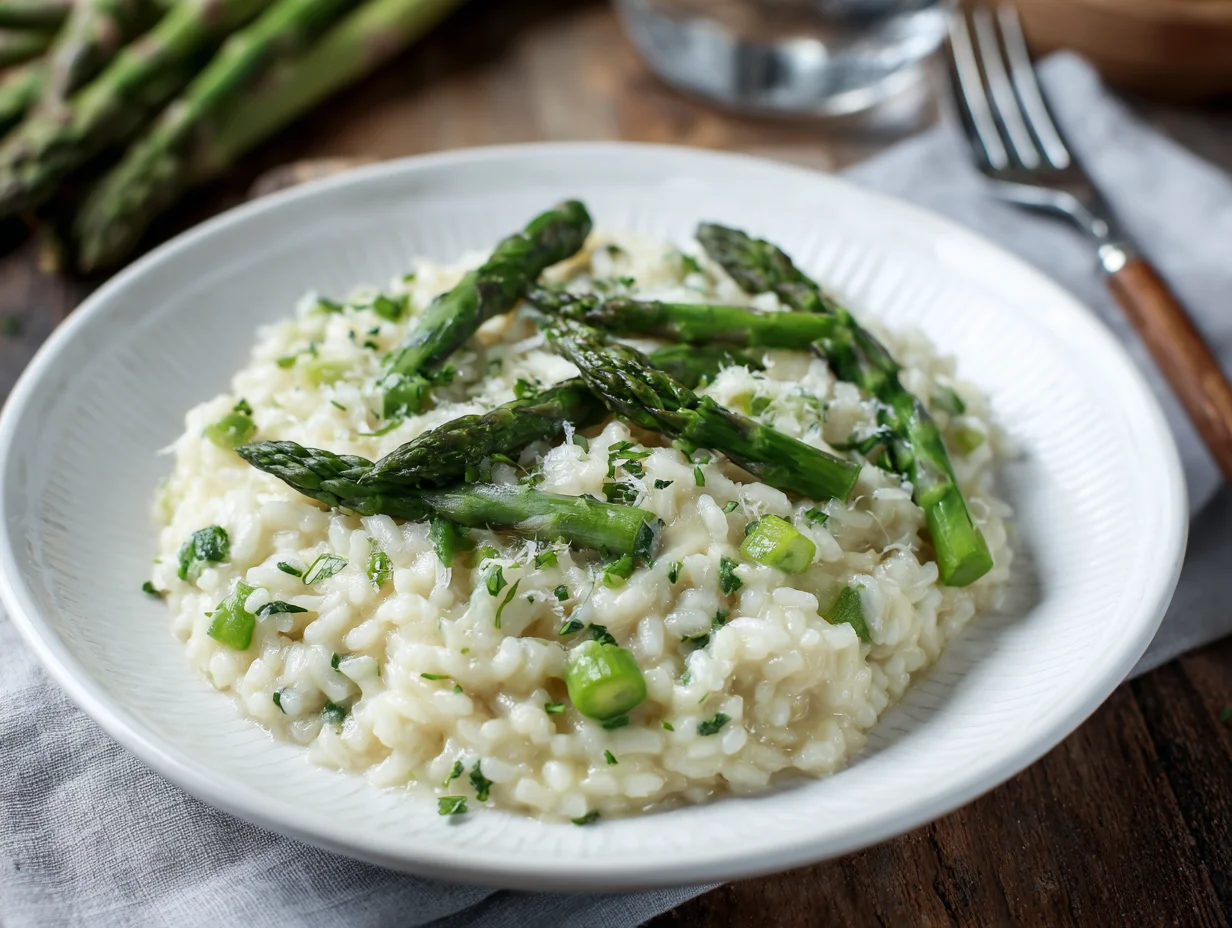
As a chef, I’ve always believed that risotto is one of the purest tests of technique in the kitchen. It looks simple, but achieving that perfectly creamy texture without turning the rice mushy requires precision and patience.
Over the years, I’ve refined my approach to asparagus risotto to ensure every grain remains distinct while still delivering that luxurious, velvety consistency. Fresh asparagus brings a clean, vibrant flavor that balances the richness beautifully.
This isn’t just a recipe I follow,it’s a method I trust. If you’ve struggled with risotto before, I’m going to walk you through exactly how I make it in my own kitchen so you can achieve the same refined, restaurant-quality result at home.
? If you love rich and comforting rice dishes, you’ll also enjoy our Creamy Shrimp Asparagus Mushroom Pasta.
The Mistake I See Most Often in Risotto
In my experience, the biggest mistake people make when cooking asparagus risotto is overcooking the rice. I’ve seen it happen countless times,people assume risotto should be completely soft, but that’s not correct. It should have a slight bite in the center.
Another issue I notice is adding too much stock at once instead of gradually. This prevents the rice from releasing its starch properly, which is what creates that natural creaminess. I also see people using cold stock, which interrupts the cooking process and affects texture.
Stirring is another problem,either too aggressive or not consistent enough. All of these mistakes lead to a risotto that feels heavy, sticky, and far from the smooth, elegant dish it should be.
My Personal Method for Perfect Risotto Texture
When I make risotto, I focus on control at every step. First, I always keep my stock warm,this is non-negotiable in my kitchen. I add it slowly, one ladle at a time, allowing the rice to absorb each addition before adding more.
I stir gently and consistently, never rushing the process. I taste frequently because timing is everything. I stop cooking when the rice is tender but still slightly firm in the center.
To finish, I remove the pan from heat and stir in butter and Parmesan, a technique I rely on to create that silky finish without overcooking. This method has never failed me, and it consistently delivers a risotto that is creamy, balanced, and refined.
Ingredients List

Base Ingredients:
- Arborio rice
- Fresh asparagus (trimmed and chopped)
- Olive oil
- Unsalted butter
- Onion or shallots (finely chopped)
- Garlic (minced)
- Vegetable or chicken stock (warm)
- Parmesan cheese (grated)
- Salt and black pepper
Optional Add-ins:
- Lemon zest
- White wine
- Fresh herbs
- Cream
- Peas or spinach
- Truffle oil
Step-by-Step Instructions
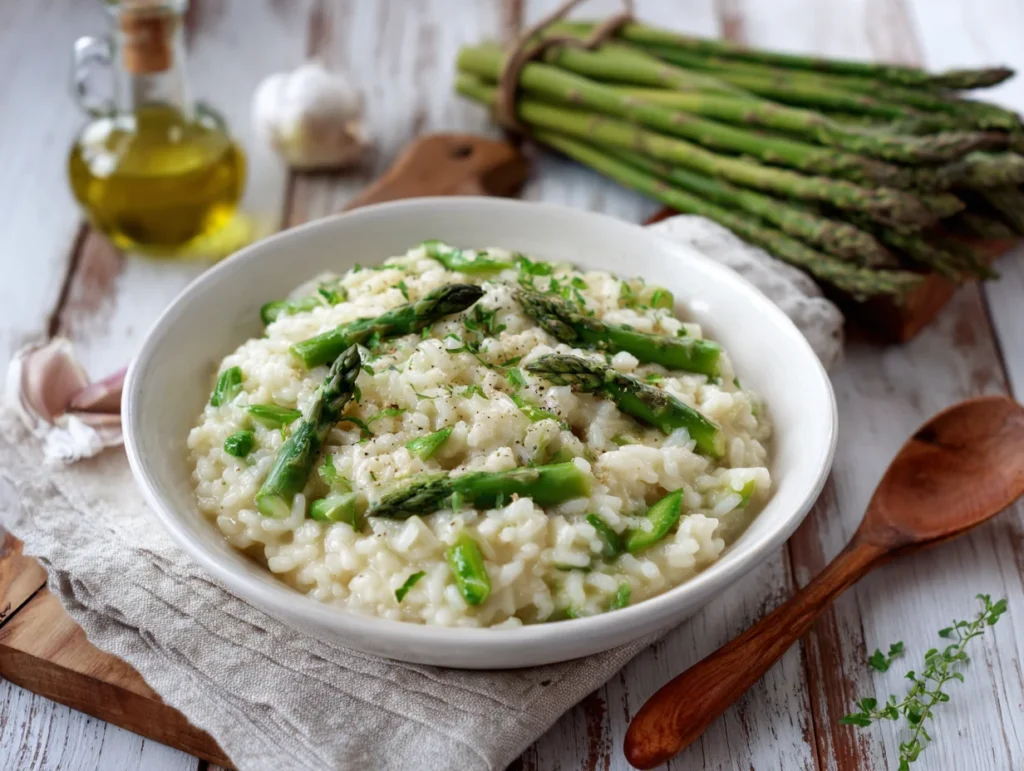
Building the Flavor Base
Whenever I start risotto, I begin with a solid flavor foundation. I heat olive oil with a small amount of butter in a heavy pan, then add finely chopped onions or shallots. I cook them slowly until they’re soft and translucent, never letting them brown because I want a clean, subtle sweetness.
Then I add garlic briefly for aroma. After that, I stir in the Arborio rice and toast it lightly. This step is something I never skip because it helps the grains hold their shape during cooking. The rice should look slightly glossy, not browned. From my experience, getting this base right ensures the final dish has depth and structure from the very first bite.
Cooking the Rice Gradually
This is where patience really comes into play. I deglaze the pan with a splash of white wine and let it cook off completely. Then I begin adding warm stock, one ladle at a time. I never rush this step. I stir gently and allow each addition to absorb fully before adding more.
This slow process is what creates the creamy texture naturally. I keep the heat at a steady simmer,not too high. I’ve learned that consistency here is everything. If you try to speed this up, the texture suffers. This stage is where risotto transforms, and I always give it my full attention to ensure the best result.
? For another elegant creamy comfort meal, try our Creamy Mushroom Soup Recipe.
Adding the Asparagus at the Right Time
Timing the asparagus correctly is something I’ve refined over time. I add it midway through cooking so it stays vibrant and slightly crisp. If you add it too early, it becomes soft and loses its fresh character. I want it to complement the risotto, not disappear into it.
As I continue cooking, I keep checking the texture of the rice and adjusting seasoning gradually. The consistency should remain slightly loose and fluid. This balance between the rice and asparagus is what gives the dish its elegance. Every component should stand out while still working together harmoniously.
Finishing Like a Professional
Once the rice reaches that perfect al dente texture, I take the pan off the heat. This is where I finish the risotto properly. I stir in cold butter and freshly grated Parmesan, allowing them to melt gently into the rice. This step creates a smooth, glossy finish that I always aim for. Sometimes I add a touch of lemon zest to brighten the flavors.
The risotto should flow slightly when served,not sit stiffly. I always serve it immediately because risotto doesn’t wait. From my experience, this final step is what separates a good risotto from a truly exceptional one.
Cook Time
Total: 40 minutes
Prep: 10 minutes
Bake: 30 minutes
Servings
When I make this asparagus risotto, I usually serve it to 4 people as a main dish or up to 6 as a side. I’ve found this portion size works perfectly because risotto is rich but not overly heavy when prepared correctly. I prefer serving it in shallow bowls so it spreads naturally and showcases its creamy texture. For me, presentation matters just as much as flavor.
If you’re hosting, this dish always impresses without feeling overly complicated. You can adjust portions easily, but I always recommend maintaining the same cooking method to ensure consistency. Each serving should feel balanced, refined, and satisfying without being overwhelming.
Nutritional Information (approx. per serving)
- Calories: 300–350 kcal
- Protein: 8–10g
- Carbohydrates: 40–45g
- Fat: 10–14g
- Fiber: Moderate
- Sodium: Moderate
- Calcium: Good source
From my perspective, this dish strikes a great balance between comfort and nutrition. Asparagus adds fiber and essential vitamins, while the rice provides steady energy. I always remind people that using quality ingredients makes a difference not just in taste but also in overall nutritional value. When enjoyed in proper portions, this risotto is both satisfying and nourishing.
? If you enjoy restaurant-style creamy dishes, you’ll also love our Creamy Lobster Risotto – Restaurant Style at Home.
Storage Instructions
Personally, I always recommend enjoying risotto fresh, but if I do have leftovers, I handle them carefully. I let the risotto cool completely before storing it in an airtight container in the refrigerator. It keeps well for about two days. When reheating, I never rush it—I add a bit of warm stock or water and heat it gently while stirring to bring back the creamy consistency. I avoid high heat because it dries the rice out quickly. Freezing is something I don’t suggest, as it changes the texture significantly. In my kitchen, maintaining quality is always the priority, even when storing leftovers.
Suggestions
Over time, I’ve found that simple pairings work best with asparagus risotto. I often serve it with grilled chicken or a lightly seared fish to create a complete meal. A squeeze of lemon or a sprinkle of fresh herbs can really lift the flavors. If I want to elevate it further, I’ll add a touch of truffle oil or extra Parmesan just before serving. I also recommend using the best stock you can find or make at home,it truly impacts the final result. Small adjustments like these can transform the dish while still keeping its core identity intact. It’s all about enhancing, not overpowering.
Seasonal Relevance
For me, asparagus risotto is a true celebration of spring. I always look forward to using fresh, seasonal asparagus because it has a natural sweetness and vibrant texture that you just can’t replicate out of season. During warmer months, I keep the dish light and fresh. In cooler seasons, I might add a bit more richness for comfort. What I love most is how adaptable it is while still maintaining its essence. Cooking seasonally has always been important in my kitchen, and this dish is a perfect example of how ingredients at their peak can elevate something simple into something exceptional.
From my experience, making a perfect asparagus risotto is all about discipline and attention to detail. It’s not complicated, but it does require focus. Every step,from toasting the rice to finishing with butter and cheese,plays a role in the final result. I’ve shared the exact method I use, and if you follow it carefully, you’ll achieve a risotto that is creamy, balanced, and never mushy. This dish is one of those recipes that truly builds confidence in the kitchen. Once you master it, you’ll understand why it’s considered a classic. And more importantly, you’ll be able to recreate that restaurant-quality experience at home whenever you want.
? For a perfect side pairing with risotto, check out our Crispy Parmesan Roasted Cauliflower.
Frequently Asked Questions
1. Can I make asparagus risotto vegan?
Yes, I often adapt it by replacing butter with olive oil and skipping Parmesan or using a plant-based alternative. The key is maintaining the same cooking technique to preserve the creamy texture.
2. What type of pan works best for risotto?
I prefer a heavy-bottomed pan because it distributes heat evenly. This helps control the cooking process and prevents the rice from sticking or cooking unevenly.
3. Can I prepare asparagus separately?
Yes, you can blanch or sauté it separately, but I prefer adding it during cooking so the flavors integrate naturally while still maintaining its texture.
4. Why does my risotto dry out quickly?
Risotto naturally thickens as it sits. I always recommend serving it immediately or adding a splash of warm stock when reheating to restore its creamy consistency.
5. Can I add protein to this risotto?
Absolutely. I often pair it with grilled chicken, shrimp, or even scallops. Just make sure the protein complements the delicate flavor of the asparagus rather than overpowering it.