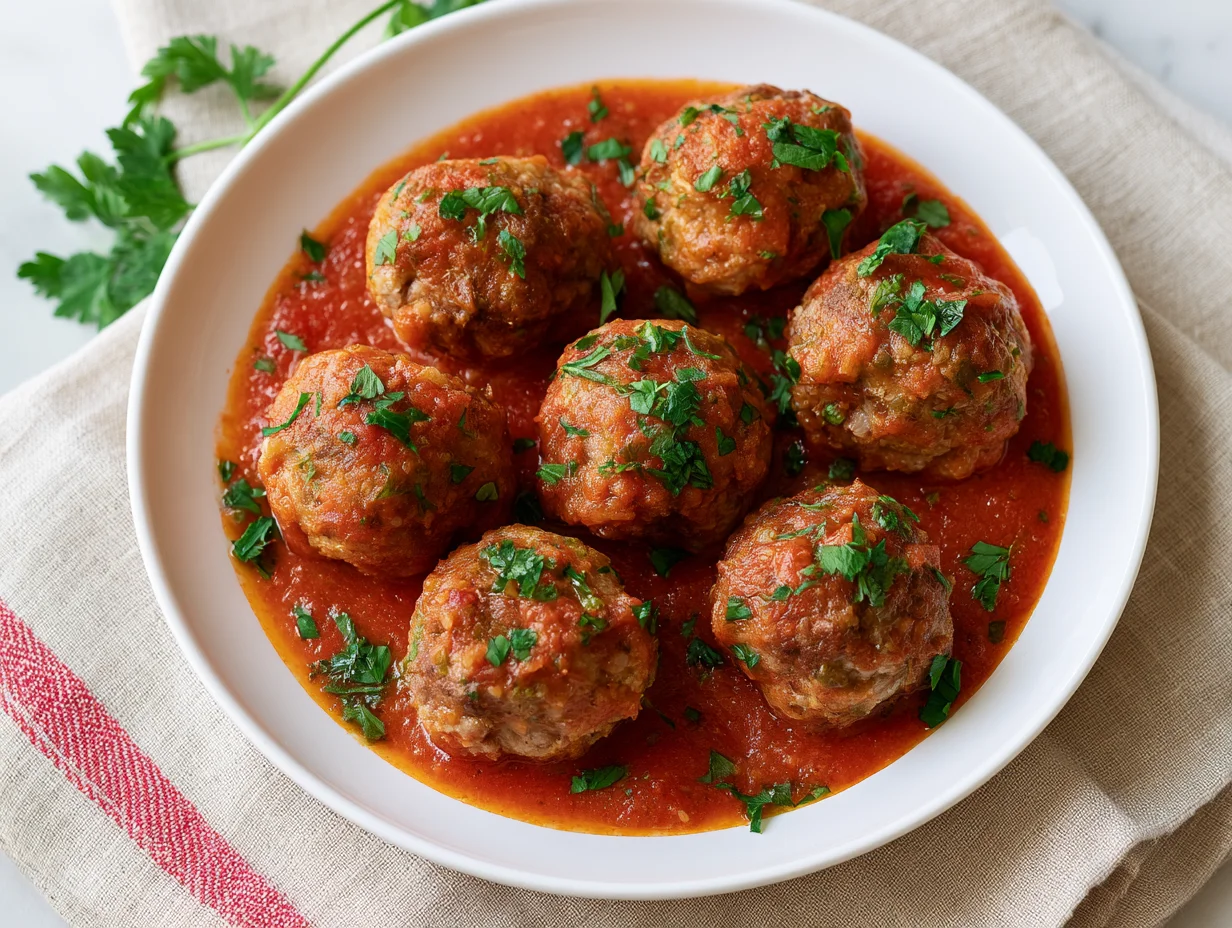
There are recipes you make once and forget, and then there are the ones that quietly become part of your kitchen identity. Homemade meatballs are firmly in the second category. These are the kind of meatballs that fill your home with a scent so deeply satisfying, your family starts hovering around the stove before dinner is even close to ready.
What separates a truly great meatball from a mediocre one is not a secret ingredient or a complex technique. It is understanding why each step matters. The fat content of your meat, the way you hydrate your breadcrumbs, the gentleness with which you mix everything together — these details are the difference between tender and tough.
I have been making meatballs for over a decade, adjusting ratios, testing different meats, and learning from every batch. This recipe is the one I keep coming back to. It is reliable, deeply flavorful, and yields meatballs with that perfect balance of a lightly crisped exterior and a soft, juicy center.
Whether you are making Sunday gravy, building a sub sandwich, or serving them with spaghetti for a weeknight dinner, this recipe will deliver every single time. Let’s get into it.
Ingredients You’ll Need
You would be surprised how much flavor comes from a short, honest list of ingredients — no obscure pantry items, no specialty store runs, just everyday staples working together in exactly the right way.
One of the things I love about this recipe is that it uses simple pantry ingredients. You probably already have most of them in your kitchen.
Base Ingredients
- 1 lb ground beef (80/20 fat ratio)
- ½ lb ground pork
- ½ cup plain breadcrumbs
- ¼ cup whole milk
- 1 large egg
- 3 cloves garlic, finely minced
- ¼ cup freshly grated Parmesan cheese
- 2 tablespoons fresh flat-leaf parsley, finely chopped
- 1 teaspoon fine sea salt
- ½ teaspoon freshly ground black pepper
- ½ teaspoon dried oregano
- 2 tablespoons olive oil (for searing)
Optional Add-ins
- ¼ teaspoon red pepper flakes (for gentle heat)
- 1 teaspoon Worcestershire sauce (for umami depth)
- 1 tablespoon tomato paste (for richness)
- ¼ cup ricotta cheese (for extra creaminess)
- 1 teaspoon fennel seeds, lightly crushed (for an Italian sausage-like flavor)
- Zest of ½ lemon (for brightness)
Step-by-Step Instructions
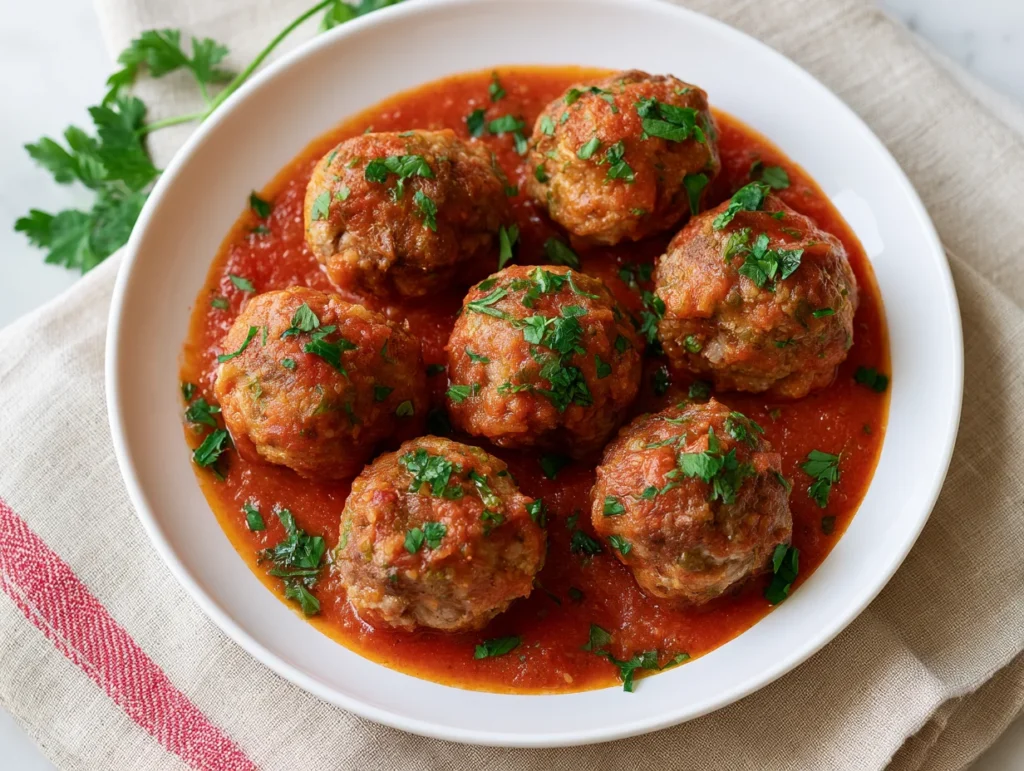
Step 1: Soak the Breadcrumbs
Begin by combining the breadcrumbs and milk in a small bowl. Let them sit for about 5 to 7 minutes until the milk is fully absorbed and the mixture resembles a soft, wet paste. This step, known as a panade, is the single most important technique in this recipe. It creates steam from within the meatball as it cooks, keeping the interior tender and moist rather than dense and dry. Do not skip it.
Step 2: Combine the Ingredients
In a large mixing bowl, add the ground beef and ground pork. Add the soaked breadcrumb mixture, egg, minced garlic, Parmesan, parsley, salt, pepper, and oregano. If you are using any optional add-ins, this is the time to incorporate them. Use your hands or a fork to bring everything together. Stop the moment the mixture is combined. Overmixing compresses the proteins and results in meatballs that are firm and tough instead of tender.
Step 3: Portion and Shape
Using a standard cookie scoop or your hands, portion the meat mixture into balls roughly 1.5 inches in diameter — about the size of a golf ball. Roll each one gently between your palms with light, even pressure. Avoid pressing too hard. Uniform size matters here: it ensures all the meatballs finish cooking at the same time. Place them on a parchment-lined baking sheet as you go. You should get approximately 20 to 24 meatballs from this batch.
Step 4: Sear in a Skillet
Heat the olive oil in a large, heavy-bottomed skillet over medium-high heat. Once the oil shimmers, add the meatballs in a single layer without crowding the pan — work in two batches if needed. Sear them for about 2 to 3 minutes per side, turning carefully with tongs, until a deep golden-brown crust forms on the outside. You are not cooking them through at this stage. You are building flavor. That crust is caramelized protein, and it adds a richness that baked-only meatballs simply cannot match.
Step 5: Finish in the Oven
Transfer the seared meatballs to a baking dish or back onto the parchment-lined sheet. Place them in a preheated oven at 375°F and bake for 12 to 15 minutes, or until the internal temperature reaches 165°F. If you plan to finish them in a tomato sauce, you can pull them from the oven slightly early and let them finish cooking directly in the simmering sauce over low heat for 10 to 15 minutes. This method infuses the sauce with meaty depth and keeps the meatballs incredibly moist.
Cook Time
Total
35 to 40 minutes
Prep
10 to 15 minutes
Bake
12 to 15 minutes
Servings
This recipe makes a generous batch that works beautifully for family dinners, meal prep, or entertaining. The portions are designed to satisfy without being excessive, striking the right balance between a hearty serving and something you can pair with pasta, bread, or vegetables without overwhelming the plate.
Makes approximately 20 to 24 meatballs, serving 4 to 6 people as a main course when paired with pasta or a side dish. If serving as an appetizer or party food, this batch can comfortably feed 8 to 10 people.
If you need to scale up, this recipe doubles cleanly. Just make sure to work in batches when searing so you maintain proper heat in the pan. Crowding will steam the meatballs instead of browning them, and you will lose that essential crust.
Common Mistakes in This Recipe
The most frequent error home cooks make is overmixing the meat. It feels intuitive to mix thoroughly for even distribution, but working the meat too long tightens the proteins and produces a dense, rubbery texture. The moment everything is combined, you stop.
Many cooks also skip the panade entirely or reduce the milk, thinking it will make the mixture too wet. This is where a lot of meatballs go wrong. Without enough moisture in the mix, the finished meatball dries out quickly, especially under oven heat.
Using meat that is too lean is another common pitfall. Extra-lean ground beef sounds like the healthier choice, but fat is what carries flavor and keeps the texture moist during cooking. A ratio of 80/20 is the standard for a reason.
Finally, skipping the sear and going straight into the oven is a shortcut that costs a significant amount of flavor. The Maillard reaction during searing creates hundreds of complex flavor compounds on the surface of the meat. Baking alone cannot replicate that depth.
Solutions to Common Mistakes
To avoid overmixing, use your hands and stop as soon as you no longer see streaks of egg or unmixed breadcrumbs. Treat the mixture gently, as if you are folding rather than kneading.
For the panade, always let the breadcrumbs fully absorb the milk before adding them to the meat. The mixture should feel wet and cohesive, almost like a thick paste. That moisture will redistribute through the meatball as it cooks.
Choose ground beef with a visible fat content of at least 15 to 20 percent. If you prefer a leaner result, add a quarter cup of ricotta cheese to the mix. It replicates the moisture and richness that fat would otherwise provide.
For the sear, make sure your oil is properly hot before the meatballs go in. A hot pan means immediate browning; a cold pan means the meat starts steaming in its own juices. Let them sit undisturbed for a full 2 to 3 minutes before turning — the crust will release naturally when it is ready.
Nutritional Information (approx. per serving)
- Calories: 310 kcal
- Protein: 24g
- Total Fat: 19g
- Saturated Fat: 7g
- Carbohydrates: 9g
- Fiber: 0.5g
- Sugars: 1g
- Sodium: 420mg
- Cholesterol: 95mg
- Calcium: 110mg
- Iron: 2.5mg
The combination of beef and pork in this recipe provides a high-quality complete protein profile, supplying all essential amino acids needed for muscle maintenance and repair. Protein also promotes satiety, making this a filling and satisfying meal.
The Parmesan cheese contributes meaningful amounts of calcium, which supports bone density, and also adds natural glutamates that enhance overall flavor without requiring excessive salt. The garlic and parsley are not just aromatics — garlic contains allicin, a compound associated with immune support and cardiovascular benefits, while parsley is a surprisingly rich source of vitamin K and vitamin C.
Olive oil, used for searing, provides monounsaturated fats that are associated with heart health when consumed as part of a balanced diet. Unlike deep-frying, searing with a small amount of high-quality oil keeps added fat to a minimum while still delivering excellent texture and flavor.
Ground pork contributes B vitamins, particularly B1 (thiamine) and B12, both of which support energy metabolism and nervous system function. When consumed alongside vegetables or a fiber-rich pasta, this dish forms a nutritionally well-rounded meal.
Storage Instructions
Once cooled to room temperature, store leftover meatballs in an airtight container. They will keep well in the refrigerator for up to 4 days. If they are stored in sauce, the container should be tightly sealed to prevent the sauce from absorbing any off-odors from the refrigerator.
For longer storage, meatballs freeze exceptionally well. Arrange the fully cooked and cooled meatballs in a single layer on a baking sheet and freeze until solid, about 2 hours. Then transfer them to a zip-lock freezer bag or airtight container. Stored this way, they will maintain quality for up to 3 months.
To reheat from frozen, place the meatballs directly into a simmering tomato sauce and heat over medium-low for 20 to 25 minutes, turning once or twice. Alternatively, reheat them in a 350°F oven for 15 to 20 minutes, covered loosely with foil to prevent drying.
Avoid microwaving meatballs directly from frozen if you can help it. The uneven heat tends to create hot spots and can make the exterior rubbery while the center is still cold. If the microwave is your only option, use a low power setting and reheat in 60-second intervals with a splash of water in the dish to create some steam.
Suggestions
These meatballs are intentionally versatile. They were built to work in multiple applications, and the mild, well-seasoned flavor profile makes them easy to pair. Serve them over spaghetti with a slow-cooked marinara for the classic Sunday dinner treatment, or nestle them into a toasted hoagie roll with provolone and sauce for a meatball sub that beats anything from a restaurant.
For something more elegant, try serving them alongside creamy polenta and a ladle of braised tomatoes with fresh basil. The softness of the polenta contrasts beautifully with the slightly firm exterior of the meatball. A sprinkle of flaky sea salt and a drizzle of good olive oil finishes the plate.
You can also use these meatballs as a base for soup. Add them to a broth with white beans, baby spinach, and ditalini pasta for a hearty Italian-style soup that comes together in under 30 minutes. They hold their shape remarkably well in liquid, which makes them ideal for this kind of application.
If you are entertaining, serve them straight from a slow cooker set on warm, bathed in marinara or a sweet-and-savory grape jelly glaze. They make an excellent cocktail party appetizer that stays warm throughout the evening and consistently disappears first from the spread.
Seasonal Relevance
While meatballs are a year-round comfort food, they feel most at home in the cooler months when you want something hearty and warming on the table. In autumn and winter, pair them with thick pasta, root vegetable sides, or a rich tomato-based braise that simmers low and slow on the stove while the house fills with that unmistakable aroma.
In spring, lighten the presentation. Serve the meatballs over orzo with fresh peas, lemon zest, and a handful of torn mint. The same recipe shifts from heavy to bright with a few simple changes to what surrounds it on the plate.
Summer meatballs work wonderfully on an outdoor grill. Shape them and cook directly over medium heat for a slightly charred, smoky version that pairs beautifully with a fresh tomato salad and grilled flatbread. Skewer them between peppers and onions for a meatball skewer that makes an excellent backyard barbecue option.
The core recipe stays constant regardless of season. What changes is the context — the sauce, the sides, and the serving style. That adaptability is part of what makes a great homemade meatball recipe an investment worth making. Once you have it dialed in, it serves you across every season and occasion.
Final Words
A recipe earns its place in your permanent rotation not because it is easy, but because it is reliable and genuinely good every time you make it. This meatball recipe is both. It asks for a little patience and care in the mixing and shaping stages, but the process itself is approachable for cooks at any skill level.
What I hope you take from this article is not just the recipe, but the reasoning behind it. Understanding why the panade matters, why you stop mixing early, and why searing is worth the extra pan gives you the tools to troubleshoot and adapt. That understanding is what separates a cook who follows recipes from one who truly knows how to cook.
Make this recipe once and you will already see what I mean. The texture will be noticeably different from anything you have bought pre-made or made without these steps. The flavor will be deeper, the interior more tender, and the overall result more satisfying than you might have expected from such a simple ingredient list.
Make them your own over time. Adjust the seasoning to your taste, experiment with the optional add-ins, try different sauces and pairings. The best version of this recipe is ultimately the one that reflects your kitchen and your preferences. This is just the foundation — a very good one — to start from.
Frequently Asked Questions
Can I make these meatballs ahead of time and refrigerate them before cooking?
Yes, you can shape the raw meatballs up to 24 hours in advance and store them covered in the refrigerator. This actually improves flavor slightly as the seasonings have time to meld. Sear and bake them directly from the fridge, adding a minute or two to the cook time.
Can I use only ground beef instead of a beef and pork blend?
You can, but the pork adds fat content and a subtle sweetness that improves both texture and flavor. If using only beef, opt for 80/20 and consider adding two tablespoons of ricotta cheese to compensate for the moisture and richness the pork would have contributed.
How do I know when the meatballs are fully cooked without cutting into them?
The most reliable method is an instant-read thermometer inserted into the center of a meatball — it should read 165°F. As a visual guide, a fully cooked meatball will feel firm but not hard when pressed gently, and any juices running from the surface should be clear, not pink.
