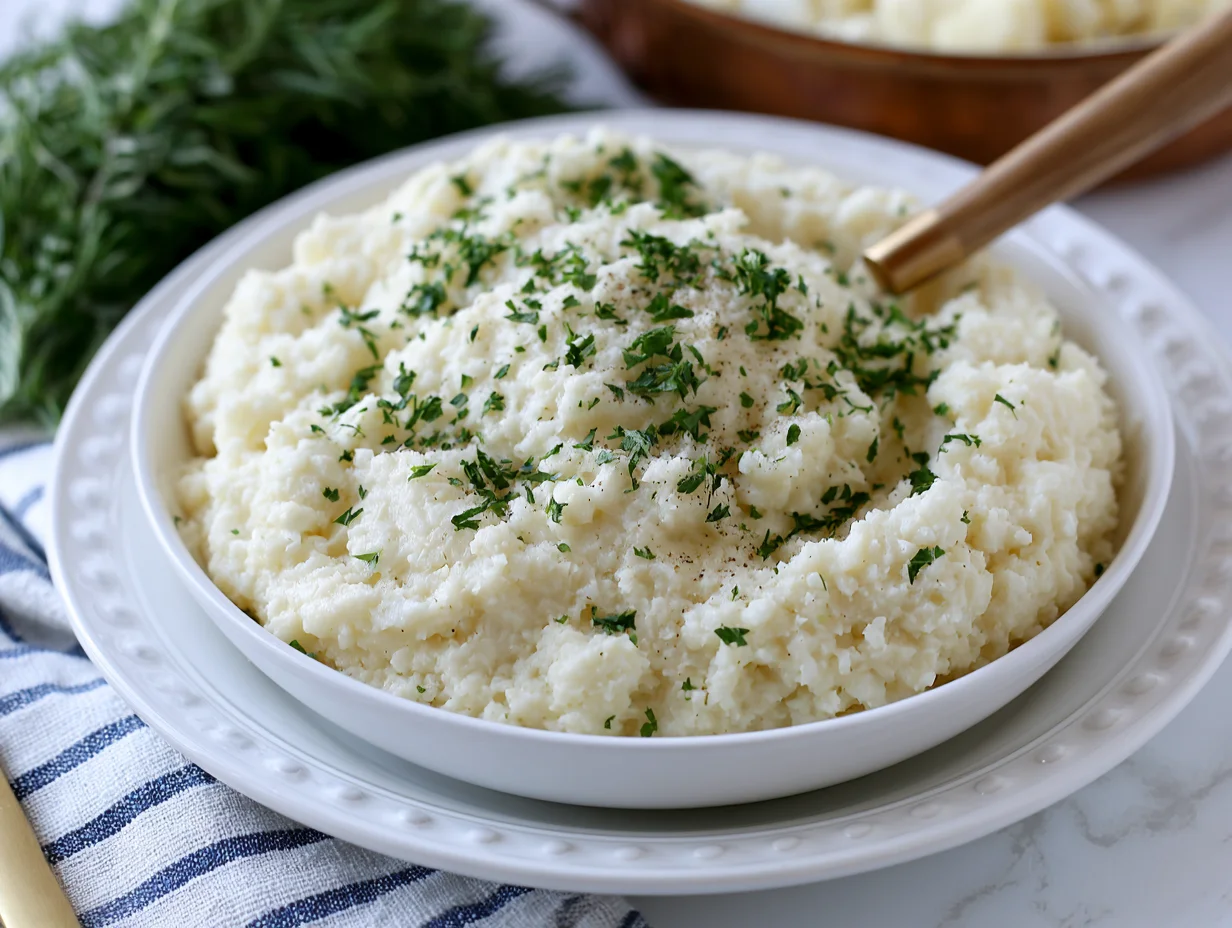
Creamy mashed potatoes are one of the most comforting side dishes ever created, but cauliflower mashed potatoes offer the same rich texture with a lighter, healthier twist. This recipe delivers silky smooth consistency, buttery flavor, and satisfying comfort while reducing carbohydrates and adding extra vegetables to your meal naturally.
Unlike bland low-carb substitutes, properly prepared cauliflower mash can taste rich, savory, and genuinely satisfying when balanced with the right ingredients and cooking techniques. Garlic, butter, cream, and seasoning help transform cauliflower into a luxurious side dish worthy of weeknight dinners and holiday tables alike.
One reason this recipe has become increasingly popular is its versatility. It pairs beautifully with roasted chicken, grilled salmon, steak, turkey, vegetarian mains, and healthy meal-prep recipes while fitting into keto-friendly and low-carb lifestyles.
If you are searching for healthy comfort food recipes, easy low-carb side dishes, or creamy mashed cauliflower that actually tastes indulgent, this cauliflower mashed potatoes recipe offers premium flavor, smooth texture, and reliable results every single time.
Ingredients You’ll Need
The magic of this recipe comes from transforming simple everyday ingredients into a creamy, restaurant-quality side dish that feels comforting while staying lighter than traditional mashed potatoes.
Base Ingredients:
- 1 large head cauliflower, cut into florets
- 3 garlic cloves, minced
- 2 tablespoons unsalted butter
- 1/4 cup heavy cream
- 1/4 cup grated Parmesan cheese
- 1/2 teaspoon sea salt
- 1/4 teaspoon black pepper
- 1 tablespoon chopped fresh chives
Optional Add-ins:
- 2 tablespoons cream cheese
- 1/4 teaspoon smoked paprika
- 1 tablespoon roasted garlic
- 1 tablespoon olive oil
- 2 tablespoons sour cream
- 1 teaspoon fresh thyme leaves
Step-by-Step Instructions
Cook the Cauliflower Properly
Bring a large pot of salted water to a gentle boil over medium-high heat. Add the cauliflower florets and cook for approximately 10 to 12 minutes until fork-tender but not falling apart completely.
Proper cooking is essential because undercooked cauliflower creates grainy mash while overcooked cauliflower absorbs too much water. Drain the cauliflower thoroughly once tender and allow it to sit for a few minutes so excess moisture evaporates naturally. Removing extra water helps create thick, creamy mashed cauliflower instead of a watery consistency that lacks richness and structure.
Build Flavor with Garlic and Butter
While the cauliflower drains, melt butter in a skillet over medium heat and add the minced garlic. Cook gently for about 1 minute until fragrant without browning excessively.
This step creates deeper savory flavor and prevents raw garlic harshness from overpowering the dish. If using roasted garlic or thyme, add them during this stage for richer aroma and complexity. Layering flavor before blending makes the finished cauliflower mash taste significantly more luxurious and restaurant-quality while maintaining balanced seasoning throughout the recipe.
Blend Until Smooth and Creamy
Transfer the cooked cauliflower into a food processor or high-speed blender. Add the garlic butter mixture, heavy cream, Parmesan cheese, salt, and black pepper.
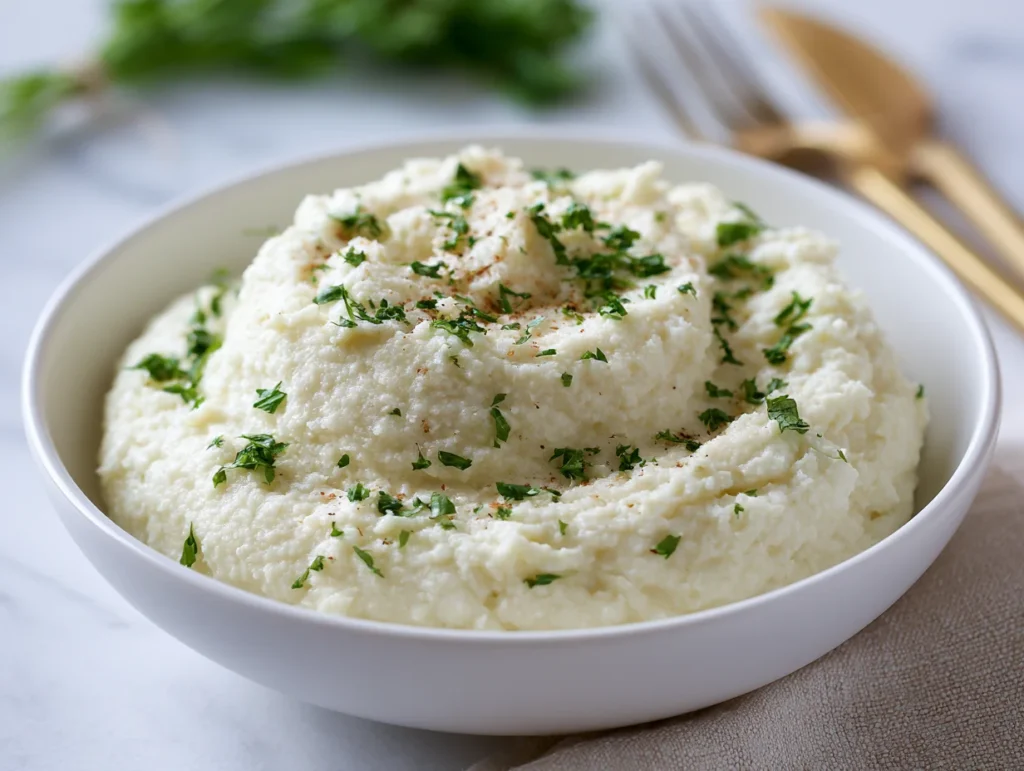
Blend gradually until the texture becomes smooth, creamy, and evenly combined. Pause occasionally to scrape down the sides for consistent texture. Avoid over-processing for too long because excessive blending can loosen the mixture. The finished mash should feel creamy and thick with a silky texture similar to classic mashed potatoes while remaining light and flavorful.
Finish and Serve Warm
Transfer the mashed cauliflower into a serving bowl and taste carefully for final seasoning adjustments. Add additional salt, pepper, or Parmesan if needed to balance the flavor.
Top with fresh chives, smoked paprika, olive oil, or sour cream before serving for extra richness and visual appeal. Serve immediately while warm for the smoothest texture and best flavor experience. This dish pairs exceptionally well with roasted meats, grilled vegetables, holiday dinners, and healthy weeknight comfort-food meals.
Cook Time
Total:
25 minutes
Prep:
10 minutes
Bake:
15 minutes
Servings
This recipe makes approximately 4 servings, depending on portion size and whether it is served as a holiday side dish or everyday dinner accompaniment.
The creamy texture and savory flavor make it satisfying enough to replace traditional mashed potatoes while remaining lighter and lower in carbohydrates. It fits especially well into balanced meal plans and low-carb dinner routines.
For larger gatherings, the recipe doubles easily without requiring adjustments to the cooking method. It is an excellent option for holiday meals, Sunday dinners, and family comfort-food menus where healthier side dishes are appreciated without sacrificing flavor.
Common Mistakes in This Recipe
One major mistake is failing to drain the cauliflower thoroughly after boiling. Excess moisture creates watery mashed cauliflower with weak texture and diluted flavor.
Another issue is under-seasoning the mash. Cauliflower naturally requires balanced seasoning to achieve rich and savory flavor comparable to mashed potatoes.
Some people over-process the mixture, causing the mash to become loose instead of thick and creamy with structured consistency.
Using low-fat dairy substitutes can also reduce creaminess and overall flavor depth, making the dish taste less satisfying and luxurious.
Solutions to Common Mistakes
Allow the cauliflower to drain fully and sit briefly after cooking so steam and moisture evaporate before blending the mash.
Season gradually during blending and taste before serving. Parmesan, garlic, butter, and salt all contribute essential savory richness.
Blend only until smooth and creamy rather than continuously processing for extended periods. Controlled blending improves consistency significantly.
Use quality butter, cream, or cream cheese for better texture and fuller flavor. Rich ingredients help cauliflower taste more indulgent and balanced naturally.
Nutritional Information (approx. per serving)
- Calories: 145
- Protein: 5g
- Carbohydrates: 8g
- Fiber: 3g
- Fat: 11g
- Saturated Fat: 6g
- Sodium: 320mg
- Vitamin C: 70% DV
- Calcium: 10% DV
Cauliflower is naturally lower in carbohydrates than potatoes, making this recipe appealing for low-carb, keto-friendly, and balanced eating plans.
The vegetable also provides fiber and vitamin C, helping support overall nutrition while maintaining the comforting texture associated with classic mashed potato dishes.
Garlic and herbs contribute aromatic flavor while enhancing the savory profile without relying heavily on processed ingredients or excess sodium.
Because this recipe uses wholesome ingredients and vegetable-based texture, it offers a lighter comfort-food option that still feels rich, creamy, and deeply satisfying alongside everyday meals.
Storage Instructions
Allow the mashed cauliflower to cool slightly before transferring it into airtight storage containers. Proper cooling helps preserve texture and freshness during refrigeration.
Store leftovers in the refrigerator for up to 4 days. Reheat gently in a saucepan over low heat while stirring occasionally for the best consistency.
If the mash thickens during storage, add a small splash of cream or milk while reheating to restore smooth texture and creaminess naturally.
Freezing is possible, although slight texture changes may occur after thawing because cauliflower contains more water than traditional potatoes. Stir thoroughly after reheating for smoother consistency.
Suggestions
Serve cauliflower mashed potatoes alongside roasted chicken, grilled steak, baked salmon, turkey, or vegetarian mushroom dishes for balanced comfort-food meals.
For extra richness, mix in cream cheese or roasted garlic before blending. These additions create deeper flavor and smoother texture without overwhelming the dish.
Fresh herbs like chives, parsley, or thyme brighten the creamy mash beautifully while adding restaurant-style presentation and freshness to every serving.
This recipe also works exceptionally well for meal prep because it reheats quickly and pairs with a wide variety of healthy lunch and dinner recipes throughout the week.
Seasonal Relevance
Cauliflower mashed potatoes are especially popular during fall and winter because they provide warm comforting texture without feeling excessively heavy.
During holiday seasons, this recipe becomes an excellent lighter alternative to traditional mashed potatoes while still fitting naturally into festive dinner menus.
In spring and summer, the lighter vegetable-based texture pairs beautifully with grilled proteins, roasted vegetables, and fresh seasonal herbs for balanced meals.
Because cauliflower remains widely available year-round, this recipe stays practical, affordable, and versatile regardless of season or occasion.
Final Words
This cauliflower mashed potatoes recipe proves that healthy comfort food can still feel rich, creamy, and deeply satisfying when prepared with proper technique and balanced ingredients.
The silky texture, buttery flavor, and savory garlic notes create a side dish that easily competes with traditional mashed potatoes while remaining lighter and more nutrient-focused.
Whether you are following a low-carb lifestyle, searching for healthier side dishes, or simply looking for new ways to enjoy cauliflower, this recipe delivers dependable flavor and practical versatility.
Once you master this method, cauliflower mash quickly becomes one of those reliable recipes you return to regularly because it feels comforting, elegant, and surprisingly indulgent every single time.
Frequently Asked Questions
Can I make cauliflower mashed potatoes ahead of time?
Yes, this recipe reheats very well and can be prepared up to 2 days in advance. Store it in an airtight container in the refrigerator and reheat gently on the stovetop or in the microwave while stirring occasionally to restore smooth texture and creamy consistency before serving.
What is the best way to thicken watery cauliflower mash?
If the mash becomes watery, continue cooking it gently in a saucepan over low heat to evaporate excess moisture. Adding Parmesan cheese, cream cheese, or additional cauliflower can also improve consistency while maintaining creamy texture and balanced flavor without making the dish overly dense.
Can I make this recipe without dairy products?
Absolutely. Replace butter with olive oil or vegan butter and substitute heavy cream with unsweetened plant-based milk. Nutritional yeast can replace Parmesan cheese for savory flavor while keeping the recipe completely dairy-free and suitable for vegan or plant-based meal plans.
