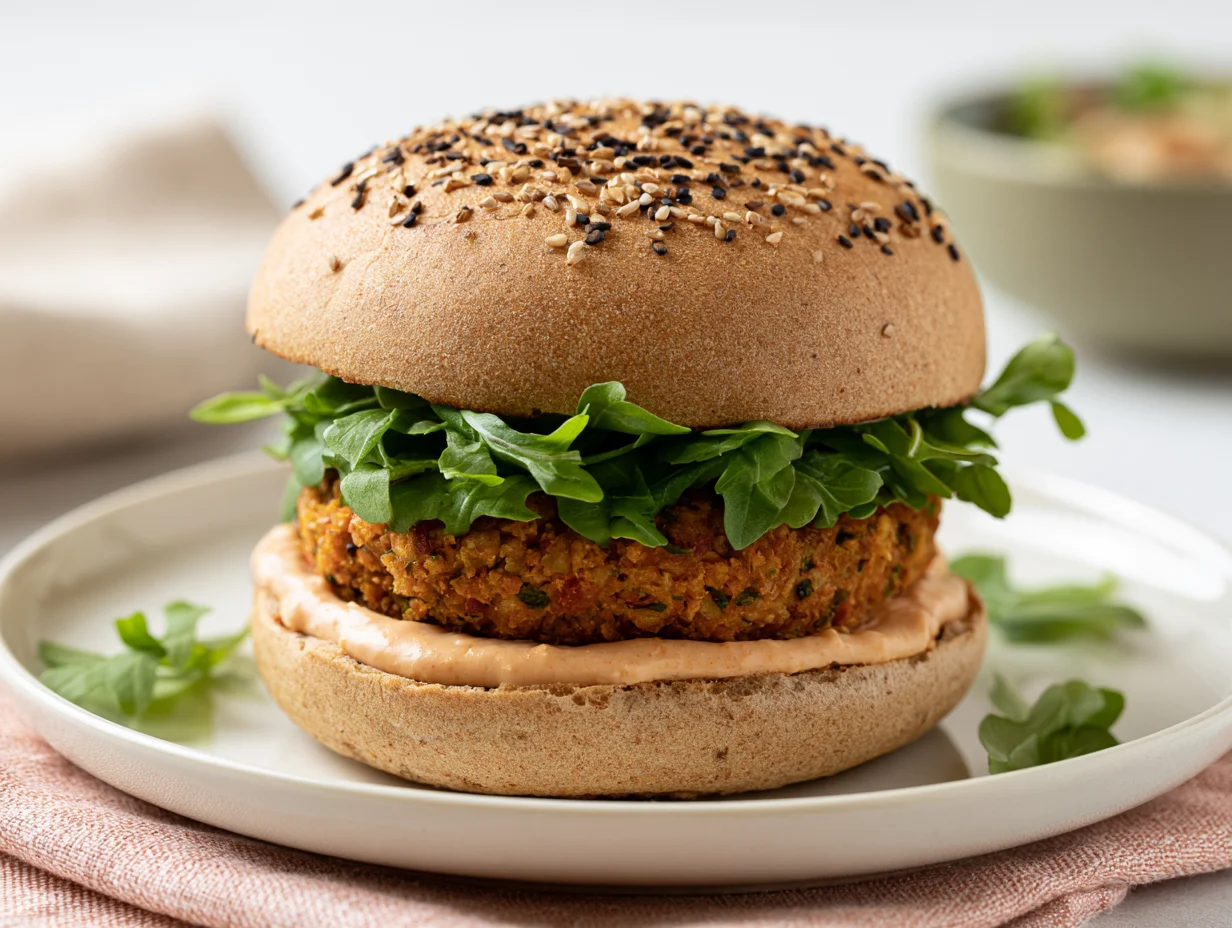
Healthy Veggie Burger Recipe
There’s a particular kind of disappointment that comes with biting into a veggie burger that falls apart, tastes like cardboard, or worse, doesn’t taste like anything at all. This recipe fixes that problem permanently, delivering a patty with real bite, deep flavor, and staying power.
Built on a foundation of black beans, oats, and roasted vegetables, this burger holds together through grilling, pan-frying, or baking without turning to mush. It’s packed with plant-based protein and fiber, so it actually keeps you full instead of leaving you hunting for a second helping an hour later.
What sets this version apart is balance. Smoky spices, a touch of umami from soy sauce, and a binding technique that skips excess breadcrumbs make every bite taste intentional rather than like a sad substitute for meat.
Whether you’re cooking for a plant-based household, easing into meatless Mondays, or just craving something lighter without sacrificing flavor, this recipe earns a permanent spot in your rotation. Let’s build a veggie burger worth making again and again.
Ingredients You’ll Need
Great veggie burgers aren’t about fancy substitutes — they’re about ingredients that actually want to work together, and this lineup proves it. One of the things I love about this recipe is that it uses simple pantry ingredients. You probably already have most of them in your kitchen.
Base Ingredients
- 1 can (15 oz) black beans, drained and rinsed
- 1 cup cooked brown rice
- 1/2 cup rolled oats
- 1/2 cup grated carrot
- 1/4 cup finely chopped red onion
- 2 cloves garlic, minced
- 1 large egg (or flax egg for a vegan option)
- 2 tablespoons soy sauce or tamari
- 1 teaspoon smoked paprika
- 1/2 teaspoon ground cumin
- 1/2 teaspoon salt
- 1/4 teaspoon black pepper
- 2 tablespoons olive oil, for cooking
Optional Add-ins
- 1/4 cup shredded cheddar cheese
- 2 tablespoons chopped fresh cilantro
- 1/4 cup corn kernels
- 1 teaspoon chipotle powder, for heat
- 1/4 cup chopped walnuts, for crunch
- 1 tablespoon nutritional yeast, for a cheesy flavor
Step-by-Step Instructions
Prepare the Base Mixture
In a large bowl, mash the black beans with a fork or potato masher, leaving some texture rather than turning them into paste. Add the cooked brown rice, rolled oats, grated carrot, chopped red onion, and minced garlic. Stir everything together until evenly distributed. This combination gives the patties structure, moisture, and a satisfying chew. Avoid overmixing at this stage, since you want visible texture from the beans and rice rather than a uniform mash, which keeps the final burger from feeling dense or gummy once cooked.
Season and Bind the Patties
Crack the egg into the bowl (or stir in your flax egg if making a vegan version), then add the soy sauce, smoked paprika, cumin, salt, and pepper. Mix thoroughly until the seasoning is evenly worked through the mixture. The egg or flax binder helps everything hold together during cooking, so don’t skip it. If the mixture feels too wet to shape, add an extra tablespoon of oats; if it feels too dry, add a splash of water until it comes together.
Shape the Patties
Divide the mixture into four to six equal portions, depending on your preferred burger size. Using slightly damp hands, press each portion into a tight, even patty about three-quarters of an inch thick. Compact the edges firmly, since loose edges are the most common reason veggie burgers crumble during cooking. Place the shaped patties on a parchment-lined tray and refrigerate for at least fifteen minutes. This brief chilling step firms up the binders and significantly improves how well the patties hold their shape on the heat.
Cook the Burgers
Heat olive oil in a skillet over medium heat until shimmering. Carefully place the chilled patties in the pan, leaving space between each one. Cook for four to five minutes per side, resisting the urge to flip early, until a deep golden crust forms. The crust is what gives these burgers their satisfying bite, so let it develop fully before turning. If baking instead, arrange patties on a lined sheet and bake at 400°F, flipping once halfway through for even browning.
Assemble and Serve
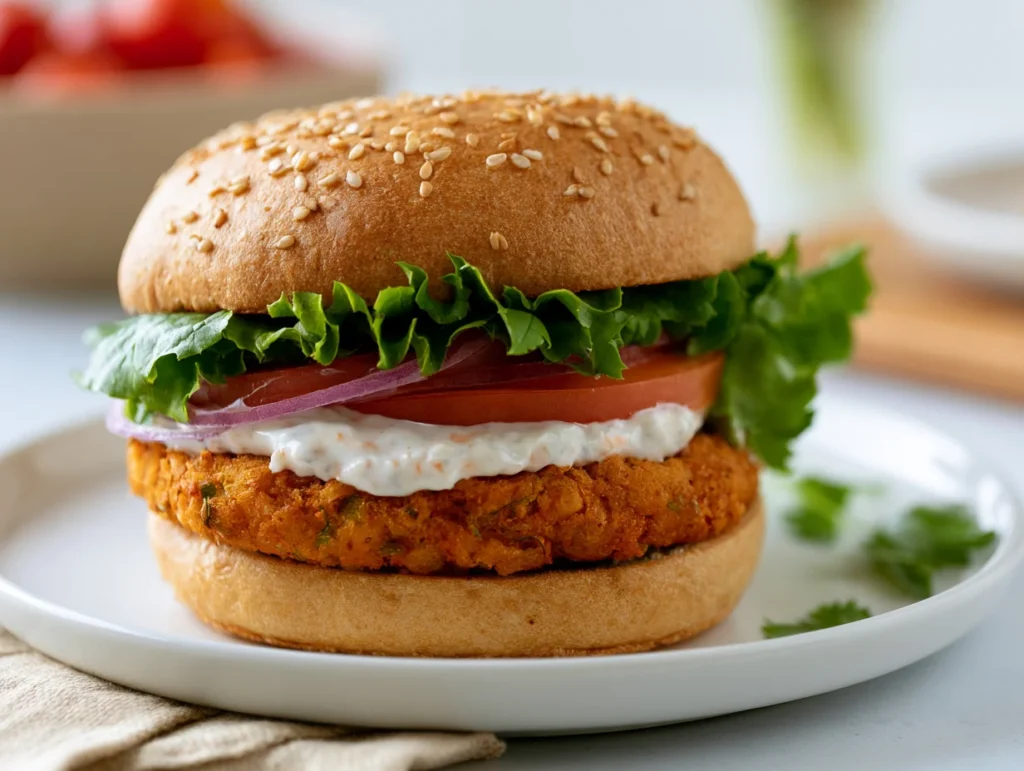
Toast your burger buns lightly for added texture and to prevent sogginess from toppings. Layer each bun with your preferred condiments, lettuce, sliced tomato, and the cooked patty straight from the pan. Add cheese if using, allowing it to melt slightly against the warm patty. Finish with pickles, avocado, or a smoky aioli for extra richness. Serve immediately while the patty is warm and the crust is still crisp, alongside a side salad or sweet potato fries for a complete meal.
Cook Time
Total:
35 minutes (including chilling time)
Prep:
15 minutes
Bake:
20 minutes at 400°F (or 8–10 minutes if pan-frying)
Servings
This recipe makes approximately 4 to 6 veggie burger patties, depending on how generously you portion the mixture. Most home cooks find four hearty, restaurant-style patties or six smaller, kid-friendly portions works best for a typical weeknight dinner.
For families or meal-prep purposes, doubling the recipe is straightforward since the base ingredients scale evenly. Cooked patties freeze well individually, making it easy to portion out exactly how many servings you need for any given meal without waste.
If you’re serving a crowd or hosting a casual cookout, pair the burgers with extra buns and toppings so guests can build their own. This recipe stretches comfortably to feed four to six people as a full meal.
Common Mistakes in This Recipe
Overprocessing the bean mixture into a smooth paste is one of the most frequent missteps. When black beans are blended too finely, the patties lose structure and turn mushy or gummy once cooked, rather than holding a pleasant, slightly chunky texture.
Skipping the chilling step is another common error. Cooks eager to get dinner on the table often shape and cook patties immediately, only to watch them fall apart in the pan because the binders haven’t had time to set properly.
Flipping the patties too early or too often disrupts crust formation. Constant movement in the pan prevents the surface from developing the golden, slightly crisp exterior that gives these burgers their satisfying texture while keeping the inside intact.
Using buns that are too soft or untoasted leads to a soggy, structurally weak burger. Without toasting, the bread absorbs moisture from toppings and the patty almost immediately, causing the sandwich to collapse before it reaches the table.
Solutions to Common Mistakes
Mash the beans by hand with a fork, leaving visible chunks rather than reaching for a food processor. This preserves texture and prevents the mixture from becoming a paste that can’t hold its shape during cooking.
Always refrigerate shaped patties for at least fifteen minutes before cooking. This resting period allows the egg or flax binder to firm up, dramatically improving how well each patty holds together when it hits the heat.
Let each side cook undisturbed for the full four to five minutes before flipping. Patience here rewards you with a firm, golden crust that locks in moisture and keeps the patty intact through serving.
Toast your buns for one to two minutes before assembling. This simple step creates a moisture barrier, keeping the bread sturdy enough to support juicy toppings and a warm patty without falling apart.
Nutritional Information (approx. per serving)
- Calories: 220 kcal
- Protein: 9 g
- Carbohydrates: 32 g
- Fiber: 7 g
- Fat: 6 g
- Sodium: 380 mg
- Iron: 15% DV
The combination of black beans and brown rice creates a complete protein profile, supplying the amino acids your body needs without relying on animal products. This makes the burger genuinely filling rather than just calorically dense.
With seven grams of fiber per patty, this recipe supports digestive health and helps regulate blood sugar levels more steadily than a traditional beef burger, keeping energy levels consistent throughout the afternoon.
Baking or pan-searing with a modest amount of olive oil keeps saturated fat low while still delivering the rich, satisfying mouthfeel people expect from a burger, without the heaviness that often follows red meat.
The iron and plant compounds from beans, carrots, and onion contribute to overall nutrient density, making this a meal that supports energy and immune function rather than just filling a craving.
Storage Instructions
Cooked patties keep well in an airtight container in the refrigerator for up to four days. Separate layers with parchment paper to prevent them from sticking together or losing their crisp exterior during storage.
For longer storage, freeze uncooked or cooked patties on a parchment-lined tray until firm, then transfer them to a freezer bag. Properly frozen, they maintain quality for up to three months without significant texture loss.
Reheat refrigerated patties in a skillet over medium heat for three to four minutes per side to restore the crust, or in the oven at 375°F for eight minutes. Avoid the microwave, which leaves them soft and unevenly heated.
Frozen patties can go straight from freezer to skillet or oven without thawing first; simply add a few extra minutes to the cooking time and check that the center is heated through before serving.
Suggestions
Swap the bun for a lettuce wrap or toasted sweet potato slice if you’re cutting carbs without sacrificing the burger experience. Both options hold up surprisingly well against the patty’s hearty texture.
A dollop of garlic yogurt sauce or chipotle mayo elevates these burgers well beyond basic ketchup and mustard, adding tang and richness that complements the smoky spice blend already in the patty.
Pair the burgers with a crunchy slaw or a simple cucumber salad on the side rather than fries for a lighter, fresher plate that still feels substantial enough for dinner.
If you’re meal-prepping, double the batch and freeze half. Having pre-shaped patties ready to cook turns a weeknight dinner into a fifteen-minute affair, which makes this recipe genuinely sustainable for busy households.
Seasonal Relevance
Summer months make this recipe especially practical, since the patties grill beautifully alongside corn and other vegetables, turning a simple cookout into a satisfying plant-based spread that doesn’t feel like an afterthought.
In cooler months, baking the patties indoors and serving them alongside roasted root vegetables or a warm soup transforms the same recipe into a cozy, comforting dinner that fits naturally into colder weather routines.
Around the New Year, when many households are leaning toward lighter, more plant-forward meals, this burger offers a satisfying way to commit to healthier habits without feeling like a diet compromise.
Because the base ingredients are pantry staples available year-round, this recipe never feels seasonally limited; it adapts to whatever produce, toppings, or sides happen to be in season at the time.
Final Words
A good veggie burger should never feel like a compromise, and this recipe was built specifically to avoid that trap. Every element, from the bean base to the seared crust, exists to deliver real texture and flavor.
What makes this version worth returning to is its reliability. The patties hold together, the seasoning is balanced, and the cooking method is forgiving enough for weeknight cooks and confident enough for those who care about technique.
Once you’ve made this a few times, you’ll likely start adjusting it to your own taste, swapping in different spices or add-ins. That flexibility is part of what makes a recipe genuinely worth keeping.
Make a batch this week, freeze what you don’t eat, and you’ll have a dependable, healthy meal ready whenever cravings strike rather than reaching for something processed or less satisfying.
Frequently Asked Questions
Can I make these veggie burgers gluten-free? Yes, simply ensure your oats are certified gluten-free and use tamari instead of regular soy sauce. The rest of the ingredients, including beans, rice, and vegetables, are naturally gluten-free, so no other substitutions are necessary for this recipe to work perfectly.
Why do my patties keep falling apart on the grill? Grilling requires extra firmness since patties lack a pan’s support. Chill them longer, ensure they’re tightly packed, and consider using a grill basket or foil packet for the first few minutes until a crust forms and holds everything together.
Can I make the mixture ahead of time without shaping it? Yes, the unshaped mixture keeps well covered in the refrigerator for up to two days. This actually improves flavor as the spices meld together, and you can shape and cook patties fresh whenever you’re ready to eat.
Healthy Veggie Burger Recipe
4
servings15
minutes20
minutes220
kcal35
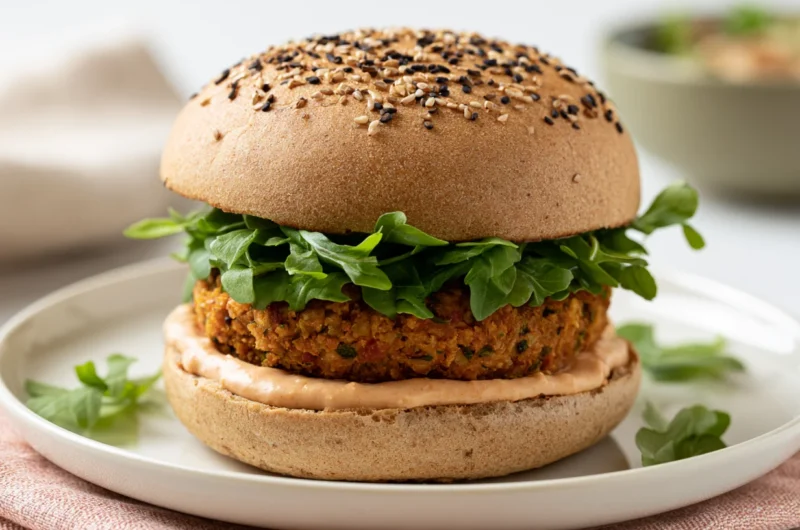
minutesDescription: These healthy veggie burgers combine black beans, brown rice, and warm spices into a hearty, protein-packed patty with a golden seared crust. Quick to prepare and freezer-friendly, they make a satisfying plant-based dinner that holds together through grilling, baking, or pan-frying.
Ingredients
1 can (15 oz) black beans, drained and rinsed
1 cup cooked brown rice
1/2 cup rolled oats
1/2 cup grated carrot
1/4 cup finely chopped red onion
2 cloves garlic, minced
1 large egg (or flax egg for a vegan option)
2 tablespoons soy sauce or tamari
1 teaspoon smoked paprika
1/2 teaspoon ground cumin
1/2 teaspoon salt
1/4 teaspoon black pepper
2 tablespoons olive oil, for cooking
Optional:
1/4 cup shredded cheddar cheese
2 tablespoons chopped fresh cilantro
1/4 cup corn kernels
1 teaspoon chipotle powder
1/4 cup chopped walnuts
1 tablespoon nutritional yeast
Directions
- Mash black beans, leaving some texture, then mix in brown rice, oats, carrot, onion, and garlic.
- Add egg (or flax egg), soy sauce, paprika, cumin, salt, and pepper; mix until evenly seasoned.
- Divide into 4-6 portions and shape into firm patties, compacting the edges well.
- Refrigerate patties for at least 15 minutes to help them hold together.
- Pan-fry in olive oil for 4-5 minutes per side until golden, or bake at 400°F for 20 minutes, flipping once.
- Toast buns, assemble with toppings of choice, and serve warm.
Recipe Video
Notes
- Mash beans by hand rather than using a food processor to avoid a mushy texture.
- Don’t skip the chilling step; it’s key to preventing the patties from falling apart.
- Let each side cook undisturbed for the full time to develop a proper crust.
- Store cooked patties in the fridge for up to 4 days or freeze for up to 3 months.
- Reheat in a skillet or oven, not the microwave, to preserve texture.