Fresh vegetables do not need complicated preparation to taste exceptional, and this Lemon Garlic Roasted Asparagus Recipe proves exactly that. With crisp asparagus spears, fresh garlic, extra virgin olive oil, and bright lemon flavor, this easy roasted vegetable side dish delivers restaurant-quality results using simple pantry staples. The roasting process creates lightly caramelized edges while keeping the asparagus tender, juicy, and naturally flavorful.
Professional chefs often rely on oven-roasted asparagus because it pairs effortlessly with premium dinner recipes including grilled salmon, baked chicken breast, steak, shrimp pasta, and healthy Mediterranean meals. The balance of citrus, garlic, and roasted vegetables creates a clean yet bold flavor profile that works for both casual family dinners and elegant holiday gatherings.
One of the biggest advantages of this healthy asparagus recipe is its speed and versatility. It requires minimal prep time, cooks quickly, and fits perfectly into low-carb, keto-friendly, gluten-free, and high-protein meal plans. Whether you are searching for a healthy side dish recipe or a quick vegetable recipe for busy weeknights, this dish delivers consistent results.
Unlike steamed asparagus that can taste bland or soggy, roasting enhances natural sweetness while adding depth and texture. Once you learn the simple chef-style roasting method, this easy oven roasted asparagus recipe will become a regular part of your weekly meal rotation.
Ingredients You’ll Need
The secret to outstanding roasted asparagus is using fresh, high-quality ingredients that enhance the vegetable’s natural flavor instead of overpowering it. Every ingredient in this recipe contributes to a perfectly balanced combination of freshness, richness, and savory depth.
Base Ingredients:
- 1 pound fresh asparagus spears, trimmed
- 3 tablespoons extra virgin olive oil
- 4 garlic cloves, freshly minced
- 1 tablespoon fresh lemon juice
- 1 teaspoon lemon zest
- 1/2 teaspoon sea salt
- 1/4 teaspoon freshly cracked black pepper
- 1 tablespoon grated Parmesan cheese
- 1 tablespoon chopped fresh parsley
Optional Add-ins:
- 1/4 teaspoon crushed red pepper flakes
- 1 tablespoon melted unsalted butter
- 1 teaspoon Italian seasoning
- 1 tablespoon toasted pine nuts
- 1 tablespoon sliced almonds
- 2 teaspoons balsamic glaze
- 1 teaspoon honey for balanced acidity
Step-by-Step Instructions
Prepare the Asparagus Properly
Start by rinsing the asparagus thoroughly under cold water to remove any dirt or grit hidden around the tips. Pat the asparagus completely dry with paper towels because dry vegetables roast far better than wet ones. Moisture causes steaming, which prevents proper caramelization and reduces flavor concentration.
Trim the tough woody ends from the asparagus, usually about one to two inches from the bottom. Preheat the oven to 425°F and line a baking sheet with parchment paper. Arrange the asparagus in a single layer with enough spacing between spears to ensure even roasting and crisp edges.
Create the Garlic Lemon Seasoning
In a small bowl, combine olive oil, minced garlic, lemon juice, lemon zest, sea salt, and black pepper. Whisk the mixture briefly until evenly blended. This combination creates the signature garlic butter style flavor without making the dish overly heavy or greasy.
Pour the seasoning mixture over the asparagus and toss gently until every spear is lightly coated. Avoid excessive oil because too much can soften the vegetables instead of roasting them properly. Sprinkle Parmesan cheese across the top for added savory depth and a subtle golden finish during baking.
Roast Until Tender and Slightly Crisp
Transfer the baking sheet to the preheated oven and roast for 10 to 14 minutes depending on asparagus thickness. Thin asparagus cooks quickly, while thicker stalks may need slightly more time. Halfway through cooking, turn the spears carefully for even browning and balanced texture.
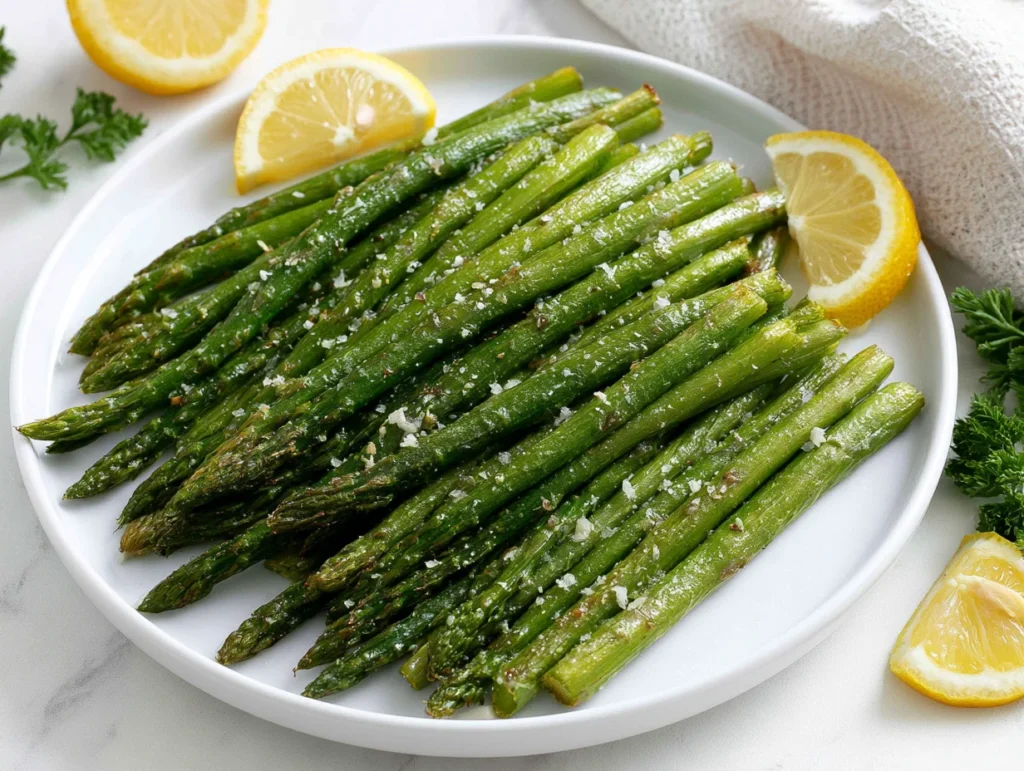
Properly roasted asparagus should appear vibrant green with lightly crisp edges and tender centers. The garlic should become aromatic and slightly golden without burning. Avoid overcooking because asparagus can lose both texture and flavor rapidly if left in the oven too long.
Finish Like a Professional Chef
Once roasted, remove the asparagus from the oven immediately to stop the cooking process. Sprinkle freshly chopped parsley over the top for brightness and visual appeal. For elevated flavor, add a light drizzle of balsamic glaze or a final squeeze of fresh lemon juice before serving.
Serve the asparagus hot alongside grilled chicken, steak, roasted salmon, seafood pasta, or healthy meal prep bowls. The combination of roasted garlic and citrus creates a premium restaurant-style vegetable side dish that feels sophisticated while remaining simple and approachable.
Cook Time
Total:
25 minutes
Prep:
10 minutes
Bake:
12 to 15 minutes
Servings
This recipe makes approximately 4 generous side-dish servings, making it ideal for family dinners, healthy weekly meal prep, or holiday menus. The portion size pairs well with both protein-focused meals and vegetarian dinner combinations.
For larger gatherings, the recipe can easily be doubled or tripled using multiple baking sheets. Maintaining proper spacing between asparagus spears is essential for achieving crispy roasted edges and avoiding steaming during cooking.
If you are preparing this recipe for healthy lunch bowls or low-carb meal prep, divide the roasted asparagus evenly into airtight containers with grilled protein, quinoa, brown rice, or roasted potatoes for balanced nutrition and convenience.
Common Mistakes in This Recipe
One of the biggest mistakes is overcrowding the baking sheet. When asparagus spears are stacked too closely together, moisture becomes trapped, causing steaming instead of roasting. This prevents the development of caramelized flavor and crisp texture.
Another common issue is using wet asparagus directly after washing. Excess moisture reduces browning and often creates soft, limp vegetables rather than perfectly roasted asparagus with vibrant color and balanced texture.
Too much olive oil can also negatively affect the final result. While oil helps with roasting, excessive amounts make the asparagus greasy and heavy instead of light, fresh, and slightly crisp around the edges.
Overcooking is another major problem. Thin asparagus cooks very quickly, and leaving it in the oven too long results in mushy texture, dull green color, and weaker flavor compared to properly roasted asparagus.
Solutions to Common Mistakes
Always use a large baking sheet and arrange the asparagus in a single layer. Proper spacing allows hot air to circulate evenly, creating better caramelization and improved overall texture during roasting.
After rinsing the asparagus, dry it thoroughly using paper towels or a clean kitchen towel. Removing moisture helps the vegetables roast efficiently and develop rich flavor without becoming soggy.
Measure olive oil carefully instead of pouring freely. A light coating is enough to enhance roasting while maintaining the natural freshness and texture of the asparagus.
Monitor the cooking time closely during the final minutes. Remove the asparagus once the stalks become tender and lightly browned while still maintaining a slight bite in the center.
Nutritional Information (approx. per serving)
- Calories: 120
- Protein: 3g
- Carbohydrates: 6g
- Fiber: 3g
- Fat: 9g
- Saturated Fat: 1.5g
- Sodium: 290mg
- Vitamin A: 18% DV
- Vitamin C: 20% DV
- Calcium: 6% DV
- Iron: 10% DV
Asparagus is naturally nutrient-dense and low in calories, making it one of the best vegetables for healthy eating plans, balanced diets, and weight-conscious meals. It provides satisfying flavor without unnecessary heaviness.
Olive oil contributes healthy fats commonly associated with Mediterranean diet recipes and heart-conscious cooking. Combined with garlic and lemon, it creates a flavorful yet clean-tasting vegetable dish.
Fresh garlic contains antioxidant compounds while lemon juice adds brightness without relying on processed sauces or artificial flavorings. This combination creates a naturally fresh and wholesome side dish.
Because this recipe is naturally gluten-free, low carb, keto-friendly, and vegetarian, it fits a wide range of modern dietary preferences while remaining flavorful and satisfying.
Storage Instructions
Allow the roasted asparagus to cool fully before storing to reduce condensation buildup inside the container. Excess moisture can soften the texture and reduce freshness during refrigeration.
Transfer leftovers to an airtight food storage container and refrigerate for up to 3 days. For best flavor retention, store without additional lemon juice until serving time.
Reheat the asparagus in a hot skillet, toaster oven, or standard oven instead of microwaving whenever possible. Dry heat helps restore texture while preventing overly soft vegetables.
Cold roasted asparagus can also be added to salads, grain bowls, wraps, omelets, or pasta dishes. The garlic lemon flavor profile remains delicious even after chilling, making it excellent for meal prep recipes.
Suggestions
For a richer restaurant-style finish, sprinkle extra Parmesan cheese over the asparagus immediately after roasting. The residual heat melts the cheese slightly while enhancing savory flavor depth.
If preparing this recipe for holiday dinners or entertaining guests, garnish with toasted pine nuts or sliced almonds for elegant presentation and additional texture contrast.
This roasted asparagus recipe pairs exceptionally well with grilled salmon, baked chicken thighs, filet steak, garlic shrimp, creamy risotto, and healthy sheet pan dinners.
To create even more freshness, finish the dish with chopped basil, dill, or parsley before serving. Fresh herbs enhance aroma, flavor complexity, and overall visual appeal.
Seasonal Relevance
Spring is considered peak asparagus season, making this recipe especially popular during spring dinner parties, Easter menus, and fresh seasonal cooking. In-season asparagus offers better sweetness and texture.
During warmer months, roasted asparagus works beautifully alongside grilled seafood, barbecue chicken, and outdoor entertaining meals. The citrus flavor profile feels light and refreshing for summer dining.
In autumn, this vegetable side dish pairs nicely with roasted meats, creamy pasta, and comfort food recipes while still adding freshness and balance to heavier meals.
Even during winter holidays, roasted asparagus remains a premium side dish option because of its elegant presentation, vibrant color, and ability to complement rich seasonal entrées.
Final Words
This Lemon Garlic Roasted Asparagus Recipe combines simplicity, nutrition, and bold flavor in one incredibly versatile side dish. With minimal preparation and quick cooking time, it consistently delivers impressive results suitable for both everyday meals and special occasions.
The balance of roasted garlic, fresh lemon, olive oil, and tender asparagus creates a dish that feels fresh, modern, and restaurant-worthy without requiring complicated techniques or expensive ingredients.
Whether you are building a healthy meal plan, preparing elegant dinner recipes, or searching for easy vegetable side dishes with strong flavor, this recipe deserves a permanent place in your collection.
Once you master the roasting technique and proper timing, you will have a dependable asparagus recipe that delivers crisp texture, vibrant flavor, and professional-quality presentation every single time.
Frequently Asked Questions
Can I make roasted asparagus ahead of time for meal prep?
Yes, roasted asparagus works very well for meal prep recipes. Store it in airtight containers in the refrigerator for up to 3 days. Reheat in the oven or skillet for the best texture, or enjoy it cold in salads, wraps, and grain bowls.
What is the best temperature for roasting asparagus?
A high oven temperature of 425°F works best because it allows the asparagus to caramelize quickly while keeping the inside tender. Lower temperatures often create softer asparagus without achieving the rich roasted flavor and lightly crisp edges.
Should thick and thin asparagus be cooked differently?
Yes, thin asparagus cooks faster and usually needs about 10 minutes, while thicker asparagus may require up to 15 minutes. Adjust roasting time based on thickness to avoid undercooking or overcooking the vegetables.