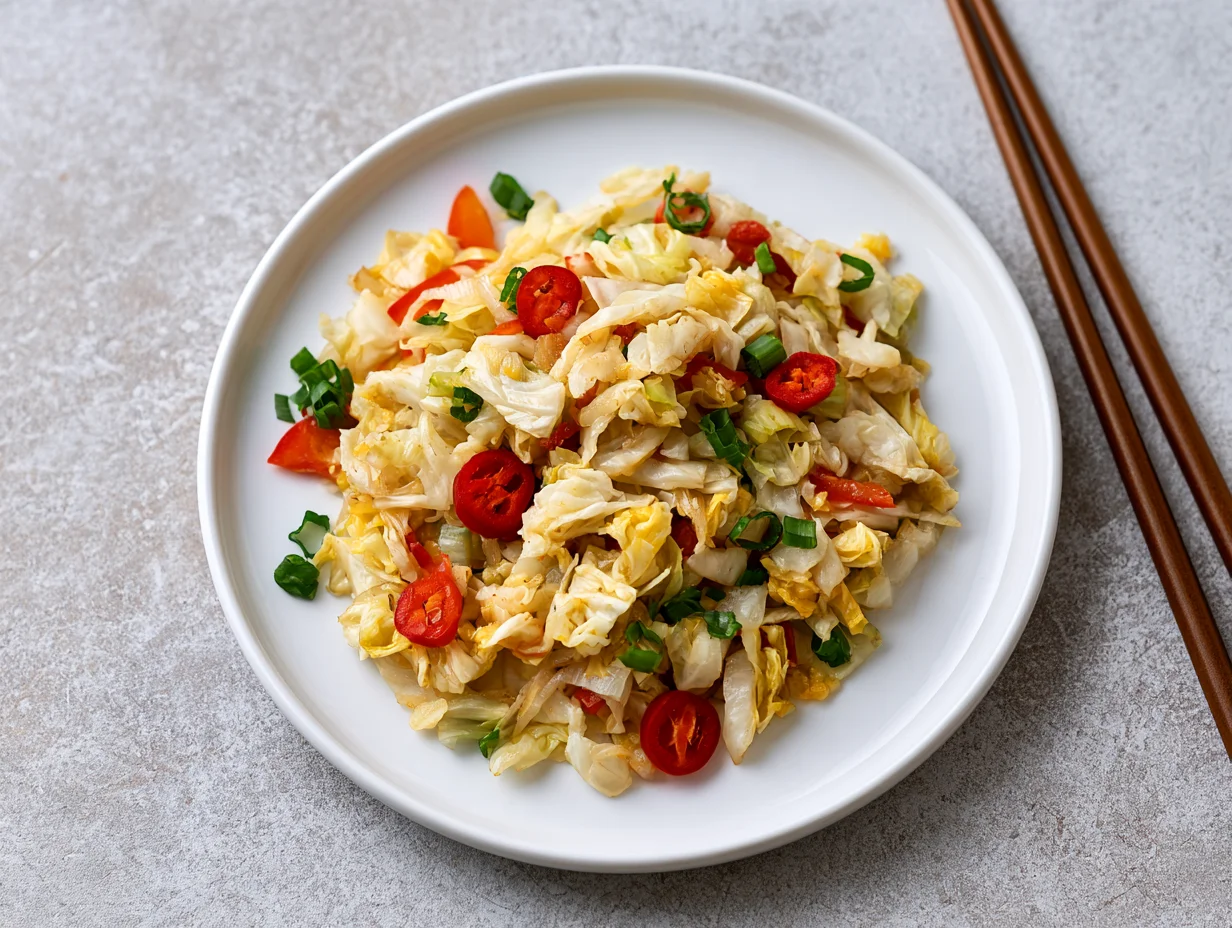
Busy weeknights call for meals that are fast, flavorful, and genuinely satisfying, and this Low-Carb Cabbage Stir-Fry Recipe checks every box. Packed with crisp cabbage, colorful vegetables, garlic, and savory seasonings, this healthy stir-fry delivers bold flavor without relying on heavy sauces or high-carb ingredients. It is the kind of quick low-carb dinner recipe that feels comforting while still supporting healthy eating goals.
Cabbage is often overlooked in modern kitchens, yet professional chefs appreciate it for its versatility, affordability, and ability to absorb rich flavors beautifully. When stir-fried correctly over high heat, cabbage develops lightly caramelized edges while maintaining a tender-crisp texture that tastes far more luxurious than its simple ingredient list suggests.
This healthy cabbage stir-fry recipe works perfectly for keto meal plans, weight-loss diets, diabetic-friendly dinners, and budget-friendly family meals. It is naturally gluten-free when prepared with tamari and can easily be customized with chicken, shrimp, tofu, or beef for added protein and variety.
Unlike greasy takeout meals, this homemade stir-fry feels fresh, balanced, and energizing. Once you master the quick stir-frying technique, this recipe will quickly become one of your favorite healthy dinner ideas for busy evenings.
Ingredients You’ll Need
One of the most impressive things about this recipe is how a few inexpensive vegetables and pantry staples can create a deeply savory, restaurant-style dish with incredible texture, freshness, and flavor in under 30 minutes.
Base Ingredients:
- 6 cups green cabbage, thinly sliced
- 1 tablespoon sesame oil
- 2 tablespoons olive oil
- 4 garlic cloves, minced
- 1 teaspoon fresh ginger, grated
- 1 medium onion, sliced
- 1 red bell pepper, thinly sliced
- 1 medium carrot, julienned
- 2 tablespoons low-sodium soy sauce
- 1 tablespoon rice vinegar
- 1 teaspoon chili flakes
- 1/2 teaspoon black pepper
- 1/2 teaspoon sea salt
- 2 green onions, sliced
- 1 tablespoon sesame seeds
Optional Add-ins:
- 1 cup cooked chicken breast
- 1 cup shrimp
- 1 block firm tofu, cubed
- 1 teaspoon sriracha sauce
- 1 tablespoon oyster sauce
- 1 teaspoon honey for balanced flavor
- 1/2 teaspoon smoked paprika
- 1 tablespoon chopped cilantro
Step-by-Step Instructions
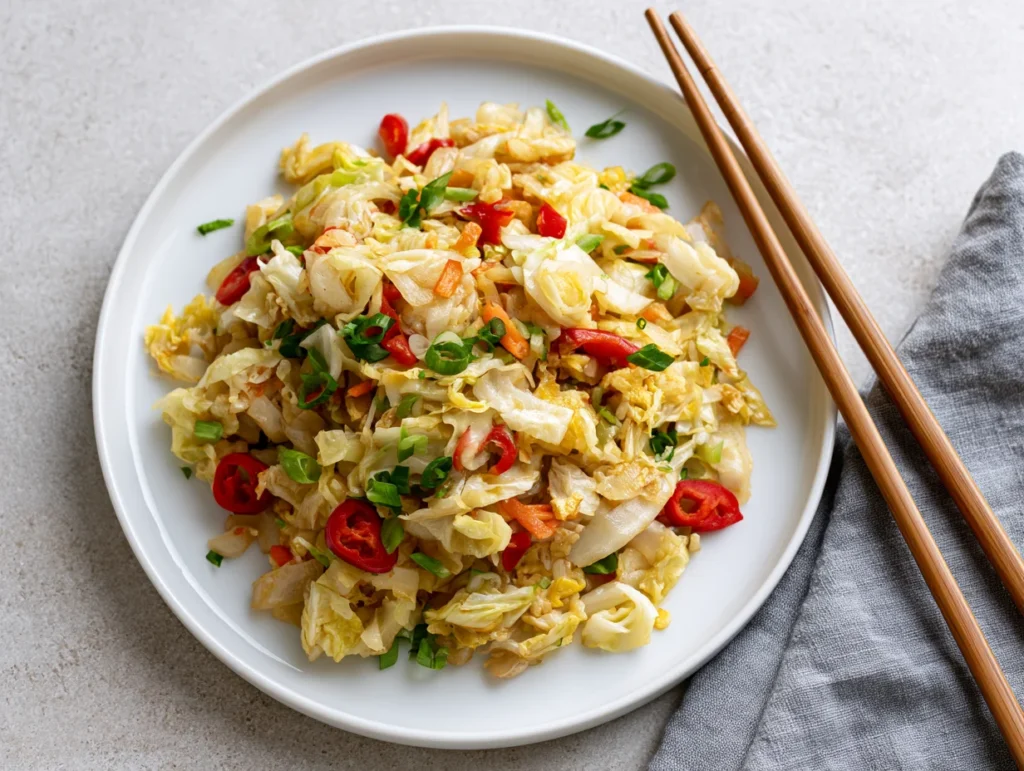
Prepare the Vegetables Correctly
Begin by washing and drying all vegetables thoroughly before slicing. Thinly shred the cabbage so it cooks evenly and absorbs the savory stir-fry sauce properly. Slice the onions and bell peppers into uniform strips for balanced texture and presentation. Julienne the carrot into thin matchsticks to help it cook quickly while retaining slight crispness.
Prepare all ingredients before heating the pan because stir-frying happens fast. Keeping everything ready ensures the vegetables cook evenly without over-softening. This preparation method is one of the key techniques professional chefs use to maintain freshness, texture, and vibrant color in healthy vegetable stir-fry recipes.
Build the Flavor Base
Heat sesame oil and olive oil in a large wok or skillet over medium-high heat. Once hot, add the sliced onions and cook for about two minutes until slightly softened. Stir in the garlic and fresh ginger, allowing them to release their aroma without burning. This creates the deeply savory base that gives the stir-fry restaurant-quality flavor.
Add the bell peppers and carrots next, cooking briefly so they remain slightly crisp. High heat is essential because it allows the vegetables to develop light caramelization while preserving freshness. Proper stir-frying should create bold flavor without turning the vegetables mushy or overly oily.
Stir-Fry the Cabbage
Add the sliced cabbage to the skillet in batches if necessary. Toss continuously using tongs or a spatula to ensure even cooking. The cabbage will reduce significantly in volume as it softens, making the stir-fry easier to combine. Pour in soy sauce, rice vinegar, chili flakes, salt, and black pepper while stirring.
Cook the cabbage for approximately five to seven minutes until tender-crisp. Avoid overcooking because cabbage should still maintain texture and slight bite. Properly stir-fried cabbage develops lightly browned edges and absorbs seasoning beautifully while remaining fresh and vibrant rather than soggy.
Finish and Serve
Once the cabbage reaches the ideal texture, remove the skillet from heat immediately to prevent further softening. Stir in green onions and sesame seeds for added flavor, texture, and visual appeal. If using protein add-ins like chicken, shrimp, or tofu, fold them in during the final cooking stage.
Serve the stir-fry hot as a standalone low-carb dinner or alongside grilled protein for a balanced meal. This dish also pairs well with cauliflower rice, zucchini noodles, or Asian-inspired meal prep bowls for healthy weekly lunches and dinners.
Cook Time
Total:
25 minutes
Prep:
10 minutes
Bake:
15 minutes
Servings
This recipe makes approximately 4 generous servings, making it ideal for healthy family dinners, keto meal prep, or quick weeknight meals. The combination of vegetables creates a filling dish without excessive calories or heavy carbohydrates.
For larger portions, the recipe can easily be doubled using a large wok or oversized skillet. Cooking in batches may help maintain high heat and proper stir-fry texture without overcrowding the pan.
If using this recipe for meal prep, divide the stir-fry into airtight containers alongside grilled chicken, tofu, shrimp, or cauliflower rice for balanced low-carb lunches throughout the week.
Common Mistakes in This Recipe
One common mistake is overcrowding the skillet. Too many vegetables at once lower the pan temperature, causing steaming instead of stir-frying. This results in soggy cabbage and weaker flavor development.
Another issue is cooking the cabbage too long. Overcooked cabbage loses its vibrant texture and can develop an overly soft consistency that lacks freshness and bite.
Using low heat is another frequent problem. Proper stir-frying requires medium-high to high heat to caramelize the vegetables while preserving texture and bold flavor.
Adding sauces too early can also affect texture negatively. Excess liquid released during early cooking may prevent the vegetables from browning properly and dilute the overall flavor profile.
Solutions to Common Mistakes
Use a large wok or skillet and cook the vegetables in batches if necessary. Proper spacing allows the cabbage to stir-fry quickly while maintaining crisp texture and rich flavor.
Cook the cabbage only until tender-crisp. Removing it from heat at the right moment preserves freshness and prevents the vegetables from becoming watery or limp.
Always preheat the skillet before adding ingredients. High heat helps develop restaurant-style flavor and creates light caramelization around the edges of the vegetables.
Add soy sauce and other liquid seasonings during the later cooking stages. This allows the vegetables to brown first while still absorbing the savory stir-fry flavors effectively.
Nutritional Information (approx. per serving)
- Calories: 165
- Protein: 4g
- Carbohydrates: 10g
- Fiber: 4g
- Fat: 12g
- Saturated Fat: 1.5g
- Sodium: 480mg
- Vitamin C: 75% DV
- Vitamin A: 35% DV
- Calcium: 6% DV
- Iron: 8% DV
Cabbage is naturally low in carbohydrates and calories, making it an excellent ingredient for low-carb meal plans, keto-friendly recipes, and healthy weight-management meals.
The vegetables in this recipe provide important antioxidants, fiber, and vitamins that help support balanced nutrition while still delivering satisfying flavor and texture.
Using olive oil and sesame oil creates richness without relying on processed sauces or heavy cream-based ingredients. This keeps the stir-fry flavorful yet light and fresh.
Because the recipe is highly customizable, it can easily fit vegetarian, gluten-free, dairy-free, and high-protein eating styles while maintaining strong flavor and meal satisfaction.
Storage Instructions
Allow the stir-fry to cool completely before transferring it to storage containers. Storing hot vegetables immediately can create excess condensation and soften the texture.
Place leftovers in airtight containers and refrigerate for up to 4 days. The flavors often deepen overnight, making this recipe excellent for meal prep and quick lunches.
Reheat the cabbage stir-fry in a hot skillet rather than a microwave when possible. Quick reheating helps restore texture while preventing the vegetables from becoming overly soft.
For freezer storage, place cooled portions in freezer-safe containers for up to 2 months. Thaw overnight in the refrigerator before reheating gently in a skillet.
Suggestions
For additional protein, add grilled chicken breast, shrimp, lean beef strips, or tofu cubes during the final cooking stage. These additions transform the recipe into a complete one-pan dinner.
If you enjoy spicy recipes, increase the chili flakes or add sriracha sauce for extra heat and flavor depth. A touch of spice balances the natural sweetness of cabbage beautifully.
This stir-fry pairs exceptionally well with cauliflower rice, zucchini noodles, or lettuce wraps for low-carb meal combinations that remain filling and flavorful.
Fresh herbs like cilantro, Thai basil, or parsley can elevate the flavor profile significantly. Garnishing before serving also improves presentation and freshness.
Seasonal Relevance
Cabbage is widely available year-round, making this recipe reliable during every season. Its affordability and versatility make it especially valuable for budget-friendly healthy cooking.
During colder months, this warm stir-fry provides comfort while remaining lighter than traditional heavy winter meals. The savory garlic and ginger flavors feel particularly satisfying in cool weather.
In spring and summer, the recipe works well as a lighter dinner option paired with grilled proteins and fresh vegetables. Its quick preparation also suits busy warm-weather schedules.
Because cabbage stores exceptionally well, this recipe remains practical for meal prep and seasonal cooking throughout the year without sacrificing flavor, texture, or nutritional value.
Final Words
This Low-Carb Cabbage Stir-Fry Recipe proves that healthy meals can still feel deeply flavorful, satisfying, and exciting. With simple ingredients and fast preparation, it delivers restaurant-quality texture and bold stir-fry flavor in every bite.
The combination of crisp cabbage, aromatic garlic, ginger, and savory seasonings creates a dish that feels balanced, nourishing, and highly versatile for modern healthy lifestyles.
Whether you are following a keto meal plan, searching for easy low-carb dinners, or simply trying to include more vegetables in your routine, this recipe offers consistency, convenience, and strong flavor.
Once you master the quick stir-fry technique, this healthy cabbage recipe will become one of your most dependable weeknight meals for fast cooking, easy cleanup, and satisfying results.
Frequently Asked Questions
Can I make this cabbage stir-fry completely vegetarian?
Yes, this recipe is naturally vegetarian when prepared without meat or seafood add-ins. For additional protein, tofu works especially well because it absorbs the savory garlic, ginger, and soy sauce flavors while maintaining satisfying texture.
What type of cabbage works best for stir-frying?
Green cabbage is the best option because it holds texture well during high-heat cooking. Napa cabbage can also be used for a softer texture, while red cabbage adds vibrant color and slightly stronger flavor to the dish.
How can I reduce sodium in this recipe?
Use low-sodium soy sauce or tamari and avoid adding extra salt until the end of cooking. Fresh garlic, ginger, sesame oil, and vegetables already provide significant flavor, making it easy to lower sodium without sacrificing taste.
