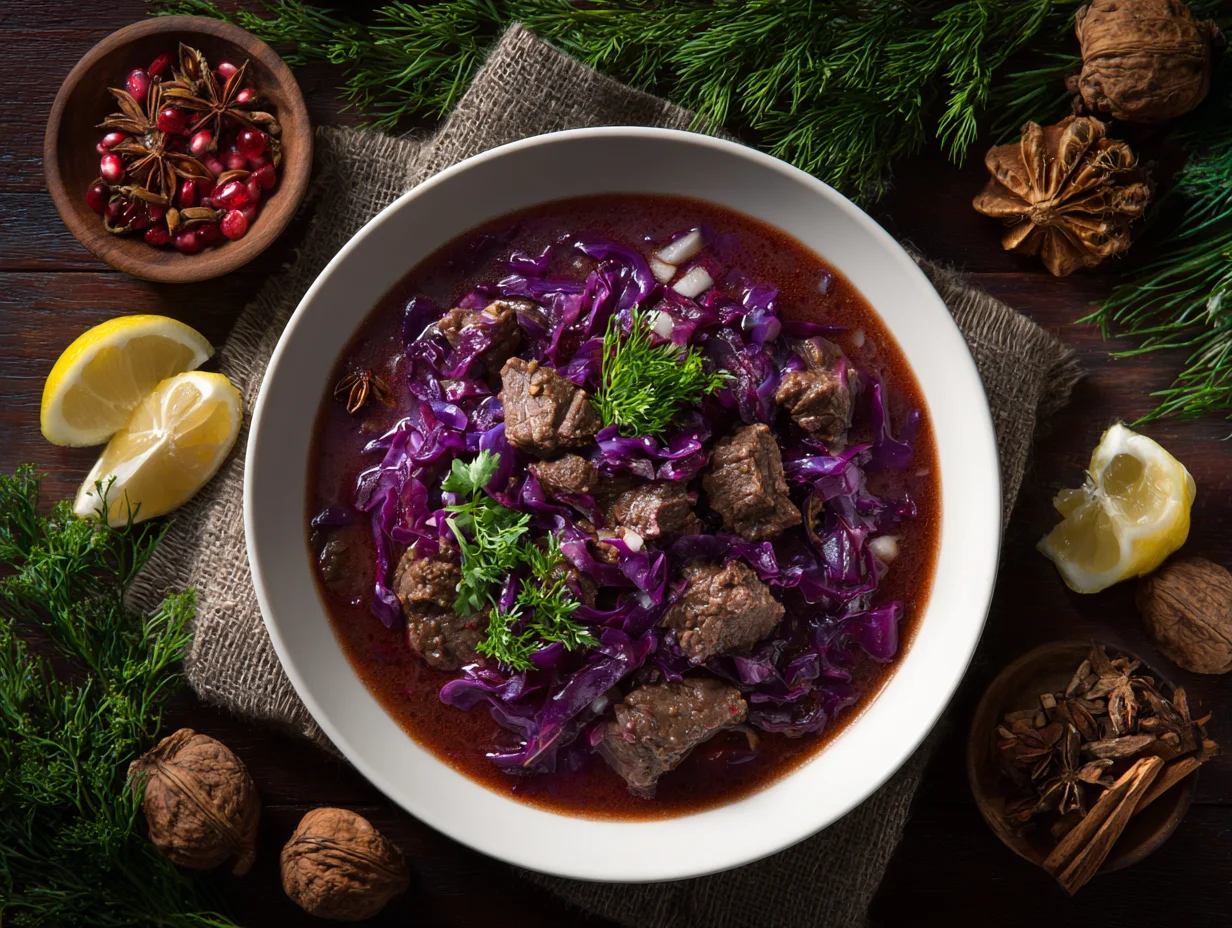
When winter settles in and the air turns crisp, I always find myself drawn to recipes that feel deeply comforting yet thoughtfully balanced. This minced venison and red cabbage stew is one of those dishes I return to again and again.
It’s rich without being heavy, hearty without losing elegance, and incredibly nourishing. I love how the natural earthiness of venison pairs with the subtle sweetness of slow-cooked red cabbage,it creates a depth of flavor that feels intentional and refined.
Over time, I’ve perfected this recipe to ensure it’s both approachable and rewarding. Whether you’re cooking for your family or preparing something special for yourself, this stew delivers warmth, satisfaction, and a truly elevated home-cooked experience.
? If you enjoy hearty winter comfort meals, you’ll also love our Cozy Wild Rice Soup.
Where Most Home Cooks Go Wrong with Venison Stew
From my experience, one of the biggest mistakes people make with venison is treating it exactly like beef. Venison is much leaner, and if you’re not careful, it can turn dry or tough very quickly. I’ve seen many home cooks use high heat to brown it fast, thinking it will lock in flavor, but it often does the opposite.
Another issue I notice is under-seasoning early in the cooking process, which results in a stew that tastes flat by the end.
Red cabbage can also be tricky,adding it too late leaves it undercooked, while overcooking strips away its texture and color. These small missteps may seem minor, but they can significantly affect the final dish if not handled carefully.
How I Ensure Perfect Flavor and Texture Every Time
Over the years, I’ve learned that success with this stew comes down to patience and timing. I always start by cooking the venison gently over medium heat, never rushing the process. Since it’s lean, I add a bit of olive oil to keep it tender and balanced.
Building flavor early is essential, so I take my time sautéing onions and garlic until they’re perfectly soft and aromatic. I add the red cabbage at just the right moment,early enough to absorb flavor, but not so early that it loses its structure.
Keeping the stew at a low, steady simmer is something I never compromise on. It allows everything to come together beautifully without overcooking. Small adjustments in seasoning at each stage make a noticeable difference in the final result.
Ingredients List
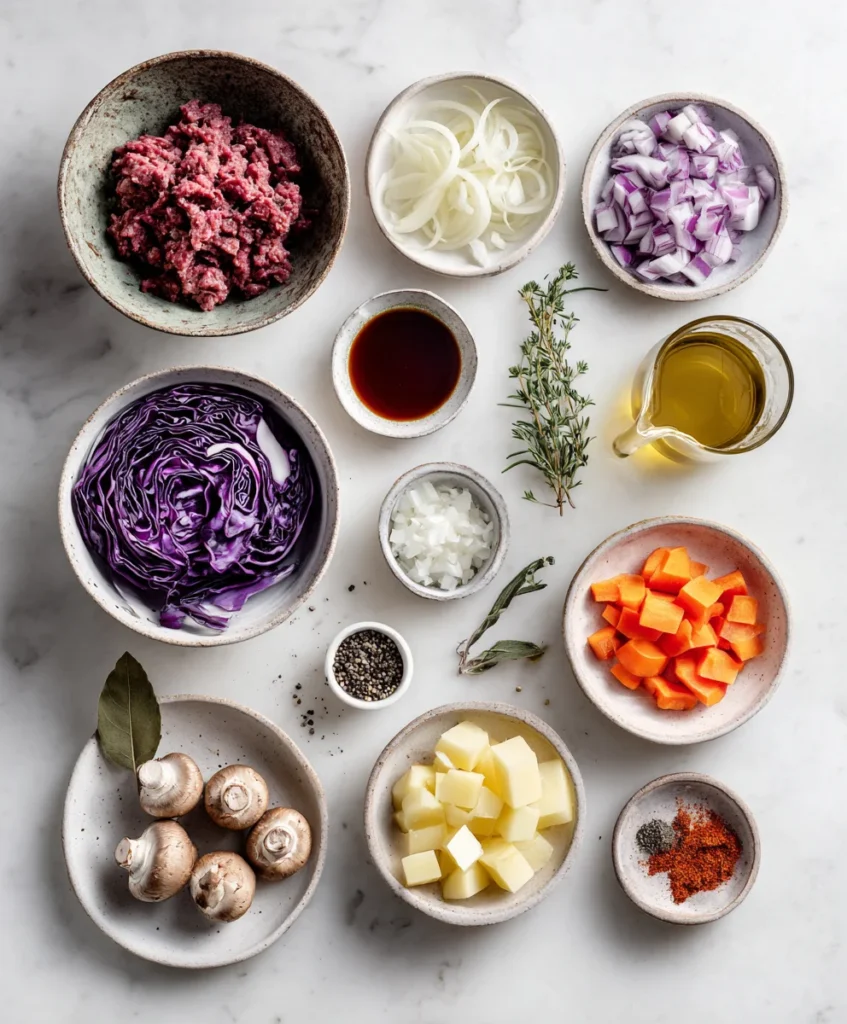
Base Ingredients:
- Minced venison
- Red cabbage, finely sliced
- Onion, diced
- Garlic cloves, minced
- Carrots, chopped
- Tomato paste
- Beef or vegetable broth
- Olive oil
- Bay leaf
- Salt
- Black pepper
Optional Add-ins:
- Fresh thyme or rosemary
- A splash of balsamic vinegar
- Potatoes for added heartiness
- Mushrooms for extra depth
- A pinch of smoked paprika
Step-by-Step Instructions
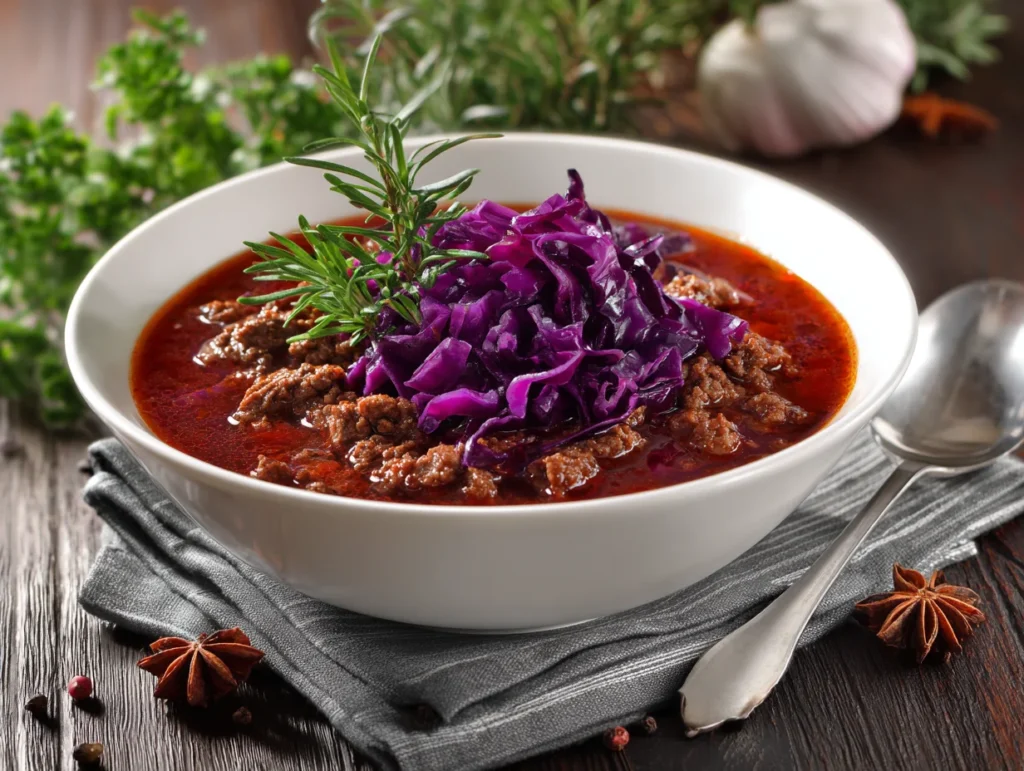
Build the Flavor Base
I always begin by heating olive oil in a heavy pot over medium heat. Once warm, I add the diced onions and let them cook slowly until they turn soft and translucent. This step is crucial, and I never rush it because it forms the base of the stew’s flavor.
Then I add garlic and cook it just until fragrant. After that, I add the minced venison, breaking it apart gently as it cooks. I avoid overcrowding the pot and keep the heat moderate to prevent the meat from becoming tough. A light seasoning at this stage helps start building layers. Taking your time here ensures the stew develops a rich, balanced flavor rather than tasting rushed or uneven.
? For another rich and warming dish, try our Hearty Beef Soup.
Incorporate Vegetables and Liquids
Once the venison is properly cooked, I add the chopped carrots and sliced red cabbage. I like to stir everything thoroughly so the vegetables are well coated with the flavors already in the pot. Then I add tomato paste and let it cook briefly to deepen its taste. Slowly, I pour in the broth while stirring, making sure to lift all the flavorful bits from the bottom.
This step adds incredible depth. I include the bay leaf and any herbs I’m using at this stage. I always bring the mixture to a gentle simmer instead of boiling it aggressively. This helps the cabbage soften perfectly while maintaining its structure and vibrant color.
Slow Simmer and Final Adjustments
This is the part where I let the stew truly come together. I reduce the heat and allow it to simmer gently, stirring occasionally to prevent sticking. During this time, the flavors deepen and the texture becomes beautifully cohesive.
I taste the stew periodically and adjust the seasoning as needed—sometimes adding a splash of balsamic vinegar for brightness. I’m careful not to overcook it, as venison can become tough if left too long. I look for tender cabbage that still holds its shape. Before serving, I remove the bay leaf and let the stew rest for a few minutes. That short resting time makes a noticeable difference in flavor.
Cook Time
Total: 50 minutes
Prep: 15 minutes
Bake: 35 minutes
Servings
When I make this recipe, it usually yields about four generous servings. I find that it’s perfectly portioned for a small family dinner or for preparing meals ahead of time. Each serving feels satisfying without being overly heavy, which is something I always aim for in winter recipes. If I’m cooking for more people, I simply double the ingredients—it scales very easily. I often enjoy it on its own, but it also pairs beautifully with a slice of warm bread. What I appreciate most is that even a moderate portion feels complete and nourishing, making it ideal for those who want a balanced, hearty meal without needing multiple side dishes.
Makes approximately 4 bowls
Nutritional Information (approx. per serving)
- Calories: 320 kcal
- Protein: 28g
- Carbohydrates: 18g
- Fat: 14g
- Fiber: 5g
- Iron: High
From a nutritional perspective, this is one of those recipes I feel good about making regularly. Venison is naturally lean and rich in iron, which makes it a great alternative to heavier meats. The red cabbage adds fiber and antioxidants, supporting digestion and overall health. I like that this stew provides a strong balance of protein and nutrients without feeling overly rich. It’s especially helpful during colder months when the body craves warming, nourishing meals. Including dishes like this in your routine can support steady energy levels while still delivering the comfort we all look for in winter cooking.
? If you prefer slow-cooked comfort food, don’t miss our Slow Cooker French Onion Soup .
Storage Instructions
Whenever I have leftovers, I always let the stew cool completely before storing it. I transfer it into airtight containers and keep it in the refrigerator, where it stays fresh for up to four days. If I want to store it longer, I freeze it in portions, which makes it incredibly convenient for busy days. When reheating, I prefer using the stovetop on low heat and adding a little broth or water to bring back its original consistency. I avoid reheating it multiple times, as that can affect both flavor and texture. Proper storage really helps maintain the richness of the stew, and in my experience, it often tastes even better the next day.
Suggestions
When serving this stew, I like to keep things simple and complementary. A slice of rustic bread works beautifully to soak up the rich broth. Sometimes, I’ll add a sprinkle of fresh herbs like parsley or thyme just before serving to brighten the dish. If I want to enhance the flavor slightly, I might add a touch of apple cider for a subtle sweetness that pairs well with the cabbage. I always recommend keeping sides light so they don’t overpower the stew. Small finishing touches can elevate the entire experience, turning a simple meal into something that feels thoughtful and complete without adding unnecessary complexity.
Seasonal Relevance
I always associate this stew with the colder months, when hearty and warming meals become essential. Venison, in particular, feels very much like a winter ingredient, bringing a rustic and comforting depth to dishes. Red cabbage is also at its best during this time, both in flavor and nutritional value. I find that slow-cooked meals like this naturally fit into winter routines, especially on evenings when you want something warm and satisfying. Cooking seasonally not only enhances taste but also ensures better quality ingredients. For me, this stew has become a staple during winter, offering both comfort and nourishment when it’s needed most.
This minced venison and red cabbage stew is a recipe I genuinely enjoy sharing because it represents everything I value in cooking—balance, flavor, and simplicity done well. It’s not complicated, but it does require attention to detail, which makes all the difference. Every time I prepare it, I’m reminded how a few well-handled ingredients can create something truly special. It’s a dish that works just as well for a quiet dinner as it does for serving others. With the right approach, you can achieve a stew that feels both comforting and refined. For me, it’s one of those recipes that never loses its appeal, no matter how many times I make it.
? For a similar rustic dinner idea, check out our Cabbage and Sausage – Quick 30 Minute Dinner.
Frequently Asked Questions
Can I cook this stew in a slow cooker?
Yes, you can adapt this recipe for a slow cooker. Brown the venison and sauté the aromatics first, then transfer everything to the slow cooker. Cook on low for 6–7 hours or high for 3–4 hours until the flavors develop fully and the cabbage becomes tender.
How can I thicken the stew naturally?
To thicken the stew, allow it to simmer uncovered so excess liquid reduces naturally. You can also mash a small portion of the vegetables into the broth. This creates a thicker consistency without adding flour or starch, keeping the dish clean and balanced.
What spices pair best with venison?
Venison pairs well with earthy herbs like thyme, rosemary, and bay leaf. You can also add a touch of smoked paprika or black pepper for depth. These spices enhance the natural flavor without overpowering the meat’s unique richness and character.
Can I add grains like barley to this stew?
Yes, barley is a great addition if you want a heartier version. Add it during the simmering stage with extra broth, as it will absorb liquid while cooking. It adds texture and makes the stew even more filling and satisfying.
Is this recipe suitable for freezing in batches?
Absolutely. This stew freezes very well. Store it in airtight containers or freezer bags in portion sizes. When ready to use, thaw overnight in the refrigerator and reheat gently on the stovetop, adding a bit of liquid if needed to restore consistency.