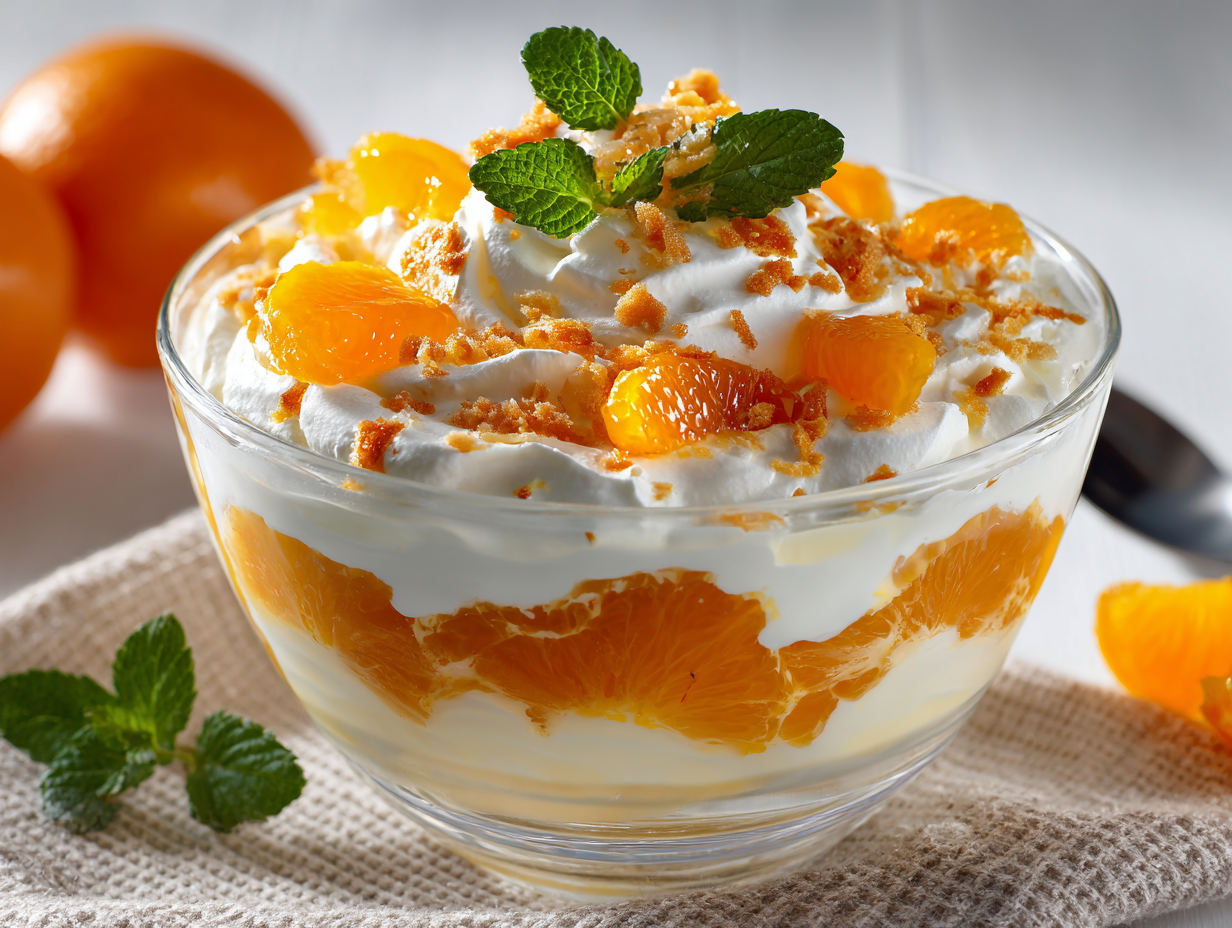
Orange Dream Salad is more than a simple dessert; it is a carefully balanced composition of citrus freshness and creamy indulgence. In professional culinary practice, this dish is valued for its ability to deliver elegance with minimal ingredients.
The foundation lies in selecting properly ripened oranges and combining them with a stabilized cream base that carries both structure and lightness. When executed correctly, the result is a dessert that feels airy on the palate yet rich in flavor.
Its appeal extends across seasons and occasions, making it a versatile addition to both casual and formal menus. From an author’s culinary perspective, the true success of this recipe depends not on complexity, but on precision, restraint, and respect for texture. Every element must work in harmony to achieve its signature “dream-like” consistency that defines this classic preparation.
? Fresh Caprese salad recipe with tomato mozzarella and basil
Overmixing the Cream Base and Breaking the Texture
One of the most frequently observed technical errors in Orange Dream Salad preparation is overmixing the cream base. From a professional standpoint, this mistake reflects a lack of control over emulsion stability. When cream is whisked beyond the soft peak stage or combined too aggressively with fruit, the air structure collapses.
This results in a dense, separated mixture rather than the intended light, cloud-like texture. Additionally, excessive mixing causes the orange segments to rupture, releasing juice that disrupts the balance of fat and moisture.
The dessert then loses its defined structure and becomes overly fluid. In culinary terms, this is a failure of texture integrity. Maintaining composure during mixing is essential, as the visual appeal and mouthfeel of this dish depend entirely on preserving the delicate suspension of cream and fruit without mechanical breakdown.
Gentle Folding Technique for Perfect Cream Stability
The corrective approach lies in disciplined folding technique and temperature awareness. Professionally, folding is not merely a mixing method but a controlled incorporation process designed to preserve aeration. The whipped cream should be at a soft, stable peak before any combination begins.
Using a wide spatula, ingredients must be integrated with slow, deliberate motions that lift rather than compress the mixture. This ensures that air pockets remain intact, preserving volume and lightness. Equally important is managing moisture from the fruit, which should be well-drained to prevent dilution.
By working in stages and maintaining minimal agitation, the structural integrity of the dessert is protected. The outcome is a stable, creamy composition where citrus elements remain suspended evenly, delivering both visual refinement and consistent texture in every serving.
Ingredients List
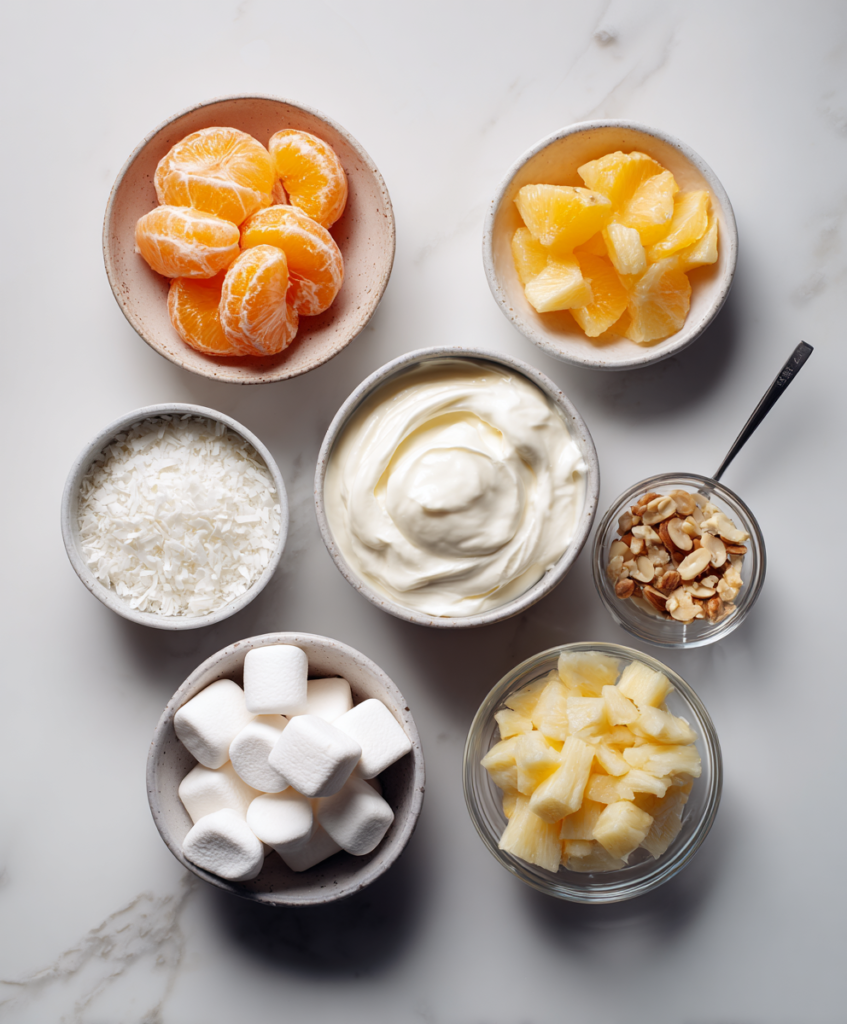
Base Ingredients:
- Fresh mandarin oranges or well-drained canned segments
- Stabilized whipped cream
- Sweetened condensed milk
- Pure vanilla extract
- Mini marshmallows
Optional Add-ins:
- Toasted shredded coconut
- Crushed pineapple (well drained)
- Chopped walnuts or pecans
- Greek yogurt (for lighter profile)
- Fresh orange zest
Step-by-Step Instructions
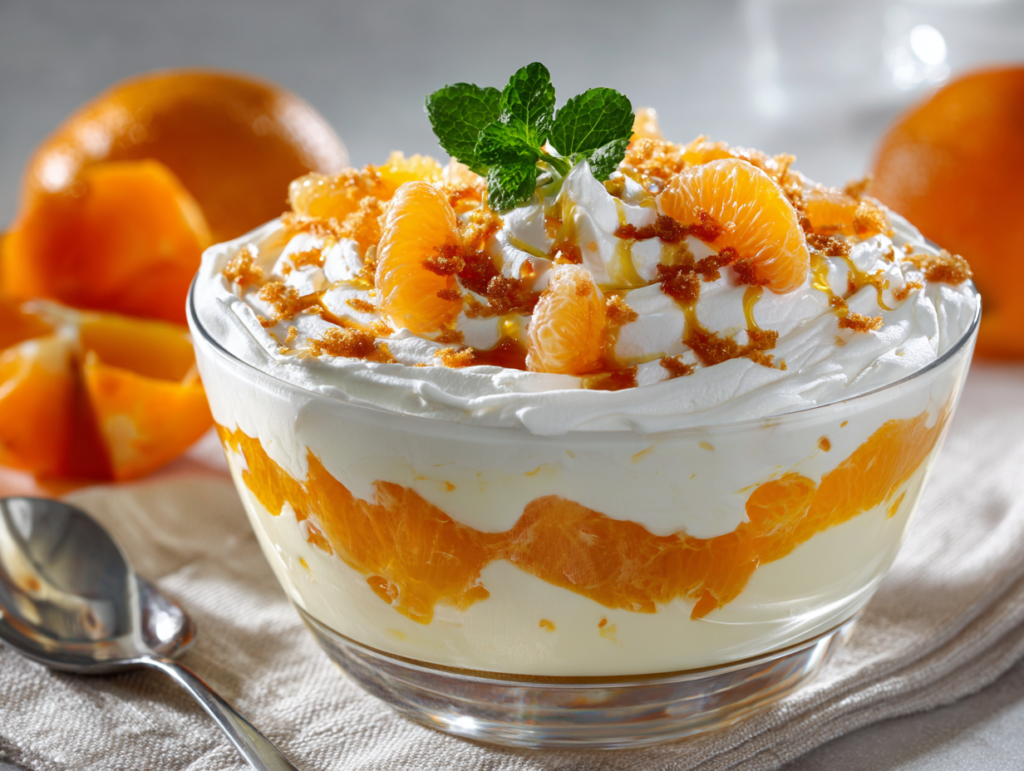
Prepare the Citrus Base
In professional preparation, the handling of citrus defines the final quality of the dessert. Begin by selecting oranges that are naturally sweet and firm. Segments must be carefully separated to avoid membrane bitterness, ensuring a clean flavor profile. Excess moisture is the primary risk factor, so draining is essential. Patting the segments dry helps maintain structural balance in the final mixture. This step is foundational, as any residual liquid will compromise the cream’s stability. Precision at this stage ensures that the dessert retains its intended consistency, allowing the citrus to contribute brightness without disrupting the emulsified base.
? Creamy macaroni salad recipe perfect side dish for summer BBQ
Create the Cream Base
The cream base functions as the structural backbone of Orange Dream Salad. Combine chilled whipped cream with condensed milk and vanilla extract, ensuring all components are cold to maintain emulsification. Whisk only until a smooth, airy consistency is achieved. Overworking at this stage risks destabilization. The objective is not stiffness, but controlled softness that can support fruit integration. From a culinary perspective, this balance determines whether the dessert will hold its form or collapse under weight. Properly executed, the cream should feel light yet cohesive, forming a stable medium for flavor distribution.
Combine Ingredients with Control
Integration must be approached with restraint and technique. Add citrus segments gradually, using a folding motion that minimizes disruption of the cream’s structure. Any additional ingredients such as marshmallows or nuts should be introduced incrementally to maintain even distribution. Stirring is strictly avoided, as it compromises texture integrity. The goal is uniform suspension rather than mechanical blending. Visually, the mixture should appear fluffy with distinct citrus presence throughout. This stage defines the aesthetic quality of the dish and reflects the precision of execution in professional preparation.
Chill for Flavor Integration
Chilling is a critical transformation phase rather than a passive waiting period. Once assembled, the mixture should be transferred into a sealed container and refrigerated. During this time, molecular interaction between citrus juices and dairy base intensifies, resulting in a more cohesive flavor profile. The texture also stabilizes as the cream slightly firms. A minimum resting period of two to three hours is recommended. This controlled environment allows the dessert to develop its signature harmony, where sweetness, acidity, and creaminess achieve full integration.
Cook Time
Total: 2 hours 20 minutes
Prep: 20 minutes
Bake: No baking required
Servings
From a production standpoint, this recipe yields approximately 6 to 8 balanced servings. Portion control is important, as the dessert is designed to be light yet satisfying. Each serving delivers a consistent ratio of citrus to cream, ensuring uniform taste experience. In professional presentation, it is often served in individual portions to maintain structural integrity and visual appeal. The recipe scales efficiently, making it suitable for both small gatherings and larger service requirements without compromising quality or texture consistency.
Makes approximately 6 to 8 servings
Nutritional Information (approx. per serving)
- Calories: 180 to 220
- Fat: 10 to 12 g
- Carbohydrates: 22 to 28 g
- Sugar: 18 to 24 g
- Protein: 2 to 3 g
From a nutritional perspective, Orange Dream Salad occupies a balanced space between indulgence and lightness. The citrus component provides natural vitamin C, supporting immune function and antioxidant activity. The dairy element contributes calcium and energy density, while maintaining moderate caloric impact per serving. When consumed in appropriate portions, it functions as a controlled dessert option that satisfies sweetness without excessive heaviness, aligning well with modern dietary preferences for lighter indulgence.
? Easy no bake cheesecake recipe that tastes rich and creamy
Storage Instructions
Proper storage is essential to preserve structural integrity. The dessert must be kept refrigerated in an airtight container to prevent oxidation and moisture loss. Exposure to air accelerates breakdown of the cream matrix, resulting in separation. For optimal quality, consumption within two to three days is recommended. Freezing is not advised, as it disrupts emulsion stability and alters texture upon thawing. In professional kitchens, strict cold chain management is maintained to ensure consistency from preparation to service.
Suggestions
For elevated presentation, serve in chilled glassware to enhance visual layering of citrus and cream. Garnishing with orange zest or toasted coconut adds aromatic complexity and textural contrast. For refined variations, Greek yogurt may replace a portion of whipped cream to introduce acidity and reduce richness. In curated menus, this dessert pairs well with light main courses, particularly grilled or citrus-based dishes. The versatility of the recipe allows adaptation while maintaining its essential identity as a light, creamy citrus dessert.
Seasonal Relevance
Orange Dream Salad demonstrates year-round adaptability, though it is particularly aligned with spring and summer menus due to its refreshing profile. During warmer months, it functions as a cooling dessert that complements seasonal produce. In colder seasons, it provides contrast to heavier, richer foods, offering brightness to the palate. The availability of oranges throughout the year ensures consistent production feasibility, making it a reliable inclusion in both seasonal and continuous dessert offerings.
From a professional culinary standpoint, Orange Dream Salad represents controlled simplicity executed with precision. Its success is determined not by ingredient complexity, but by technique, timing, and respect for texture. When properly prepared, it delivers a refined balance of citrus brightness and creamy softness. The dessert stands as an example of how minimal components, when handled correctly, can produce a sophisticated and memorable result. It remains a dependable preparation for chefs seeking elegance without excess.
? Fresh watermelon feta salad recipe perfect refreshing summer salad
Frequently Asked Questions
1. Can frozen oranges be used for this recipe?
Frozen oranges are not recommended as they release excess water upon thawing, which compromises texture stability. Fresh or properly drained canned segments are preferred for maintaining structural integrity and flavor clarity in the dessert.
2. What is the ideal consistency of whipped cream for this salad?
The cream should be at soft peak stage. It must hold shape lightly without becoming stiff or grainy. This allows smooth folding and ensures the final mixture remains airy and stable.
3. How can the dessert be made less sweet?
Sweetness can be reduced by decreasing condensed milk or substituting part of it with unsweetened Greek yogurt. This adjustment maintains creaminess while creating a more balanced flavor profile.
4. Why does my dessert lose volume after chilling?
Loss of volume usually occurs due to overmixing or insufficiently whipped cream. Proper folding technique and correct whipping stage are essential to maintain aeration during refrigeration.
5. Can this recipe be scaled for large events?
Yes, it scales effectively. However, each batch should be folded separately to maintain texture control. Over-large single batches increase the risk of uneven mixing and structural breakdown.