Introduction
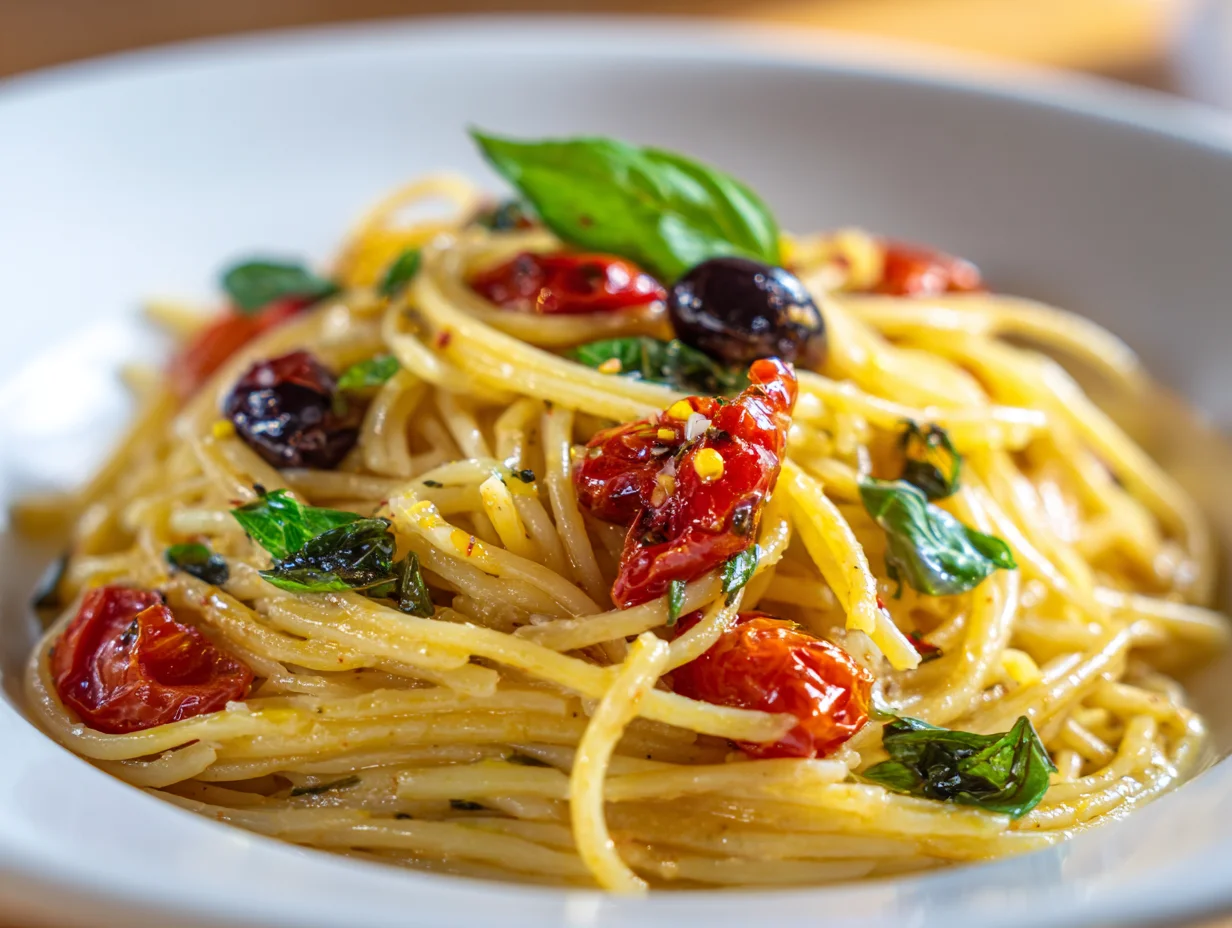
There are dishes that do not try to impress with complexity, yet leave a lasting memory through purity and balance. Summer pasta with olive oil belongs to that rare category. As an author and chef, I see it as a quiet expression of Italian culinary philosophy where restraint becomes elegance.
This recipe relies on the harmony of extra virgin olive oil, properly cooked pasta, and aromatic accents like garlic, chili, and herbs. It is not heavy, not overwhelming, but intentionally light to suit warm weather dining. Every element has purpose, and nothing is unnecessary.
When prepared with attention, it transforms into a silky, fragrant dish that reflects the essence of Mediterranean summers and the simplicity that defines true Italian cooking tradition.
? If you enjoy fresh Mediterranean flavors, you’ll also love our Greek Pasta Salad .
Over-Emulsification of Olive Oil and Pasta Water Mistake
In my experience, one of the most misunderstood aspects of summer olive oil pasta is emulsification. Many cooks assume that the more vigorously they mix pasta water with olive oil, the better the sauce becomes. In reality, this often leads to the opposite result.
Overworking the mixture breaks the natural balance, creating a cloudy, thin liquid that fails to cling to the pasta. I have seen countless plates where enthusiasm replaces technique, and the dish loses its identity. Another frequent error is adding too much pasta water at once, which dilutes flavor and weakens texture.
Instead of a glossy coating, the pasta becomes slippery and disconnected, lacking the refined finish that defines authentic Italian preparation.
Solution to Achieve Perfect Olive Oil Emulsion Balance
The solution is rooted in patience and controlled technique rather than force. In professional kitchens, emulsification is treated as a gradual conversation between heat, starch, and fat. I always advise adding pasta water in small, deliberate amounts while gently tossing the pasta over low heat.
This allows the starch to naturally bind with olive oil, forming a smooth and stable glaze. The key is observation, not aggression. When the texture begins to shine rather than pool, you know the balance is correct.
Removing the pan from heat at the final stage preserves the aroma of olive oil and prevents breakdown. The result is a refined, cohesive dish where every strand of pasta carries flavor evenly and elegantly.
Ingredients List

Base Ingredients:
- Spaghetti or linguine pasta
- Extra virgin olive oil
- Fresh garlic, thinly sliced
- Sea salt
- Freshly ground black pepper
- Red chili flakes
- Fresh parsley, chopped
- Lemon zest (optional)
Optional Add-ins:
- Cherry tomatoes
- Parmesan cheese
- Black olives
- Fresh basil leaves
- Toasted pine nuts
- Grilled zucchini
- Anchovies
Step-by-Step Instructions
Preparing with Intention
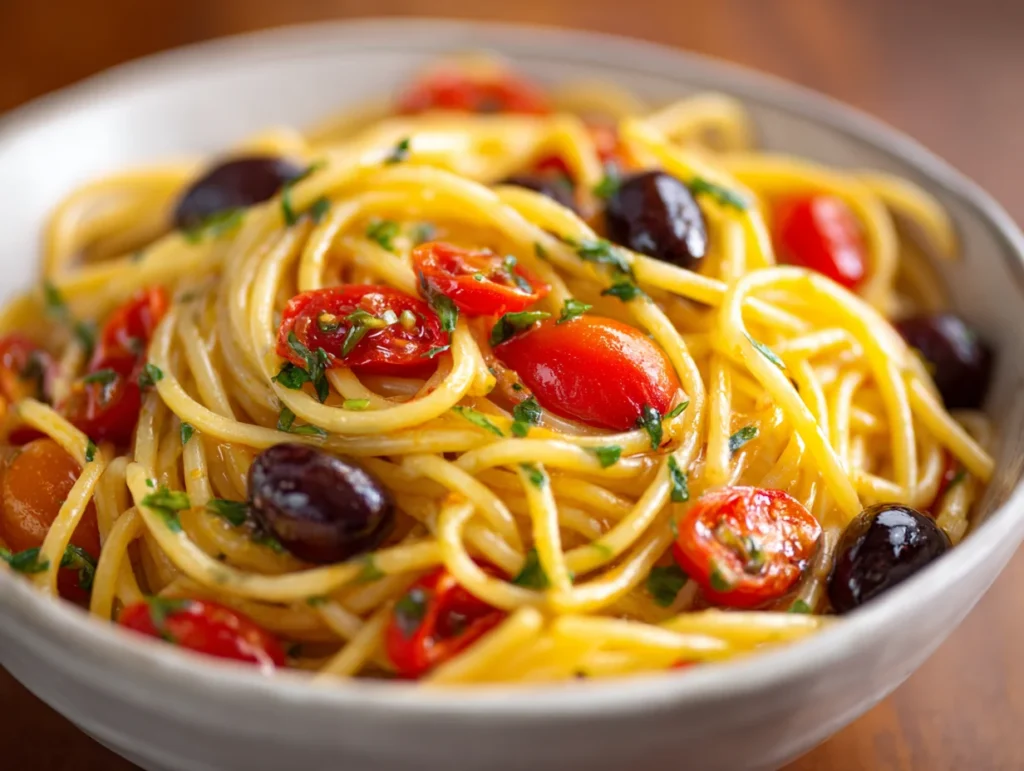
Before heat touches the stove, I always prepare every ingredient in full view. This is not just organization, it is discipline. Garlic is sliced finely, herbs are cleaned and chopped, and olive oil is measured with care. A large pot of salted water is brought to a boil, and pasta is cooked until just al dente, never soft.
I insist on reserving pasta water before draining because it carries the starch that defines the final sauce texture. The pasta is never rinsed, as its natural surface starch becomes essential for emulsification. This stage is about building control and respect for timing, ensuring that the cooking process flows without interruption or hesitation.
? For another light and refreshing pasta idea, try our Mediterranean Pasta Salad.
Building Aromatic Olive Oil Base
Olive oil must be treated with respect, never aggression. In a wide pan, I warm it gently until it becomes fragrant but never overheated. Garlic is introduced slowly, allowing it to release sweetness rather than bitterness. As it turns lightly golden, chili flakes are added to create depth and warmth. The aroma should feel soft, not sharp.
This infused oil becomes the foundation of the dish, carrying all future flavors. It is important to maintain low heat throughout, as overheating destroys the character of extra virgin olive oil. This stage is about layering aroma with restraint, creating a base that is both simple and deeply expressive in flavor.
Creating the Emulsion
This is the most critical stage, where technique defines outcome. The cooked pasta is added directly into the infused oil, and gentle tossing begins immediately. Reserved pasta water is introduced gradually, not all at once. I always emphasize patience here, as the transformation is subtle but essential.
The starch begins to interact with the olive oil, forming a silky coating that clings to every strand. The texture should never look watery or separated. Instead, it should appear unified and glossy. Seasoning is adjusted at this stage with salt and pepper. The process is not rushed, because true emulsification develops slowly and rewards careful attention.
Final Refinement and Plating
Once the texture reaches a silky consistency, I remove the pan from heat immediately. Fresh parsley and lemon zest are added to lift the aroma and introduce brightness. Optional ingredients like tomatoes or cheese can be folded in gently, but never aggressively.
The pasta is then plated with intention, allowing it to fall naturally into a soft arrangement. A final drizzle of olive oil completes the dish, enhancing both aroma and visual appeal. This is the moment where simplicity becomes elegance. The dish is served immediately, while warmth and fragrance are still intact, capturing the true essence of summer Italian cooking.
Cook Time
Total: 25 minutes
Prep: 10 minutes
Bake: 0 minutes
Servings
From an author’s perspective, this dish is not about quantity but experience. It comfortably serves two to three people, depending on appetite and occasion. I often describe it as a personal yet shareable recipe, ideal for quiet lunches or intimate dinners. Its light nature makes it suitable for warm weather when heavy meals feel unnecessary.
The portioning allows flexibility, whether served as a main dish or part of a larger Mediterranean spread. What matters most is balance rather than abundance, ensuring each serving carries the same freshness, aroma, and silky texture that defines this olive oil pasta experience.
Makes approximately 2 to 3 servings
Nutritional Information (approx. per serving)
- Calories: 420 kcal
- Carbohydrates: 55 g
- Protein: 10 g
- Fat: 18 g
- Fiber: 3 g
- Sodium: Moderate
Benefits paragraph
This dish offers more than nourishment; it reflects balance. The olive oil provides healthy fats that support heart wellness, while pasta delivers steady energy. Garlic and herbs contribute natural antioxidants and digestive benefits. In my view, its greatest strength lies in its lightness, allowing enjoyment without heaviness. It is a meal that respects the body’s needs during warm seasons, offering satisfaction without excess.
? If you love simple olive oil based dishes, you’ll also enjoy our Cold Pasta Without Mayo – Light Healthy Summer Pasta.
Storage Instructions
While I always recommend serving this dish fresh, there are occasions when storage becomes necessary. If stored, it should be placed in an airtight container and kept in the refrigerator for up to two days. However, the nature of olive oil pasta changes over time, as the emulsion begins to lose its original silkiness. When reheating, gentle heat is essential.
A small splash of water or olive oil can help restore some moisture, but the original texture cannot be fully recreated. This is why I treat it as a dish meant for immediate enjoyment, where timing plays a crucial role in preserving its identity.
Suggestions
This recipe invites interpretation rather than restriction. I often encourage pairing it with simple grilled vegetables or lightly cooked seafood to maintain its delicate character. A crisp white wine or chilled citrus water enhances its freshness beautifully.
Herbs like basil or oregano can shift its personality without overpowering it. Parmesan adds depth, while nuts introduce texture. What matters most is restraint. Overloading the dish defeats its purpose. It is meant to remain light, clean, and expressive, allowing each ingredient to speak without competition, staying true to its Italian inspiration.
Seasonal Relevance
Summer is the natural home of this pasta. In warmer months, the body instinctively seeks lighter meals, and this recipe answers that need with precision. It avoids heavy sauces and instead relies on freshness and simplicity.
Seasonal produce such as tomatoes, basil, and zucchini integrates seamlessly, enhancing its character. I often associate this dish with long evenings, open windows, and relaxed dining. It reflects the rhythm of Mediterranean summers where food is not rushed but enjoyed slowly. Its quick preparation also makes it practical for modern lifestyles while preserving traditional culinary values rooted in seasonality and balanc.
Summer olive oil pasta is not merely a recipe; it is a philosophy of cooking expressed through simplicity. As an author and chef, I see it as a reminder that true elegance often lies in restraint. When prepared correctly, it delivers a silky texture, balanced aroma, and refreshing lightness that feels both satisfying and effortless. It does not rely on complexity but on respect for ingredients and technique. In every bite, it carries the spirit of Italian summer dining,uncomplicated, honest, and deeply enjoyable.
? For a rich and comforting pasta option, check out our Creamy Tomato Pasta – Rich Delicious Pasta.
Frequently Asked Question
1. Can whole wheat pasta be used instead of regular pasta?
Yes, whole wheat pasta can be used, but it will slightly alter the texture and flavor. It absorbs more sauce and has a stronger taste. If used, adjust olive oil and pasta water carefully to maintain balance and avoid dryness in the final dish.
2. How important is pasta water in this recipe?
Pasta water is essential because it contains starch that helps create emulsification. Without it, olive oil cannot properly bind to the pasta. It should be reserved before draining and added gradually to achieve the desired silky consistency and cohesive texture.
3. Can this dish be made vegan?
Yes, the base recipe is naturally vegan if Parmesan is omitted. Olive oil, pasta, herbs, and garlic form a fully plant-based dish. Optional add-ins like cheese can be excluded without affecting the core structure or flavor balance of the recipe.
4. What is the best time to serve this pasta?
It is best served immediately after cooking while the emulsion is fresh and warm. It suits lunch or early evening meals, especially in summer. Delayed serving reduces its silky texture and aromatic intensity, which are central to its appeal.
5. Can lemon be replaced with another citrus?
Yes, lime or even orange zest can be used as alternatives. However, lemon remains the most balanced choice as it enhances olive oil without overpowering it. Any substitute should be used lightly to maintain the dish’s delicate flavor structure.