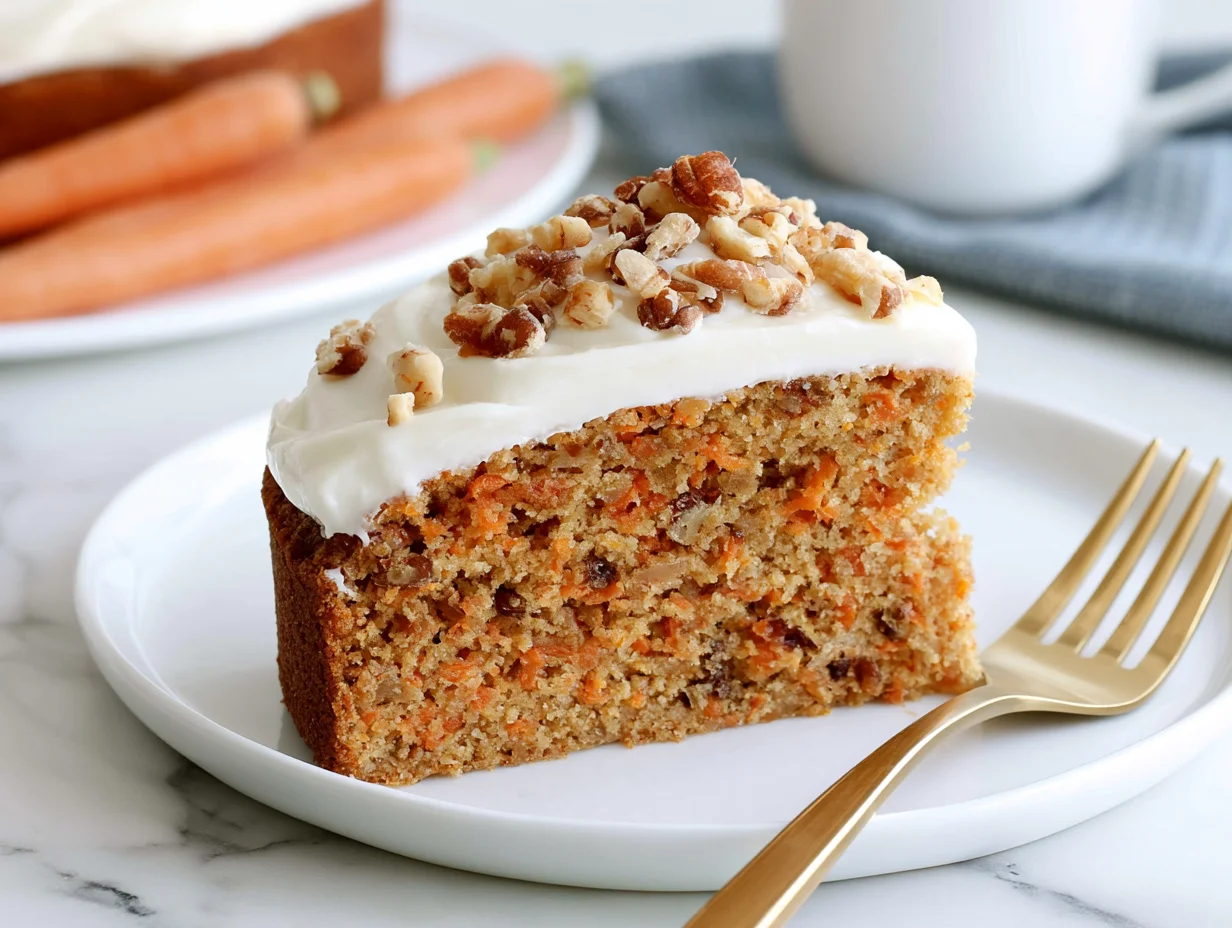
A perfectly baked vegan carrot cake should deliver more than sweetness. It should have a soft, bakery-style crumb, deep warm spice flavor, balanced moisture, and a rich frosting that tastes indulgent without feeling heavy. This vegan carrot cake recipe achieves exactly that using accessible pantry ingredients and professional baking techniques that create reliable results every time.
Unlike many plant-based cakes that turn dry or dense, this recipe produces a moist texture with incredible flavor depth from freshly grated carrots, cinnamon, nutmeg, and brown sugar. The combination creates a homemade dessert that tastes premium enough for celebrations while still being simple enough for everyday baking.
This recipe is ideal for anyone searching for a healthy carrot cake alternative, dairy-free dessert recipe, eggless cake recipe, or easy vegan baking idea that still feels luxurious and satisfying. It works beautifully for birthdays, Easter desserts, holiday gatherings, coffee-table cakes, and weekend baking projects.
What makes this cake especially valuable is its versatility. You can keep it classic, add walnuts for texture, include raisins for sweetness, or finish it with vegan cream cheese frosting for a bakery-quality presentation that looks as impressive as it tastes.
Ingredients You’ll Need
One of the reasons this vegan carrot cake recipe stands out is its ability to turn simple, affordable ingredients into a rich, moist dessert that tastes like it came straight from a professional bakery kitchen.
Base Ingredients:
- 2 cups all-purpose flour
- 2 teaspoons baking powder
- 1 teaspoon baking soda
- 1/2 teaspoon fine sea salt
- 2 teaspoons ground cinnamon
- 1/2 teaspoon ground nutmeg
- 1 cup packed brown sugar
- 1/2 cup granulated sugar
- 1 cup unsweetened almond milk
- 1 tablespoon apple cider vinegar
- 3/4 cup neutral vegetable oil
- 2 teaspoons pure vanilla extract
- 2 cups freshly grated carrots
- 1/2 cup crushed pineapple, well drained
Optional Add-ins:
- 1/2 cup chopped walnuts
- 1/2 cup chopped pecans
- 1/3 cup raisins
- 1/4 cup unsweetened shredded coconut
- 1 tablespoon fresh orange zest
- Vegan cream cheese frosting
- Extra chopped nuts for garnish
Step-by-Step Instructions
Prepare the Baking Ingredients
Preheat your oven to 350°F (175°C). Grease two 8-inch round cake pans and line the bottoms with parchment paper to prevent sticking. In a small bowl, combine almond milk with apple cider vinegar and let it rest for 5 minutes. This creates a vegan buttermilk substitute that improves the cake’s softness and texture.
In a large mixing bowl, whisk together flour, baking powder, baking soda, salt, cinnamon, and nutmeg. Mixing the dry ingredients thoroughly helps distribute the leavening agents evenly, which is essential for achieving a light and fluffy vegan cake texture instead of a dense result.
Mix the Wet Ingredients Properly
In another large bowl, combine brown sugar, granulated sugar, vegetable oil, vanilla extract, and the prepared vegan buttermilk mixture. Whisk until smooth and glossy. Properly dissolving the sugars at this stage helps create a moist crumb and balanced sweetness throughout the cake.
Gradually add the dry ingredients into the wet mixture while stirring gently with a spatula or whisk. Avoid overmixing because excessive stirring develops gluten, which can make the cake heavy instead of soft. The batter should appear thick, smooth, and evenly blended without dry flour pockets remaining.
Fold in the Carrots and Optional Ingredients
Add the freshly grated carrots and drained crushed pineapple to the batter. Fold carefully using a spatula until evenly incorporated. Fresh carrots are essential because they release natural moisture during baking, helping create the rich texture expected from a bakery-style carrot cake recipe.
If using walnuts, pecans, raisins, coconut, or orange zest, gently fold them into the batter now. These additions create extra texture, flavor complexity, and visual appeal. Keep the folding motion light to preserve air in the batter, which helps the cake rise evenly during baking.
Bake and Frost the Cake
Divide the batter evenly between the prepared pans and smooth the tops lightly. Bake for 32 to 36 minutes or until a toothpick inserted into the center comes out mostly clean with a few moist crumbs attached. Avoid overbaking because it removes moisture and can dry out the cake layers.
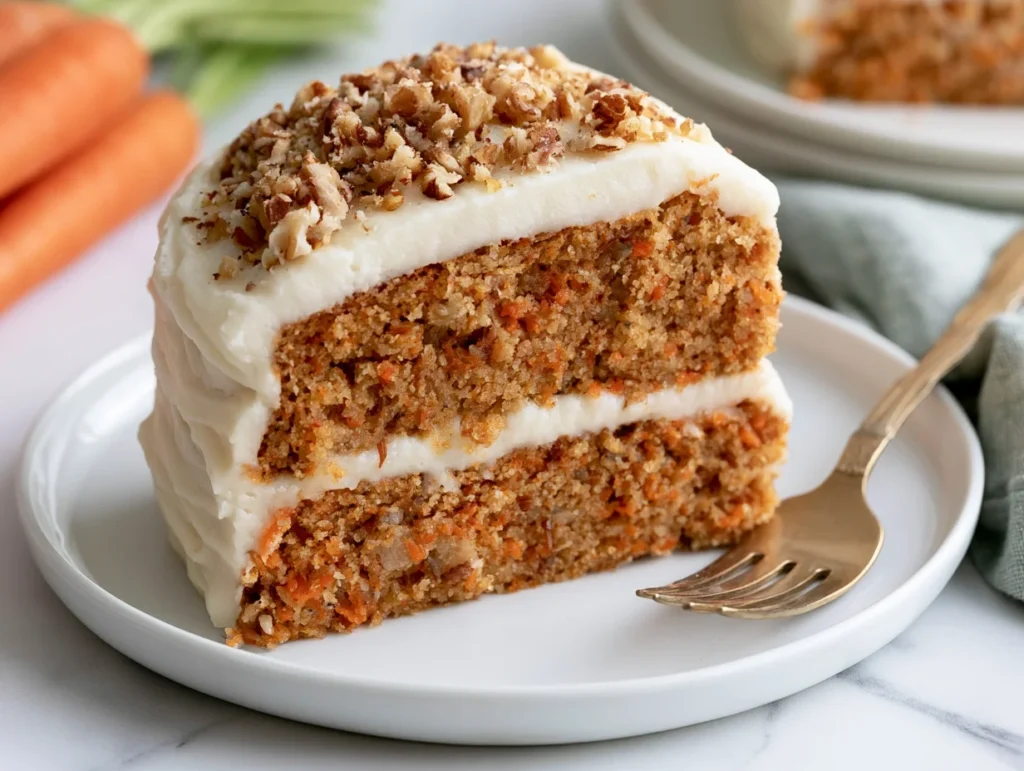
Let the cakes cool in the pans for 15 minutes before transferring them to a wire rack. Once fully cooled, frost with vegan cream cheese frosting and garnish with chopped walnuts or cinnamon if desired. Chilling the cake for 20 minutes before slicing creates cleaner presentation and enhances the flavor.
Cook Time
Total:
Approximately 1 hour 5 minutes
Prep:
25 minutes
Bake:
32 to 36 minutes
Servings
This vegan carrot cake recipe makes approximately 10 to 12 generous slices, making it ideal for family desserts, dinner parties, birthdays, and holiday dessert tables. The rich flavor and moist texture make each serving feel satisfying without requiring oversized portions.
Because the cake stores exceptionally well, it is also an excellent make-ahead dessert option for entertaining. Many bakers notice the flavor becomes even deeper and more balanced after resting overnight in the refrigerator.
For larger gatherings, the recipe can easily be doubled and baked in a sheet pan or transformed into a layered celebration cake. Its stable structure also makes it suitable for professional-style decorating and elegant dessert presentations.
Common Mistakes in This Recipe
One frequent mistake is using pre-shredded carrots instead of freshly grated carrots. Store-bought shredded carrots are often dry and thick, which prevents the cake from developing proper moisture and softness.
Another common issue is overmixing the batter after combining wet and dry ingredients. Too much mixing develops excess gluten, creating a dense cake texture instead of a light bakery-style crumb.
Many bakers forget to properly drain the crushed pineapple. Excess liquid changes the batter consistency and can lead to undercooked centers or uneven baking throughout the cake layers.
Applying frosting before the cake fully cools is another major problem. Warm cake layers melt the frosting, causing poor texture, messy presentation, and unstable cake structure during slicing.
Solutions to Common Mistakes
Always grate fresh carrots using the fine side of a box grater. Freshly grated carrots contain more natural moisture and distribute evenly throughout the batter for better texture and flavor.
Mix the batter gently and only until combined. A few small lumps are completely acceptable and actually help maintain a soft, tender crumb after baking.
Drain crushed pineapple thoroughly using a fine mesh strainer or paper towel. Removing excess liquid helps maintain proper baking consistency and improves cake structure significantly.
Allow the cake layers to cool completely before frosting. For even cleaner slices and easier decorating, chill the cake briefly before applying the frosting and serving.
Nutritional Information (approx. per serving)
- Calories: 360
- Carbohydrates: 46g
- Protein: 4g
- Fat: 18g
- Fiber: 3g
- Sugar: 28g
- Sodium: 260mg
Fresh carrots provide beta-carotene, fiber, and natural sweetness while contributing moisture and color to the cake. This helps create a dessert that feels rich without relying entirely on processed ingredients.
Using plant-based ingredients makes this recipe suitable for dairy-free and egg-free lifestyles while still maintaining a classic cake texture and satisfying flavor profile.
Warm spices like cinnamon and nutmeg enhance flavor naturally and reduce the need for excessive sweetness. They also create the comforting aroma associated with premium homemade baked desserts.
Compared to many traditional frosted cakes, this vegan carrot cake recipe offers a balanced richness that feels indulgent without becoming overly heavy, making it ideal for everyday dessert enjoyment.
Storage Instructions
Store the vegan carrot cake in an airtight container in the refrigerator for up to five days. The texture remains moist, and the flavor often improves after the first day as the spices deepen.
If unfrosted, the cake layers can stay at room temperature for up to two days when tightly wrapped. Keep them away from direct sunlight or warm kitchen environments to maintain freshness.
For long-term storage, wrap individual slices tightly in plastic wrap and place them in freezer-safe containers. The cake freezes exceptionally well for up to two months without major texture loss.
Before serving refrigerated cake, let it sit at room temperature for about 20 minutes. This softens the crumb and frosting slightly, improving both flavor and texture during serving.
Suggestions
For a more premium bakery-style finish, decorate the cake with chopped toasted walnuts, carrot ribbons, or a light cinnamon dusting. Simple garnishes instantly elevate presentation and visual appeal.
This recipe also works beautifully as vegan carrot cake cupcakes. Divide the batter into cupcake liners and reduce the baking time to approximately 20 to 24 minutes for perfectly moist cupcakes.
Adding orange zest creates a fresher flavor profile that pairs exceptionally well with the warm spices and cream cheese frosting. It adds brightness without overpowering the cake.
For an elevated dessert experience, serve slices with plant-based vanilla ice cream or a hot latte. This pairing makes the cake feel even more luxurious and café-worthy.
Seasonal Relevance
This vegan carrot cake recipe is especially popular during spring holidays because its fresh carrot flavor and warm spices fit perfectly into Easter and brunch dessert menus.
During autumn and winter, the cinnamon and nutmeg create a cozy dessert that pairs naturally with coffee, chai tea, and seasonal holiday gatherings. The aroma alone feels comforting and inviting.
Because carrots are affordable and available year-round, this cake remains practical for every season. Its accessibility makes it an excellent everyday baking recipe for home bakers.
In warmer months, chilled carrot cake with lighter frosting becomes a refreshing dessert option for picnics, celebrations, and summer gatherings without feeling overly rich or heavy.
Final Words
A truly memorable vegan carrot cake should feel every bit as indulgent and satisfying as the traditional version, and this recipe delivers exactly that with reliable bakery-quality results.
The combination of fresh carrots, warm spices, balanced sweetness, and moist texture creates a dessert that appeals to both vegan and non-vegan dessert lovers alike. It feels homemade yet professional.
Whether you are building a premium dessert menu for your food blog or simply looking for a dependable dairy-free cake recipe, this version offers strong flavor, excellent presentation, and high reader appeal.
Once you bake this vegan carrot cake recipe, it quickly becomes the kind of reliable signature dessert people request repeatedly for holidays, birthdays, gatherings, and everyday comfort baking.
Frequently Asked Questions
Can I make this vegan carrot cake ahead of time?
Yes. In fact, the flavor often improves after resting overnight in the refrigerator. The spices deepen, the crumb becomes even more moist, and the frosting sets beautifully, making it an excellent make-ahead dessert for parties and holidays.
Which frosting works best with vegan carrot cake?
Vegan cream cheese frosting is the most popular option because its slight tang balances the sweetness of the cake perfectly. However, vegan vanilla buttercream or maple frosting also pair beautifully with the warm spice flavors.
Can I reduce the sugar in this recipe?
Yes, you can slightly reduce the sugar without affecting the texture too much. However, lowering it excessively may reduce moisture and flavor balance, so moderate adjustments work best for maintaining bakery-style results.
